Katy Balls

Katy Balls

Katy Balls is The Spectator’s former political editor.

Amber Rudd: Government should think ‘very carefully’ on deselections

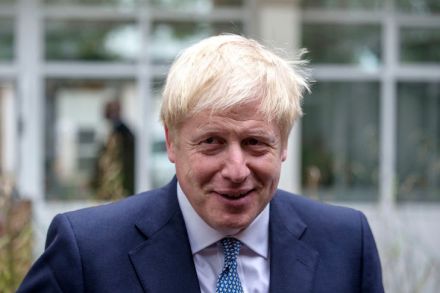
How is the Cabinet responding to the latest Brexit developments? This evening, Boris Johnson will meet with his ministers to discuss the next steps forward – and rumours of an early election are rampant. No. 10's decision to withdraw the whip and stop from standing at the next election any Tory MP who rebels on Brexit will no doubt come up. Today, I spoke to Amber Rudd about the move in a recording for The Spectator Women with Balls podcast. The full episode will be released on Friday but given the ever-changing nature of politics, Coffee House is publishing her Brexit comments in advance.
The dilemma facing the anti-no deal Tory rebels

After the government confirmed James's story that any Tory MPs who rebel in a Brexit vote this week will have the whip withdrawn and be unable to stand as a Conservative at the next election, anti-no deal MPs find themselves in a dilemma. No 10’s aim is to present them with a simple choice: Johnson or Corbyn, making clear that the wrong decision will be career-ending. A number have been dissuaded from joining efforts tomorrow to legislate against no deal. Others – including David Gauke and Rory Stewart – appear to be holding firm. However, whatever happens this week with the votes, the dilemma for the anti-no deal Tories will remain much the same. The Conservative party under Johnson is set on a path that many cannot reconcile with their Brexit views.

Boris Johnson clashes with Gaukeward squad over deselection threat

How many Tory MPs will vote against the government this week in a bid to stop a no deal Brexit? When MPs return to the House of Commons on Tuesday from the summer recess, a cross-party group of MPs – with the help of John Bercow – are expected to try to take control of the order paper and push through a bill to legislate against no deal. As James revealed at the weekend, No. 10 is planning to dissuade Tories from joining the efforts by threatening to deselect any Tory MPs who vote for such measures.

How Cabinet responded to Boris Johnson’s prorogation plan

When news broke on Wednesday morning that Boris Johnson was planning to prorogue Parliament for five weeks ahead of a new Queen's Speech, a conference call was hastily scheduled with his Cabinet. By the time it happened, every minister on the call was aware of what the Prime Minister was seeking to propose. The Prime Minister used the call to stress that the decision to suspend Parliament was not about denying MPs the chance to have their say. However, he did say that  if Brussels thinks MPs cannot frustrate Brexit, there is a better chance of an eventual deal. The general mood of the Cabinet towards Johnson was one of support – ministers previously opposed to both no deal and prorogation found words of praise for the Prime Minister.

It’s time to talk about what no deal really means

The main reason Conservative MPs prefer Boris Johnson’s government to Theresa May’s is because of its clarity of message. The government now has direction and purpose. Briefings from Tory HQ, delivered even to those MPs who have managed to get away on holiday, have gone from intermittent and inconsistent to daily and succinct. The message is simple: Brexit will be delivered by 31 October, crime is being tackled and the NHS properly funded. We can expect to hear these messages, or variants thereof, for the next few months. But there is one area where the government seems less sure of itself: what will happen in the event of no deal?

Boris Johnson and Angela Merkel’s optimistic press conference

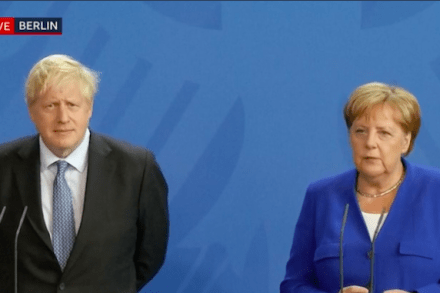
When Theresa May held press conferences with European leaders over Brexit, they were often a painful affair – with her counterpart quick to suggest little progress had been made. This afternoon Boris Johnson opted for an optimistic approach in his first outing on the world stage. The Prime Minister met with Angela Merkel this afternoon in Berlin for talks ahead of the G7 summit this weekend. In the press conference, Johnson joked that the pair had many things to discuss including the 'small matter of Brexit'. With figures in Brussels – including EU council leader Donald Tusk – rejecting the demand in Johnson's letter to ditch the backstop from the Withdrawal Agreement, an undeterred Johnson used the press conference to make the same point.

No. 10’s media strategy – ‘The focus is the country rather than the Westminster bubble’

What is Boris Johnson's strategy for engaging with the media? Over the weekend reports emerged that the Johnson government's media strategy would omit Radio 4's flagship current affairs programme. No. 10 director of communications Lee Cain is said to have told aides that the Today programme is a 'total waste of time'. He’s not alone. Johnson’s most senior adviser Dominic Cummings also appears to feel little in the way of warmth towards the show – reportedly telling colleagues that he didn’t listen to it once during the EU referendum campaign when he was campaign director for Vote Leave. So is the government at war with the BBC already? It's a little more complicated than that.

The Joan Collins Edition

20 min listen

Dame Joan Collins is an actress, author, and entrepreneur. Her acting career spans three quarters of a century, including 1950s Hollywood movies, to her role as Alexis Carrington in Dynasty. In this episode, she talks to Katy about breaking into acting as a young woman, what she thinks about Love Island, and why she supports both Boris Johnson and Brexit.Presented by Katy Balls.

Corbyn’s Brexit offer puts Jo Swinson under pressure

The recurring story of the summer recess is the plot to form a government of national unity in order to thwart any No. 10 plans for a no-deal Brexit. Anti no-deal MPs have discussed voting down Boris Johnson's government when Parliament returns in September and then using the two week grace period that follows to form a government of national unity. There are several catches to this plan – one potentially big flaw is that people in No. 10 believe Johnson can simply refuse to stand down, wait the two weeks out and then decide the date of the election that would follow. However, the biggest problem is that to even get to that point, anti no-deal MPs need to find a leader that a majority of MPs can rally around. Today Jeremy Corbyn attempted to pitch himself as that person.

Taking back control

Every Friday at 6 p.m. government aides are summoned to No. 10 Downing Street for a meeting with Dominic Cummings, Boris Johnson’s right-hand man. Here they are plied with alcoholic beverages, updated on the latest government messaging and given instructions for the week ahead. Such meetings seldom happened under the old Theresa May regime: Fridays were a bit of a non-event when ministers were in their constituencies and aides worked hard right up to lunchtime. The new end-of-week meeting register means that is no longer an option. At the most recent meeting, a handful of aides were singled out for good behaviour. Their achievement? Reporting the minister they work for to No. 10 for going off message. ‘You know who you are,’ said Cummings approvingly.

No. 10 seeks to restore Tory reputation for law and order

It's law and order week in No. 10. After a series of announcements over the weekend, on stop and search and a promise of more prison places, Boris Johnson has today announced a review of sentencing guidelines for rapists and murderers. More announcements and appearances are expected as the week goes on to further hammer home the message that this is a Government that's tough on crime. With 80 days to go until the UK is to leave the EU, No. 10 is focussed on three main areas: Brexit, health and law and order. It follows that these three topics are also what the Tories are expected to campaign on in an early election. Under Theresa May, the Conservatives' reputation as the party of law and order has suffered.

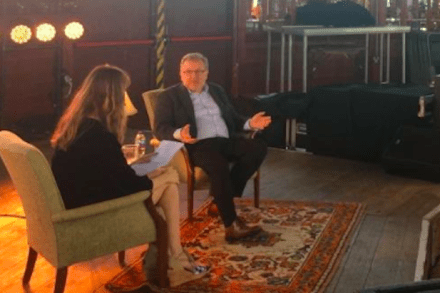
Interview: David Mundell on being sacked, IndyRef2 and no-deal Brexit

When Boris Johnson sacked David Mundell as Scottish Secretary, Ruth Davidson was said to be 'livid' over the decision. One of 17 ministers to leave government with Theresa May, there had been an expectation among Scottish Tories that he would stay in place – as a figure with ministerial experience unlike the bulk of the Scottish Conservative MPs who entered Parliament in 2017. In the end, the job went to Alister Jack – a politician who is more relaxed about the prospect of no deal. With reports of a growing rift between the Scottish Conservatives and Boris Johnson, I sat down with Mundell at the Fringe by the Sea festival to discuss the future of conservatism in Scotland.

How should the Tories respond to an SNP/Labour pact?

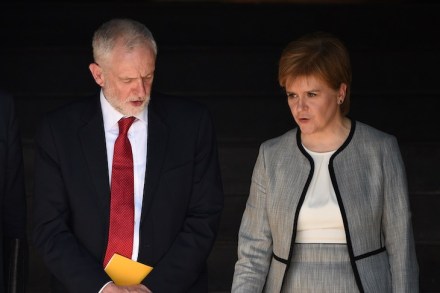
John McDonnell has caused a stir over recess with an interview he gave to Iain Dale at the Edinburgh Fringe. The shadow chancellor suggested that Westminster should not decide whether Scotland gets a second independence vote – instead it should be up to the Scottish Parliament. As Stephen writes on Coffee House, this is most definitely not the Scottish Labour line. The comments were also made within 24 hours of Nicola Sturgeon suggesting she’d be willing to work with Labour to 'lock the Tories out of government'. So, with a general election now seen as inevitable within the next six months – is the prospect of an SNP/Labour pact an open goal for the Tories?

Can a vote of no confidence prevent no deal?

Talk of an early election has been on the rise in recent months as the Brexit arithmetic has looked increasingly shaky. This week it has hit fever pitch. Boris Johnson announcing extra funds for the NHS has been read as a sign the party is getting campaign ready while party chairman James Cleverly set the cat among the pigeons at the weekend after he used a broadcast interview to say only that the Tories would not 'initiate' a general election. The verdict: an early election is beginning to be seen as inevitable.

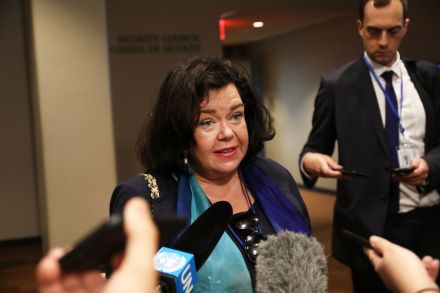
The Karen Pierce Edition

28 min listen

Karen Pierce is the UK's Permanent Representative to the UN. In this episode, she talks to Katy about her career ambitions when she was young, using Lewis Carroll to combat the Russians, and what day to day life is like in the UN.Presented by Katy Balls.

The Brecon by-election result raises difficult questions for the Tories

As expected, the Liberal Democrats have won the Brecon and Radnorshire by-election – thereby reducing Boris Johnson's majority to one. The news ought not to come as much of a surprise. Ahead of the vote, the Tories appeared to be doing everything they could to lose it. The by-election itself was triggered following a recall petition after Tory MP Chris Davies was found guilty of submitting a false expenses claim. Despite this, Davies was chosen to stand again rather than a new Conservative candidate. While some Tories have been campaigning in the area, it could hardly be described as all hands on deck in the lead up to the election.

European Research Group divisions over Boris Johnson’s Brexit tactics

With Boris Johnson currently refusing to meet with any EU leaders for Brexit talks unless they agree to abolish the 'undemocratic' backstop, speculation is rising that the UK is on course to leave the EU without a deal. However, should the new Prime Minister manage to silence his critics and win a concession from Brussels to replace the backstop with alternative arrangements, Johnson ought not expect all members of his party to celebrate. In an interview with the Telegraph, arch-Brexiteer Marc Francois – one of 28 Tory MPs who refused to vote for May’s deal on any occasion – has said that even were the backstop to go from the withdrawal agreement, he and dozens of colleagues would still refuse to vote for it.

Inside Dominic Cummings’ first meeting with government aides

When Boris Johnson was interviewed by The Spectator ahead of becoming Prime Minister, he said that on Brexit, his 'determination burns with a magnesium brightness to get it done and to deliver'. Less than a week into his premiership and that commitment is echoed by senior No. 10 staff – many of whom come from Vote Leave. With speculation mounting that an early election is now inevitable as Brussels refuse to take Johnson's Brexit demands seriously, special advisers and government officials gathered on Friday evening to hear from Johnson's senior adviser Dominic Cummings – referred to by No. 10 staff as the CEO. I understand the Friday 6pm meeting is likely to become a weekly feature (with alcoholic beverages provided for after).

The leadership result that has Labour worried

As the Westminster rumour mill goes into overdrive over the likelihood of an early general election, talk has turned to how the main parties would fare in an Autumn trip to the polls. Crucial to that question is how the Liberal Democrats would do. Just a year ago, the Lib Dems were the subject of pity and widespread mockery. They were scarred by their time in coalition with the Tories. They failed to make much ground during the 2017 snap election, ending up with just 12 MPs, and seemed destined for extinction. In theory, they should have hoovered up Remain voters. Instead, they hoovered up derision and obloquy. Sir Vince Cable announced his resignation as party leader with the future looking bleak.

Leo Varadkar ramps up the rhetoric on Boris’s Brexit demands

Since entering No. 10, Boris Johnson has made clear that any route to a Brexit deal must involve ditching the backstop that currently sits in the withdrawal agreement. If that's not possible, he intends to take the UK out of the EU without a deal. The backstop was the major stumbling block for Theresa May passing that deal – something she failed to do three times – and her government had sought to secure a time limit to make it more palatable to MPs. Brussels refused to play ball. With Johnson asking for more drastic changes, will he have any luck? So far, the signs are not particularly positive.