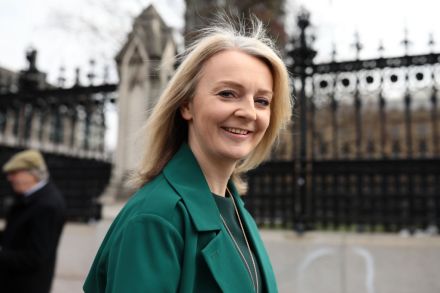
Katy Balls

Katy Balls

Katy Balls is The Spectator’s former political editor.

Boris Johnson calls for December 12 election – will he succeed?

From our UK edition

Boris Johnson will make his third attempt to call a general election. In an interview with the BBC, the Prime Minister unveiled his new offer to opposition MPs: he will bring the Withdrawal Agreement Bill back to the Commons on the condition that there is a general election on 12 December. Explaining his decision, Johnson said that he believed the UK was heading for an extension – something he regretted. He said he was willing to bring his Withdrawal Agreement Bill back to the Commons so long as MPs agree that a general election will follow. The reason? 'In order to create a deadline that is credible in everybody's mind then there must be that hard stop of a general election.' But is it in Johnson's control when an election happens?

The Tory push for an early election

From our UK edition

As EU leaders mull over what length of extension to grant the UK, talk in Westminster is focused on whether an election is imminent. The line from No. 10 is that Boris Johnson will push for a general election if the EU agrees to delay Brexit until January. Earlier today Johnson met with Jeremy Corbyn to discuss a new programme motion – this opens the possibility of Johnson trying to pass the Withdrawal Agreement Bill before any election. Even though the government's original programme motion (which would have allowed the UK to leave by 31st October) failed, the bill did pass its second reading. That means there could be the votes to pass it into law – depending on amendments. However, the meeting proved a mixed bag.

Boris Johnson’s Halloween deadline drifts further away

From our UK edition

Will the UK leave the EU on the 31 October? Barring the highly unlikely event of the EU refusing an extension, the answer to that question is no. This evening, MPs voted against the government's programme motion to push the Withdrawal Agreement Bill through the Commons at breakneck speed – at 308 to 322. This means it is hard to see how the bill can pass the Commons without an extension being agreed with the EU. On hearing the result, Boris Johnson told MPs that he would now put the bill on 'pause' and speak to EU leaders about the extension.

Tories buoyed by response to Boris Johnson’s Brexit deal

From our UK edition

Is this the week Boris Johnson passes his Brexit deal? As ever with Brexit, there is a chance that what is meant to be a decisive week in terms of the UK's exit from the European Union ends up leading to more delay and confusion. However, whatever happens in the coming days, senior Tories are increasingly relaxed. It's not that ministers are confident they will be able to pass the Withdrawal Agreement Bill unscathed. Instead they believe Johnson's deal puts the party in a good position for whatever comes next. The risk to Johnson agreeing a deal before a general election was that senior Brexiteers in his own party would reject it – and decry it as Brino (Brexit in name only).

Letwin amendment threatens to derail ‘Super Saturday’

From our UK edition

Those expecting MPs to finally make a decision on Brexit today may be left disappointed. This afternoon MPs are due to vote on a government motion – on what has been dubbed 'Super Saturday' – to signal their approval of the Prime Minister's deal. The numbers are tight but there is optimism on the government benches that they could do it. This morning Steve Baker told his European Research Group colleagues that they ought to back the deal (for further updates see The Spectator's list of MPs backing the deal). However, MPs may not even get to this vote. John Bercow has this morning accepted Oliver Letwin's amendment to the government motion. The Letwin amendment seeks to withhold approval for Johnson’s deal until the legislation implementing it becomes law.

Jean-Claude Juncker: ‘There is no need for a prolongation’

From our UK edition

How can Boris Johnson pass a deal without the support of the DUP? The answer could lie in comments this afternoon made by Jean-Claude Juncker. The EU Commission president appeared to rule out an extension being offered to the UK if no deal is agreed. Speaking to the BBC, Juncker said there ‘must be no prolongation – it has to happen now'. He made similar comments to Sky News – suggesting that Boris Johnson's deal was the only option they would be putting forward: Sky News: Will you rule out an extension? Juncker: If we have a deal. We have a deal. There is no need for a prolongation. That’s not only the British view it is my view as well As James revealed earlier today, No. 10's hope has been that the EU simply refuse to offer an extension.

DUP rejects Boris Johnson’s Brexit deal – what next?

From our UK edition

Here we go. As Boris Johnson heads to Brussels today for the EU council summit, hope inside government that Johnson will be able to pass a provisional deal in the Commons this Saturday is fading. Despite progress in talks between the UK, Brussels and Ireland, the Prime Minister is yet to successfully convince his confidence and supply partner – the DUP – to back what is being proposed. In a statement released this morning, Arlene Foster and Nigel Dodds said: 'As things stand, we could not support what is being suggested on customs and consent issues, and there is a lack of clarity on VAT.

The purpose of Boris Johnson’s Queen’s Speech

From our UK edition

Normally a Prime Minister uses a Queen's Speech to lay out their government's legislative agenda for the year ahead. However, with the government currently boasting a working majority in the region of -40, few ministers expect Boris Johnson to be able to even pass his first Queen's Speech as Prime Minister – let alone the individual bills. Instead, Johnson and his ministers hope Monday's set piece event will provide a public platform for the things the government would do were they to win a majority in a forthcoming election. Johnson plans to present an 'optimistic and ambitious' Queen's Speech that would make the UK 'the greatest place on earth'. There are 22 bills in total.

The Lynn Barber Edition

From our UK edition

26 min listen

Lynn Barber is an award-winning journalist known for her incisive interviews and her best-selling books An Education and How to Improve Your Man in Bed. On this episode, she talks to Katy about her lifetime of interviewing the great and the good, from Salvador Dali to Katie Price; the death threats she received from Rafa Nadal's fans; and her favourite (and least favourite) BBC journalists.Presented by Katy Balls.

John McDonnell suggests Labour could be open to referendum before election

From our UK edition

The Labour party is abuzz with talk that the party could back a second referendum before a general election. It's not that Jeremy Corbyn has suggested such a move is on the cards – in fact, this week he's been saying the exact opposite while setting out his stall for a general election. However, John McDonnell has used an interview with Alastair Campbell for GQ to open the door to the possibility of holding a second referendum first. Asked which ought to come first, McDonnell says while his preference remains a general election 'let's see what actually parliament will wear in the end': AC: Do you agree with me that there shouldn't be an election? JM: I'm more of the view that we've said up until now that we want a general election.

The UK and EU agree to intensify Brexit negotiations

From our UK edition

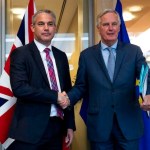
The chance of a Brexit deal being agreed between the UK and EU has risen. This morning Brexit Secretary Stephen Barclay met with his EU counterpart Michel Barnier to pick up where Boris Johnson and Leo Varadkar left off at the pair's Cheshire meet. With the Prime Minister and Taoiseach agreeing that they could see a path to a potential deal, Barclay and Barnier discussed the technical details over a two hour breakfast. That discussion appears to have gone well with the EU27 telling Barnier they are happy for talks to now intensify. A European Commission spokesperson said: 'The EU and the UK have agreed to intensify discussions over the coming days.

Johnson and Varadkar: It’s not over yet

From our UK edition

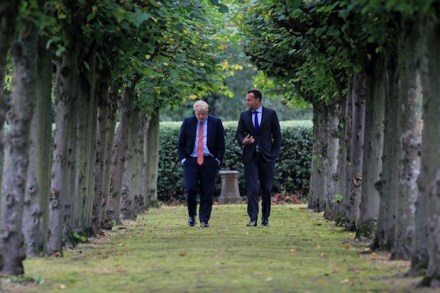
Is all hope lost that a Brexit deal can be agreed before 31 October? That's been the mood music coming from both the UK and Brussels in recent days. However, Boris Johnson and Leo Varadkar have this afternoon made a joint statement making clear that they haven't given up on agreeing a deal just yet. After holding two hours of talks in a Cheshire countryside bolthole, Johnson and Varadkar released a joint statement in which they said that they could both 'see a pathway to a possible deal': 'The Prime Minister and Taoiseach have had a detailed and constructive discussion. Both continue to believe that a deal is in everybody’s interest. They agreed that they could see a pathway to a possible deal. Their discussion concentrated on the challenges of customs and consent.

Tories fret over further election delay

From our UK edition

Members of the One Nation caucus of Conservative MPs met with Boris Johnson this afternoon over concerns the party could shift to a no-deal platform if an election takes place after a Brexit delay. No. 10 sources have suggested such a policy could be the best electoral route for the Tories in this scenario – as they would need something to prevent frustrated Leave voters moving to the Brexit party. However, attendees at the meeting say they left reassured this was not the case – with Johnson suggesting that a policy of only accepting no deal was unlikely to make its way into the Tory manifesto. But as these MPs worry about the contents of that manifesto, a growing number of Tory MPs are worrying that the election may not be for months yet. The view in No.

The voters who will prove pivotal at the next election

From our UK edition

As the prospect of a Brexit deal drifts further away and a blame game ensues between Downing Street and Brussels, the UK is on course for a volatile general election. As James reveals on Coffee House, No. 10's attention has moved to how to position the Conservatives in an election in during a Brexit extension. A senior Downing Street source tells him: 'Those who pushed the Benn Act intended to sabotage a deal and they’ve probably succeeded. So the main effect of it will probably be to help us win an election by uniting the leave vote and then a no deal Brexit. History is full of such ironies and tragedies.' When it comes to that election, two reports today have been published identifying the swing factors that could decide the result.

Scottish court: ‘no doubt’ that Boris will abide by law on Brexit extension

From our UK edition

Is Boris Johnson on course to request an Article 50 extension within the fortnight? The Court of Session, Scotland's highest court, has today dismissed a legal effort to force Johnson to comply with the law (dubbed 'surrender act' in No. 10) aimed at making the government seek a Brexit extension in the event of a no deal. Only the reason the judge in question ruled that there was no need for 'coercive orders' against the UK government is that he said there could be 'no doubt' that the prime minister had already agreed to abide by the law – after government documents submitted to the Court of Session said the prime minister would send a letter asking for an extension to Article 50 if he fails to secure a new agreement with Brussels by 19 October.

Is a Brexit deal now off the table?

From our UK edition

Is a Brexit deal agreed before October 31st a realistic possibility? Technically talks between the UK and EU are ongoing – with Emmanuel Macron saying the EU will decide by the end of the week whether a Brexit deal is possible. Meanwhile, the weekend papers have been filled with op-eds from government ministers on the need for both Brussels and MPs to get behind Boris Johnson's proposed Brexit deal. However, while Johnson appears to have made some progress with the latter group (a mix of MPs from across the spectrum have suggested they could vote for the proposal), the mood music in Brussels is gloomy. The differences between the two sides remain great.

MPs get behind Boris Johnson’s proposed deal

From our UK edition

As figures in Brussels mull over the Brexit proposal put forward by Boris Johnson, the initial signs are that EU leaders remain sceptical. However, over in the Commons the picture is somewhat rosier. After the government published the letter the Prime Minister had sent to Jean-Claude Juncker, cabinet ministers were quick to take to social media to describe it as a fair compromise – complete with a CCHQ banner highlighting its positives: https://twitter.com/JamesCleverly/status/1179653360905064448?s=20 More significant, however, is the number of backbench MPs and Labour MPs who have made positive noises about what's being proposed. Despite opposition party attacks, some MPs are speaking out in support.

Why the Tories are talking tough on crime

From our UK edition

Although Brexit remains the top of the news agenda, the Conservatives believe they will need to talk about more than just leaving the EU if they are to triumph in an early election. Boris Johnson used his conference speech to push a domestic agenda beyond Brexit. The areas he focussed on were the same ones that Downing Street has repeatedly pushed since the summer: the NHS, law and order, education and investment in the north.

Why senior Conservatives are talking about a Brexit extension

From our UK edition

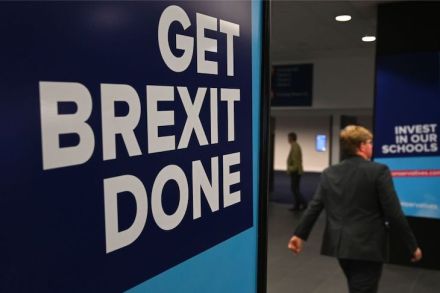
Will the UK have left the EU by October 31st? At the Conservative party conference, ministers, MPs and activists are keen to repeat the event slogan: 'Get Brexit done'. However, many are unsure as to when exactly Brexit will get done. Johnson has promised to take the UK out of the EU by 31 October “do or die” – he has repeatedly said “extension means extinction” for the Tories. But with parliament passing legislation to try to force him to seek an extension, and opposition MPs refusing him an election until that extension is secured, senior Conservatives are starting to contemplate a world in which Brexit isn’t done at the end of October.

Conservative party conference special: Liz Truss II

From our UK edition

26 min listen

Liz Truss is the Secretary of State for International Trade and holds the Women and Equalities brief. On the podcast, she talks about why Boris picked her for the job (having heard her speech about cheese exports), the limitation to trans rights, and how punchy language is all just a part of politics.Presented by Katy Balls.