Katy Balls

Katy Balls

Katy Balls is The Spectator’s former political editor.

Why trust is an election issue for Boris Johnson

From our UK edition

What is the main take away from ITV's leaders' debate? Listen to the news bulletins and it appears to be that the Conservatives have been accused of misleading the public. During the debate on Wednesday night, one of the Conservative party Twitter accounts was renamed (and rebranded) as a 'fact-checking' site. Throughout the showdown between Boris Johnson and Jeremy Corbyn, the account published tweets suggesting Labour claims did not add up. For those who looked, the Twitter handle was still @CCHQPress. Today there has been a backlash over that decision. While the Tories say it was a mere campaign stunt, the Liberal Democrats have called on the Electoral Commission to intervene.

Why the Tories have to talk about fox hunting

From our UK edition

At what point did the Conservatives' 2017 campaign start to go off the rails? A lot of Conservative MPs point to the manifesto launch and the creation of the so-called dementia tax. However, many view comments Theresa May made during a stump speech on fox hunting as just as damaging. The then prime minister said she had 'always supported fox hunting' and vowed to give parliament a free vote on the issue. This was quickly weaponised by Labour and the story spread online. May’s proposal to reintroduce fox hunting with a free vote was the single most viral topic of the election. Since then, the Tories have had an unwritten rule: don't talk about fox-hunting.

Jeremy Corbyn’s opportunity to unite the Remain vote

From our UK edition

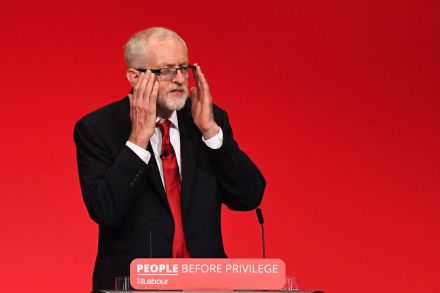
As the election campaign enters its third week, the Conservatives are enjoying a 17-point lead, according to a YouGov poll. However cautious Tory MPs are quick to point out nothing should be taken for granted, as this is broadly speaking where the Tory party was at this point in the 2017 campaign. But for Labour to have a chance of forming a government come 12 December, Jeremy Corbyn needs to change the political weather. He has two set piece opportunities this week to do just that: Tuesday's leader's debate and Labour's manifesto launch. ITV’s planned television debate has the potential to move the dial. The first head-to-head debate of the campaign has led to cries of foul play from smaller opposition parties who have been excluded from the meet.

The voters the Conservatives plan to persuade to win a majority

From our UK edition

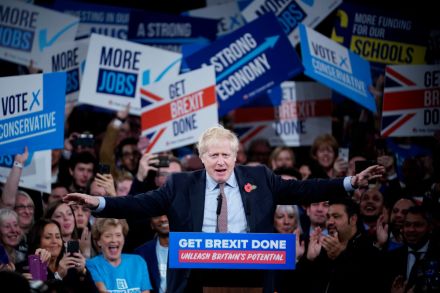
In this election, the Tories hope to persuade voters who have never backed the Conservative party before to turn blue. Key target seats lie in parts of the Midlands and North that are historically Labour. As I say in this week's magazine, to help candidates and activists take on this new terrain, the party has sent them a handbook setting out who they need to win over. It lays out the importance of communicating 'with voters who in the past may not have considered a vote for the Conservatives, but who want to GET BREXIT DONE and would now prefer a majority Conservative government to a coalition led by Jeremy Corbyn.

The five groups of voters the Tories are targeting

From our UK edition

Tory MPs used to think they could rely on telltale signs while out on the campaign trail — a detached house or a neatly kept lawn — to help them find their target voters. These days, things are more complicated. The Tories’ electoral strategy now rests on persuading voters who have never voted Conservative in their lives to go blue. To help candidates and activists in their efforts, the party has sent them a handbook setting out who they need to win over. It identifies the following groups as being pivotal to Tory success: Labour Leave voters Top of the list are the Labour Leave voters who backed Brexit but probably voted Labour in both 2017 and 2015.

Farage’s ‘unilateral’ Leave alliance doesn’t guarantee the Tories a majority

From our UK edition

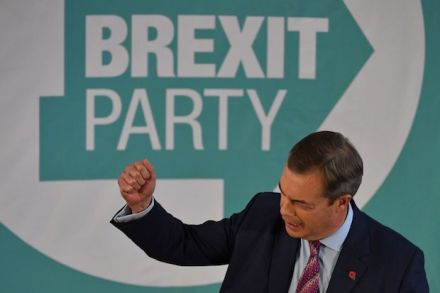
Will a Leave alliance lead the Tories to victory in the snap election? Nigel Farage has today announced that the Brexit party will be unilaterally creating one. The Brexit party leader rowed back on an earlier plan to stand candidates in 600 seats. Instead, the Brexit party will focus its efforts on Labour-held seats. Speaking from Hartlepool, Farage said he would not field candidates in the 317 seats won by the Conservatives at the 2017 general election. Explaining his change of heart, Farage pointed to a Twitter video Boris Johnson released on Sunday night in which he clarified his commitment to no transition extension and to the UK diverging from the EU in any post-Brexit trade deal. https://twitter.com/BorisJohnson/status/1193562889484951552?

Why the Tories remain optimistic despite a shaky campaign start

From our UK edition

The first official week of the Conservatives' election campaign did not go as many inside CCHQ had hoped. A cabinet minister resigned, a row erupted over insensitive Tory comments on the Grenfell fire and a candidate stepped down over previous comments on rape. Despite this, the Conservatives end the week with a sense of cautious optimism about the next month. Tory MPs believe that Johnson steadied the ship on Wednesday evening with the party's official launch event in the Midlands. 'That calmed nerves,' says a member of government. 'Boris on form cheers up activists and candidates.' The Tories continue to hold a comfortable lead in the polls – and with parliament dissolved, they can now focus their efforts entirely on campaigning.

The Nicky Morgan Edition

From our UK edition

27 min listen

Nicky Morgan is the Secretary of State for Culture, and former Conservative MP for Loughborough. Despite her success in Boris Johnson's cabinet, she announced that she'd be standing down at this election. On the podcast, she talks about student politics in Oxford with Dan Hannan, filling in Michael Gove's shoes as Education Secretary under David Cameron, firing herself for Theresa May when the latter became Prime Minister.Presented by Katy Balls.

Will former Labour MPs help the Tories break the ‘red wall’?

From our UK edition

Will former Labour MPs help the Tories break the red wall? A key plank of the Tory path to a majority consists of winning seats in the Midlands and the North which have been Labour for generations. Many of these areas voted to leave in the EU referendum. The Tory hope is that a well-executed campaign in which they reinforce their Brexit message with increased public spending promises for domestic policies will lead to them winning Labour Leave voters over. However, as crucial to the strategy is how the vote splits between the various candidates standing in each constituency. Ian Austin – the independent MP for the key Tory target seat of Dudley North – has announced today that he will not seek re-election.

Scottish Tories find reasons to be cheerful on the campaign trail

From our UK edition

Will the Scottish Conservatives face near extinction in the snap election? In recent months, talk in the Tory party has turned to what seats the party can pick up in the Midlands, North and Wales to make up for the seats they will lose north of the border. The thinking goes that a combination of the departure of Ruth Davidson, the arrival of Boris Johnson (regarded as unpopular in Scotland) and a hard Brexit policy means that the Tories will shed voters. However, the mood among sitting Scottish Tory MPs has improved in recent weeks. The reason? The general election campaign in Scotland is being dominated by talk of a second independence referendum. 'It's becoming a proxy second independence referendum,' says one Tory out on the campaign trail.

Jo Swinson’s Corbyn problem

From our UK edition

The Liberal Democrat election campaign launch was beset by technical difficulties which meant that Jo Swinson was at times hard to make out. However, the anti-Brexit message was loud and clear. The enthusiastic Liberal Democrat leader said she was 'excited' to stand as the Liberal Democrat candidate for Prime Minister. Swinson said there was a very real chance she could be the next inhabitant of 10 Downing Street as it was not about 'the red team or the blue team anymore'. Swinson was clear that only her party could be trusted to stop Brexit. She pitched the Liberal Democrats as the party of the centre ground – stuck between two extremes in Labour and the Tories. But she had a harder time when it came to the Q and A.

Lindsay Hoyle elected new Speaker of the House of Commons

From our UK edition

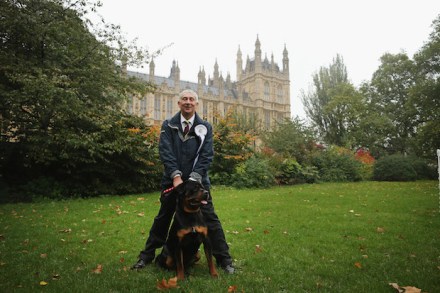
The era of John Bercow as Speaker is no more. This evening MPs voted for Sir Lindsay Hoyle to succeed Bercow as Speaker of the House of Commons. Elected by secret ballot through a series of knockout rounds, Hoyle was triumphant with 325 votes, following four rounds of voting. Chris Bryant came second with 213 votes. Although it was a crowded field, going into the contest Hoyle was the frontrunner. As deputy speaker under Bercow, the Labour MP for Chorley had impressed colleagues with his no frills approach to the role. Compared with Bercow's style, Hoyle earned a reputation as a fair and neutral speaker. During the hustings, Hoyle continued to show that he was a very different candidate to Bercow – refusing to say whether he voted leave or remain in the EU referendum.

What Farage’s Brexit ultimatum means for the Tories

From our UK edition

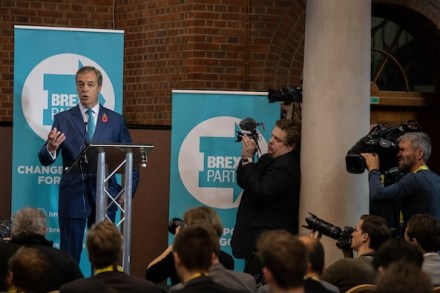
There's been much speculation this week about how the Brexit party will approach the incoming general election. Varying reports suggested Nigel Farage's party could choose to target anything from 20 to 100 seats. However, speaking in Westminster this morning, Farage made clear that he had bigger ambitions. The Brexit party leader said that unless Boris Johnson changed his Brexit position, his party would stand candidates in every seat in England, Wales and Scotland: 'We will contest every single seat in England, Scotland and Wales. Please don't doubt that we are ready. Do not underestimate our determination or organisation.

Election 2019: how the Tories plan to break Labour’s ‘red wall’

From our UK edition

Of all those fighting this general election, the Conservatives are the only ones who need a majority. Labour just needs enough seats to club together with the SNP in order to form a government. The nationalists aim to win almost every seat in Scotland and then call a new independence referendum. The Liberal Democrats would like (at the very least) to double their count of 19 MPs, and stand a good chance of doing so. As for the Tories, they cannot rely on the DUP or anyone else to get over the line. Nothing less than an overall majority will do. In theory, this is not so hard: Boris Johnson needs to win eight more seats than Theresa May did in 2017. The trouble is government ministers say that they find it easier to name the seats the party will lose than those it will gain.

How the Tories plan to ramp up their digital operation

From our UK edition

As Jeremy Corbyn launches the Labour campaign today, talk has turned to the key battlegrounds that will decide the result of the general election. However, when it comes to where the most pivotal campaigning will take place, increasingly the answer is online. Digital campaigning has risen in importance with each election. With bad weather likely to put off some of the less enthusiastic campaigners this year, the efforts online will be particularly crucial. This poses a challenge to the Tories. In 2015, the Conservatives were praised for running a carefully planned digital campaign that focused on key voter groups. But in 2017 they dropped the ball.

Corbyn reveals his election attack lines at PMQs

From our UK edition

The last PMQs before the general election offered a teaser for what to expect over the next six weeks. With Boris Johnson keen to fight the incoming election on a promise to get Brexit done so the UK can focus on domestic issues, it's clear Jeremy Corbyn plans to respond by suggesting the Prime Minister's Brexit would be damaging to public services. Top of that list is the NHS. The Labour leader used the final session to lead on the NHS – suggesting the Prime Minister's 'sell-out deal' with Donald Trump would mean NHS money going into private profit. Corbyn pointed to a recent Channel 4 Dispatches investigation to claim the government had been discussing the health service with US officials.

10 Tory rebels have the whip restored

From our UK edition

As a vote on the government's plan to hold an election beckons, the Prime Minister has made the decision to restore the Conservative whip to 10 of the 21 Brexit rebels. This group collectively lost the whip when they voted for the Benn bill which forced the government to seek an Article 50 extension rather than leave the EU with no deal. These MPs have been welcomed back following a meeting with Boris Johnson: Alastair Burt Caroline Nokes Nicholas Soames Greg Clarke Ed Vaizey Margot James Richard Benyon Stephen Hammond Steve Brine Richard Harrington Those who have returned to the fold have voted with the government on key votes: for the programme motion and against the Letwin amendment.

Momentum builds behind a pre-Christmas election

From our UK edition

Will an election be called this week? That's the growing expectation among Conservative MPs. Later today the government will hold a vote on an early election for December 12 under the Fixed-term Parliaments Act. To pass, Boris Johnson needs two thirds of MPs to back him. However, this is very unlikely – with Labour MPs planning to abstain and both the Lib Dems and SNP opposing on the grounds that Johnson's plan would see his government bring the Withdrawal Agreement Bill back to the Commons before going to the polls. Instead, there is a sense that Tuesday could see a pre-Christmas election agreed upon.

The Katharine Birbalsingh Edition

From our UK edition

26 min listen

Katharine is the headmistress of Michaela Community School, dubbed by some as 'Britain's strictest school'. She talks to Katy about why she regrets speaking at Conservative Party Conference, her school's 'tiger teacher' philosophy, and why she would ban smartphones for everyone under the age of 18.Presented by Katy Balls.

The Brexit extension waiting game

From our UK edition

The UK and Brussels are currently engaged in a waiting game – only no one is sure who is waiting for whom. EU leaders had been expected to announce the terms and length of an Article 50 extension this Friday. However, that decision has been put on hold in light of Boris Johnson's call for a general election – with MPs voting on a motion on Monday. Speaking in Brussels following a meeting of ambassadors, Michel Barnier – the EU’s chief negotiator – said 'no decision' had been made on a way forward. A decision is likely to be made on Monday or Tuesday. EU leaders want to wait and see what happens with the election vote.