Katy Balls

Katy Balls

Katy Balls is The Spectator’s former political editor.

The Chloe Smith Edition

From our UK edition

27 min listen

Chloe Smith is the Conservative MP for Norwich North and minister at the Cabinet Office. She entered parliament at the age of 27 and rose through the ranks quickly. In 2012, she was interviewed by Jeremy Paxman in what has been described as a 'car crash interview' when she was sent out to defend then-Chancellor George Osborne's U-turn on fuel duty. On the podcast, she talks to Katy about what it was like to do that interview and the aftermath, why she proposed to her husband, and what it was like to receive a fake anthrax package.

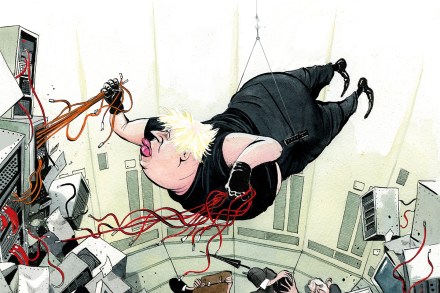
Mission Impossible: can Boris Johnson rewire the British government?

From our UK edition

39 min listen

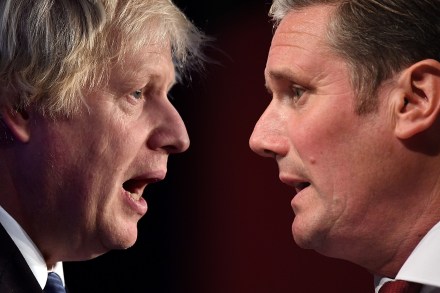
The Prime Minister is trying to reform the civil service. He's not the first to try - so will he succeed? (00:50) The stakes for success are high, as his opponent is no longer Jeremy Corbyn, but the more impressive Keir Starmer. How have Starmer's first almost 100 days gone? (15:45) And last, how widespread is loneliness? (29:45)With the Spectator's political editor James Forsyth; Jill Rutter from UK In a Changing Europe; our deputy political editor Katy Balls; former C4 Economics Editor Paul Mason; author Leaf Arbuthnot; and Andy Nazer from the Campaign to End Loneliness.Presented by Cindy Yu.

The fight the government cannot afford to lose

From our UK edition

As Boris Johnson attempts to move attention back to his pre-coronavirus election agenda, one of the biggest blockers that remains is the failure to get all pupils back to school. Having revised down a previous ambition to get all primary school children in the classroom before the summer holidays, Education Secretary Gavin Williamson held a press conference on Thursday to explain how – with 'concrete determination' – he would get everyone back in September. Under new government guidelines, groups of children will be separated by their class or year into 'bubbles' thereby minimising contacts between them.

How schools will look after the pandemic

From our UK edition

14 min listen

The government has set out its guidelines for how schools will look come September. Attendance will be compulsory, and even Labour is on board. Cindy Yu talks to James Forsyth and Katy Balls about the new world of schooling. Also on the podcast: why the Frost-Barnier meeting broke up a day early and Scotland's lockdown easing.

Keir Starmer’s quiet revolution

From our UK edition

For the first time in 13 years, the public, when polled, think a Labour leader would make the best prime minister. To be fair, Sir Keir Starmer has been helped in this regard by the Conservatives, who haven’t done wonders for their reputation as the party of competence in recent weeks. But the opposition leader has had a decent start. Yes, Starmer is right when he says his party has a ‘mountain to climb’ to win power following Jeremy Corbyn’s historic defeat, but the Tories are on their fourth term and no party has ever won five times in a row. When Iain Duncan Smith was elected leader of the Conservative party, he said he ought to be judged on his first hundred days. The public gets a sense of the opposition leader by this point, he argued.

Should the government go further on Hong Kong?

From our UK edition

17 min listen

China's new national security law has been passed in Hong Kong, and from this morning it has been implemented as handfuls of protestors have already been arrested under its new wide-ranging powers. Dominic Raab has pledged to speed up the process to offer British residency for Hong Kong's BNO passport holders and their dependents. Cindy Yu talks to James Forsyth and Katy Balls about whether or not the government should go even further. Also on the podcast: the local lockdown in Leicester and Keir Starmer's new strategy.

What’s so new in Boris’s ‘New Deal’?

From our UK edition

15 min listen

The country is facing a post-pandemic recession that will leave millions unemployed and businesses bankrupted, so despite all the noise, is Boris's 'New Deal' tackling the right problems? Our Economics Correspondent Kate Andrews joins the podcast today, and tells James Forsyth and Katy Balls why she thinks today's announcement was little more than rehashing of the Conservatives' pre-coronavirus manifesto.

Can Boris’s relaunch escape the Leicester lockdown?

From our UK edition

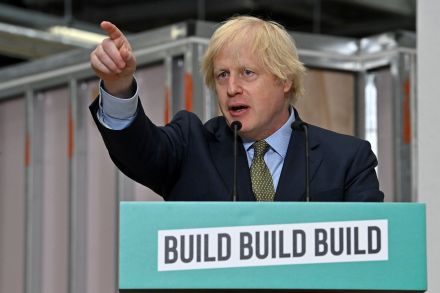
Boris Johnson had hoped to use today's speech in Dudley to draw a line under the past 14 weeks of lockdown and return to his election agenda. However, with the government announcing overnight that Leicester is to go into a local lockdown, the ongoing challenge of coronavirus isn't far away. The Prime Minister acknowledged that some might think his speech on Britain after Covid 'premature' but he said it was not sustainable to 'simply to be prisoners of this crisis'. Instead, the country must 'slowly and cautiously' come out of hibernation.Reflecting on the crisis, Johnson did not go so far as to say mistakes had been made. Instead, he said he knew 'there are plenty of things that people say and will say that we got wrong'.

Will the ‘whack-a-mole’ approach of local lockdowns work?

From our UK edition

16 min listen

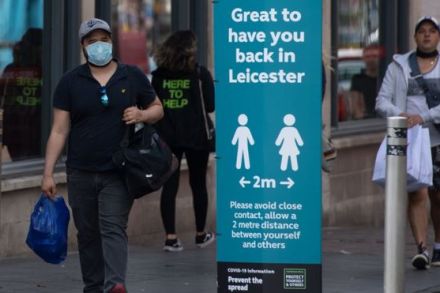
Leicester is set to lock down locally. It's an approach that the Prime Minister has dubbed 'whack-a-mole', referring to clampdowns on local clusters that will inevitably arise in the coming months. All eyes are on Leicester's experience now as it signals whether or not the national lockdown is a thing of the past. Katy Balls talks to James Forsyth and Fraser Nelson. Also on the podcast: the government's schools funding and socially distanced weddings.

What Sedwill’s departure means for No 10’s civil service reform

From our UK edition

14 min listen

The Cabinet Secretary Mark Sedwill has announced that he will be stepping down in September, though his resignation letter suggests that it wasn't necessarily his decision. This move comes as Michael Gove makes a wide-ranging speech on reform of the civil service. The government looks to be gearing up its Whitehall reform, and on the podcast, Cindy Yu talks to James Forsyth and Katy Balls about how these events are all linked.

Has Keir Starmer upset Labour’s fragile unity?

From our UK edition

13 min listen

Throughout the leadership contest, Keir Starmer was careful not to upset the delicate balance between the hard left and the moderates in the party. But with the sacking of Rebecca Long Bailey, he has risked the wrath of the Corbynites and unambiguously moved the party on from the era of Corbyn. Has he triggered a new Labour civil war? Katy Balls talks to James Forsyth and the New Statesman's Stephen Bush.

The difference in Starmer and Johnson’s approach to party discipline

From our UK edition

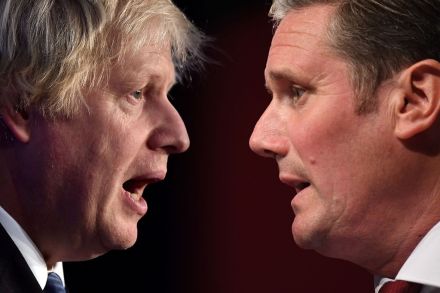
Keir Starmer's approach to party discipline is being favourably contrasted with Boris Johnson's after the Labour leader sacked Rebecca Long-Bailey from his shadow cabinet for sharing an article that included an anti-Semitic conspiracy theory. The argument goes that Starmer has shown quick, clear and decisive action by letting Long-Bailey go whereas the Prime Minister has failed to do so by sticking with his Housing Secretary Robert Jenrick.  Starmer's decisive action on Thursday has seen him win praise from unlikely places. However, within his own party it has led to a backlash from those on the left.

The government’s dilemma on reopening

From our UK edition

14 min listen

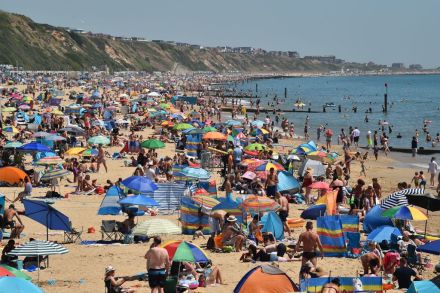
The government wants the country to head back out and boost the economy, but scenes at Bournemouth beach and elsewhere reflect the government's dilemma - how much reopening is enough to keep the economy afloat, but without triggering a second wave of infections? John Connolly speaks to Katy Balls and James Forsyth.

Will Long Bailey’s sacking trigger a Corbynite backlash?

From our UK edition

11 min listen

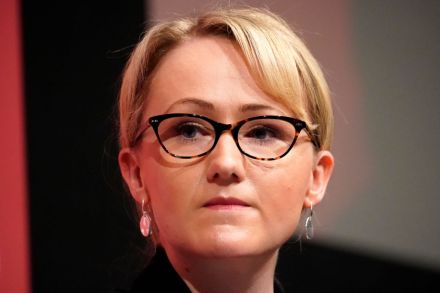
After retweeting an interview with Maxine Peake in which the actress voiced an anti-Semitic conspiracy theory, Rebecca Long Bailey has been sacked as the shadow education secretary. On the podcast, Cindy Yu talks to James Forsyth and Katy Balls about whether or not this will trigger a Corbynite backlash.

Rebecca Long-Bailey’s sacking risks reopening Labour’s civil war

From our UK edition

Keir Starmer has today sacked his former leadership rival Rebecca Long-Bailey from the shadow cabinet. The Labour leader asked Long-Bailey to step down as shadow education secretary after she shared an interview which contained an anti-Semitic conspiracy theory. In the article in question, long-time Jeremy Corbyn supporter Maxine Peake – an actress – suggested the tactics used by police in America on George Floyd were 'learnt from seminars with Israeli secret services'. Announcing the decision, a spokesperson for Starmer said: 'This afternoon Keir Starmer asked Rebecca Long-Bailey to step down from the Shadow Cabinet. The article Rebecca shared earlier today contained an antisemitic conspiracy theory.

How Boris Johnson plans to reset his premiership

From our UK edition

The decision to significantly ease lockdown from early July marks a new chapter when it comes to the government's approach to coronavirus. After a miserable few months, the hope in Downing Street is that with the number of confirmed new cases down to pre-lockdown levels, the government can return some form of normality – and get back to delivering its election manifesto promises.It was this message that Dominic Cummings was keen to get across in his meeting with special advisers on Monday night. Boris Johnson's senior aide acknowledged that recent events had made this difficult. First, Brexit, which dominated Boris Johnson’s first few months in office. Second, a global pandemic that arrived on these shores on the day the UK left the EU.

The new common sense phase of lockdown

From our UK edition

13 min listen

Boris Johnson has announced further measures to ease the lockdown, and from the 4th July, more venues will be open than not, including restaurants, pubs, and galleries. It also marks a new phase in the lockdown, when social distancing will be guidelines, not law. But does the public actually want the lockdown to be eased? Katy Balls talks to James Forsyth and Fraser Nelson.

Boris announces major lockdown easing

From our UK edition

Speaking in the Chamber this lunchtime, the Prime Minister declared that ‘our long national hibernation is coming to an end’ as he unveiled the most drastic easing of lockdown yet. Phase three of the road map will see parts of the hospitality industry reopen from 4 July while individuals will be able to socialise with greater freedom. Announcing the changes, Boris Johnson emphasised that his government was only able to make these changes due to the progress made as a result of people abiding by the rules. Should this fail to be the case in the future or the number of cases rise, Johnson warned he would not hesitate to put the brake on as 'caution will remain our watchword'.

What’s behind the brewing Sunday trading Tory rebellion?

From our UK edition

15 min listen

There's a rebellion brewing on the backbenches - MPs claim that there are over 50 backbenchers who oppose the government's proposal to loosen Sunday trading laws. On the podcast, Katy Balls talks to James Forsyth and Fraser Nelson about whether there might be more to this rebellion than initially meets the eye.