Katy Balls

Katy Balls

Katy Balls is The Spectator’s former political editor.

US election: how did the polls get it so wrong?

18 min listen

The post–mortem has begun on the US election with the Democrats desperately trying to figure out what just happened. To make sense of the result, Katy Balls is joined by Kate Andrews and James Kanagasooriam, chief research officer at Focaldata. On the podcast they discuss: how an election that seemed to be on a knife–edge ended in a landslide; how the Democrats misjudged the issues that matter to their core voter coalition; how global election trends and the ‘incumbency problem’ played a part; and how the term ‘asymmetric realignment’ can describe the voting patterns we saw yesterday. Produced by Oscar Edmondson.
Inside Kemi Badenoch’s first shadow cabinet

At her first shadow cabinet as Tory leader, Kemi Badenoch walked into the room and declared that there were ‘still too many people’. Various advisers hastily left. It was an indication of how she plans to do things differently. Even the invitation list for politicians has been slimmed down – the shadow attorney will not attend, and some roles have been axed, such as deputy leader. No ‘readout’ of discussion topics was emailed to hacks afterwards to update the lobby on what happened. Kemi Badenoch can start off her leadership by pitching herself ason the same side as rural voters The reason? Badenoch wants shadow cabinet meetings to be a safe space for political debate. She herself has been stung by leaks from these meetings in the past.

Badenoch’s Trump card

16 min listen

It’s happened. The scenario Labour politicians hoped would not come to pass is now a reality: Donald Trump is heading back to the White House. The official line from Labour is that everything is fine – they will work with whoever hold the office of president. That was the message from Keir Starmer at Prime Minister’s Questions as he congratulated president-elect Trump, and made a point of mentioning they had recently had dinner together. However – Kemi Badenoch focused on David Lammy’s past criticisms of Trump at PMQs. Is this a unique tension for the Labour government? James Heale discusses with Michael Gove and Katy Balls.

Three challenges Trump poses for Starmer

It’s happened. The scenario Labour politicians hoped would not come to pass is now a reality: Donald Trump is heading back to the White House. The official line from Labour is that everything is fine – they will work with whoever hold the office of president. That was the message from Keir Starmer at Prime Minister’s Questions as he congratulated president-elect Trump, and made a point of mentioning they had recently had dinner together. However, privately there have long been nerves and concerns as to what a Trump comeback would mean for the Starmer government. It’s already well documented that steps have been taken to try to mitigate the risks.

Has Kemi Badenoch formed a unity cabinet?

14 min listen

Kemi Badenoch's shadow cabinet continues to take shape: Chris Philp has been appointed shadow Home Secretary, with the biggest news being Robert Jenrick's decision to accept the position of shadow Justice Secretary. Jenrick's proposal to leave the ECHR was one policy disagreement with Badenoch, could this cause the Conservatives problems in the future? And what do her appointments say more broadly about her programme: has she put party unity above policy? Oscar Edmondson speaks to Katy Balls and the FT's Stephen Bush. Produced by Patrick Gibbons and Oscar Edmondson.

Has Kemi Badenoch formed a unity cabinet?

In approximately 12 hours, all UK news will take a back seat as the world looks to the United States and the election of a new American president. Until then, the new Tory leader Kemi Badenoch is trying to drum up as much momentum as possible following her election on Saturday. This morning, Badenoch met with her shadow cabinet, after spending Monday making appointments to her top team. It wouldn't really be a shadow cabinet reshuffle without something going not to plan. In that vein, there was some confusion last night when Jenrick allies announced that he was the new shadow justice secretary – only for the Badenoch camp to offer no confirmation. Has Badenoch done enough to reach out across the party?

Who will make up Kemi’s shadow cabinet?

12 min listen

Kemi Badenoch is the new leader of the opposition, and we have an early indication of who will make up her shadow cabinet. She has already chosen her chief whip in loyalist Rebecca Harris; Nigel Huddleston and Dominic Johnson will be party chairman; Laura Trott will be shadow education secretary; Neil O’Brien will be shadow minister for education – crucially, a Jenrick backer. Is she going for party unity? Who will take the top jobs in team Badenoch? Also on the podcast, it’s anything-but-the-budget-week for Labour, who are trying to move the agenda along from last week’s fiscal event with a raft of announcements. Today, the prime minister unveiled his plan to ‘smash the gangs’ and announced that university tuition fees would rise.

Badenoch wins: what next?

18 min listen

Kemi Badenoch has won the Tory leadership election. She beat Robert Jenrick in a tight race, winning 53,806 votes against his 41,318. What will a Badenoch opposition look like? What are her strengths? Her weaknesses? Cindy Yu speaks to Michael Gove and Katy Balls.

What Kemi Badenoch’s victory means for the Conservatives

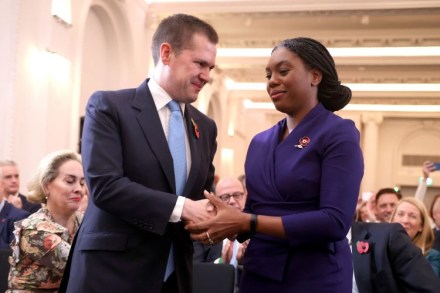
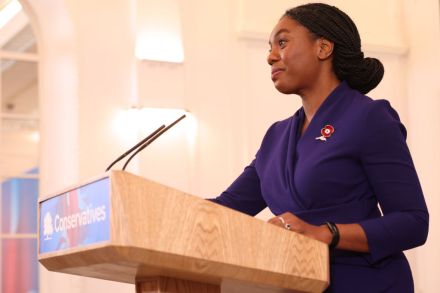
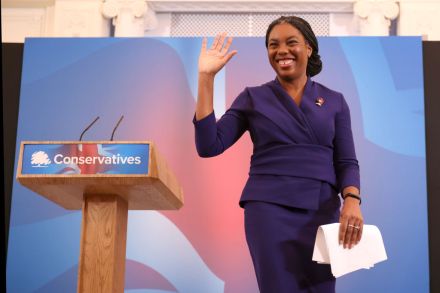
The results of the Conservative leadership contest are in. Almost four months after the Tory party suffered its worst general defeat in its history, Kemi Badenoch has been crowned as the party’s new leader. Badenoch won 53,806 votes to Robert Jenrick on 41,388 - the turnout was 72.8 per cent, down on the 2022 contest which saw a turnout of 82.2 per cent. On being announced as the victor, Badenoch gave a short speech – beginning by thanking her husband Hamish for his support, saying her candidacy would not have been possible without him. Badenoch opted to be magnanimous in victory – praising Rishi Sunak for his hard work and complimenting the runner up despite relations between Badenoch and Jenrick becoming frosty in the second half of the contest.

Can Labour save its Budget?

14 min listen

The fallout from Labour's Budget continues. On the media round this morning, Darren Jones, Chief Secretary to the Treasury, admitted that it will hit working people, and the cost of government borrowing has only risen since Rachel Reeves delivered her speech to Parliament. Katy Balls, Kate Andrews and James Heale take us through the reaction from various groups, including small business owners, farmers and the markets. Is the Budget unravelling? Also on the podcast, they look ahead to tomorrow's Tory leadership result; could low turnout make a difference? Produced by Patrick Gibbons.

Will Rachel Reeves hike taxes even higher?

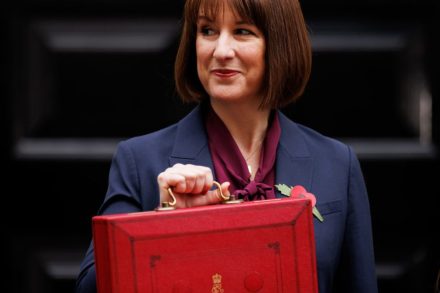
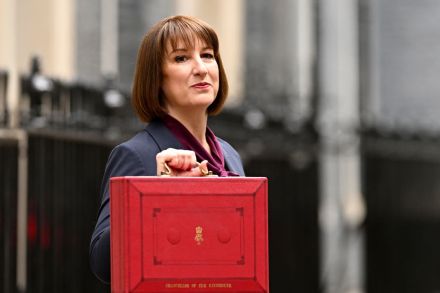
Rachel Reeves has spent the morning out on the media round trying to sell her first Budget to the public. The Chancellor woke to a critical reception from the media – with headlines including 'Halloween Horror Show', 'Nightmare on Downing Street' and 'Return of tax and spend'. Meanwhile, she is facing a backlash from the farming community, citing betrayal over the news that inheritance tax relief for farms will be limited to £1 million. When pressed, Reeves would not rule out further tax rises later down the line Speaking to the BBC's Nick Robinson, Reeves was put on the defensive as she was asked to explain why she claimed 'every Labour policy will be fully-funded and fully costed no ifs, no buts' only to then jack up taxes to the tune of £40 billion.

Labour’s new cabinet divide

There were no civil servants present when ministers gathered for their weekly cabinet meeting on Tuesday. The reason? It was time to talk politics. On the eve of Labour’s first Budget for 14 years, Keir Starmer tried to rally his ministers around a common message: blame the Tories! He spoke of the so-called fiscal black hole bequeathed to Labour before he handed things over to his Chancellor to explain why difficult decisions were required on spending, tax and welfare. Plenty of Labour MPs and aides question the wisdom of an election campaign which has boxed them in For all the attempts to unite against a common enemy, just a glance around the cabinet table was a reminder of the unease about the decisions taken this week.

Labour’s low growth Budget

15 min listen

Rachel Reeves has announced that taxes will rise by £40 billion in Labour’s first Budget for 14 years. The headlines include: an increase in employers’ National Insurance contributions from April to 15 per cent, raising £25 billion; that the freeze on income tax and National Insurance thresholds will not be extended past 2028; that the lower rate of capital gains tax will be raised from 10 per cent to 18 per cent, and the higher rate from 20 per cent to 24 per cent; that fuel duty will remain frozen for the next two years; and the introduction of VAT on private school fees from January. The Chancellor didn’t want to surprise anyone with this Budget.

Three tests for Reeves’s first Budget

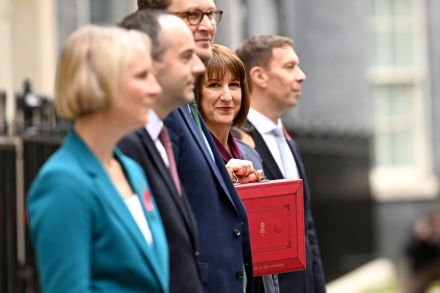
It’s Budget day in Westminster. The question being asked by Labour MPs: can Rachel Reeves pull it off? This lunchtime, the Chancellor will stand at the despatch box and pitch Labour's first Budget for 14 years as necessary tough choices to ‘fix the foundations’ while also ensuring ‘working people don’t face higher taxes in their payslips’ (see Mr Steerpike for who Labour's working people definition misses out). Reeves will use a report by the Office for Budget Responsibility to argue that the Tories left such a bad economic inheritance she had to take action. The Tories will try to argue in turn that Labour planned a tax raid (to the tune of £35 billion) all along and can be accused of breaching manifesto pledges.

Budget week: Labour braced for backlash

13 min listen

It's Budget week (finally)! How this week goes will set the tone for Labour’s first year in office. It’s fair to say that expectations are relatively low – with the Prime Minister himself warning of ‘painful decisions’ ahead. We know a lot of what will likely be included and Treasury sources are keen to play down talk of any Budget rabbits – suggesting a mix of the measures currently being discussed in the media. So what should we expect? And can Labour ride out the week unscathed? Also on the podcast, Labour have suspended the whip for Mike Amesbury, MP for Runcorn and Helsby, after he appeared to threaten a man who has been knocked onto the road in Frodsham, Cheshire. Labour look like they will be facing their first by-election.

Keir Starmer’s Budget reality check

It's Budget week in Westminster. Over three months after Keir Starmer triumphed in the general election, his Chancellor Rachel Reeves will this week set out the direction of the Labour government for the coming years in her first ever Budget. It's fair to say that expectations are relatively low – with the Prime Minister himself warning of painful decisions ahead. Meanwhile, Treasury sources are keen to play down talk of any Budget rabbits, suggesting a mix of the measures currently being discussed in the media. Starmer will be trying to offer a narrative as to why tough decisions need to be taken The one confirmed Budget measure is a change to the fiscal rules to allow Reeves to borrow more for infrastructure spending.

How did Keir Starmer end up in this reparations bind?

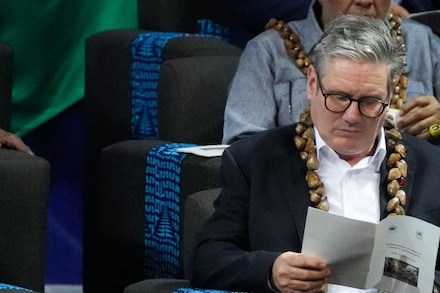
Ahead of the Commonwealth summit in Samoa, Keir Starmer told the travelling press pack that he wanted to look forward rather than have ‘very long endless discussions about reparations on the past.’ Rather than discuss the possibility of payments to Commonwealth countries to apologise for Britain’s historical role in the slave trade, Starmer wanted to talk about areas of collaboration on climate and humanitarian work. By his own metric, the Prime Minister appears to have failed. While government figures repeatedly said reparation talks were not on the table, Starmer leaves Samoa having agreed with Commonwealth countries that Britain will discuss reparations for slavery next year. Despite opposition from the UK government, the 56 Commonwealth countries pressed on.

Does Keir Starmer know what a working person is?

First, Keir Starmer struggled to define what a woman is. Now, he's having difficulty explaining what counts as a working person. Ahead of next week’s Budget, the Prime Minister has been accused of tying himself in knots over who will be expected to carry the burden in the Budget. During the general election campaign, both Starmer and his chancellor Rachel Reeves regularly said the tax burden on ‘working people’ was too high. In the manifesto, the party pledged to protect ‘working people’ from paying more. Now ahead of a tax-raising Budget (Reeves is expected to try to raise £35 billion through tax), Starmer is under pressure to explain who exactly this refers to. Those who don’t fall into the category could find their taxes going up significantly.

Labour’s ‘working people’ muddle

11 min listen

Who exactly are 'working people'? The Labour party's use of this phrase during the election raised questions over who they will really be levying taxes upon. With less than a week to go until the Budget, Labour in government is now again struggling to give a clear definition of what they mean. James Heale talks to Katy Balls and Kate Andrews. Produced by Cindy Yu.