Katy Balls

Katy Balls

Katy Balls is The Spectator’s former political editor.

Brexit talks resume despite ‘critical issues’

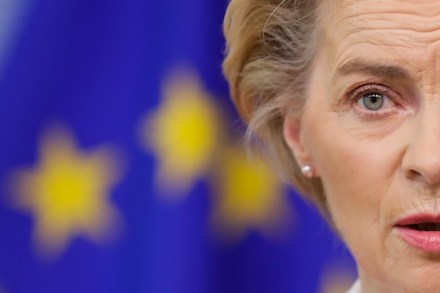
Brexit talks are back on between the UK and EU after a brief break. Both sides paused talks on Saturday due to remaining differences on level playing field rules, governance and fishing rights but the hope was that a phone conversation between Boris Johnson and European Commission president Ursula von der Leyen would help to break the deadlock. While a deal is yet to be agreed, that call has led to both sides agreeing to return to the negotiating table.
Brexit negotiations paused ahead of crunch talks

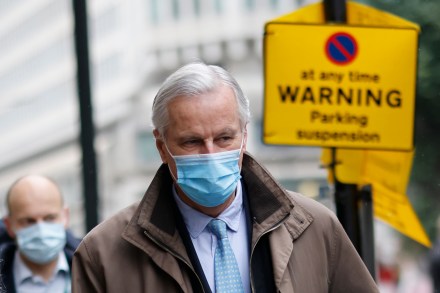
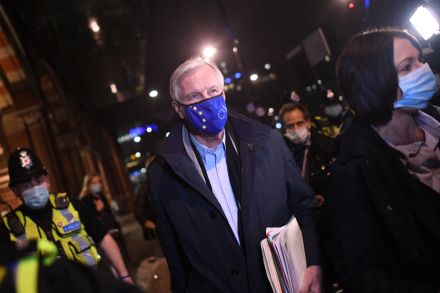
Those hoping for white smoke in the Brexit negotiations tonight will be left disappointed. After a week of intense negotiations, late-night pizza and a warning from France, the UK and EU have agreed to pause the negotiations. Announcing the decision, EU chief negotiator Michel Barnier said significant differences remained on the issues of level playing field rules, governance and fishing rights. https://twitter.com/MichelBarnier/status/1334939381854040064?ref_src=twsrc%5Etfw So, does this mean no-deal is now the more likely scenario? It’s worth stating that the talks have been paused rather than stopped. Both Barnier and Frost will brief their side on the state of the negotiations and the compromises that could be required. The talks are not over yet.

Will the French really veto a Brexit deal?

15 min listen

In the last days of the negotiations, the pressure is ramping up as reports began to surface on Thursday evening that the talks were not going as well as hoped. This morning, allies of Emmanuel Macron have warned that France could unilaterally veto a Brexit deal. What will the next days bring and could Macron really pull the plug? Cindy Yu talks to James Forsyth and Katy Balls.

Is a Brexit deal imminent?

10 min listen

The promising sign of late night negotiation pizza has caused some optimism in Westminster that a Brexit deal may be just around the corner. On the podcast, James Forsyth and Katy Balls discuss what to look out for in the coming days.

Will the vaccine rollout end Tory division?

14 min listen

The UK is the first western country in the world to approve a coronavirus vaccine, it was announced today. The first doses of Pfizer's jab will be distributed from next week, and the news has renewed hopes that restrictions could soon be lifted. But after last night's vote saw 55 Tory MPs reject the new tiered system, can the good news heal the party? Katy Balls speaks to James Forsyth and Isabel Hardman.

Pfizer vaccine approved for use in UK

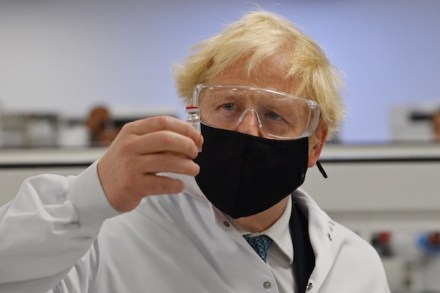
Boris Johnson may have just suffered his biggest Tory rebellion since the election but he is unlikely to be too down this morning. The Prime Minister is the receiver of some good news that could soon transform the political landscape. After positive soundings from several vaccine trials, the UK has approved the Pfizer-BioNTech coronavirus vaccine for widespread use. The UK is the first country to see its regulator approve the vaccine — which offers up to 95 per cent protection against coronavirus. The expectation in government is that jabs could start to take place within days. However, the logistics are not simple — as well as the complications of mass vaccination, the Pfizer vaccine must be stored at around -70C.

Boris Johnson suffers his biggest Tory revolt since the election

When Boris Johnson addressed MPs this evening on a Zoom call ahead of the Commons vote on his new tier system, his message to would-be rebels was simple: the unity of the Tory party is important so don't give Labour the satisfaction of seeing a disunited Conservative party.  Pointing to the light at the end of the tunnel when it comes to vaccines, he urged MPs to keep their eye on the prize – and used a car analogy to make his point. He likened the past few months of Covid restrictions to a six hour car journey, with everyone asking 'when do we get there?' But you do eventually get there, he said, so patience is needed. However, this message appears to have fallen short when it comes to convincing his party to back him.

Johnson to hold last-minute meeting with Tory rebels

What scale of Tory rebellion is Boris Johnson facing in tonight's vote? Depending who you ask, the number of likely Tory rebels ranges from anywhere between 40 and 100. The estimates on the higher end of the spectrum are being dismissed by some Tory MPs as an attempt by government figures to lower expectations so the real number appears small by comparison. However, whatever games are being played, it's clear there is growing concern in Downing Street over the scale of the rebellion. The debate this afternoon has been dominated by Tory MPs voicing their displeasure at the policy Coffee House understands that Tory MPs have been invited to an impromptu meeting with the chief whip Mark Spencer and the Prime Minister at 6 p.m. this evening — ahead of the vote.

Has Boris Johnson’s optimism backfired?

11 min listen

The government looks set to win today's Commons vote on the return of the tiers system for England, but tens of Tory backbenchers are unhappy. For them, the Prime Minister's reassurances have lost credibility, so on today's podcast, Isabel Hardman discusses with Katy Balls and James Forsyth whether or not Boris's optimism has backfired.

Labour to abstain in vote on Covid tiers

Boris Johnson is the receiver of good news and bad news this evening. He is on course to win Commons approval for his new tier system when it's put to a vote on Tuesday. However, it will likely be down to support from Labour. While a Tory revolt is brewing, Sir Keir Starmer has announced that his party will abstain in the vote — meaning even a sizeable rebellion on the Tory benches won't be enough to stop it passing.  Explaining his decision, Starmer said his party would not vote against the restrictions on the grounds that Labour will 'always act in the national interest'. His reason for not voting for the restrictions? The lack of a 'credible health and economic plan in place'.

Is a no-deal Brexit underpriced?

20 min listen

Brexit negotiations are continuing this week, with fisheries and the level playing field remaining key sticking points. But with the deadline for an agreement edging closer, is no-deal more likely than anticipated? Katy Balls speaks to Fraser Nelson and James Forsyth.

Is a no-deal Brexit underpriced?

As the Brexit talks enter what is expected to be the last full week of substantive negotiations, opposition leaders are blasting the government for the lack of progress while No. 10 has issued a warning that no deal is 'arguably underpriced'. So, is this more fighting talk for the purpose of the negotiations or is no deal now a likely prospect? Given that Boris Johnson agreed a deal at the last minute in the first stage of Brexit talks on the withdrawal agreement, the working assumption among many Tory MPs for some time has been that the same will occur this time around.

Are the Lib Dems too soggy?

17 min listen

In this week's Spectator, Matthew Parris asks why the Lib Dems have lost their ideological backbone. On the podcast, he discusses this 'soggification' of the party with Katy Balls and Polly Mackenzie, former special adviser to Nick Clegg and now chief executive of the think tank Demos.

Can the government appease disgruntled Tory MPs?

14 min listen

The return to the tier system will be voted on in the Commons next week, but from the grumblings in the Conservative party, it sounds like the government may need Opposition votes in order to get the legislation through. That's never a comfortable position for a government, so on the podcast, Katy Balls discusses with James Forsyth and Fraser Nelson what the government needs to do in order to appease its backbenchers.

The Gillian Keegan Edition

41 min listen

Gillian Keegan is the minister for apprenticeships and skills, and Conservative MP for Chichester. She previously worked at Natwest, Mastercard, Travelport and Amadeus. On the podcast, she tells Katy about growing up in a Labour stronghold, working in a car factory, pitching to be apprenticeships minister, and having her social life ruined by a friend's advice to have a perm.

Tory MPs see red over the new tiers

Boris Johnson began the week with an optimistic message of an end to the English lockdown and hopes of a vaccine breakthrough to rid us of coronavirus restrictions altogether. However, until then his revised three-tier system is becoming a major cause of frustration for Tory MPs. The three tiers have been bulked up from their pre-lockdown incarnation. While gyms and hairdressers now can remain open under any tier, socialising is stricter than before. The level of disquiet means No. 10 will likely have to offer more to backbenchers However, the point of contention among Tory MPs is which areas are under which tier. The hope among many in the parliamentary party was that a four-week lockdown would allow a significant relaxation of restrictions in its aftermath.

Will Tory MPs rebel over the Tier system?

15 min listen

England's tier system returns today. With some areas in a stricter tier than they were before the lockdown, as well as a general mistrust amongst Tory lockdown sceptics for the government, many MPs are not happy. But is there anything they can do about it? Katy Balls and James Forsyth discuss.

Meet Boris Johnson’s new chief of staff

Boris Johnson's search for a chief of staff to bring order to 10 Downing Street has proved so difficult that earlier this month civil war erupted in No. 10 after he offered the role to his longstanding director of communications Lee Cain. In the face of a backlash from figures including the Prime Minister's partner Carrie Symonds and new press spokesperson Allegra Stratton, Cain ended up handing in his resignation — Dominic Cummings followed him out the door — and the search for a chief of staff continued.  Now Johnson has made his pick. Dan Rosenfield is the Prime Minister's new chief of staff, beginning work in Downing Street next month before officially taking on the role in the new year.

Why is Rishi Sunak going back on a manifesto pledge?

20 min listen

Pandemic finances are different to normal finances, as seen by today's new figures from the OBR which show that the UK's economy will not be back to pre-pandemic levels until 2022. In today's spending review, the Chancellor broke a manifesto pledge by cutting the overseas aid budget. Is this a taste of things to come? Katy Balls speaks to Kate Andrews and James Forsyth.