Katy Balls

Katy Balls

Katy Balls is The Spectator’s former political editor.

Can Labour win back trust on the economy?

What's the Labour party's biggest weakness at the ballot box? After the last election, Brexit and Corbyn were credited by Tory MPs with helping them win the biggest Conservative majority since Margaret Thatcher. But now the UK is out of the EU and Keir Starmer in charge, there's an argument that it's now the economy that is their biggest weakness.  A YouGov poll over the summer found that while Starmer's personal approval ratings are promising, only 19 per cent of voters believe that Labour to be best at handling the economy, compared with 37 per cent who say the Tories are. Given that six in ten voters view the economy as their biggest priority, that's not an encouraging sign for Labour.

Is Marcus Rashford a more effective opposition leader than Starmer?

13 min listen

Gavin Williamson, the education secretary, has said today that a national voucher scheme for free school meals would return on Monday, after pictures of the food packages being given to children were widely circulated online. Footballer Marcus Rashford said the Prime Minister promised 'that he is committed to correcting the issue'. Katy Balls speaks to James Forsyth and Isabel Hardman.

No. 10’s approach to new restrictions

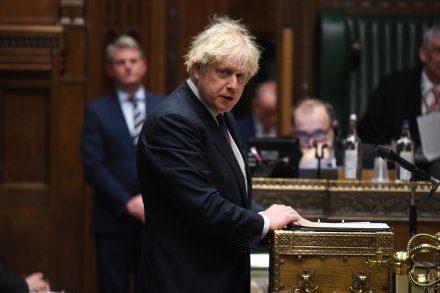
Cappuccino lovers beware. As ministers pressure Boris Johnson to consider tightening up the current lockdown, tougher messaging are emerging as the more likely option. Although Keir Starmer used the first Prime Minister's Questions of 2021 to try and get on the front foot arguing that it was clear that tougher restrictions than the ones currently on offer were required — asking why, if the infection rate was higher than in March, the restrictions to tackle it were looser – Johnson responded by going on the attack. He replied that if Starmer had had his way the country would have been in a 12 month continuous lockdown. Johnson said that he would not — and had not — ruled out tighter rules.

Priti Patel’s enforcement warning

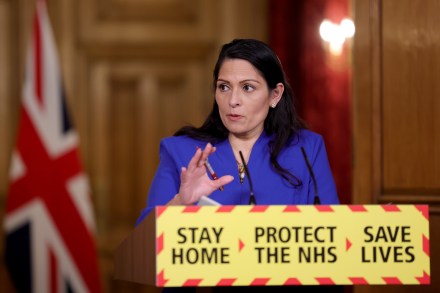
As the government's 'enforcement week' rumbles on, Priti Patel addressed the nation on Tuesday evening over the need for the public to play by the rules. While the Home Secretary was keen to praise the vast majority of people who have followed the lockdown rules so far, she said a minority were 'putting the health of the nation at risk' by flouting the restrictions.  With the daily death toll at 1,243 (the number of people who have died within 28 days of a positive coronavirus test in the UK), Patel stressed that the pandemic was at a very dangerous point and everyone would need to play their part — whether voluntarily or not.

Do Covid rules need to be clearer?

11 min listen

Boris Johnson has been criticised for taking a bike ride in the Olympic Park, seven miles away from Downing Street. Should the government make the Covid rules clearer? Isabel Hardman speaks to James Forsyth and Katy Balls.

Has lockdown fatigue set in?

13 min listen

Chris Whitty said that hospitals will face 'the worst weeks of this pandemic' in a broadcast round this morning, as he implored Brits to keep social contact 'to an absolute minimum'. It comes as the government is considering even stricter restrictions to improve compliance. Katy Balls speaks to Isabel Hardman and James Forsyth.

The next Tory debate is on post-vaccine restrictions

When the third national lockdown came to a vote in parliament last week, only 12 Conservative MPs voted against the measures. This was a far cry from the second lockdown – which saw a rebellion of over 50 – and the mood at that time. Back in November, members of the Covid Recovery Group – made up of Tory MPs sceptical of tighter restrictions – were warning that a third lockdown would see a rebellion in the three-figure mark. So, what's changed? Speak to former lockdown rebels and it's a mix of factors that has provoked a rethink. The approval of several vaccines means that there is now a reasonable argument to be made that this will be the last national lockdown rather than one in a never-ending cycle. Second, the data.

Is Nigel Farage’s new party about to make waves?

17 min listen

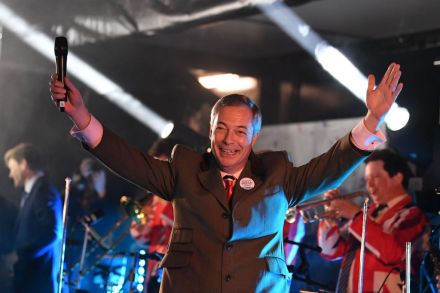
Brexit is done, but Nigel Farage may well remain an influential force in British politics. With his rebranding of the Brexit Party to 'Reform UK' approved this week, Katy Balls talks to James Forsyth and Patrick O'Flynn, former Ukip MEP, about whether or not Sinoscepticism and lockdown-scepticism are enough for Farage to build a new movement.

Covid sparks a major incident in London

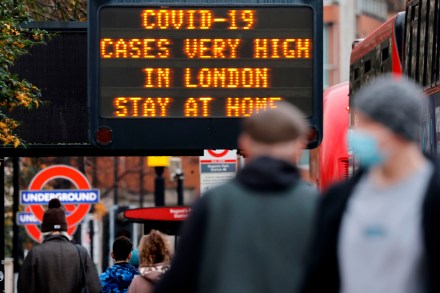
Is the NHS at risk of being overwhelmed? That's a question of increasing concern in Westminster as hospital admissions rise. Sadiq Khan has today declared a 'major incident' in London — calling the situation 'critical' with the spread of the virus 'out of control'.  With the coronavirus infection rate in London now exceeding 1,000 per 100,000 people, Khan said that the London Ambulance Service was currently taking up to 8,000 emergency calls a day (compared to 5,500 typical for a busy day). It comes as the reported daily death toll on Thursday — 1,162 — reached the highest recorded since April. There’s little, too, to suggest things are about to improve anytime soon.

Could an overwhelmed NHS stall the vaccine rollout?

13 min listen

Simon Stevens, NHS chief executive, said yesterday that 800 new patients are admitted to London hospitals with Covid-19 every day. Could pressure on the health service force them to delay the vaccine distribution? Katy Balls speaks to Fraser Nelson and James Forsyth.

The Christina Lamb Edition

55 min listen

Christina Lamb is an award-winning journalist who has reported on conflicts and politics across the world for more than three decades. Her latest book is Our Bodies, Their Battlefields, highlighting especially the treatment of women in war.

A race against time: can the vaccine outpace the virus?

34 min listen

Coronavirus vaccines are now being distributed across the world, but what are the challenges posed by its delivery? (01:30) Is Boris Johnson the SNP's greatest weapon? (13:55) And is Prince Harry becoming more and more like his mother? (23:35)With financial columnist Matthew Lynn; former director at the McKinsey Global Institute Richard Dobbs; the UK's former director of immunisation David Salisbury; The Spectator's deputy political editor Katy Balls; The Spectator's Scotland editor Alex Massie; journalist Melanie McDonagh; and royal biographer Angela Levin.Presented by Lara Prendergast.Produced by Max Jeffery, Alexa Rendell, Sam Russell and Matt Taylor.

How should the government handle Trump?

13 min listen

Last night's events in Washington DC has sent shockwaves around the world. Trump's obvious disregard for democracy was on show, leading to a normally diplomatic British government to condemn the President in strong language. Cindy Yu talks to Katy Balls and James Forsyth about how the government sees its past and future relationship with Trump and Trumpism.

Boris Johnson’s Scotland problem

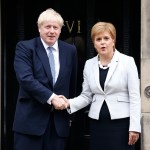
A few months ago, Tory aides spotted a suspicious pattern. If they agreed on a new Covid policy to be announced in a week, Keir Starmer would get wind of it and demand it was implemented immediately. In No. 10, two conclusions were drawn: that they had a mole (perhaps on Sage) and that the Labour party’s policy was to try to look prescient. The conclusion? Ignore it. In such times, they reasoned, no one cares about Westminster games. But it’s a different matter when it comes to being upstaged by Nicola Sturgeon. To many Tories, she is the real opposition leader these days. If Boris Johnson’s premiership collapses — despite delivering Brexit and even if he sees off Covid — it will likely be due to her.

MPs overwhelmingly back third Covid lockdown

Boris Johnson's decision to impose a third national lockdown in England has won approval in the Commons by an overwhelming majority – with 524 MPs voting for the measures to just 16 against. It comes after only a handful of Tory MPs suggested they would oppose the lockdown measures in the debate on the issue today. This means that the new national lockdown will be in place for at least seven weeks – with many MPs expecting it to roll on longer. However, while the legislation allows for the lockdown to remain in place until the end of March, Johnson has signalled to MPs that he will return to the Commons for a vote if that is deemed necessary by the government.

How many vaccinations are needed to end lockdown?

12 min listen

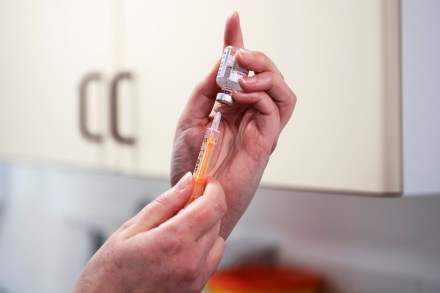
The government has announced that 23 per cent of over 80s in England have now received their first dose of the Covid vaccine. With Boris Johnson and Matt Hancock aiming to give 13.5 million people the jab before the middle of February, will that be enough to end lockdown restrictions? Cindy Yu speaks to Katy Balls and James Forsyth.

Inside Boris Johnson’s Zoom Q&A with Tory MPs

After Boris Johnson used a statement to the nation on Monday evening to announce a third national lockdown, ministers made plans to recall parliament for a Wednesday sitting to debate the measures. But before Johnson faces the music in the Chamber, the Prime Minister addressed his own MPs in a 45-minute meeting of the 1922 committee via Zoom.  In his opening statement, Johnson tried to explain to his party why he felt he had no choice but to resort to a national lockdown – stating that 2 per cent of the population now have Covid. He said the aim of the vaccination programme was to create 'a force field of immunity'. He went on, however, to attempt to paint a more optimistic picture at least in the medium term.

Why are the UK’s borders still open?

11 min listen

Following the announcement of a third lockdown, a testing regime for arrivals could be put in place. It comes as Michael Gove said there would be announcements in the coming days about 'how we will make sure that our ports and airports are safe', and Nicola Sturgeon said 'urgent' discussions were underway. Isabel Hardman talks to Katy Balls and James Forsyth.

Michael Gove suggests lockdown could continue until March

When Boris Johnson addressed the nation on Monday evening, he was keen to offer a glimmer of hope as he announced a seven-week lockdown. The Prime Minister said that the lockdown would be reviewed in the week commencing 15 February – with a hope of sending pupils back to school after the February half term. This is the date by which Johnson aims to have vaccinated 13.2 million people, making up the most vulnerable and elderly. However, anyone thinking about making firm plans for the following week may need to think again. As has become a trend in this pandemic, Michael Gove has embarked on a morning round in which he has painted a more pessimistic picture.

Lockdown returns: what the new rules mean

11 min listen

This evening the Prime Minister announced a return to the lockdown system for England, coming after Nicola Sturgeon announced similar measures earlier in the day. Katy Balls talks to James Forsyth and Isabel Hardman about what the measures mean for students, vulnerable groups and more.