Katja Hoyer

Katja Hoyer

Katja Hoyer is an Anglo-German historian. Her latest book is Beyond the Wall: East Germany, 1949-1990.

German voters set for a tense night

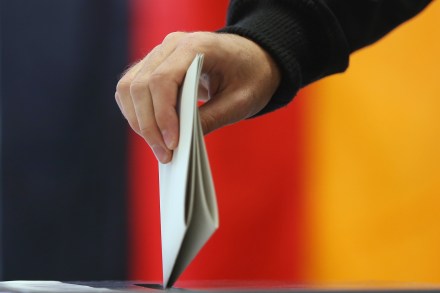
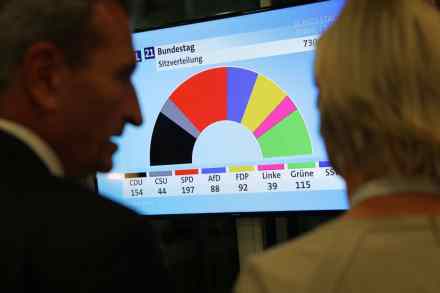
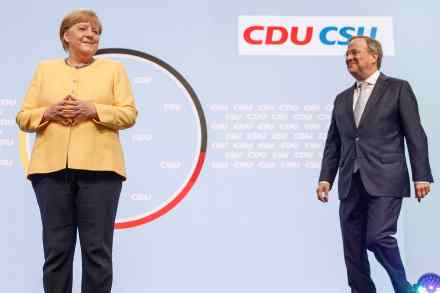
The German elections have turned out to be an unexpected nail-biter. Since the exit polls were released earlier this evening the result has been too close to call. Angela Merkel’s CDU/CSU and their coalition partners, the SPD, are both predicted to have received 25 per cent of the vote each, which means it will remain unclear throughout the evening who has won as the votes continue to be counted. Despite the close result, the mood in the Christian Democratic camp is subdued. Angela Merkel’s would-be successor Armin Laschet has received the worst result his party has achieved in its history. The exit polls showed that 1.4 million of their voters switched to the Social Democrats this time and a further 900,000 migrated to the Green Party.
The sad circus of the German election

The German election campaign has been entirely lacking in substance. Laschet, Baerbock, Scholz: none seem to grip the public’s attention. None are good enough to stand out, yet none are bad enough to drop out as the media and the opposition struggle to land definitive blows. Amid the monotony of political circus and sclerosis, the German press’s tactics are becoming increasingly outlandish, as two 11-year-old children asking questions about land requisition processes on television showed. A particular segment on the talk show Late Night Berlin is responsible: the idea is that children ask politicians questions.

Could a left-wing coalition end up running Germany?

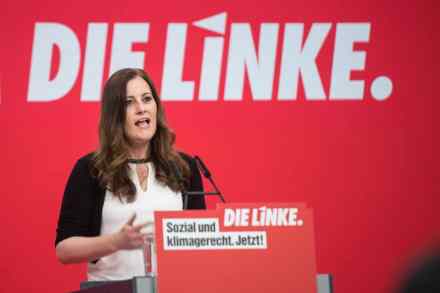
A spectre is haunting Germany — the spectre of the left. As Merkel’s Christian Democrats fall further behind in the closing weeks of the federal elections, there is now a real possibility of a left-wing coalition forming that might include the far-left party Die Linke. ‘They will never commit to Nato,’ barked Armin Laschet, leader of Merkel’s CDU and her would-be successor in a televised debate with his rivals last Sunday. He demanded to know if Olaf Scholz, chancellor candidate for the social democratic SPD, and the Greens’ Annalena Baerbock would rule out a coalition with Die Linke. Neither did.

The Prince of Prussia’s Nazi problem

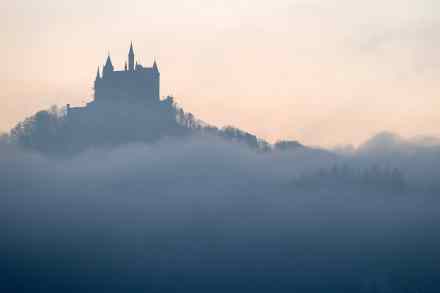
Perched on a mountain top overlooking the Swabian Alps, Hohenzollern Castle, with its picturesque towers, seems like something out of a fairytale. It is a relic from a bygone era. When the proud owner is at home, his flag waves defiantly in the wind, but it bears the colours of a kingdom that no longer exists: the black-and-white of Prussia. Georg Friedrich, Prince of Prussia, is the current head of the House of Hohenzollern. It is strange to look at the smiling businessman in the tailored suits and think of him as a Kaiser. But the 45-year-old father of four would be exactly that had the German monarchy not fallen. His dynasty can trace its roots back to the 11th century.

Germany is facing political stagnation

Jamaica, Germany, Kenya or traffic lights? The names of the potential German coalitions — and their corresponding party colours — can be quite exotic. But as the vote has begun to split in the run up to the federal elections next month, the possible combinations that will make up Germany’s government have grown. The race is still wide open. Coalitions were purposefully built into Germany’s post-war democracy — the voting system mixes first-past-the-post with proportional representation to ensure a workable splintering. With one notable exception in 1957, no political party has received the votes of over half of the electorate outright. It usually falls to the party with the most votes to find a coalition partner to form a majority government.

The German Greens can’t make up their mind on Afghanistan

The situation in Afghanistan has suddenly dominated the debate in the middle of a sluggish German election campaign. Candidates to succeed Angela Merkel are having to declare their positions. Military intervention is out of the question without US backing. The question then becomes a repeat of the Syrian crisis: will Germany once again open its doors to potentially hundreds of thousands of refugees and migrants? It’s an unequivocal ‘nein’ from the government. ‘There will not be another 2015’ came the strong response from the ruling coalition of Angela Merkel’s CDU/CSU and the SPD. The Green party, currently in opposition but the second strongest party in most polls, are fudging the issue.

Hungary, Poland and the EU’s ‘diversity’ problem

It is quite something when the self-proclaimed ‘illiberal’ prime minister of Hungary, Viktor Orbán, reminds Brussels of its liberal principles. As part of the ongoing row over a Hungarian law which bans the ‘depiction or promotion’ of homosexuality and gender reassignment, Orbán has argued that: ‘If we want to keep the European Union together, liberals must respect the rights of non-liberals. Unity in diversity.’ ‘Unity in diversity’ has been the official motto of the European Union for over 20 years. The idea that the continent can unite in a common political and economic framework without losing the diversity of its constituent nations underpins the very idea of a democratic union of states.

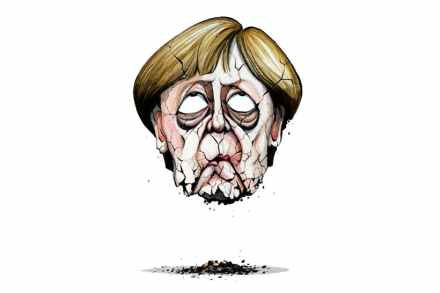
How will Merkel cope with retirement?

Retirement sounds pretty nice. The ONS says that pensioners spend an average of seven hours and ten minutes a day on leisure activities. Over seven hours. That’s a lot of time for nice things. Yet the prospect of retirement can bring a certain dread. According to a YouGov survey, only around half of people about to retire look forward to it. The reality of having nothing to do is as terrifying as it is thrilling. So how do you feel when you have not held any old job, but one that kept you busy 24/7, one that let you meet hundreds of people every day and one that gave you an enormous sense of purpose? Angela Merkel faces that prospect. She has been the German chancellor for 16 years. No time for hobbies, no time for idle thoughts, no time for herself.

The uninspiring choice facing German voters

The gloves are off in Germany’s electoral race. As personal insults are traded and skeletons dragged from their closets, even the German president — a figurehead who normally stays above politics — has urged all parties not to let the campaign descend into ‘mud-slinging’. In a rare political intervention, Frank-Walter Steinmeier warned that ‘measure and reason’ were preconditions of a functioning democracy. What had happened to cause the head of state such concern? The German Green party has long complained that their leader Annalena Baerbock is being subjected to a sexist smear campaign.

What’s the problem with Gareth Southgate’s ‘war talk’?

War analogies are a cherished football tradition. From chants of ‘Stand up if you won the war’ to the Daily Mirror’s infamous 1996 headline ‘Achtung! Surrender - For you Fritz, ze Euro 96 Championship is over!’ But the Euro 2020 tournament has been marked by restraint from the British tabloid media. It’s as if someone had told them not to mention the war. Unperturbed by the comparative quiet on the war-theme front this year, Gareth Southgate has gone out guns blazing in an interview with the Telegraph.

What Merkel’s visit means for Brexit Britain

Angela Merkel visited the UK yesterday for the last time as German chancellor – the 22nd visit she has paid in her 16 years at the helm of German politics. Such an auspicious occasion however did not stop Boris Johnson from starting their joint press statement with a humorous jibe. A wry smile on his face, he told Merkel: ‘it was certainly a tradition, Angela, for England to lose to Germany in international football tournaments and I’m obviously grateful to you for breaking with that tradition, just for once.’ Good-natured, football-themed exchanges between the two nations were also in play elsewhere.

The politics of Germany’s Stasi archives

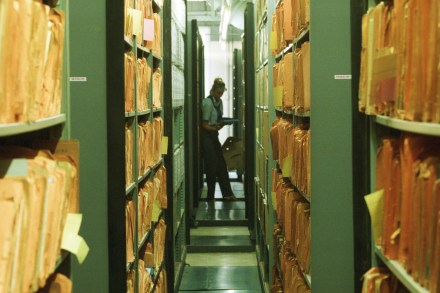
‘Oh please… not the letters I sent to my mum,’ sighed the East German pastor Gernot Friedrich as he randomly pulled pages out of the 3,000-page file. Since January 1992, Germany has attempted a unique experiment in addressing its own past: anyone can request to view their Stasi file. Founded in 1950 as the Socialist party’s ‘sword and shield’, the Ministry for State Security, better known as the Stasi, spent its 40-year existence gathering information about real and imagined political opponents. It created one of the most comprehensive police states in the world, dwarfing even the Nazi’s infamous Gestapo. Where the latter operated at around one officer to 10,000 citizens, at its peak the Stasi had one officer to every 180 East Germans.

Why the far-right flourishes in East Germany

A spectre is haunting Germany — the spectre of the AfD. Having come to prominence on a wave of anti-migrant sentiment, most German commentators believed that the Alternative für Deutschland was now a spent force. The party had been able to attract centre-right voters following the 2015 migrant crisis, many of whom may not have agreed with its entire manifesto but sought a political outlet for their scepticism of Merkel’s handling of the crisis. But last year, its national polling dropped to just over half the level of support it enjoyed in late 2018. The pandemic has brought to the surface many of the AfD’s most extreme members and activists, including anti-vaxxers and conspiracy theorists. This seemed to have made them unelectable — or so we were told.

The German Greens are floundering

Cracks are beginning to appear in the shiny veneer of the German Green’s professionalism, a feature that was supposed to mark out the insurgent centrist party and contrast them against the spluttering greyness of the outgoing Merkel regime. If indeed the Greens are to win a quarter of votes in September’s German elections— as their most favourable polls suggest — that would mean a tripling of their vote share compared to 2017. Given the jump in the scale of the party’s ambition, one may be forgiven for expecting a corresponding increase in competence. But so far, the Greens’ campaign has been amateurish to say the least.

Germany’s Belarus blindspot

Everything about the video seemed wrong. ‘It's likely his nose is broken because the shape of it has changed and there's a lot of powder on it. All of the left side of his face has powder,’ said the father of Belarusian journalist Roman Protasevich. The details of the story are now known: the exiled activist’s plane was diverted while en route between two EU capitals. The Ryanair flight was grounded, the pilot having been fed false reports of a bomb threat while a Soviet-era jet stalked the plane. Protasevich and his girlfriend were then removed by Belarusian forces and the flight was sent on its way.  https://twitter.com/mediazona_by/status/1396898057858555909?

Germany’s growing extremism problem

On 2 June 2019, a German politician was found lying in a pool of blood outside his home in Hesse. He had been shot in the head at close range with a .38 Rossi revolver. Walter Lübcke, the 65-year-old leader of Kassel city council, who had been a vocal supporter of Germany's immigration policy, had been assassinated by a German member of the British neo-Nazi group Combat 18. On Tuesday, his killer was sentenced to life in prison. Lübcke’s murder is the most extreme example of Germany’s increasingly alarming relationship with immigration, anti-Semitism, and fanatical politics.

Britain’s golden diplomatic opportunity

‘The world’s changed quite a bit,’ was Domic Raab’s fitting, if somewhat understated, opening remark at the G7 meeting of foreign secretaries this week. The first in-person meeting of the alliance in two years saw masked dignitaries, elbow bumps and distanced discussions behind plexiglass screens. But two members of the Indian delegation still ended up testing positive for Covid. Beyond the immediate challenges of the current crisis, Raab’s words seemed prescient. Quite a bit has changed since the G7 last met in France in 2019. Britain has left the EU and is no longer paralysed by parliamentary deadlock. President Biden has replaced Donald Trump in the White House.

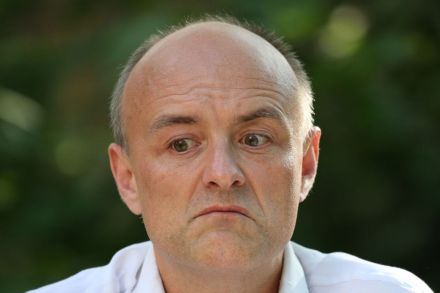
Dominic Cummings’s Bismarck complex

‘One’s enemies one can count on — but one’s friends!’ Otto von Bismarck quotes have mostly gone out of fashion since the middle of the last century. But perhaps not as far as Dominic Cummings is concerned.  Cummings describes Germany’s first chancellor — and the man responsible for the country’s unification in 1871 — as a ‘monster’. He says in his 2017 blog that ‘the world would have been better if one of the assassination attempts had succeeded’. But it is clear that Cummings seeks inspiration from the Iron Chancellor for his own political doings.

Jonathan Dimbleby, Katja Hoyer and Melissa Kite

17 min listen

On this week's episode, broadcaster Jonathan Dimbleby reads his diary (00:55), journalist Katja Hoyer reports on the German Greens and their poll surge (06:25) and Melissa Kite on why she's perfectly happy to stay in the country this summer (12:05).

Is Germany about to go Green?

Angela Merkel never quite managed to appoint a successor. Her 16 years at the helm of Europe’s largest democracy has seen every potential challenger either annihilated or neutered. For all her motherly charms, Mutti Merkel is a merciless political operator. The Christian Democratic Union and its Bavarian sister, the Christian Social Union, seem to have settled on a political incompetent to lead them into September’s federal elections. Armin Laschet is, at least for now, set to become the bland, monotone heir to Merkelism — the result of a stitch-up that may yet unravel. Pandemic-stricken Germans are growing tired of the CDU: roughly a quarter of its voters have melted away since the start of the year. Meanwhile, the country’s Green party is surging.