Katja Hoyer

Katja Hoyer

Katja Hoyer is an Anglo-German historian. Her latest book is Beyond the Wall: East Germany, 1949-1990.

‘The truth will make us free’: students on the march in post-war Europe

One night in early autumn 1982, two young men roamed the streets of Lodz in Poland. It was a dark period in the country’s history – one of many. A mass movement led by the Solidarnosc trade union had recently attempted to challenge the communist regime which had kept the country under a heavy Soviet yoke, with little to offer but food shortages, economic decline and the erosion of national identity. The authorities had responded with force to the widespread strikes, declaring martial law in December 1981 and rolling tanks into cities. Protests were silenced with guns. Thousands were arrested and dozens killed. When Waldemar Fydrych and Piotr Adamcio wandered through Lodz months later, the streets were eerily quiet.

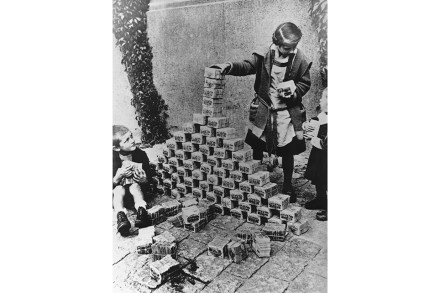
Why did the Weimar Republic descend so rapidly into chaos?

‘Thirteen wasted years’ bellowed Adolf Hitler at receptive audiences in the spring of 1932. He was talking about the first full German democracy, the Weimar Republic. Proclaimed in November 1918, it was born out of a desire to do things better after the horrors of the first world war and was an ambitious attempt to establish one of the most progressive states in history. ‘Democratic chaos,’ sneered Hitler, ‘unmitigated political and economic chaos.’ Much of the electorate agreed. Less than a year later, Hitler became chancellor and immediately set about fulfilling his electoral promise to destroy democracy. The short and tumultuous story of the Weimar Republic continues to fascinate.

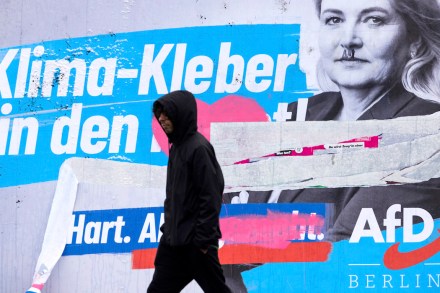
Germany shouldn’t ban the AfD

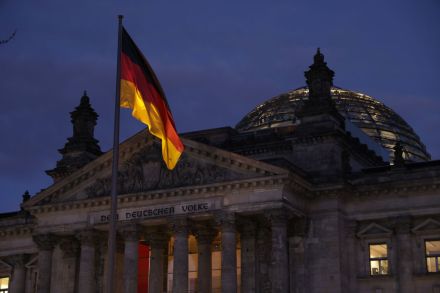
There are few countries in the world more conscious of the fragility of democracy than Germany. After the horrors of Nazism, the country vowed never again and, in August 1948, a constitution was drafted for West Germany that was designed to build a stable democracy and defend it. 75 years later, the same legal framework continues to uphold the same values, but the challenges mounted by increasing fanaticism are keenly felt. The temptation to use the constitution’s own heavy-handed tools to defend democracy is great, but politicians must resist it.

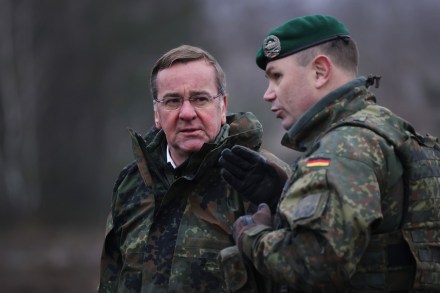
The unlikely rise of Germany’s defence minister

An unlikely political star has risen in Germany. Boris Pistorius, a 63-year-old father of two is a career politician and, as of January, defence minister, an office that has proved a dead end for many of his predecessors. On the face of it, Germany’s Boris has little by way of stardust. Yet he is the country’s most popular politician by a country mile and his department is set to increase its budget at a time when overall government spending is being sharply cut. It seems for the first time in decades, Germany is serious about security and defence – but how long will that seriousness last?

What explains the remarkable rise of Germany’s AfD?

A common stereotype about Germans is that they love to complain – and there is certainly a kernel of truth to that. Grumbling is part and parcel of everyday German life, often with complete strangers. But on my recent trips to Germany, I felt that general expressions of dissatisfaction have acquired a new sharpness. Whole communities seem angry and disillusioned with the status quo.   More and more Germans seem to have turned their backs on mainstream politics. According to a survey released last week, the ruling coalition of Social Democrats (SPD), Greens and Liberals (FDP) would now only accrue 38 per cent of the vote.

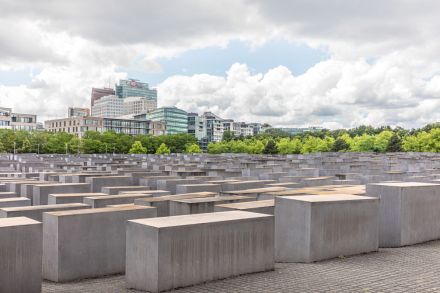
Has Germany truly come to terms with its Nazi past?

Germany is often lauded for the way it confronts its own past. The Holocaust, the murder of six million Jewish men, women and children, has a central place in collective memory as well as in the memorial landscape of the capital Berlin, where a 200,000 sq ft site is dedicated to it. But campaigners and historians have long argued that the Nazis’ murder of an estimated 275,000 people suffering from mental illness and disabilities has received far less public attention. Now one of the last physical traces of this crime is to be destroyed, causing a new row over how modern Germany should deal with its past.

Katja Hoyer: Beyond The Wall

50 min listen

In this week's Book Club podcast, my guest is the historian Katja Hoyer, whose new book Beyond The Wall: East Germany 1949-1990 tells the story of four decades which are vital to understanding modern Germany, but which tend to be quietly relegated to a footnote in history. Born in the GDR herself, Katja tells me how much more there is to the East German state than the Berlin Wall, the Stasi, and the grey totalitarian dystopia of popular imagination. She tells me about Erich Honecker's wild side, about the importance of coffee to East German morale, and about how inevitable or otherwise were the historical forces that saw Germany first divided, and then reunited.

The Prince of Prussia’s legal fight brings painful memories back for Germany

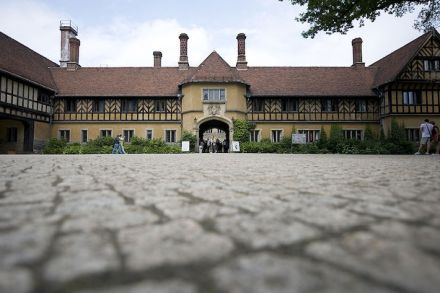
Georg Friedrich Prince of Prussia has two big problems: he is the great-great-grandson and heir of Wilhelm II, Germany’s last emperor who was forced to abdicate after his country’s disastrous defeat in the First World War. For another, he is Prince of a country that hasn't existed since 1947, when the victorious Allies abolished Prussia. As if that wasn’t enough historical baggage, the head of the House of Hohenzollern has been embroiled in a long legal fight over his family’s role in Hitler’s rise. Now the Prince has announced a tactical withdrawal from this particular battle over his family’s legacy, one that he hopes will 'clear the path for an open-minded debate.

How does the EU solve a problem like Qatar?

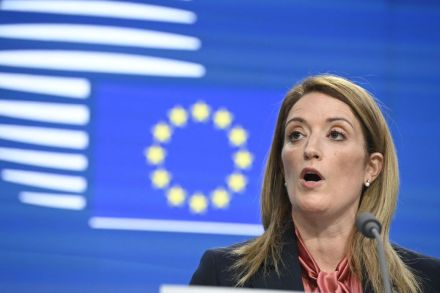
Can the EU afford to snub Qatar? The corruption scandal engulfing the European Parliament centres around allegations that the Gulf state gave bribes in exchange for influence and favour at the European Parliament. But if the EU cleans up this problem by distancing itself from Qatar, it might have a serious, potentially even larger, dilemma on its hands. The war in Ukraine, sky-high inflation, the energy crisis and internal divisions have already shaken the very foundations of the EU. With four suspects, including Eva Kaili, a vice president of the European Parliament, now being held on charges of corruption and money laundering, what has been dubbed ‘Qatargate’ may push the EU over the brink. Even if it wanted to, can it clean up its own act?

Germany’s failed coup shows the danger of conspiracy theories

It was one of the biggest police raids modern Germany has ever seen. Early Wednesday morning, 3,000 officers, among them members of special units sent by both state and federal police forces, searched 130 properties in 11 of 16 states. They arrested 25 people on suspicion of being members or supporters of a terrorist organisation plotting to overthrow the government. It’s the latest indication that Germany’s political underbelly contains a worrying element of extremists who are ready to act on their conspiracy theories. The group is allegedly known as the ‘Patriotic Union’ with an inner circle known as the ‘Council’.

Mark Galeotti, Katja Hoyer and Tanya Gold

19 min listen

This week: Mark Galeotti tells us why Ukraine has become a weapons testing ground (00:53), Katja Hoyer discusses Germany’s extreme monarchists (09:12), and Tanya Gold reads her Notes on … espressos (15:24).  Produced and presented by Oscar Edmondson.

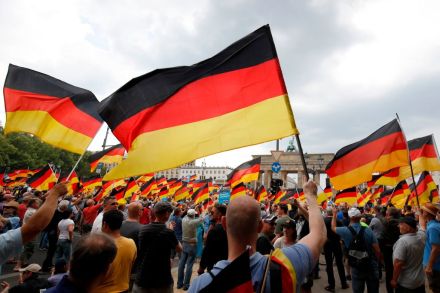
The march of Germany’s extreme monarchists

The far right in Germany isn’t all angry young men with shaved heads, baseball bats and black boots. There are those who appear respectable, even intellectual. The Reichsbürger movement includes accountants, teachers and academics; many members are middle-aged. It’s a fractured network with vastly diverging world views, united in their belief that the current government is illegitimate.   The Reichsbürgers claim that the German empire was not legally abolished when it collapsed at the end of the first world war and that it therefore continues to exist. To them, the so-called November Revolution of 1918, in which Kaiser Wilhelm II was forced to abdicate, ending the German monarchy, was a coup without legal basis.

How the Queen helped to fix Germany

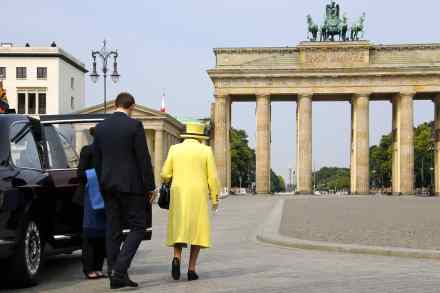
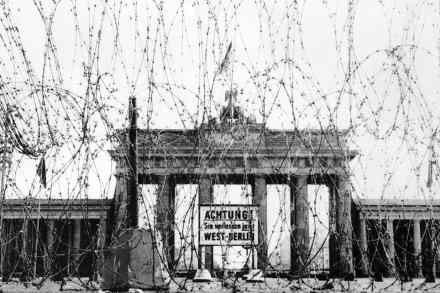
The Brandenburg Gate has often reflected the state of the German nation. Throughout the centuries, Berlin’s iconic landmark has been a symbol of victory, defeat, unity, division and restoration. It has even reflected Germany’s energy crisis, no longer lit in order to save electricity. But on Friday night it shone brightly once more: in red, white and blue as Germany mourns the death of Queen Elizabeth II. This is much more than a gesture of condolence. ‘Expressing our sympathy and our mourning by lighting the symbol of our city and our country in the colours of the Union Jack to honour Queen Elizabeth II fully represents the sentiments of people in Berlin,’ said mayor Franziska Giffey.

Olaf Scholz needs to deal with the Putin appeasers in his party

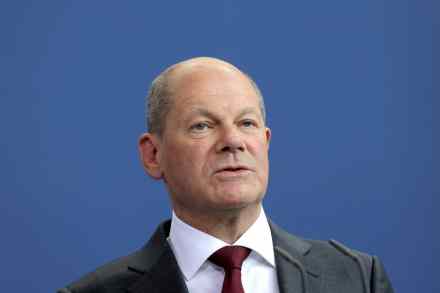
'The weapons have to fall silent,’ the left wing of Germany’s ruling Social Democratic party suggested this week, in their latest public appeal for peace in Ukraine. The authors argued that it is time to find a way of living with the Russian government, putting pressure on the Chancellor Olaf Scholz. The intervention could well be a watershed moment for the Chancellor, whose own support for Ukraine during the conflict has been mixed to say the least. Now Scholz has been presented with a choice: either he faces down the appeasers in his own party, or signals once again that Germany is an unreliable ally to Ukraine. The left-wing SPD appeal itself demands a ceasefire in Ukraine even if that means ‘accepting realities one may not like.

Is Germany afraid of China?

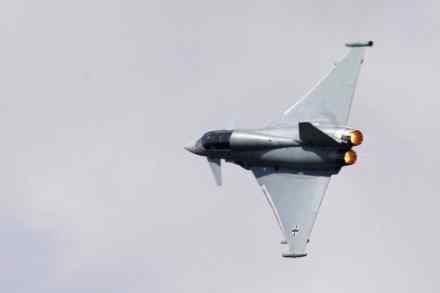
The German air force has taken off for its first deployment in the Indo-Pacific region. It will take part in Australia’s biennial warfare exercise Pitch Black from Friday, side by side with other western nations as well as regional partners such as Japan, Singapore and South Korea. Berlin’s show of solidarity will be welcomed by Nato allies, but it will also draw pushback from China. It’s an opportunity for Germany to show that it can make a meaningful contribution to the deterrence of Chinese aggression in the Pacific. But in order to do so convincingly it will have to resist pressure from Beijing with more confidence than it has in the past. Germany’s commitment looks promising.

Germany is caught in Putin’s trap

A collective sigh of relief went through Berlin this week as Russia resumed its gas deliveries through the Nord Stream 1 pipeline after a scheduled ten-day maintenance break. But even with the immediate crisis averted, Germany remains palpably jittery: it is unclear whether it will have enough gas to get through the winter. Threats from Vladimir Putin to curb or even stop energy supplies to Europe altogether have been part of the Russian war strategy right from the beginning. Shortly before the invasion of Ukraine in February, when the German chancellor Olaf Scholz announced a halt to the controversial Nord Stream 2 pipeline, former Russian president Dmitry Medvedev sneered: ‘Well.

Douglas Murray, Katja Hoyer and Lara Prendergast

20 min listen

On this week's episode: Douglas Murray on Hispanic Conservatives in US politics (0:26). Katja Hoyer on East German sentiment towards Russia (08:32) and Lara Predergast on the rise of the sex bore (13.13). Presented by Natasha Feroze.Produced by Oscar Edmondson.

Cold War

41 min listen

In this week’s episode:Can Russia turn off Germany’s gas?Wolfgang Münchau and Katja Hoyer discuss Germany’s looming energy crisis (0.51).Also this week:What are relations like between Boris Johnson and Prince Charles? The Spectator’s diary editor, James Heale joins Camilla Tominey from the Telegraph talk about the growing tensions between the Prime Minister and future King (19.56).And finally: Are sex parties becoming a cliché?Emma Sayle, CEO of Killing Kittens and James Innes-Smith, talk about the rise of sex parties and why they’ve become an open secret. (27.48)Hosted by Lara Prendergast & William MooreProduced by Natasha FerozeSubscribe to The Spectator today and get a £20 Amazon gift voucher: spectator.

East Germans still find it hard to see Russia as the enemy

Not all of Germany is against Vladimir Putin. Sahra Wagenknecht, a Left party MP, recently defended him, saying he is not ‘the mad Russian nationalist’ of caricature and sending weapons to Ukraine was a ‘US-driven policy’ which played a role in provoking his invasion. Her views are quite common in East Germany and not only among the left. The far-right party Alternative for Germany, which has most of its support in the East, opposes sanctions and providing weapons. A recent opinion poll asked whether Berlin should ‘be tough on Russia’: half of West Germans agree, but just a third of East Germans do. Some 58 per cent of East Germans want Berlin to take an approach that doesn’t ‘provoke Russia’. Only 40 per cent of West Germans agree.

Germany is failing Ukraine

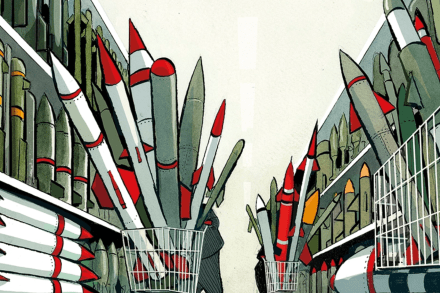
‘A giant step for German and European security,’ is how Chancellor Olaf Scholz described his government’s €100 billion cash injection for the country's depleted military. But while Germany’s newfound commitment to its own defence is welcome, its commitment to Ukraine’s is still questionable at best.   Over the weekend, the German newspaper Die Welt reported that it had seen documents showing that Berlin had reduced military support for Ukraine to ‘a minimum’. According to inside sources, only two German weapon deliveries have reached Ukraine since the end of March. Both contained light equipment such as mines, hand grenades and spare parts for machine guns.