Katja Hoyer

Katja Hoyer

Katja Hoyer is an Anglo-German historian. Her latest book is Beyond the Wall: East Germany, 1949-1990.

Banning Germany’s AfD won’t make it disappear

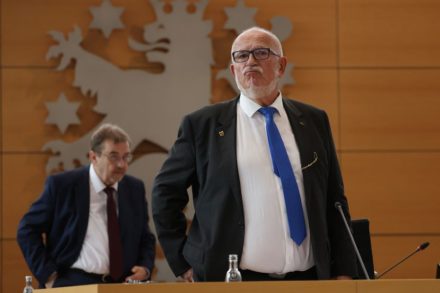
The opening of a regional parliament doesn’t usually make for edge-of-the-seat politics. But in the German state of Thuringia, the first session of newly elected MPs descended into such unsavoury chaos that some commentators now fear for German democracy itself. A few weeks ago, Alternative für Deutschland (AfD) won the Thuringian parliamentary election, making it the first significant far-right victory in Germany since the Nazis. All other political parties agreed to uphold their cordon sanitaire around the AfD, but the first parliamentary session on Thursday showed that the democratic system isn’t designed to isolate the election winner.
Germany’s immigration crackdown will heap pressure on Brussels

In a drastic move to curb illegal immigration, the German government has announced that it will tighten controls on its borders. Long-term measures to reduce the number of asylum seekers entering the country are being discussed in cross-party talks in Berlin. This represents paradigm shift on immigration. Germany opened its borders to over one million asylum seekers during the refugee crisis of 2015, and it did so – outwardly at least – with a sense of optimism. Then-chancellor Angela Merkel’s rallying call of ‘we can do this’ quickly turned into an official policy of ‘Wilkommenskultur’ – ‘Welcoming Culture’.

The remarkable success of the Allied occupation of Germany

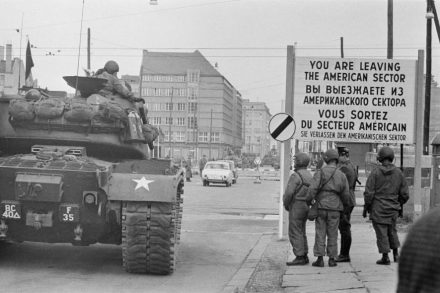
'We came as adversaries, we stayed as allies, and we leave as friends,' British prime minister John Major told crowds in Berlin on 8 September 1994, thirty years ago today. The last 200 British, American and French soldiers withdrew from Berlin that day, leaving the city without a foreign military presence for the first time since the Second World War. This was supposed to be the end of history. In reality, a new chapter had already begun. The presence of the Western Allies in post-war Germany is still remembered fondly today. There are events marking the 30th anniversary of their departure, and many traces of their occupation remain.

Olaf Scholz’s immigration quagmire

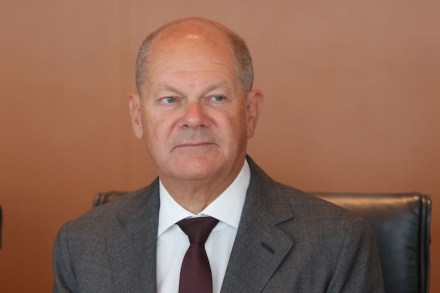
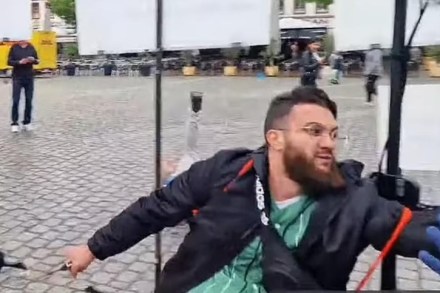
Shock quickly turned to anger in Germany when a Syrian asylum seeker was arrested for the brutal knife attack in the city of Solingen last weekend. Three people were murdered and eight more injured by a man who had no right to be in Germany.  Politicians from the coalition government reacted with a flurry of statements, demanding anything from tougher knife laws to quicker deportations of illegal migrants. But many voters want to see more than tweaks to the immigration system before they can begin to feel safe again on Germany’s streets.

Alt reich: Is Germany’s far right about to go mainstream?

46 min listen

This week: Alt reich. The Spectator’s Lisa Haseldine asks if Germany’s far right is about to go mainstream, ahead of regional elections this weekend. Lisa joined the podcast, alongside the historian Katja Hoyer, to discuss why the AfD are polling so well in parts of Germany, and how comparable this is to other trends across Europe (1:13). Then: why are traditional hobbies being threatened in Britain? Writer Richard Bratby joins the podcast, alongside Chris Bradbury, the drone support officer at the BMFA, to discuss his article in the magazine this week about the challenge red-tape poses to model steam engine and aeroplane enthusiasts (18:47). And finally: how has sound design changed the world of theatre?

Has Germany run out of money to give to Ukraine?

Germany is Ukraine’s biggest military donor in Europe. On paper, it appears determined to ensure that Vladimir Putin’s act of aggression does not pay off. But now a German newspaper has seen documents suggesting Berlin wants to halt new support for Kyiv.  According to the newspaper Frankfurter Allgemeine Zeitung, Finance Minister Christian Lindner sent a letter to Foreign Minister Annalena Baerbock and Defence Minister Boris Pistorius to inform them that ‘new measures’ in aid of Ukraine’s struggle to survive may only be approved if ‘funding is secured’. Lindner urged both his colleagues to ‘ensure that the set upper limits are adhered to.

Germany will regret cutting Ukraine aid

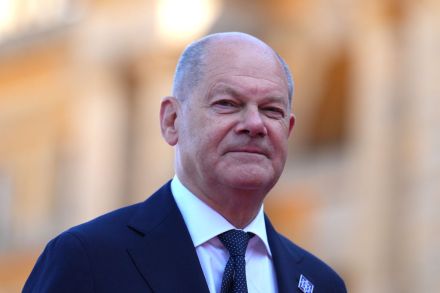
It wasn’t so long ago that the German chancellor Olaf Scholz tried to convince fellow European leaders to do more to help Ukraine. Wherever he travelled in the spring, the message was the same: Vladimir Putin will only withdraw Russian troops ‘if he realises that he cannot win the war on the battlefield,’ Scholz told European social democrats at a meeting in April. Now his coalition has decided to cut German military aid to Ukraine by half, Reuters reported, based on a draft of the 2025 budget. Next year, Europe’s largest economy intends to spend just €4 billion on supporting Kyiv against Russian aggression.

The Euros couldn’t come at a worse time for Germany

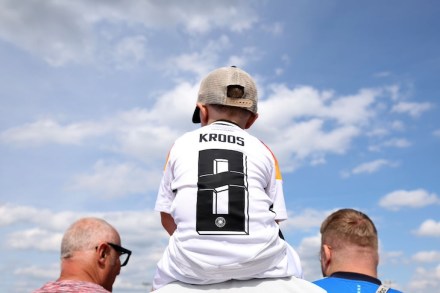
Like many Germans, I remember the summer of 2006 with fondness. We hosted the football World Cup, and for a few glorious weeks the country was transformed. The sun literally didn’t stop shining. Every cafe, bar and park seemed to have the football on TV. The country was in an exceedingly good mood.  When it became public that German police would not be allowed to display German flags, opponents pointed out that rainbow colours were still allowed The ‘summer fairytale’ of nearly two decades ago holds such a cherished place in collective memory that it would be difficult to rival even at the best of times. But Euro 2024 isn’t coming at the best of times for its German hosts. There is an atmosphere charged with political tension, fear and pessimism.

It feels like the social order is crumbling in Germany

I’ve been in and out of Germany a lot in recent months, and it’s hard not to gain the impression that its society is falling apart at the seams. Wherever you go, there seem to be angry political rallies and street protests. The news is full of violent attacks on politicians and activists. The fear is of a resurgence of far-right sentiments nearly eight decades after the fall of the Nazi regime. The concept of irrational German angst has become a bit of a cliche over the years, but this time the threats to social cohesion feel very real.

Germany was right to take the Reichsbürger threat seriously

Germany is in the grip of one of the most extensively covered courtroom dramas in recent memory. On trial is an alleged terrorist group of nine men and women centred around the 72-year-old aristocrat Heinrich XIII Prince Reuss. They stand accused of having plotted to violently overthrow the state before they were arrested in December 2022. The groups’ network is said to reach far into Germany’s armed forces, police and politics, making the case one of the most bizarre and troubling in modern German history. The case is so large that it had to be split into three parts. The first one began in Stuttgart in April. Another one is due to start in June in Munich.

A Russian spy scare won’t undermine German morale on Ukraine

The news that German police have arrested two alleged Russian spies in Bavaria has understandably raised some alarm bells in Berlin. The men stand accused of targeting military infrastructure, aiming to undermine German support for Ukraine; such acute security threats are always bad news. But the response so far has been more defiant than divided. This latest spate of planned Russian attacks in Germany may well backfire on all fronts. There is no doubt the incident is serious. The two men who were arrested in Bayreuth, northern Bavaria, on Wednesday stand accused of targeting German military facilities through arson and bombings. The main suspect, a 39-year-old man named by the press as Dieter S.

Germany’s Holocaust dilemma

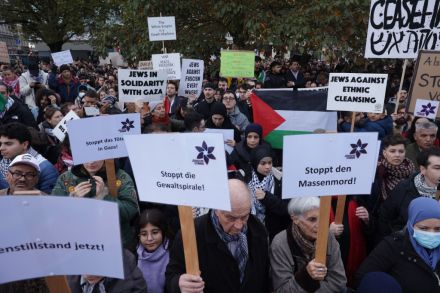
‘In 2024, Jewish money is once again being confiscated by a German bank’. This is a headline that makes for uncomfortable reading in Berlin. It is part of a story currently making the rounds on social media and being described as a ‘worrying echo of history.’ But there is more to this story than meets the eye. And it goes right to the heart of Germany’s Holocaust dilemma. The country responsible for arguably the biggest crime in history does not want to be seen as suppressing Jewish voices The headline was thought up by the activist organisation Jewish Voice for Peace which says its account with a Berlin bank has been frozen – and not for the first time.

How Germany became a security liability

There were lots of smiles and some awkward football banter when German foreign minister Annalena Baerbock met her British counterpart David Cameron in Berlin earlier this week. Cameron was careful to tiptoe around Berlin’s recent security blunders, after an online call between German officials discussing British military activities in Ukraine was intercepted by Russia. Alliances aren’t just about money, they are also about trust and dependability Britain’s former prime minister is good at this diplomatic dance, and he made a valiant effort to not, in his words, ‘play into the hands of some Russian narrative about divisions between allies.’ But it’s hard to paper over the cracks these recent security breaches have caused.

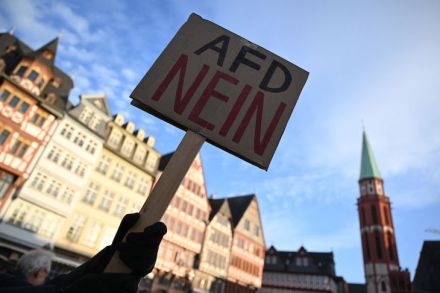
Germany’s anti-AfD marches are backfiring

The rise of Alternative für Deutschland (AfD) has set off one of the largest waves of protest in modern German history. Half-a-million or so demonstrators took to the streets last weekend: they were a mixed bunch of all ages and ethnicities; politicians also marched alongside members of the public. All were united in their desire to stem the rise of the far-right AfD.  But while the marches looked impressive, there is little sign that they are working – or that they have the power to actually change anyone’s mind. Much has been made out of the fact that, while the AfD polled at around 23 per cent for much of December and January, support for the party has now ‘dipped’ a little to 20.5 per cent.

What a secret far-right meeting reveals about the AfD

It sounds like a scene from a dystopian TV drama: in a country hotel west of Berlin, far-right politicians met neo-Nazi activists and sympathetic businesspeople to discuss a ‘masterplan’ for Germany that involves the forced deportations of millions from the country. But this is no fiction. According to reports in the German media, such a meeting took place last November. These revelations will do little to calm the tumultuous political waters in Germany. Around two dozen people met at the picturesque lakeside hotel in Potsdam, according to the news outlet Correctiv, which published a detailed report of its undercover investigation. Given the explosive content discussed in speeches between meals, secrecy was paramount for the organisers.

Can Scholz convince the EU to continue supporting Ukraine?

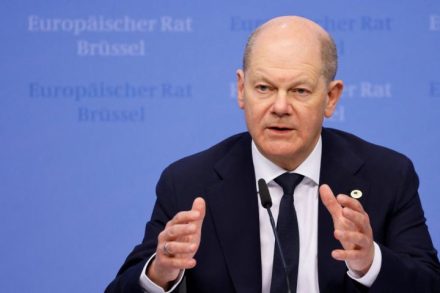
New Year’s resolutions are notoriously difficult to keep. But when it comes to Ukraine, Europe hasn’t made any. There is no clear plan for 2024 on how to stop Russia from winning its war of aggression. With the future of American politics uncertain, it will fall to Europe to make a stand. Initially lambasted for its reluctance to send weapons to Ukraine, Germany has since stepped up to the task and become its second largest contributor of military aid. Now, chancellor Olaf Scholz is leading the call for others to do more, too. ‘Europe must show that it stands by Ukraine, by freedom, by international law and by European values,’ he told the press earlier this week.

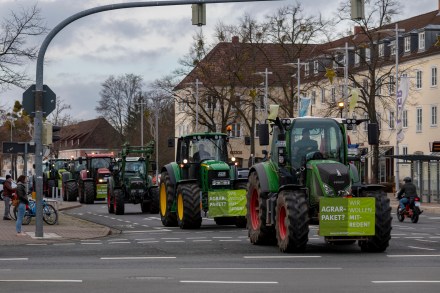
Why German farmers are rebelling

He wanted to get away from it all. The splendid solitude of the tiny North Sea island of Hooge was a momentary refuge from the waves of political tumult buffeting his country. But when Germany’s vice chancellor Robert Habeck returned from his holiday on Thursday, a group of furious farmers prevented his ferry from docking on the mainland. Germany's 2024 began as 2023 ended: with public confidence in the government at a low ebb.   The anger of farmers is currently the most visible expression of Germany’s disillusionment with the ruling coalition. Chancellor Olaf Scholz’s administration has manoeuvred itself into a corner from which there is no easy way out.

Getty

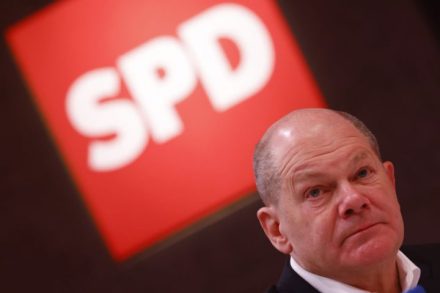
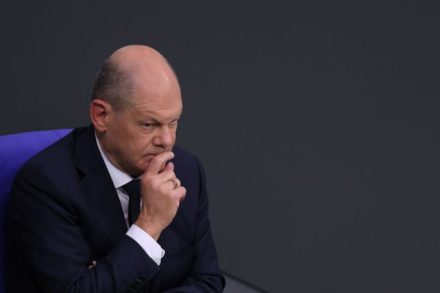
Can things get any worse for Olaf Scholz?

A ‘smurf’, a ‘plumber’, a ‘know-it-all’: Olaf Scholz has been called many things. But so far Germany's chancellor has brushed off the criticism. ‘I like the smurf thing,’ he told German media, ‘they are small, cunning and they always win.’ Being associated with the ‘honourable craft of plumbing’ made him ‘proud’. And of all the epithets to acquire, ‘know-it-all’ may not have been the worst; unless, that is, you run out of answers. Scholz has had a tricky year in 2023. With crisis after crisis engulfing his administration, few Germans now trust him to offer viable solutions.

Germany’s Reichsbürger movement is anything but a joke

They don’t believe the German state exists, they make their own passports and they want the German monarchy restored. It’s tempting to dismiss the so-called Reichsbürger movement as a bunch of deranged conspiracy theorists. But the movement is growing, increasingly well-connected and willing to use violence to overthrow the state. In their latest crackdown on extremist Reichsbürger circles, the German authorities on Thursday conducted a coordinated raid involving around 280 police officers in eight of the country’s 16 states. They targeted 20 residences, involving people aged between 25 and 74 who are suspected of having formed a group around a 58-year-old Bavarian man.

Can Germany’s ‘Rwanda-style’ migrant plan keep the AfD at bay?

Germany is facing one of the greatest political upheavals in its modern history. Polls indicate that the ruling coalition would gain only a third of the vote between its three parties if an election were to be held now. Meanwhile the far-right Alternative für Deutschland (AfD) has emerged as the second most popular party. With concerns about immigration one of the hot topic issues, Scholz's government is now considering a Rwanda-style plan to process asylum claims in partner states outside of the EU. Much is at stake. If it works, it will be a sea change on immigration policy that will affect the entire EU bloc.