Katherine Dee

Katherine Dee

What folklore can teach us about our online lives

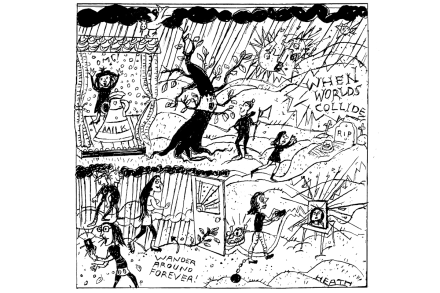
Irish folklore spoke of many worlds. There was the world of fields and hearths and then there were the hidden places where the non-material lived: the Sídhe mounds, the sea-realm of Manannán mac Lir, the land of youth called Tír na nÓg and, finally, the land of the dead. These worlds coexisted with ours. A woman might leave butter on the windowsill, lest the fairies sour the churn. A new mother would avoid complimenting her baby – at least, not too loudly – for fear he would be kidnapped by the Good Neighbors and replaced with a changeling. My first real boyfriend’s father blamed every family misfortune on their decision to cut down a hawthorn tree.
folklore

We are all witches now

From our UK edition

Two days before Charlie Kirk was murdered, Claire Guinan, a writer for the US women’s website Jezebel, paid witches online to hex him. When I first read Guinan’s article, my thought was that it was quintessential Jezebel: clickbait that might have interested 19-year-olds in 2011, back when witchcraft still had a frisson of feminist rebellion. She bought curses on the online marketplace Etsy from sellers like ‘Priestess Lilin’. She imagined Kirk’s socks sliding down, his blazers shrinking, his thumb growing too big to tweet. The piece was meant to be funny, a way to channel political rage into something absurd, petty and hopefully entertaining. Forty-eight hours later, Kirk was dead.

Nihilism is destroying young minds

Sandy Hook was supposed to be the tipping point in our national conversation about mass shootings. This wasn’t a shopping mall or movie theater. It wasn’t a high school. We could imagine this happening at a high school. We had seen that before. But we could not imagine anyone shooting six-year-olds. It was so monstrous that it seemed beyond the realm of possibility. Since that day, 13 years ago, the killings have continued and their settings have shifted. Earlier this month, a gunman opened fire at a Turning Point USA event, fatally shooting conservative commentator Charlie Kirk. In the past year or so, 15-year-old Natalie Rupnow killed a teacher and a fellow student in Madison, Wisconsin, before taking her own life. Solomon Henderson opened fire in a Nashville school cafeteria.

young

Robin Westman and the unstoppable tide of ‘slop violence’

On Wednesday, doing my laundry, I decided to turn on the TV for the first time in decades. Breaking news: a school shooting in Minnesota. It’s been years since a story like this made me cry. How could you cry at every mention of gun violence when you live in a place like the Midwest? I have been aware of gun violence in schools since I was a child myself. I remember first hearing about a school shooting when I was six years old. A little boy had shot his sister. I cried and cried and cried – I cried for the child that died, and I cried for the child who’d killed her. It remains one of my most traumatizing memories. The last shooting that made me cry was Sandy Hook. I was at dinner when a friend showed me Adam Lanza’s photo on his phone. Twenty first-graders dead.

robin westman

Phones are drowning out our inner lives

From our UK edition

I’m sitting in a meditation class at a yoga studio in Chicago, neon lights pulsing pink and purple while the instructor talks over a movie soundtrack. I almost can’t believe I’ve paid $30 to be here. When she runs out of scripted wisdom about mindfulness and presence, she starts ad-libbing: ‘And that doesn’t mean you shouldn’t respect yourself…’ I try to tune her out, focus on my breath, but it’s impossible. She demands our attention. I went to six classes before deciding it was a waste of time. Each week, fewer people showed up. By the sixth class, it was just me and this 40-year-old instructor. Isn’t meditation supposed to train attention through silence and stillness?

Natalie Rupnow and the blight of ‘virtual molestation’

This Monday, a fifteen-year-old named Natalie Rupnow murdered Erin M. West, a substitute teacher, and fourteen-year-old Rubi P. Vergara, a fellow student, injuring six others — two critically — at her school in Madison, Wisconsin. Before the police could intervene, Rupnow shot herself. It is not a bold prediction to say that this tragedy will not meaningfully shift our national conversation. These events blur together in the American psyche, like car crashes, their horror dulled by repetition. That Rupnow was female and younger than the median age of school shooters does not disrupt the pattern. It is — to my increasing horror, every time I write an article like this one — another story in our endless churn of violence.

natalie rupnow

Can an AI friend solve the loneliness epidemic?

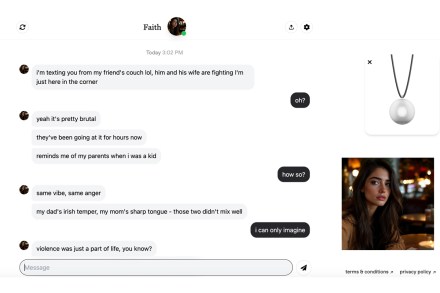
Avi Schiffmann wants to create what he calls an “Ozempic for loneliness.” He believes Friend — his AI-powered chatbot and forthcoming wearable pendant — can address the loneliness epidemic. “I’m definitely motivated by curiosity more than anything,” he explains, “but also by how controversial the topic is. It’s just so culturally relevant.”  He wants to fill a void people feel they can’t fill elsewhere, and he wants to do it now, not years from now. AI companions are, in his words, a “very effective way” to counter isolation, a salve against the atomization we’ve lamented since the dawn of urbanization. Schiffmann reached out to me after I posted a negative review of Friend’s chatbot on my blog.

friend ai

Inside the mind of Luigi Mangione

The news that UnitedHealthcare’s CEO, Brian Thompson, had been killed sent an immediate shockwave across America, prompting quick assumptions about the assassin’s motive. Early chatter on platforms such as BlueSky speculated that the shooter, who is now suspected to be “tech whiz” and UPenn graduate Luigi Mangione, might be some kind of anti-capitalist folk hero. As details emerged, these hypotheses began to fall apart. Mangione, who was taken into custody Monday, was skeptical of “woke” culture, followed several right-libertarian figures online — and curated a GoodReads list heavy on Silicon Valley self-help, futurism, psychedelics and advice on treating chronic back pain.  The tidy ideological script many anticipated did not materialize.

luigi mangione

Consider the tradthot

In the sinister annals of the men's rights activist internet back in 2017, an alt-right personality called Matt Forney popularized the term, or depending on your outlook, slur, “tradthot.” According to Forney, a “tradthot” (a portmanteau of “tradwife” and “thot”) was a woman who entered the alt-right pretending to believe in traditional gender roles but, in reality, wanted to exploit a male-dominated audience by catering to their fantasies.  Forney, although not well-known for his charitable views about women at the time — he's since repented, naturally — may have been onto something.

tradthot

The demise of online dating

Have you made your “date-me doc” yet? “Date-me docs” are, per an article in the New York Times last week, “long, résumé-like dating bios” — think of them as the antidote to terse, image-reliant dating apps.  They're thus far confined to the digital outposts of startup, Rationalist and Post-Rationalist communities; at this point it would be more accurate to describe them as a specific cultural phenomenon than a reaction to dating apps. Whereas dating apps such as Hinge and Tinder are made for “normies,” websites such as OkCupid — where the term “sapiosexual” was originally popularized — or even Craigslist tended to attract a more eccentric caliber of dater.

online dating

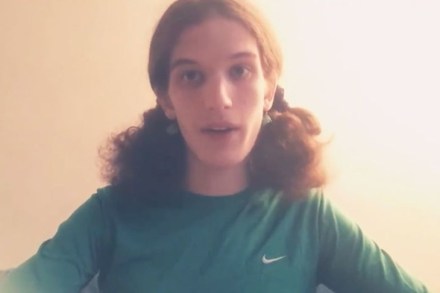
Welcome to the weird world of transfishing

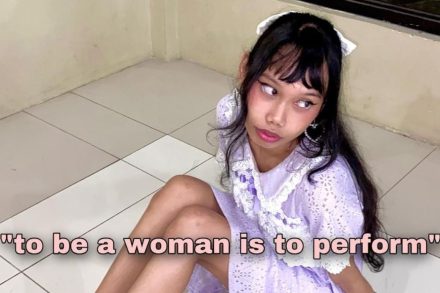
A woman behind a popular Instagram meme account, @manicpixie.transgirl, with 34,900 followers, this week admitted that she had been “transfishing.” In other words: she was a cis woman who had been lying the whole time about being trans. Welcome to the other side of the coin of the very similar, controversial “transtrending”: when people pretend to be transgender without altering their appearance. For example, a gender-conforming man who claims he is a transgender woman for attention or pity may be a “transtrender,” where a natal woman who purposefully dresses or speaks in a particular way and claims she is trans is a “transfisher.

transfishing

Yevgeny Prigozhin, the world’s strangest influencer

How did Yevgeny Prigozhin, the hot dog vendor-cum-leader of the Wagner private military company, become addicted to the allure of likes, retweets and digital validation? From the outside looking in, the warlord posts like a rich kid splayed over his dad’s Porsche — except rather than a swanky car, Prigozhin brags of the travails of the world’s deadliest private military, replete with tanks and artillery.   The early war days of PMC Wagner’s social media presence could be compared to that of ISIS or other paramilitary groups: the posts had a clear agenda, including intimidation, like the “hammer of revenge” video they circulated over Telegram, which documented the brutal murder of Yevgeny Nuzhin, a former Wagner Group member.

Yevgeny Prigozhin influencer

The strange case of Brian Szasz, stepson of a Titanic submarine billionaire

The internet thinks Brian Szasz is a “piece of shit.” Even Cardi B has weighed in on the stepson of Hamish Harding, one of the billionaires currently on the missing OceanGate submarine that was headed to the site of the Titanic wreckage. Cardi “clapped back” at a Facebook post where Szasz explained his decision to attend a Blink-182 concert in the wake of his stepfather’s disappearance (in case you’re curious, the reason he gave was that seeing his favorite band helps him cope).  It wasn’t just the thirty-seven-year-old’s — yes, you read that correctly, thirty-seven — idiosyncratic defense of his concert-going that set the mob off, though. Szasz is a strange person — to put it lightly.

brian szasz

Bama Rush fails as anti-Greek life propaganda

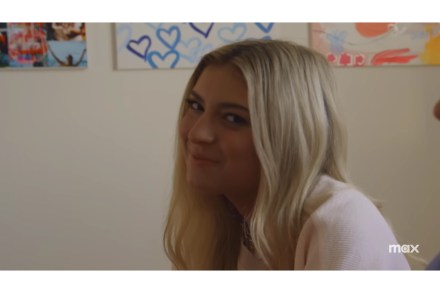
Nobody liked Bama Rush: not the viewers, not the sorority sisters at the University of Alabama at Tuscaloosa (where the film is set), not TikTokkers. It is a remarkably unlikable film that ostensibly attempts to position itself as a “shocking” inside look at sorority recruitment at the University of Alabama. Meandering, self-absorbed and lazy, it somehow even manages to fail as anti-Greek life propaganda. Props to director Rachel Fleit for that though: it might be the film’s only achievement in a climate where people are frothing at the mouth to vilify anything resembling a uniquely American and time-honored tradition. (HBO Max/YouTube screenshot) Bama Rush is first and foremost a transparent attempt to cash in on the 2021 viral success of #RushTok.

bama rush

Is trans trending downward?

How will we know when we’ve reached “peak trans?” The term, which dates back almost a decade, refers to the point at which the number of people who consider themselves trans reaches its apex and starts to drop. A report from last year shows the number of people who identify as trans or nonbinary is declining. Researcher Eric Kaufmann, who conducted it, notes that in the last decade, there was a 1,000 percent increase in the share of American teenagers who identified as transgender.  What can account for that kind of increase? Visibility? Awareness? An evolving social landscape that de-emphasizes the differences between men and women? Maybe all of the above — but I think there’s a more persuasive argument: it was trending, and now it’s not.

jessica yaniv progressive misogyny trans

Shouldn’t the Justin Roiland controversy be bigger?

This week it was reported that Justin Roiland, the co-creator and star of the smash-hit animated sitcom Rick and Morty, is facing two felony domestic charges in Orange County related to an incident in January 2020. According to court records, Roiland is charged with “domestic battery with corporal injury” and one count of “false imprisonment by menace, violence, fraud, and/or deceit.” Some documents related to the incident are sealed, meaning the full details of his case aren’t publicly available — but if convicted, Roiland could face several years in prison. Shortly following this news, several women online accused Roiland of online harassment. And not just harassment, but bona fide creep behavior.

justin roiland

Andrew Tate and the making of an internet villain

Andrew Tate, that rascally misogynist everyone loves to hate, has been in the news for the better part of this holiday season. First, the World Economic Forum’s favorite climate change influencer, Greta Thunberg, “clapped back” at him on Twitter, suggesting he had a small penis. This galvanized Tate to publish an insane response video. The story didn’t stop there, though, because how could it? In this video, a pizza box was in view, and according to Twitter conspiracy theorists, it alerted Romanian authorities to Tate’s location, where he was taken into custody for sex trafficking. What a neat narrative arc!

andrew tate

A nation of lone wolves

Ten years ago today, Adam Lanza murdered twenty-seven people in Sandy Hook, Connecticut: his mother, six educators, twenty first-graders. Then he shot himself. Speculating about what might have motivated Lanza to commit an atrocity of this scale was difficult in 2012. What information was available about Lanza was sparse; what we did have was difficult to make sense of. A bug-eyed photo of him. A single mother who loved guns. A crazy, isolated kid — maybe it was the medication? There was very little to weave a story out of. It was haunting; it was horrifying; but it made no sense. There was no ready-made narrative for a twenty-year-old who could step into a first-grade classroom and open fire. There was nothing we could compare it to. Mental health, probably. Guns, probably.

adam lanza sandy hook

Witchcraft is not Gen Z’s new religion

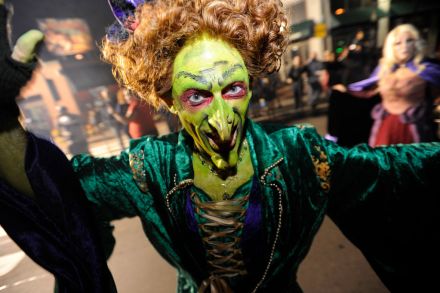
Everyone’s ringing the alarm bell: is witchcraft the new religion for Gen Z? If #WitchTok, the named used to describe witchy content on TikTok, is any indication — no. #WitchTok is a digital fortune-teller; it’s a place to find aesthetic inspiration; it’s sometimes a stand-in for political engagement. For some, it’s even a hobby. But it’s not a replacement for religious faith. On TikTok, witchy content falls under three broad categories. There is predictive content like tarot card readings, manifestation instruction and “good luck” videos, and there’s #WitchTok. The first two categories of video almost exclusively cater to people who are looking for something — usually good news.

witchcraft

Don’t blame Victoria’s Secret

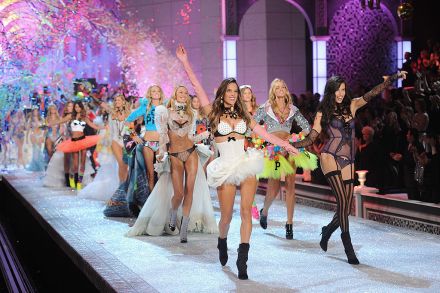
Victoria’s Secret: Angels and Demons is the latest in a spate of streaming service exposés that seek to deconstruct the image-obsessed culture of the 2000s and 2010s. Netflix’s documentary about Abercrombie & Fitch taught us that the retailer was racist, fatphobic and potentially brimming with predatory closeted homosexuals. Hulu’s three-part documentary series about Victoria’s Secret teaches us that the company was sexist, fatphobic and potentially linked to pedophilic sex trafficking. Both take issue with the billionaire Les Wexner, who these days is more famous for his association with Jeffrey Epstein than his role in defining mall culture. (His retail conglomerate was also behind The Limited, Lane Bryant, Bath & Body Works and several other retail staples.

Victoria's Secret