Kate Chisholm

The man who killed The Archers

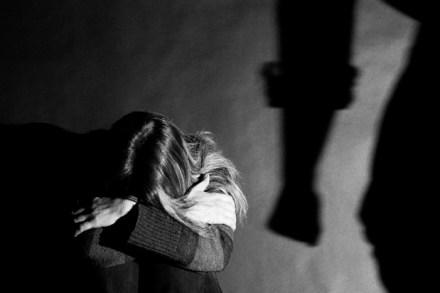
Such a hoo-ha about The Archers this week as Helen faces trial by jury — and, much worse, has to confront her horrid husband Rob face-to-face for the first time since she tried to stab him with a knife in the kitchen of Blossom Hill Cottage. Whatever the decision of the court (and of Sean O’Connor, the horrid editor who is supposed to have left his job at the Radio 4 soap but who in a recent interview threatened us with a worst-case scenario that would free Helen but hand custody of the children over to Rob), it’s curtains for life in Ambridge as we know it.

Northern brag

The last thing we need right now, in these divisive times, is a series that spends all its time crowing about how special the North is, that continually insists it’s the fount of English art, faith and civilisation and also the region where our notions of justice and equality have been forged.

Distant voices

One of the weirdest responses when someone close to you dies is the gradual realisation that now at last you know them fully. They become to you complete, rounded, fully themselves, in a way that just does not seem possible while they are still alive. It’s so frustrating. Just when you’re at last ready and able to talk to them in the way you’ve always wanted, in full knowledge of who they are, seeing clearly every aspect of their person, they are no longer present. Radio 4 has come up with a partial antidote to this aspect of death, loss, grief, and so too of life and living, with its unsettling new lunchtime series, Unforgettable (produced by Adam Fowler), the title inspired by Natalie Cole’s 1991 single, where she duets with her long-dead father.

Super human

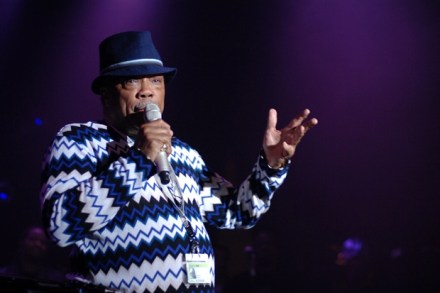
‘We think we’re in charge of this stuff but we’re not,’ said Quincy Jones, the composer, arranger, jazz trumpeter, musical genius. He was talking to Julian Joseph at the Montreux Jazz Festival for Jazz Line-Up on Radio 3 (Saturday). ‘It’s divine intervention.’ Jones, who masterminded Michael Jackson’s Thriller as well as countless other hits, film scores (including The Italian Job and The Color Purple) and his own ‘Soul Bossa Nova’, was remarkably sanguine about his extraordinary career. His enormous self-confidence was there from the start. Finding himself in Paris in the 1950s touring with a big band, he decided to stay on so that he could study with Nadia Boulanger and learn how to write for a symphony orchestra.

Funny is dangerous

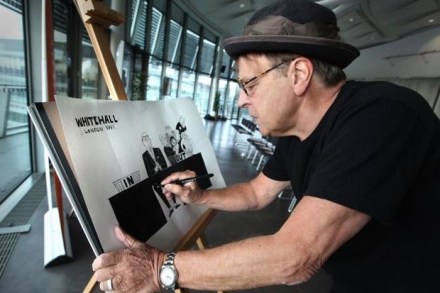
‘I’m off now,’ says Michael Heath, signing off from his selection of Desert Island Discs on Radio 4, ‘to go and do a gag about God knows what. I haven’t the foggiest idea.’ You’d think at 80 he might want to stop, or have to give up because he’d somehow lost his touch. But not the cartoon editor of this magazine, and chief creator of wicked skits on the idiocies and affectations of contemporary life. What’s it like working as a cartoonist after the attacks on the satirical magazine Charlie Hebdo? asked Kirsty Young. ‘It adds a certain frisson to your drawing,’ Michael replies. ‘But I never wanted to be a political cartoonist… I wanted to be funny.’ ‘People take offence,’ he says.

Far from Naples

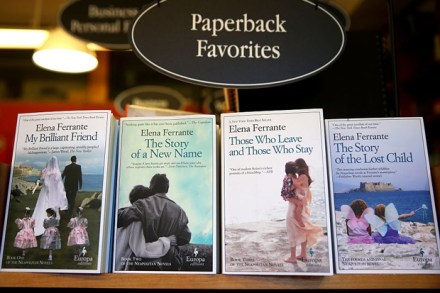
It’s a brave dramatist who would seek to adapt for radio the hit novels of the Italian writer Elena Ferrante. As soon as her quartet of novels set in Naples from the 1950s onwards began appearing in English translation a few years ago they created a bestselling stir because of the unusually bold flavour of the writing and the brutal honesty with which Ferrante is prepared to expose the dark underside of female friendship and motherhood, its jealousies and bitterness, the betrayals and self-centredness. It was even rumoured that Ferrante must be a man (she has never given an interview) because no woman, surely, would be so critical of her own sex (which doesn’t explain why she is not kind to men either).

Fever pitch | 28 July 2016

It cost just £4/10s for 19-year-old Alan Dryland to buy a season ticket that would take him inside the stadium for all ten of the World Cup matches held in London in that magical summer of 1966. The pound was falling, the Vietnam war raging, but England made it through to the final and the Beatles and Rolling Stones were battling it out to top the charts. If nothing else, 66: We Were There, Radio 5 Live’s affectionate look back at that tremendous victory, proved that Sixties music was brilliant. The producer’s choice on Saturday was pitch-perfect, from the Lovin’ Spoonful’s ‘Summer in the City’ to Chris Farlowe’s ‘Out of Time’. I was there.

Dramatic effect

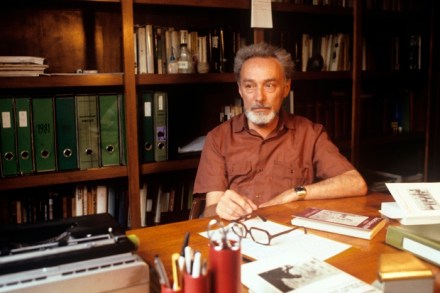
It was hard to believe that Monday morning’s introduction to the Italian writer Primo Levi on Radio 4 lasted for only 15 minutes. It was so rich, multi-layered, filled with meaning. Presented by Janet Suzman, it was intended as a fanfare for the 11-part adaptation of Levi’s most original book, The Periodic Table, in which he explores the chemical elements by equating them to episodes in his own story. Levi, an Italian chemist, was captured by the Nazis as a resistance fighter and a Jew, and at first detained and later sent to Auschwitz. His science training and his knowledge of German saved him from the gas chambers; and a timely bout of scarlet fever ensured he did not die on the death marches from Auschwitz that preceded its liberation.

Sounds of the suburbs

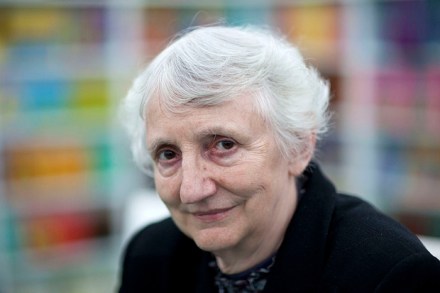
In After the Vote, her talk for this week’s special edition of A Point of View (Radio 4) on the subject of Brexit, the philosopher (and former Reith lecturer) Onora O’Neill suggested that the media have played a large part in creating our current crisis. All branches of it failed ‘to communicate with the public an accurate and honest account’, she argued. The BBC, she said, ‘provided coverage but failed to challenge unfair or dubious claims’ by either side, adding that ‘democracy does not work if such claims are not properly challenged’. This for her is the true nature of ‘the democratic deficit’ — lack of information, of informed debate, of proper checks.

Accentuate the positive | 7 July 2016

Fifty years ago on Monday the World Service programme Outlook was launched as an innovative news and current affairs programme presented ‘magazine style’ with live interviews featuring ‘star’ guests. Such ‘soft’ journalism was highly suspect back in 1966, as England won the World Cup, Russia landed the Lunar 9 mission on the moon and China embarked on its Maoist cultural revolution, because it relied not so much on factual truths or reportage but on the emotional truth of what it felt like to be there in that place at that moment in time.

Refuge from the referendum

A brief encounter with Radio 4’s Any Questions to gauge the measure of opinion in the shires after the referendum result was enough to convince me we are entering even more torrid times than during the campaign. For some mysterious reason both Harriet Harman and Alex Salmond, billed in Radio Times to appear on the panel alongside Ken Clarke and Chris Grayling, had reneged on their promise and been replaced by Emily Thornberry, the Labour MP who got into trouble in 2014 for her white van man tweet, and Steven Woolfe, an oxymoronic Ukip MEP.

Madeleine moments

I’d just heard (on catch-up) Jenny Abramsky (a former director of BBC radio) telling Gillian Reynolds (the esteemed radio critic of the Telegraph) why radio is so special to her: ‘It takes place in my head. It paints pictures in my mind. It talks to me as an individual. It surprises me. It stretches me.’ Then I popped down to the kitchen to make some soup for lunch, reached for the radio button and was hooked instantly as Jeremy Vine talked to a man who had lost his wife in a road accident when their child was just two. (Vine’s Radio 2 lunchtime programme on Monday was focusing on child bereavement following the tragic death of Jo Cox, mother to two young children.) It was just as Abramsky had described. One of those moments.

Women of substance

Three women, three writers, three very different life experiences. On Monday afternoon the artist Fiona Graham-Mackay introduced us to Imtiaz Dharker, whose portrait she has been painting. While she attempts to capture a visual impression, Imtiaz, who is a poet, tells us what it feels like to be the sitter, the one who is being looked at, drawn, observed with such sharp-eyed scrutiny. A Portrait of... on Radio 4 was one of those seductive programmes that draws you in simply by the quality of the voices and the clear-sighted honesty of what they’re saying. What would it feel like to be painted, and then see yourself as someone else has drawn you? How does the artist know where to begin? With the eyes, the mouth, a first impression?

Polluted by podcasts

Just to prove my esteemed colleague wrong I’ve been out there in podcast space looking for a wireless moment that will outclass the impact, the fascination, the compelling authority of much (though not all) of Radio 4’s daily output. Of course, there’s a lot of good stuff being made but how do you discover what’s worth spending time with? It’s hard to make a serendipitous discovery by surfing the web. There’s no equivalent to the simple switching of a button and that instant connection, our attention held, communication created, imagination fed. You have to work hard to find a podcast that has edge, knowledge, aural style; all you can do is research online, picking up tips on Twitter or Facebook, and listening to a lot of duds.

Pulling power | 19 May 2016

Monday’s ‘World on the Move Day’ on Radio 4 was a bold challenge to government policy and proof that radio is much the most flexible, the most accommodating, the most powerful medium when compared with TV. Without much ado, the day’s planned schedule was squeezed, manipulated, overturned to allow the team behind the Today programme to mastermind a live discussion throughout the day about the migration issue, as if to say to the government, here’s what people not just in the UK but from around the world care about. Let’s listen to them and see what solutions they might have to offer.

The power of song

You might not think that the Eurovision Song Contest (screened live from Stockholm tonight) could have any connection with how we might choose to vote in the coming referendum. Surely it’s just a string of naff pop songs stuck together with fake glitter and a lot of false jollity? The songs are uniformly terrible, the show so overproduced it’s impossible not to mock its grandiosity, the idea that it conjures up the meaning of Europe laughably misplaced. But in a programme for the World Service that caught my attention because it sounded so counterintuitive, Nicola Clase, head of mission at the Swedish embassy in London, tried to persuade us otherwise.

Service with a smile | 5 May 2016

He’s been billed as the new Pied Piper but it’s going to take a while for Tom Service to quite match the engaging brilliance of David Munrow, who back in the 1960s persuaded us that medieval pipes-only music was cool listening. Munrow’s series on what was then the Third Programme was aimed at six-to-12-year-olds but succeeded in drawing everyone in because of his gift for communication and his willingness to explore the wilder shores of repertoire, creating sound connections we had never heard before. Service’s new magazine programme for Radio 3, The Listening Service, may be inspired by Munrow but it’s not yet sure what it’s meant to be. How experimental? How difficult the content? It’s timetabled at 5 p.m.

The gooseberry fool

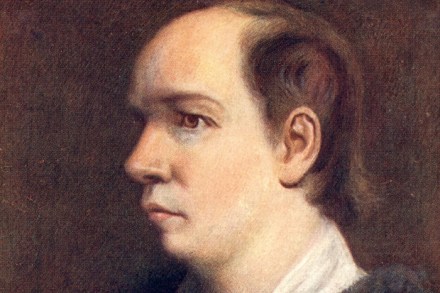
On 10 April 1772, the biographer James Boswell recorded in his diary that he had hugged himself with pleasure on discovering he would be dining with Oliver Goldsmith. This was not because he hoped to elicit from the Irish-born writer some fruity details for the life of Dr Johnson, the dictionary-maker, that he was planning to write (although Goldsmith did know Johnson intimately). On the contrary, Boswell, the literary groupie, was fascinated by Goldsmith himself. He devotes several pages of his Life of Johnson to him in an attempt ‘to make my readers in some degree acquainted with his singular character’. But, frustratingly, Goldsmith remains an enigmatic figure.

Word processing

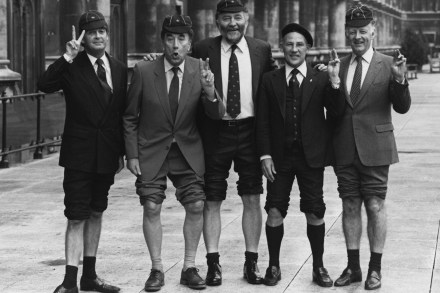
‘Comedy is like music,’ said Edwin Apps, one of the characters in Wednesday afternoon’s Radio 4 play, All Mouth and Trousers (directed by David Blount). ‘The words are the notes and they have to be in exactly the right place. And every line has to pull its weight, add something to the situation.’ Apps was one half of the writing partnership who created that most unlikely of TV hits in the supposedly swinging Sixties, All Gas and Gaiters, set in the cathedral close of St Oggs and featuring a laughably inept quartet of Anglican clerics.

Written on the body

Sue Armstrong’s programme on Radio 4 All in the Womb (produced by Ruth Evans) should be required listening for anyone dealing directly with the refugee crisis, with those who have fled from intense fear and terrible violence in their home countries. Armstrong has been investigating recent developments in our understanding of the impact of severe trauma, how it affects not just the mind but also the body, creating physical changes that also need to be addressed. Those who lived through the Holocaust, for example, who were in prison camps or were forced to hide in dark, cramped, inhuman conditions, perpetually afraid that at any moment they might be discovered, have been found to have low levels of cortisol.