Kate Chisholm

What stopped Stoppard?

Two programmes this week presented two radically different world views, or rather ways of life. Aditya Chakrabortty’s series for Radio 4, Decoding the News, looked at five words or phrases which have come to characterise how politics, finance and business operate in the UK. We entered a world of policy wonks and pundits, of words used not to enlighten or explain but to calculate and confuse. A world in which those who tell stories get all the attention, while those who insist on sticking to the facts are ignored or on occasion ridiculed. It made for chilling listening as, for instance, Chakrabortty deconstructed the meaning of that slippery term, ‘shareholder value’.

The joy of the Proms

Summer nights, hot and humid, mean just one thing — it’s Proms season again. Sore feet, sweaty armpits, queuing outside the ladies loos, home on the Underground with a head and heart buzzing with Bruckner or Bacharach, Handel or Honegger. Just as special is the nightly feast on Radio 3 — a live concert, guaranteed every evening, and on top of that specially commissioned talks and literary events to get us thinking. On Sunday afternoon, in between the Mozart and Schumann performed by Bernard Haitink and the Chamber Orchestra of Europe (COE) at the Royal Albert Hall, Sarah Walker took us inside the working life of an orchestra. What does it take to create the particular sound of an ensemble of individual players? How important is the conductor?

Stitches in time

When Martha Ann Ricks was 76 she travelled from her home in Liberia to London to meet Queen Victoria. The daughter of a slave, who had purchased freedom for his family from his American owner and taken them to west Africa, she wanted to honour the Queen whom she believed had played a pivotal role in abolishing slavery. ‘She stoops,’ Ricks told a reporter from the Pall Mall Gazette of that meeting in a corridor at Windsor Castle on 16 July 1892, ‘and I don’t stoop though I’m older than her… But she has had troubles, great troubles. No wonder her shoulders are bent.’ Ricks considered herself fortunate that aged 13 she had been taken from the Tennessee plantation where she had been born and had thereafter lived as a free person.

Listen with mother | 22 June 2017

This week’s column is dedicated to my mother who loved her radio and encouraged us to be listeners. Without her, I would not be qualified to do this. My earliest memories are of sitting under the table while my mother sewed and the theme tune of Listen with Mother echoed through the house. The radio, an old valve model which took a while to get going and whose half-moon dial promised to send us signals from Lahti and Motala as well as Reykj’vik and Kief, was switched on not all the time, that would have inured us to its pleasures, but on and off for a regular sequence of programmes, day by day.

Making history | 15 June 2017

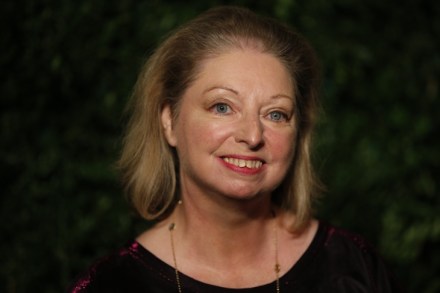
‘History is not the past,’ says the writer Hilary Mantel in the first of her Reith Lectures on Radio 4 (produced by Jim Frank, Tuesday). ‘It’s the method we’ve evolved of organising our ignorance of the past.’ In Resurrection: The Art and Craft, her series of five talks, Mantel shows her mettle as a novelist (most notably of the award-winning Wolf Hall and its sequel) and as a historian, too, arguing the case for historical fiction, once much-maligned as a literary genre precisely because it twists the facts to create a narrative, usually of a highly romanticised flavour. But facts are not truths, Mantel asserts provocatively. ‘The moment we are deceased we become the subject of stories.

Diary stories

By chance on Saturday morning, I tuned into Radio 4 and heard Professor Clare Brant talking on Saturday Live about Dear Diary, a new exhibition at Somerset House in London that celebrates the art of writing a daily journal. It caught my ear because diaries are such a crucial tool for the biographer yet whenever I’ve attempted to write my own it’s always turned out dreadfully narcissistic and infinitely boring. What, asked Richard Coles, makes diaries so fascinating? It’s all in the detail, said Brant. The way reading a diary can take us into another person’s world, not the outward gloss and grandeur but right inside the way the diarist is thinking and responding to what’s happening around them.

Comic relief | 1 June 2017

In such times as these, enough to try a man’s soul, a dose of John Finnemore is advisable. His brand of comedy, as fans of Cabin Pressure will know, makes you laugh out loud (unlike, I fear, a lot of the programmes in that 6.30 p.m. slot on Radio 4). His quirky stabs at the absurdity of human nature are guaranteed to cheer even the most awful of days because they’re so simply drawn, etched in clear, sharp lines, and because they celebrate rather than bewail our frailties; life’s tendency to make you fall flat on your face just as you thought you were about to make it big time.

Crime and punishment | 25 May 2017

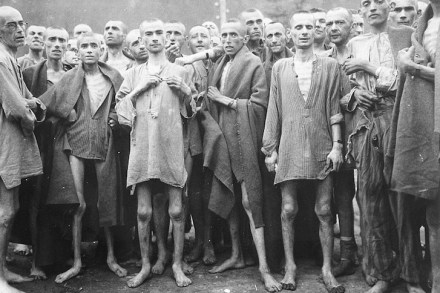
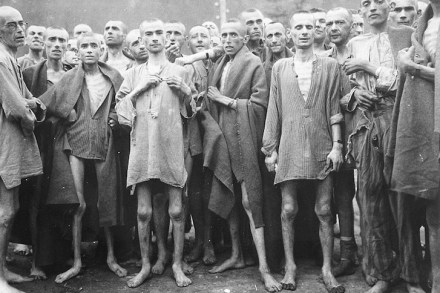
‘Hell is better than what I personally witnessed,’ says Ben Ferencz, who was one of the American troops sent in to the Nazi death camps to collect vital evidence. ‘Dead bodies mingled with those alive. Piles of bones waiting to be buried. The smell of burning flesh. Those who were still alive pleading with their eyes.’ All of which we have heard many times before, perhaps too many times. But then Ferencz added, ‘SS men trying to flee, running away, and the inmates, those who could still walk, trying to chase them, grabbing at them.’ It was an unusual, vivid detail that captured the attention. Ferencz was talking to Emma Barnett in her slot Eye of the Storm on Radio Five Live last week. Not that Barnett had much chance to say anything.

Moment of truth | 18 May 2017

Two extremes of the listening experience were available on Monday on Radio 4. The day began conventionally enough with Start the Week, chaired by the deceptively genial Amol Rajan (now in charge of The Media Show), whose warm, inviting voice fronts a keen, intense intelligence. He guided his guests through a conversation about our post-truth world which, apart from the subject-matter, could have graced the airwaves in the 1950s. This was a masterclass in elevated discussion, so graceful were the exchanges, so theoretical the ideas, yet so clear the meaning.

Teenage kicks | 11 May 2017

Imagine living in a country where the average age is under 16 (in the UK it’s currently 40 and increasing) so that everywhere you go you’re surrounded by teenagers. It sounds exhilarating. Such optimism and energy; the sheer vitality of young blood coursing through the streets. How brilliant, too, for a country to be unfettered by how things have always been done, no elders to restrain them, hold them back, warn against change. But nothing is that simple. For The Compass: A Young World (Wednesday) on the World Service (produced by Mike Gallagher), Alan Kasujja took us to his native Uganda to find out what it’s like to walk down a street where no one shuffles along, wearied by the years.

Discovery channels

Bashing the BBC often becomes a popular blood sport in times of political instability, and especially if the left is weak and un-able to defend itself. You only have to think back to the period when Margaret Thatcher was leading the Tories and lambasting Auntie to recognise that there is some truth in this aphorism. It’s not surprising, then, that we’re going through another phase of repeated attacks on the BBC’s impartiality, the unfair advantage provided by the licence fee, its ‘dumbing down’ to satisfy a broad audience. Those of us who rely on listening to the radio to keep us sane in a mad, mad world need to rally round and keep on insisting why we so love and admire the Corporation if we want it to survive as a publicly funded institution.

A square dance in Heaven

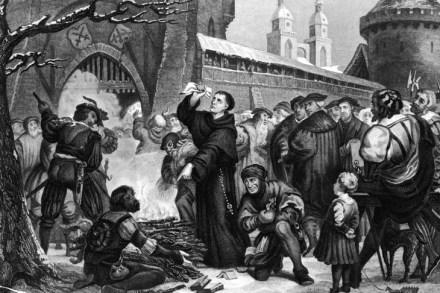
It’s 500 years since Martin Luther pinned his 95 Theses to the door of the Castle Church in Wittenberg, sparking what would come to be known as the Protestant Reformation. His superficial complaint was against the corrupt practice of indulgences, the Catholic Church teasing money out of the gullible and persuading them that they could buy their way into Heaven. But what Luther, a professor of theology, really wanted was for God to be made accessible to everyone and for worship to be more intimate, more direct, and in the vernacular, not Latin. We think of him now as a man of the text, who believed that faith was so important its meaning should not be withheld by the priesthood or clouded by that ‘dead’ language.

The real deal | 20 April 2017

How about this for an inspiring response to what could have been a personal tragedy. Chi-chi Nwanoku was in the sixth form at school, a promising athlete hoping to represent Great Britain as a 100-metre sprinter, when she injured her knee playing football. ‘It was a poignantly painful moment,’ she recalls, but thanks to a far-seeing music teacher and headmaster, and her own inimitable character, the accident was turned into a springboard not just for her but, through her, for many other young musicians too. When she returned to school, she was told, ‘We think you could have a career in music,’ and she was taken into the music room where two double basses were lying ready for her. She was not at all impressed at first.

Tales of the unexpected | 12 April 2017

It’s the oddest place to find a profound meditation on the death of Christ, but there it is on Radio 2 every year on the night of Good Friday, on the ‘light music’ station, and not on Radio 3 or Radio 4, where you might expect to find it. This year At the Foot of the Cross was sandwiched between Desmond Carrington — All Time Great and Sara Cox’s disco beats, the uncompromising reflections on the nature of belief adding a certain bite to the evening. Diane Louise Jordan and her host of guests at the Watford Colosseum (including the Bach Choir and the tenor Wynne Evans) created a sequence of words and music designed to encourage us to think about the grief of the disciples, the tyranny of Rome, the agony of Christ as he walked towards Golgotha.

Ed’s diner

In a world where politicians can turn into newspaper editors and former newspaper editors can seize the most coveted job in radio news, it should not be at all surprising that a former shadow chancellor and Labour MP known for his bullish manner has morphed into a chatshow host on radio. Not only that, he’s rather good at it. Ed Balls’ Dream Dinner Party (Radio 4, Thursday) takes the time-worn formula of putting together a fantasy guest list, seating them round the same table, and waiting for the fireworks to go off, and triumphantly revamps it for the digital age.

Going underground

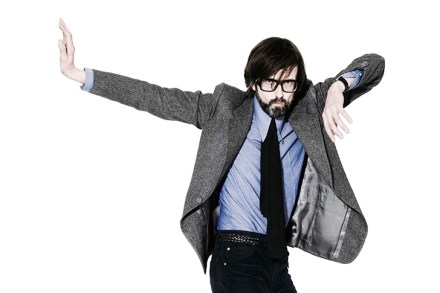
When Wireless Nights hit the Radio 4 airwaves in the spring of 2012, I was not at all sure about Jarvis Cocker’s particular, not to say eccentric, manner of presentation, butting in, making his presence felt, never letting us forget that it’s his programme, he’s in charge. His coy comments were too self-conscious for my taste. He didn’t sound natural; his after-dark meanderings felt too contrived. Now I realise I had completely missed the point. Cocker’s deliberate mannerisms, his upside-down way of looking at things, his curiosity and desire to share with us his thoughts are all very much part of who he is, and once you get used to his style of delivery it all becomes very beguiling.

A matter of life and death | 16 March 2017

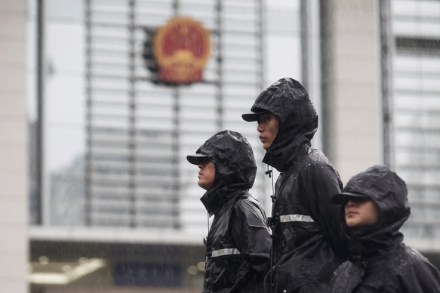
It was the crime story that showed us just how much China has changed since its years of social, political and economic isolation. The discovery on 16 November 2011 of the dead body of the British businessman Neil Heywood in Room 1605 of the Lucky Holiday Hotel in the Chinese city of Chongqing was not in itself so shocking. Sordid maybe, as it was declared by the Chinese authorities that he had died of excessive alcohol consumption. But nothing more than that. The revelations that followed, though, transformed the case into an international cause célèbre, the inner workings of Chinese politics unravelling before the greedy eyes of the foreign media. Heywood, it has been suggested, was if not a spy then at least an ‘informer’ working for the British government.

Keeping the faith | 9 March 2017

Perhaps surprisingly, in these secular times, Radio 4 keeps up its annual (and very Reithian) tradition of holding a series of esoteric talks about faith and belief to mark the Christian season of Lent, those 40 days of preparation and penitence leading up to the events of Holy Week. In the first of this year’s Lent Talks (produced by Christine Morgan), the psychotherapist Anouchka Grose talked about the role of the unconscious in our behaviour and the peculiar tendency of human beings to repeat experiences they claim not to enjoy. You could say that unconsciously we influence our own fate, and that however hard we might try to tame our own impulses we are always liable to be thrown off-course.

All in the mind | 2 March 2017

At the third UK International Radio Drama Festival held last week in Herne Bay, entitled ‘And Let Us Listen to the Moon’, the entries included an Australian play about Chekhov, the limericks of Edward Lear translated into Serbian, a Czech version of Hamlet in which the palace at Elsinore is transformed into a sporting arena, and a play from Palestine in Arabic about three female political activists. Fifty dramas from 17 countries and in 15 different languages were broadcast at various venues across the Kentish town.

Olden but golden | 23 February 2017

This weekend Brian Matthew will present his last-ever Sounds of the 60s show on Radio 2. Now 88, he’s been in charge at breakfast time on Saturdays since 1990, his gravelly voice deepening and getting hoarser with the years. You could tell he was well past his clubbing prime, or for that matter being able to dance along to Bryan Ferry. Yet this has never mattered. Matthew’s band of devoted listeners have cherished his weekly two hours on air precisely because of his age. It has meant he was there when those classic Sixties’ records were made. He met the Beatles in their prime, and Dusty Springfield, Steve Winwood, Alan Price, Sandie Shaw.