Kate Chisholm

Picking out the plums

‘How much did you say the TV licence cost?’ asks my American friend. ‘£145.50,’ I reply. ‘One hundred and forty-five pounds,’ she repeats, with astonishment. ‘And everyone has to pay it?’ ‘Yep. Every home with a TV.’ ‘That’s a lot of money.’ My friend is an economist, with the ability to be as precise about the US’s federal budget as I am about what I’ve just spent at the supermarket. She made me stop and think. If you multiply £145.50 by 26.4 million households, that is for sure a huge amount of money. Is it worth it? It’s the obvious question, to which the answer has to be yes, if the alternative is a commercially driven network, and especially when it comes to News.

All in the mind | 10 January 2013

Radio 4’s Book of the Week sounded so promising, pertinent, perfect for these gloomy first days of January. Maybe listening to it day-by-day could help to banish those demons of despair and disillusion which become so virulent after festive over-indulgence and the onset of the New Year? What better antidote to the dank outside than the positive thoughts and advice of an expert psychoanalyst, you might think. But although Stephen Grosz’s The Examined Life was beautifully read by Peter Marinker — a voice that’s easy on the ear yet always fluent with meaning — it felt empty, without relevance. Grosz promised us solutions to those feelings of being trapped, imprisoned, walled in by life.

Vision on

Something strange, very strange is going on. Take two sparky young, very young men, watch them launch their media careers a couple of years ago by creating zany videos and putting them up on YouTube. Witness the impish, imaginative duo going viral, followed by millions across the globe. Note that what they’re famous for are the videos, the visual gags; not for music, for sound, for aural wizardry. Who, then, might you expect to snap them up as the next best thing? The head of Sky TV? Or the controller of Radio 1? In this topsy-turvy world, it’s Radio 1 who’ll be hosting Dan and Phil from 13 January onwards, giving them their own Sunday-night request show (produced by Alistair Parrington).

Heart of the matter | 28 December 2012

Looking back can be fatal and is usually ill-advised, inducing a nostalgia that can only blight what lies ahead. Let’s risk it, though, reliving those radio moments of 2012 (avoiding the Jubilee and the Olympics) when words took shape and became visceral. Most memorable (perhaps because most recent) was John Humphrys’s grilling of his boss George Entwistle on the Today programme on Radio 4. The air crackled with pent-up feeling, as Humphrys, like one of Eddie Grundy’s ferrets, went after Entwistle. ‘You should go, shouldn’t you?’ says Humphrys, after we had heard the then DG admit that he hadn’t seen the newspaper story which exposed the flawed Newsnight investigation.

Dream team | 12 December 2012

It’s like being a fly on the wall (or maybe an earwig) at one of those fantasy dinner parties where a group of people who intrigue, infuriate or fascinate us are brought together just so we can see how they will get along. 6 Music, as a Christmas treat for listeners, has put Bradley Wiggins and Paul Weller behind the same mike and given them a record player (definitely not a CD; these two are seriously vinyl) and two hours of airtime to fill. What’s the favourite lyric you’ve ever written? Bradley asks Paul. Quick as a flash, Paul replies, ‘Two lovers kissing amongst the scream of midnight.’ Not quite Wordsworth, but that ‘scream of midnight’ does resonate. Can you name one song that means more to you than any other? Paul asks Brad.

Sounds in silence

Two really scary programmes this week, and not a vampire or psychopath to be heard. Both gave personal accounts of catastrophic hearing loss. Not something you’d expect to work on radio, the aural medium. How can you explain what it’s like to stop hearing when there’s no pictures, no other way to explain the absence of sound except through sound? But that’s what made them both such terrifying programmes. All the time I was listening, I kept on thinking: what would it be like if I suddenly couldn’t hear these voices, that piece of music they’re playing, this discussion of ideas. Hearing loss doesn’t mean, of course, that you actually stop hearing. It’s far worse than that, as both programmes illustrated, to alarming effect.

Value for money | 29 November 2012

It’s been challenged as ‘elitist’ and at times in its more than 60-year history it’s been threatened with deletion from the schedule. But CD Review, with its specialist ‘Building a Library’ slot, has been around since I was old enough to listen. Radio 3’s keynote Saturday-morning show is probably the programme I miss most when I’m away. You know exactly what the format is going to be, recognise most of the voices behind the mikes, yet you’re never quite sure what you might hear, what you could discover. Its survival, in a format virtually unchanged as far back as I can remember, always strikes me as extraordinary in this age of constant makeovers.

Short changed

Was that it? Was that the sum total of 90 years of radio? Radio Reunited, the three-minute ‘celebration’ of the first BBC wireless broadcast in November 1922, was a very odd affair. Billed as a revolutionary simulcast to a ‘potential’ 120 million listeners round the world, playing out on all the BBC’s radio stations at the same time, it was so short, so compressed, you couldn’t take in the many layers of sound at once, or decipher what the different soundbites could possibly be, now, then, or from the future. After about four or five listens, the babble of voices, Big Ben, Morse Code, birdsong and beeping did begin to clear so that keywords from the recorded messages from Listeners Anonymous cut through the background interference.

Carry on broadcasting

By some strange, freakish coincidence, just as the biggest story to hit the BBC in recent years was about to cut through the airwaves on Saturday night, Radio 4 was discussing the question, Who’s Reithian Now? It was as if, by some act of God, Lord Reith, the corporation’s creator, was speaking to us direct from the upper ether (or maybe the lower furnace?) and reminding us of why the BBC was set up as a licence-funded organisation in 1927, and what it is supposed to do in a crisis: carry on broadcasting. The Archive on 4 programme (produced by Karen Pirie for the independent company Whistledown Productions) replayed clips of Reith himself, proudly boasting that when he was director-general he used to read, and approve, every news bulletin before it went out on air.

Global power

Go back 90 years to the first radio broadcast by the newly formed BBC and you might think you’ve entered a time warp. The company (it became a corporation later) was obsessed about a government inquiry and accusations that it was elitist and biased towards London. How could it survive without the licence fee? How do you keep those troublesome regional stations happy? How do you stop your unruly artistes (as they were then so politely called) from landing you in the muck? Not much has changed in 2012. The BBC has always been at the mercy of the licence fee, set initially by the government at ten shillings (equivalent now to about £13).

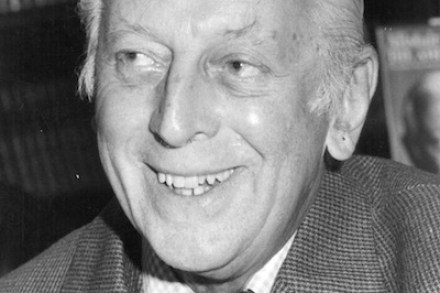
Living document

It takes Alistair Cooke three minutes, or about 450 words, before he finally gets round to declaring ‘I was there’ — on the night that Bobby Kennedy was assassinated in June 1968. Cooke was talking just a few days later on his weekly Letter from America slot on Radio 4. You might think Cooke would not have been able to contain his excitement that after 30 years on the job as a foreign correspondent he had at last actually been there as an eye-witness to this dramatic ‘accidental convulsion of history’. But, no, Cooke, as the ultimate professional, understood that for us, his listeners, the impact of his account would be enhanced 300 per cent if he gave us a preamble, a slow build.

Hearing voices | 1 November 2012

It’s business as usual for the BBC’s radio stations. While the boardroom burns, the production teams are busy creating — weekloads of entertainment, information, erudition. The doomsayers love a crisis, and this latest disaster is a devil of a mess, but we should probably remember that the Corporation depends for its survival not on the superiority of its management techniques but on the continuing excellence of its programmes. Once that goes, we should be really worried. Anyone doubting this should spend the afternoon with Simon Callow and his Tasting Notes programme on Classic FM (Sundays). Sponsored by Laithwaite’s Wine, the programme’s format obliges Callow to match each and every piece of music on his playlist with a suitably blended glass of wine.

Exhibitions of narcissism

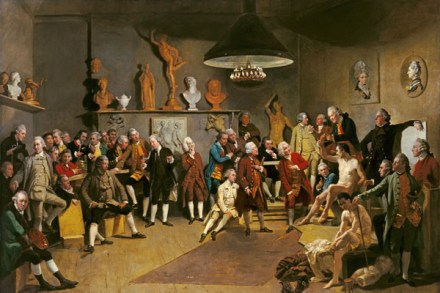
The summer exhibition at the Royal Academy, with its overstuffed galleries and motley collection of overblown portraits, twee still lifes and garish landscapes has become an event where you go to be seen rather than to see; it’s less about the art than the experience. But the first-ever public show of paintings, sculpture, architectural drawings in London, which opened on 21 April 1760, was a truly artistic sensation. For the first time, it was possible for anyone to see the best of British paintings and sculpture, for the price of a modest entrance fee. Until then, viewing great masters had been strictly limited to those who could afford to travel abroad to the galleries of Florence, Rome, Paris, or who had rich friends with a private collection.

Time switch

It seems an astonishing statistic but 99.6 per cent of radio is broadcast live, delivered straight from the studio mike to your personal loudspeaker: 99.6 per cent! Compared with TV, which must be at least 80 per cent recorded, this is an extraordinary indicator of how radio is the on-message medium right now, able to deliver immediate content, live and interactive. Yet a lot of radio listening is not done in real time these days, but later, after transmission, via the internet, the iPlayer, podcasts and downloads. We could experience a live connection but find ourselves switching on to a recorded moment. This is all about to be revolutionised with the launch earlier this month of a new version of iPlayer.

Serious listening

‘Shhhh! Listen!’ Peter White demands of us, his listeners. ‘You’re about to enter into a blind man’s world.’ White, who for years has presented the In Touch programme on Radio 4 on Tuesday nights and who is now a stalwart on You and Yours, has become such a finely attuned listener that he can tell whether a day is damp not by colour of the sky that he cannot see, or by smell, but by checking out what he can hear, the tick, tick, thump of raindrop on leaf as drizzle slowly envelops the street.

Teen spirit

A vital sign that radio is so much more vibrant these days than tired old TV is the way the networks are rebranding themselves, extending their range, developing their programme base. On Radio 1 on Monday night Keeping Mum took on the subject of young adult carers in a feature that could easily have been on Radio 4. Greg James, the Radio 1 DJ, hosted, but he was soon overshadowed by his young co-presenter, Pippa Haynes, who last year was recognised as a Radio 1 Teen Hero in a celebrity bash at Wembley Arena. Pippa, now 18, looks after her mother, who has spinal injuries, and her mentally ill sister, and has done since she was four. ‘Why is there no support?

No escape

‘They were Jews with guns! Understand that...’ declares Raymond Massey, chillingly, in the final scene of The Battle of the Warsaw Ghetto, first heard across America on Sunday, 12 December 1943. Notice that date: 1943. Not 1953, or even 1945. Just six months after the Jews who had been herded into the Polish capital by the Nazis lost their battle to escape certain death, American radio fans heard the rich and unmistakable voice of Massey (Oscar-winning star of a Hollywood biopic on the life of Abraham Lincoln), playing the role not just of a dead man, which was shocking enough, but of a Jewish dead man, a rabbi who had lost his life at Warsaw. After hearing the drama there would have been no excuse for not knowing, and fully understanding, what was happening in Europe.

Classic celebrations

It’s 20 years since Classic FM launched itself on the airwaves with a blast from Handel’s ‘Zadok the Priest’. Its mission was to play ‘the world’s greatest music’ non-stop to an audience for whom the classics was a no-go area. On paper it’s worked a treat. The station now claims five million-plus listeners, who love its blend of Vivaldi, Prokofiev and John Barry interspersed with adverts for dental implants, Age UK and classicfm.com/romance. Last Friday was devoted to its birthday celebrations.

Crime and punishment

Just a snippet on an edition of Today last spring taken from the programme that had just won an esteemed Sony Gold radio award was enough to create an impact. Ray and Violet Donovan were talking about the murder of their son, Chris, on a feature made by the Prison Radio Association. The programme was part of an innovative Restorative Justice scheme, using the power of listening to help victims, heal prisoners, and of taking that one further step by then broadcasting their conversations throughout the prison network. It was one of those moments when you just had to stop whatever you were doing. There was something in the voice, the stillness around that voice, the lingering echo of what was being said. It made you want to hear more from Ray and Violet, and from the prisoners.

Human stories

‘The aggregation of marginal gains’ is the key to success, according to Dave Brailsford, the extraordinarily successful cycling coach to Team GB. You could say that’s been the motto of this Olympic Games. Not massive injections of dosh (or drugs, for that matter). But a heady cocktail of supreme physical effort and tactical nous. Brailsford recognises it’s the little things that can make the difference when mere fractions of a second are all that’s between gold and nothing. We discovered that his cyclists sleep on specially chosen mattresses and wear heated hot pants (yes, I do mean hot pants). Cyclists, he reckons, need to sleep well before a race.