Kate Andrews

Kate Andrews

Kate Andrews is deputy editor of The Spectator’s World edition.

Do Rachel Reeves’s growth plans go far enough?

From our UK edition

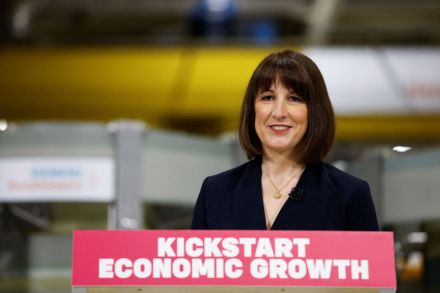
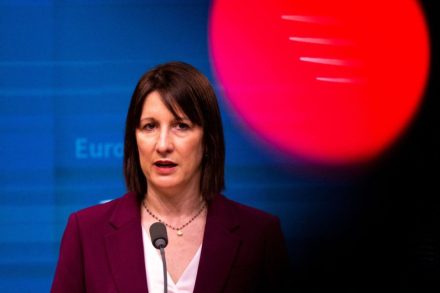
Has Rachel Reeves got her growth? Today’s speech from the Chancellor in Oxfordshire was not this government’s first attempt to pivot towards a more business-friendly, growth-generating narrative. But it was its best effort yet.  Starting with the highlights. Reeves threw her unabashed support behind a third runway at Heathrow, insisting that the expansion was ‘badly needed’ and that the case had never been stronger for boosting trade; the airport ‘connects us to emerging markets all over the world, opening up new opportunities for growth’. Let’s not get carried away She called on proposals to be submitted by the summer, to start a process that would ensure the fastest and best-value action was taken to get more planes on and off the ground.
Will Rachel Reeves walk the walk on going for growth?

From our UK edition

On the face of it, the Chancellor’s big growth speech tomorrow could be one of this government’s most significant interventions yet. If Rachel Reeves is serious about starting the building process for a third runway at Heathrow – she is expected to endorse the idea formally tomorrow – she will be single-handedly overturning more than a decade of Nimby consensus under the Tories that such projects simply were politically impossible to carry out. The same goes for her pledge to finally get some homes built, and to ‘take on regulators, planning processes and opposition’ to the growth consensus. These also seemed like an impossible task for the governments that came before her.

Is Donald Trump warming to Keir Starmer?

From our UK edition

16 min listen

Starmer and Trump have finally spoken, with a 45 minute phone call taking place between the two leaders. The pair reportedly discussed the ceasefire in Gaza, and trade and the economy, with Starmer attempting to find common ground by talking up his plans for deregulation. Cindy Yu speaks to Katy Balls and Kate Andrews about their relationship. Do these early signs suggest it will be wholly positive, or are there thornier issues to come?  Also on the podcast, Rachel Reeves is set to deliver a speech this week outlining her plans for growth - just how important is this week for her? Produced by Patrick Gibbons and Cindy Yu.

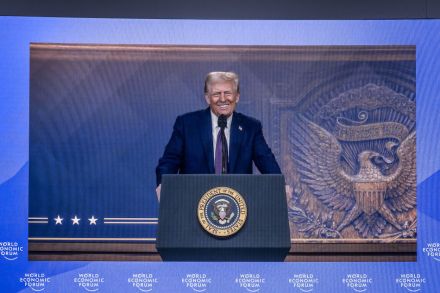
Trump gives the establishment some respite at Davos

From our UK edition

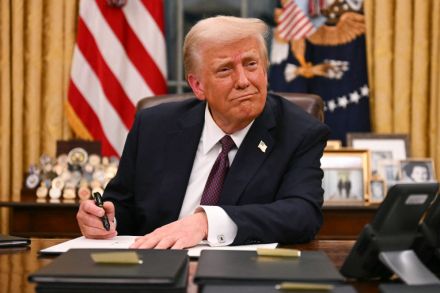
We’ve heard more from the 47th President of the United States this week than we heard from his predecessor over many months. But Donald Trump has always loved the spotlight: especially when he gets to rile up all his favourite people. This was on full display this week when, rather than winding down from his inauguration speech, the President ramped up his message in a video call to Davos. The establishment was on high alert all week, well aware that the annual Swiss gathering of politicians and CEOs kicked off on the same day Trump was sworn in for a second time. They were right to be worried. Trump did not pull his punches. But to the relief of many Davos attendees, Trump’s critical focus was largely pointed at political opposition in his own country.

‘I’m a Democrat who will give him a chance’ – Lionel Shriver on Trump’s inauguration

From our UK edition

23 min listen

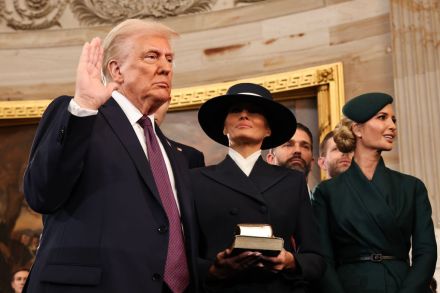
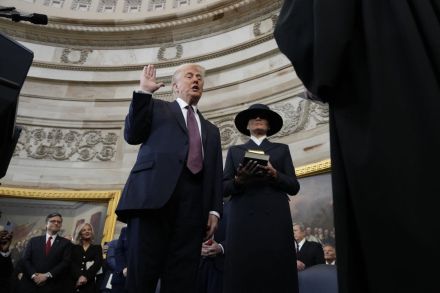
Donald Trump has been sworn in as the 47th President of the United States. All the former leaders of the free world were there to watch Trump take the oath - again - but how was this inauguration different to the last? And what signs were there of how Trump intends to govern? Guest hosting for Americano, The Spectator’s Kate Andrews speaks to Freddy Gray, who is on the ground in D.C., and Lionel Shriver about Trump’s speech lamenting the Biden administration, Biden’s last minute pardoning of his family, and why some Democrats could be willing to give Trump a chance this time round.  Produced by Patrick Gibbons and Natasha Feroze.

Donald Trump has promised the world

From our UK edition

‘The golden age begins right now’ said the 47th President of the United States as he began his inauguration speech in the Capitol Rotunda. What followed was a 30-minute speech, during which Donald Trump stayed both on script and on message, reiterating his promise to declare a border crisis, deport foreign criminals, return America’s title of energy independence and to ramp on tariffs on foreign countries to ‘protect American workers and families’.  Trump aides had promised that, eight years on, the President’s second swearing-in speech would be different. Gone were the days of promoting ‘American carnage’. Today, the message was to be one of unity.

Trump has upended the Davos dominion

From our UK edition

It’s fitting that Donald Trump’s inauguration day coincides with the first day of the World Economic Forum’s infamous Davos conference. The new and the old world orders are, in theory, competing for attention. But this is not a competition. It’s not even close. This year’s conference theme is ‘Collaboration for the Intelligent Age’: an idea that means little to nothing if the world’s largest economy – and leader in AI development – is not on board. And ‘collaboration’ is hardly a word that suits the lead-up to inauguration day, as the 47th President of the United States has been gearing up for the return to an ‘America First’ policy, which is set to include the establishment of more trade barriers on his first day back in the Oval Office.

Will Donald Trump pardon TikTok?

From our UK edition

Millions of Americans will have tried to follow their routine this morning: turn off the alarm, grab the phone, start to scroll. For TikTok users, there will have been a moment of false hope: the shortest clip of a video starts to play, before the notification pops up that everyone was expecting , but no one was certain would actually appear: ‘Sorry, TikTok isn’t available right now.’ With a federal ban looming, the company decided to cut off operations for its 170 million users in America, making clear in the statement who is responsible: ‘A law banning TikTok has been enacted in the US. Unfortunately, that means you can’t use TikTok right now’.

Reeves’s worst week so far?

From our UK edition

16 min listen

It's been a tricky week for Rachel Reeves: an onslaught of criticism for the levels of borrowing costs, GDP at 0.1 per cent, and stagflation still gripping the UK economy. Remarkably she has come out of it looking stronger – politically at least. But can she afford to celebrate? The Spectator's Kate Andrews and data editor Michael Simmons join the podcast to discuss the economy, and go through some of the most striking graphs from The Spectator'sdata hub this week. Produced by Natasha Feroze.

Will the IMF regret its backing for Labour’s Budget?

From our UK edition

International investors may be jittery about the UK’s future, but the International Monetary Fund appears to be more optimistic. The IMF has published its World Economic Outlook report for January, which forecasts the UK will have the third-fastest growth in the G7 this year. It revises upwards its projection for 2025, by 0.1 per cent, to 1.6 per cent. The UK falling in after the United States and Canada does not make good on Labour’s promise to be the fastest growing advanced economy. But after a tumultuous week of gilt fluctuations, bad growth figures and an even worse retail sales update, it’s a good way to be ending the week.

The UK economy is in a rut

From our UK edition

The UK economy has grown for the first time in three months. The Office for National Statistics (ONS) reports that the economy expanded by 0.1 per cent in November after it contracted by 0.1 per cent in both September and October. This uptick is largely thanks to an increase in services output, which grew by 0.1 per cent in November 2024, after falling by 0.1 per cent in October (a downward revision from last month’s estimate that there had been no growth. So has the economy turned a corner? It’s very difficult to spin this morning’s news in a wholly positive light. Yes, it’s good that the economy did not contract again, but November’s numbers are simply more evidence of a stagnant economy.

Why would the government pay Gerry Adams?

From our UK edition

11 min listen

With rumours swirling around Westminster and after Keir Starmer’s less than convincing defence of his Chancellor earlier in the week, Rachel Reeves has found some brief respite. The Office for National Statistics (ONS) confirmed that inflation dipped to 2.5 per cent in the 12 months to December, down from 2.6 per cent the month before. It’s welcome news for a Chancellor who is under pressure, so is she safe? Elsewhere, there is a fresh row emerging concerning Gerry Adams. The government is proposing to repeal legislation, enacted in 2023, that prevents Gerry Adams and 400 others from claiming ‘compensation’ for having been detained in the 1970s for suspected involvement in terrorism.

Inflation dip marks a welcome surprise for Rachel Reeves

From our UK edition

Rachel Reeves has found brief respite this morning, with the Office for National Statistics confirming that inflation dipped to 2.5 per cent in the 12 months to December, down from 2.6 per cent the month before. This is a smaller rise than had been expected (the consensus was 2.6 per cent) and roughly in line with the Bank of England’s forecast from November, which had predicted a 2.4 per cent increase. It's welcome news for a Chancellor who is under pressure. Core inflation slowed too, from 3.5 per cent in the year to November, to 3.2 per cent in December. This competes for the best news in the update, as core inflation (which does not include more volatile costs, like food) has been particularly sticky in the UK over the past couple of years.

Rachel Reeves is getting ready for the next market test

From our UK edition

Rachel Reeves did her best to keep today’s China visit statement on topic. The Chancellor wanted to talk about ‘cooperation’, ‘competing where our interests differ,’ her efforts to break down market barriers and the £600 million she secured in investment. But other MPs had other ideas.  ‘I know the Chancellor has been away,’ said the Shadow Chancellor Mel Stride. ‘So let me update her on the mess she left behind.

Can Trump claim the credit for an Israel-Hamas ceasefire?

From our UK edition

Donald Trump has made a long list of promises for what will be done on ‘day one’ of his second term in the White House. Peace in the Middle East was not one of them. Yet it looks increasingly likely that the President-elect will be sworn in having just helped to secure a ceasefire between Israel and Hamas, to (at least temporarily) end the war in Gaza.  Trump has made his feelings clear about the war for some time: in line with his broader views about foreign conflict, he wanted the war brought to an end. While positioning himself as a strong ally of Israel, the President-elect was also calling for swift action in the lead-up to last year’s election, saying in April: ‘What I said very plainly is get it over with, and let’s get back to peace and stop killing people.

Rachel Reeves is making the same mistake as Liz Truss

From our UK edition

Rachel Reeves returns from China this morning to face growing accusations that she has lost her grip on the public finances. This latest bond market crisis has brought into question whether the Chancellor is at risk of – or has already – broken her own fiscal rules. Capital Economics reports that a surge in gilt yields – which are at their highest levels since the financial crash – means that her £12 billion of fiscal headroom is now gone. The Treasury will be desperately hoping that something, anything, calms the markets this week and sees borrowing costs start to fall. Reports that the Chancellor has called on ministers to come up with some quick and spectacular ideas to grow the economy over the weekend are unlikely to cut it.

Borrowing costs soar – will Rachel Reeves have to go back on her word?

From our UK edition

12 min listen

Long term borrowing costs for the government have reached levels not seen since 1998, and 10 year UK gilts are now at their highest point since the 2008 financial crash. Both surpass the levels seen during the Liz Truss premiership - and this hasn't gone unnoticed by the former PM. A set of similar circumstances, but could the consequences be the same? What are the economic - and political - challenges facing Keir Starmer and Rachel Reeves? James Heales speaks to Kate Andrews and Katy Balls to unpack the latest tranche of economic data. Produced by Patrick Gibbons.

Smoking bans: the fallback legacy for failed leaders

From our UK edition

What is a legacy? Is it the sum of our actions? Is it the family and friends we leave behind? Is it banning cigarettes? The consensus for exiting western leaders seems to be that last option. Just days before Joe Biden is to leave the White House, and hand the power back to Donald Trump, his administration is trying to push through a last-minute curb on the production of cigarettes, which critics are saying would not be far off from an actual ‘ban’. The plan is to mandate a significant reduction in the amount of nicotine found in cigarettes, so that future products are less addictive, and less appealing, to consumers.

Borrowing costs have just passed Liz Truss levels

From our UK edition

The new year may have rustled up some surprise stand-offs for the Labour government (mainly calls from X founder Elon Musk for Keir Starmer to resign), but the rise of new problems does not mean the old problems have disappeared. A harsh reminder has been dished out this morning, as long-term borrowing costs reached a 27-year high, calling into question yet again exactly how the Treasury is going to make good on its spending commitments while sticking to the Chancellor’s own fiscal rules. Thirty-year gilt yields hit 5.21 per cent this morning – a level that surpasses the surge in borrowing costs following Liz Truss’s mini-Budget in 2022. The ten-year gilt is now parallel to the peak reached under Truss, too.

Elon Musk is just one of Labour’s many headaches

From our UK edition

It’s not terribly helpful for Keir Starmer that Elon Musk is creating polls on X, asking his 210 million followers if ‘America should liberate the people of Britain from their tyrannical government’. Nor does the Prime Minister seem very happy about the attacks on his record as chief prosecutor, using the Q&A of his healthcare speech this morning to insist that he used his five years in the role to tackle child exploitation ‘head on’. But the mudslinging back and forth across the pond has buried one of the most worrying indicators for 2025 announced so far: business confidence has sunk to its lowest point since Liz Truss’s infamous mini-Budget.