Kate Andrews

Kate Andrews

Kate Andrews is deputy editor of The Spectator’s World edition.

Coffee House Shots Live with Robert Jenrick and Jonathan Ashworth

From our UK edition

70 min listen

The Spectator’s Katy Balls, Michael Gove and Kate Andrews were joined by special guests Robert Jenrick and Jonathan Ashworth for a live podcast, recorded at the Emmanuel Centre in Westminster. The main topic of discussion was, of course, Donald Trump, whose inauguration has ushered in a new world disorder. His ‘shock and awe’ foreign policy has sent Europe scrambling as it tries to work out who will be responsible for ensuring its security in the future. We have seen a move away from the idealism that has defined foreign policy in the last decade and towards ‘realism’, with countries committing to boots on the ground and greater defence spending. Are Labour right to increase their defence pledge?

How successful was Keir Starmer’s visit to Washington?

From our UK edition

25 min listen

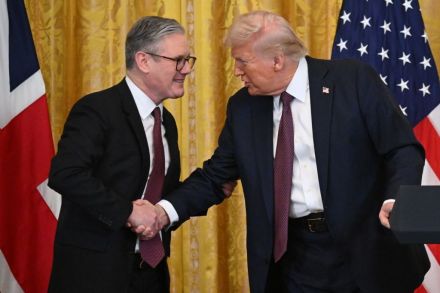
Freddy is joined by The Spectator World’s deputy US editor, Kate Andrews, and The Telegraph columnist, Tim Stanley, to talk about Keir Starmer’s much-anticipated meeting with Donald Trump in Washington. Across the board, it has been read as a success – at least domestically, that is. The victories include movement on the Ukraine backstop, some positive discussions around the UK avoiding tariffs, and a second state visit is on the horizon as well. The biggest win, though, was the number of compliments that the president gave Starmer, including – puzzlingly – about his accent. The Spectator World’s Ben Domenech secured an interview with Donald Trump after the Starmer meeting, in which he was similarly effusive about the PM: ‘I thought he was very good.

How Starmer won over the Donald

From our UK edition

14 min listen

Unbelievably, Keir Starmer arrives back from Washington today after a successful meeting with Donald Trump. In fact, it’s hard to see how it could have gone much better. Top of the list of victories: it looks like some headway was made in avoiding tariffs on the UK and, on Ukraine, the pair discussed the prime minister’s call for a security backstop for any deal. Starmer described that part of the talks as ‘productive’ and said that a ‘deal has to come first’. There will also be a second state visit for the President.  The greatest victory however is winning personal and effusive praise from the President. The Spectator’s sister magazine in the US was the first to get Trump’s reaction. The president told editor-at-large Ben Domenech: ‘I thought he was very good.

Can Starmer score an easy win with Trump on Ukraine?

From our UK edition

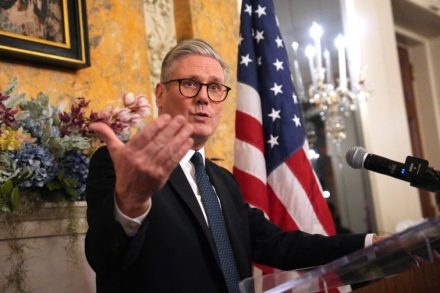
Keir Stamer has landed in Washington, where he joins the succession of European leaders lining up to convince the President of the United States that he’s got it wrong on Ukraine. But will the Prime Minister be convincing? Starmer and Donald Trump will meet today at the White House, arriving just after 1pm EST (5pm GMT). The pair are set for talks, lunch, and a press conference, taking up several hours of the afternoon. The Prime Minister has arrived with some points to make about Ukraine – mainly the insistence that the US provides a ‘security guarantee’ for the country under siege – but he’s got some kind words to deliver, too.

Starmer’s Scottish headache

From our UK edition

11 min listen

'What does a party get after nearly two decades in office, collapsing public services, an internal civil war and a £2 million police investigation? Re-election again - perhaps with an even bigger majority', writes James Heale in The Spectator this week. He's talking about the SNP, whose change in fortunes has less to do with their leader John Swinney and more to do with the collapse of support for Scottish Labour and their leader Anas Sarwar. Who could benefit from the increased fragmentation of voters in Scotland? Will demands for more time, money and attention cause even more issues for Rachel Reeves? As Scottish Labour meets for its conference in Glasgow this weekend, James and editor Michael Gove join Katy Balls to discuss the dynamics between Holyrood and Westminster.

Why Rachel Reeves is safe, for now

From our UK edition

14 min listen

Foreign affairs are inescapable this week, with the readout from the meeting yesterday between Russian and American diplomats in Saudi Arabia. We understand that Trump told Putin that Ukraine will be part of the next round of peace talks. However, Trump’s shock-and-awe foreign policy continues to deliver significantly more shock than awe, especially after he seemingly blamed Ukraine for starting the war. What is he thinking? Could there be more to Trump's foreign policy than he is letting on?  Back in the UK, pressure is mounting on Rachel Reeves as more inaccuracies in her CV come to light, and inflation rises to 3 per cent. There have been murmurs that she could be replaced, but is there a viable candidate to replace her?

Inflation rises to 3% – should we panic?

From our UK edition

Prices are rising. Inflation rose to 3 per cent in the twelve months leading up to January, up from 2.5 per cent in December. It’s a bigger jump than expected, with markets and the Bank of England expecting a rise to 2.8 per cent, driven largely by higher transport costs, as well as higher costs for food and non-alcoholic drinks. Is there reason to panic? While the CPI figures are higher than expected for January, they are not far out of line with the Bank’s latest forecast, which expects inflation to peak closer to 4 per cent this summer, due to rising energy costs. As Capital Economics notes this morning, ‘it’s no secret that higher energy prices will push CPI inflation further above 3 per cent over the next seven months' when Ofgem updates the price cap once again.

Can we trust the Tories on immigration? An interview with Chris Philp, shadow home secretary

From our UK edition

38 min listen

On this special episode of Coffee House Shots, economics editor Kate Andrews is joined by shadow home secretary Chris Philp to discuss the Tories’ newly announced plan to tackle immigration. On legal migration, their proposal includes plans to end worklessness in order to stop the reliance on low-paid migrant workers. And on illegal migration, the line is ‘zero tolerance’ on small boats, including a removals deterrent much like the Rwanda plan, as well as other changes to the legal framework. One of the more controversial elements of their strategy is on citizenship.

The Spectator’s war on government waste

From our UK edition

11 min listen

It’s a double celebration for Rachel Reeves today. Not only is it her birthday, but the UK economy grew by 0.1 per cent in the last three months of 2024, according to the Office for National Statistics’ latest report. December, when the economy expanded by 0.4 per cent (the market consensus had been 0.1 per cent), was the saving grace. This helped tip the final quarter of 2024 onto the right side of positive growth. But it’s not all rosy for the Chancellor. This morning’s update won’t take anyone in the Treasury off high alert, and there has been a development in the story about her CV. The BBC has been looking into her expenses during her time at Halifax bank. The Chancellor’s response is that she had no knowledge that there was an investigation into wrongdoing.

UK recession fears ease but Rachel Reeves has little to celebrate

From our UK edition

The UK economy grew by 0.1 per cent in the last three months of 2024, according to the Office for National Statistics's latest report. December, when the economy expanded by 0.4 per cent (the market consensus had been 0.1 per cent), was the saving grace. This helped tip the final quarter of 2024 onto the right side of positive growth. Talk of recession will quiet down, at least for now. But this morning’s update is not going to take anyone in No.10 or the Treasury off high-alert. Monthly growth in December was stronger than expected, mainly thanks to a continued rise in services activity and a recovery in production from November.

OBR gloom spells trouble ahead for Rachel Reeves

From our UK edition

Has Rachel Reeves broken her fiscal rules? It’s been speculated for some time now that the Chancellor lost her headroom when borrowing costs surged last month. Capital Economics forecast at the start of the year that Reeves’s limited headroom (about £10 billion) had been wiped out by rising gilt yields. This left the Chancellor in the uncomfortable spot of having to weigh up more tax hikes or serious spending cuts just months after unveiling her first Budget – the kind of tax-hiking Budget she insisted would not be needed again. Today, the news gets worse. The Office for Budget Responsibility has reportedly downgraded its growth forecast for the UK – squeezing the Chancellor’s headroom further.

Have the Tories thought through their immigration policy?

From our UK edition

12 min listen

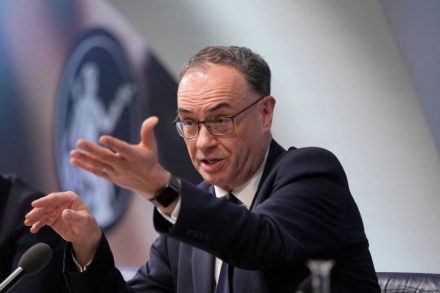
The Bank of England has cut interest rates for the third time since the inflation crisis, taking the base rate to 4.5 per cent. The Monetary Policy Committee voted by seven to two to further reduce rates by 0.25 percentage points – a move that was widely expected by markets, but had been put into doubt after government borrowing costs surged in January and President Donald Trump announced his plans for substantial tariffs last week. Why have the Bank of England decided to cut rates? Also today, Kemi Badenoch has announced some policy! Ahead of the Labour government’s Border Security, Asylum and Immigration Bill being debated in Parliament next week, the Tory leader has unveiled her party’s latest offering on immigration. But have they actually thought it through?

Why the Bank of England is cutting interest rates

From our UK edition

The Bank of England has cut interest rates for the third time since the inflation crisis, taking the base rate to 4.5 per cent. The Monetary Policy Committee voted by seven to two to further reduce rates by 0.25 percentage points – a move that was widely expected by markets, but had been put into doubt after government borrowing costs surged in January and President Donald Trump announced his plans for substantial tariffs last week. Even so, the MPC pushed ahead – interestingly with no one on the committee voting to hold rates at 4.75 per cent (two members voted instead for a 0.5 percentage point cut).

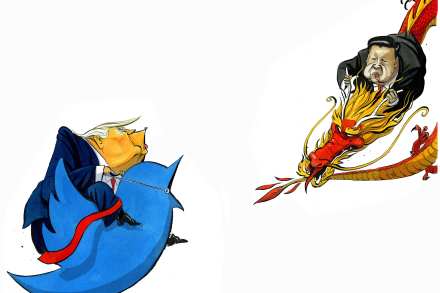
What does Donald Trump want from a trade war with China?

From our UK edition

What are the real intentions of Donald Trump’s trade war? Does he really believe tariffs work to boost economic growth domestically? Does he see them as tools to prop up American businesses, as his Vice President does? Or, as in his first term, are threats of import levies almost purely about leverage – and if so, what does he want? Last-ditch efforts to pause 25 per cent tariffs on Canadian and Mexican goods seem to have worked, with both countries pledging to better police illegal immigration and drug trafficking across the borders. Trump has suspended the implementation of tariffs for 30 days to see if both countries can move towards what he calls ‘FAIRNESS FOR ALL’.

Are Trump’s tariffs really that bad?

From our UK edition

34 min listen

The Spectator's economics editor Kate Andrews and Social Democratic Party leader William Clouston join Freddy Gray to try and make sense of Donald Trump's decision to impose tariffs on Canada, Mexico and China. He has since threatened the European Union, and has warned the UK. Is this a negotiation tactic or something more? What political philosophy underpins the decision? And what will the impact be? Produced by Patrick Gibbons and Megan McElroy.

Trump vs Europe

From our UK edition

15 min listen

Trump's tariff spree continues... After making good on his election promise to opt for another round of tariffs – a 25 per cent tax on imports from Canada and Mexico and a 10 per cent levy on Chinese goods – Trump has now turned his attention to Europe. In an interview with the BBC, the president said that while the UK would likely avoid tariffs, the EU might not be so lucky and described the trade relationship with Europe as an ‘atrocity’. This comes on the day that Keir Starmer is in Brussels and will likely be trying to smooth the road ahead of a post-Brexit ‘reset’. Can Labour continue to play both sides? Katy Balls speaks to Kate Andrews and Charles Grant, director of the Centre for European Reform. Produced by Oscar Edmondson.

Will Britain get dragged into Trump’s trade war?

From our UK edition

North America is now engaged in a full-blown trade war. Markets are reacting. Japan’s Nikkei was the first to indicate the downturn, falling 2.9 per cent this morning, while early trading on the FTSE is down 1.1 per cent. It’s not the cataclysmic shock some were expecting, though also not the ‘FANTASTIC’ response the President insists has occurred since his announcements over the weekend, which include hitting Canada and Mexico with a 25 per cent import tariff, and China with an additional 10 per cent. It is also just the start of market reaction, as forecasters pile in with predictions about what these tariffs mean for inflation, business confidence and future trade relationships between close allies.

Donald Trump kicks off the tariff wars

From our UK edition

He did it, Joe! Following on from the $79 billion worth of tariffs he implemented in his first term – which went largely untouched by Joe Biden’s Administration –  last night Donald Trump made good on his election promise to opt for another round of tariffs: this time, a 25 per cent tax on imports from Canada and Mexico, with China facing an additional 10 per cent levy on its goods. Despite whispers that the President might water down his plans in the last hours, he carved out very few exceptions for his new tax orders, which include Canadian oil and energy supply. It is now expected that America will be in a trade war with all three of its largest trading partners It’s a staggering tax, the cost of which experts have been desperately trying to calculate overnight.

Will Trump follow through on his tariff threat on Canada and Mexico?

From our UK edition

No one can really act surprised if Donald Trump pushes ahead with substantial tariffs on Canada and Mexico tomorrow. ‘Tariff’ is the President's favourite word, as he said many times on the campaign trail in the lead up to last November’s US election. The only words that could compete for the top slot were ‘love’ and ‘religion’. So, the countdown to 1 February – when a staggering 25 per cent border tax is slapped on the countries north and south of America’s border – isn’t, in theory, some dreaded doomsday for Trump. If anything, it’s more like the countdown to Christmas. Is this really the end game for the President? But is this really the end game for the President, who has promised the American people both tariffs and cheaper goods at the same time?

‘Props to Rachel’

From our UK edition

12 min listen

Today was the day for Rachel Reeves, as she delivered her big growth speech in Oxfordshire. This was not this government’s first attempt to pivot towards a more business-friendly, growth-generating narrative, but it was its best effort. The headline announcement is, of course, a third runway at Heathrow, throwing her support behind the ‘badly needed’ expansion. However, a lot of what was announced will sound familiar to recently departed Tories, who laid the groundwork for Labour’s plans to properly connect the South East (or the ‘Oxford–Cambridge Arc’, as it has been repackaged). Will Rachel Reeves get her growth? Katy Balls speaks to Michael Gove and Kate Andrews. Produced by Oscar Edmondson.