Kate Andrews

Kate Andrews

Kate Andrews is deputy editor of The Spectator’s World edition.

No. 10’s Christmas trade-offs

From our UK edition

The government’s Covid-19 strategy is designed to keep Christmas gatherings on the cards. But what might be the trade-offs? At this morning’s Downing Street press conference on Covid-19 data, Public Health England's Dr Susan Hopkins and deputy chief scientific adviser professor Dame Angela McLean gave some indication of what tactics could be used to make Christmas week feel as normal as possible. Dr Hopkins referenced Sage advice, suggesting that ‘for every day we release, we’ll need two days of tighter restrictions'. (Public Health England has since issued a correction to this statement, saying every day of 'release' will require five days of increased restrictions.
Denmark is creating a roadmap for mandatory vaccination

From our UK edition

Could British residents be forced to have a Covid-19 vaccine? Yesterday Health Secretary Matt Hancock refused to rule out mandatory inoculation, telling TalkRadio that the government would ‘have to watch what happens and… make judgments accordingly’. His comments have sparked questions about how realistic the prospect of mandatory vaccination is in the UK, or what restrictions people could face – with MP Tom Tugendhat suggesting that the unvaccinated could be banned from workplaces – if they refuse to get inoculated. If a policy of mandatory vaccination were to be carried out in the UK, what might it look like?

Britain’s economy has been bouncing back – but there’s a major caveat

From our UK edition

Britain's economy rebounded by a record 15.5 per cent between July and September, reflecting the relaxation of lockdown measures and increased consumer activity over the summer. This is the largest quarterly growth in the UK economy the Office for National Statistics has reported since records began in 1955. Services, manufacturing, production and construction saw big uplifts across the board in Q3, but all remain below their Q4 levels in 2019, reflecting that the economy as a whole has not recovered to its pre-Covid levels: it is still 8.2 per cent smaller than it was at the start of the year.

Treasury reveals it didn’t forecast economic impact of second lockdown

From our UK edition

Lockdowns are designed to temporarily delay the spread of the virus – but at what cost? This was the line of questioning that kicked off yesterday’s evidence session for the Treasury Select Committee, scrutinising the work HM Treasury has conducted in relation to lockdown. Chair of the committee Mel Stride asked Clare Lombardelli, Chief Economic Adviser to the Treasury, to comment on specific economic analyses conducted around lockdown restrictions, ranging from the closure of pubs, gyms and restaurants to ‘circuit breakers’ and working from home directives. It was quickly revealed that no analysis has been done.

Why is No. 10 so cautious about a Covid vaccine?

From our UK edition

14 min listen

The Pfizer vaccine is being lauded by many as the silver bullet that could end the Covid crisis. Meanwhile, the UK has seen a record number of redundancies. Also, No. 10 suffered serious defeat in the Lords last night over its controversial Brexit bill. Katy Balls talks to James Forsyth and Kate Andrews.

Joe Biden wins the election

From our UK edition

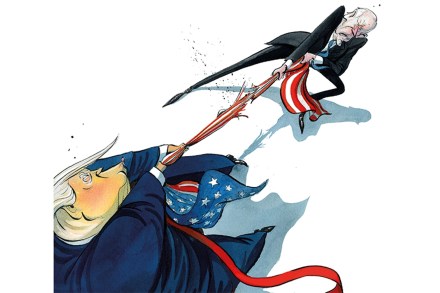
Four days after a (much closer than predicted) election, American networks have called the race for Joe Biden, who has secured more than the 270 electoral votes needed to win the race. CNN, ABC, NBC, CBS, Fox News (and now the BBC) project Joe Biden will become the 46th President of the United States, as vote counting in Pennsylvania gave the Vice President a big enough lead for them to say with confidence he had won. The additional 20 electoral votes from the swing state bring Biden to a total of 273. Based on current projections, Biden only needed one of the outstanding states (including Georgia or Nevada) to cross the finish line. In addition to the networks, Joe Biden is now also declaring victory.

What will Boris make of a Biden win?

From our UK edition

President Donald Trump sees himself as a great friend to the UK: he backed Brexit, likes Boris, and has personal ties to Britain as well. He’s proud of his Scottish heritage, and long before he was running the nation, he was running golf courses in his mother’s home country. But it’s not obvious the UK government always appreciates the President’s expressions of support. The Johnson team made nothing of Trump’s endorsement for the Tory candidate during the 2019 general election. The government is notably squeamish whenever the President lavishes his praises.

Can the NHS cope with Covid?

From our UK edition

25 min listen

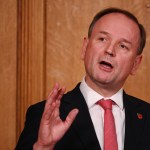
At Thursday's coronavirus press conference, Sir Simon Stevens, chief executive of the NHS, said a second wave 'is real and it's serious', as he warned that 11,000 people were already in hospital with the virus. Is the NHS able to cope with another spike in infections, and has the government adequately prepared for winter? Kate Andrews speaks to Fraser Nelson and Dave West, deputy editor of the Health Service Journal.

Trump doubles down on unfounded election claims

From our UK edition

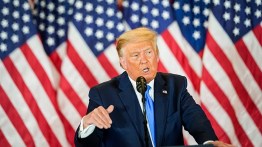
Tensions over the election outcome are escalating in the United States, as President Donald Trump repeated unsubstantiated claims of election fraud. Nearly a day and a half after Trump prematurely declared victory, he took to the stage at a press conference held in the White House and did so again, arguing 'if you count the legal votes, I easily win. If you count the illegal votes, they can try to steal the election from us.' He also used the opportunity to double down on his assertions of foul play: 'they’re trying to rig an election. They’re trying to steal an election,' he said. Team Trump has not provided evidence for these serious allegations.

Is this the end for Trumpism?

From our UK edition

28 min listen

What are the latest developments in the US presidential election? (01:15) - Lara is joined by the Spectator's economics correspondent Kate Andrews and the Spectator US's editor Freddy Gray, who is currently in Pennsylvania.What is it like to care for a disabled child during a time of lockdown? (09:19) - The journalist Sam Carlisle discusses the lack of support for her daughter Elvi with the Education Select Committee Chairman Robert Halfon. And finally, should churches keep their doors open throughout the pandemic? (20:42) - Journalist Laura Freeman thinks so, and considers the issue with Reverend Steve Morris from St Cuthbert's Church in North Wembley.Presented by Lara Prendergast.

Has Rishi Sunak lost the argument?

From our UK edition

14 min listen

The Chancellor announced new furlough measures today, something that he has long been opposed to. Katy Balls speaks to Kate Andrews and James Forsyth about whether or not Rishi Sunak has lost the argument.

Sunak’s furlough extension paves the way for more lockdowns

From our UK edition

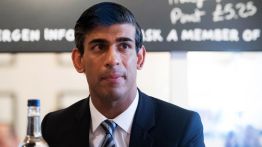
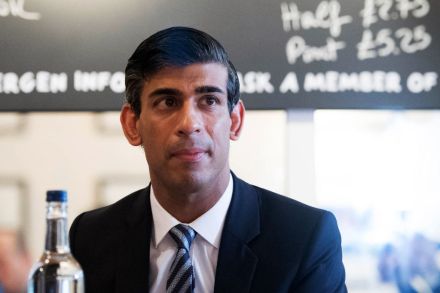
England has only been back in national lockdown for a matter of hours and already economic support packages are rolling in — not for the duration of this lockdown (furlough was already confirmed until 2 December) but for the months to follow after the country exits lockdown. Chancellor Rishi Sunak has abandoned a return to the jobs support scheme when lockdown ends — which sees the majority of financial costs fall on the employer — and instead decided to extend the furlough scheme across the UK in its most generous form.

The economy was Trump’s secret weapon

From our UK edition

American expats have a conundrum on election night: do you stay up to watch the results come in or do you try to sleep? On the one hand, the future of your country is at stake — and in the pre-Covid era, there was the added glamour of election night parties and free booze. On the other hand, if your side loses, you’re miserable and exhausted. Of course I stayed up. Four years ago I watched hundreds of party guests flee the US Embassy in London in a matter of minutes after Florida declared for Donald Trump, trampling over Hillary badges and stickers on their way out. This year I spent the night alone with Bret Baier (Fox News) in my living room. It would appear that even after four years, no one has solved the Trump riddle.

The good and bad news for Trump about the US economy

From our UK edition

With voting day finally here, what can the state of the US economy tell us about tonight’s result? While the United States has been hit hard by Covid-19, the country's economy is showing signs of improvement – and the latest stats could be good news for Donald Trump in his bid to defy the odds and win re-election. GDP figures for the third quarter of 2020 (published last week) show a spectacular rebound for annualised GDP: 33.1 per cent between July and September. This amounts to a 7.4 per cent increase from the previous quarter, the fastest growth the US has seen in its post-war history. According to Capital Economics, the recovery can be credited to a 40.

Backsliding on a lockdown end-date has begun already

From our UK edition

Will England’s lockdown end on 2 December? Even before this morning’s media round there was good reason to suspect it might not. The first national lockdown - we were originally told - would be for three weeks, with the explicit aim of building more capacity in the National Health Service. But the goalposts shifted and three weeks turned into more than three months: despite daily Covid deaths peaking in April, pubs and restaurants didn’t reopen until early July. Weeks later gyms and other leisure sectors followed, and public transport guidance changed to encourage employees back to their offices.

The green revolution: how technological advancements can level up Britain sustainably

From our UK edition

59 min listen

The UK was the first major economy to set a net-zero carbon emission target. But our work is cut out for us: 23 million homes fuelled by natural gas will need upgrading, while nearly 98% of vehicles on UK roads are still powered by petrol or diesel. Reaching net-zero will require big changes, but will also need to sustain our standards of living and quality of life. As we make this transition, and start to recover from the economic damage Covid-19 has inflicted upon the world, we have the opportunity to merge the levelling up agenda with green solutions and advancements.

Has Rishi Sunak performed a U-turn?

From our UK edition

11 min listen

The Chancellor's new economic package was much more generous than his previous plans, and when asked, Sunak insisted he was just reacting to the changing coronavirus situation. But could these pandemic developments really not be foreseen? Katy Balls talks to Kate Andrews and James Forsyth.

Sunak upgrades his jobs support scheme

From our UK edition

Chancellor Rishi Sunak has upgraded the jobs support scheme with a more generous package. The new measures, which will replace furlough on 1 November, will see eligible businesses pay just 5 per cent of their employee’s non-working hours (originally 33 per cent), with the government picking up the huge bulk of the tab once again. Where employees would have needed to work 33 per cent of their hours to be eligible for the scheme, this has now dropped to 20 per cent — the equivalent of one day out of the working week. The updated job support scheme sticks with the principle of the original plan: your employees have to be working to receive the subsidies. But it abandons plans to transfer the majority of the financial burden back onto the employer and away from the government.

Europe’s long Covid: things aren’t getting better any time soon

From our UK edition

China is now suffering only mild symptoms from the global pandemic. It is Europe that is stuck with the dreaded long Covid. The Chinese economy has rebounded and its exports are going through the roof, as it sells medical equipment to a world devastated by the pandemic it covered up. The virus originated in Wuhan, yet China has avoided much of the pain, despite how slow Beijing was to admit to the initial outbreak. But eurozone economies were a tenth smaller this spring than at the start of the year. Only a few weeks ago, it had seemed that Britain — and Europe — was on a steady path to recovery. The UK economy seemed to be bouncing back. This stood to reason: we have significantly more control over Covid-19 than we did in March.