Kate Andrews

Kate Andrews

Kate Andrews is deputy editor of The Spectator’s World edition.

Has inflation stuck?

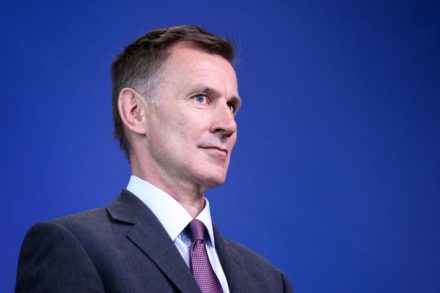
‘As we have seen across other G7 countries, inflation rarely falls in a straight line,’ said Chancellor Jeremy Hunt this morning in response to UK inflation data for September. We’ve seen this in the UK, too: at the start of the year, the rate of inflation rose from 10.1 per cent on the year in January to 10.4 per cent in February – before finally falling out of the double digits in April. And this morning we’ve seen another break in the line: the rate of inflation stuck at 6.7 per cent on the year in September, the same rate as August. Food and non-alcoholic beverages were the ‘largest downward contributors’ to this month’s figures. Having reached a high of over 19 per cent this spring, food price increases have slowed dramatically, falling to 12.

Say goodbye to tax cuts?

‘We are in a horrible fiscal bind’ says the Institute for Fiscal Studies this morning, as it publishes its Green Budget report ahead of the Autumn Statement. A combination of stagnant growth, stubborn inflation, rising debt interest payments and a tax burden at a postwar high has produced a grim assessment of the UK economy, which the IFS suggests will worsen in the coming years, as ‘huge fiscal pressures’ around the National Health Service and public sector pensions increase (more on that here). The report’s conclusion is that now is not the time to raise taxes. It would make terrifying reading for a Conservative prime minister and chancellor if they weren’t already aware of the dire financial state we’re in.

As oil prices rise, the permacrisis continues

It was a year ago this weekend that Liz Truss sacked her chancellor, Kwasi Kwarteng, over the fallout of their ‘growth plan’. This marked the beginning of the end of Truss’s premiership: she then appointed Jeremy Hunt to the role, and he swiftly dismantled almost every part of her infamous mini-Budget. Since leaving No. 10, Truss has been quick to return to the political spotlight, writing comment pieces for national papers, giving interviews, making speeches and interventions – and launching a Growth Commission through which she continues to take the Office for Budget Responsibility to task. But just as Truss continues to make her views known, so do her critics. One of those critics is Andrew Bailey, the Bank of England’s Governor.

Is the IMF right to be this pessimistic about the UK economy?

The International Monetary fund has published its biannual World Economic Outlook report – and it’s more bad news for the UK. While the IMF’s predictions for 2023 fall broadly in line with other forecasts – which show Germany having the most economic trouble this year – the IMF predicts that the UK will be an outlier come 2024. It expects the UK to grow by 0.6 per cent next year: the weakest growth among G7 nations and a downgrade of 0.4 per cent from its previous predictions. But there are reasons to be optimistic. Revisions to UK GDP of late has been more positive. Just last month the Office for National Statistics revealed that the UK in fact had a better pandemic bounce-back than France or Germany.

What is driving the fraud explosion?

61 min listen

Fraud, by some margin, is the biggest crime in Britain. How did it spin out of control? Who is responsible? And who do we call to tackle and prevent the biggest menace in the digital era? The Spectator's economics editor, Kate Andrews is joined by an esteemed panel for this discussion, kindly sponsored by TSB and hosted at Conservative Party Conference. Also on the panel: Tom Tugendhat MP, Minister of State – Minister for Security, Victoria Atkins MP, Finance Secretary, Bob Wigley, Chair – UK Finance, Richard Hyde, Senior Researcher and Lead on Fraud - Social Market Foundation and Paul Davis, Fraud Director - TSB.

Labour’s grand plan? More borrowing

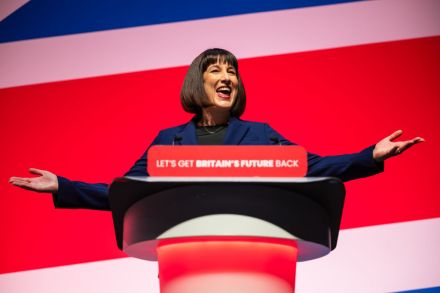
Rachel Reeves’s speech at Labour party conference was an attempt to show how the party’s economic strategy differs from the Tories. Oddly, the shadow chancellor decided to do this by cherry-picking the showstoppers from both Liz Truss and Rishi Sunak’s highlight reels.  Reeves’s accusations were numerous, though predominantly levelled at Truss and her disastrous 49-day premiership. ‘When you pay fast and loose with the public finances’, she said, ‘it’s working families that pay that price’ – a sentiment that no doubt resonates with the many households that were acutely affected by the surge in mortgage costs last autumn. The shadow chancellor repeated one of Labour’s favourite, if not misleading, claims that Truss and her chancellor ‘crashed the economy’.

Battle begins

40 min listen

This week: Katy Balls writes in her cover piece that after Tory conference the battle lines have now been drawn between the two main parties. She says we should prepare for a 'presidential campaign' ahead of the 2024 election and joins the podcast alongside The Spectator’s editor Fraser Nelson to discuss the dividing lines between Labour and the Conservatives. (01:17).  Also this week: In her column Lionel Shriver says that she is leaving the UK for the sunnier climes of Portugal. She argues that Britain has lost its way both economically and culturally and is joined by another American expatriate Kate Andrews, The Spectator’s economics editor. (15:37).  And finally: Matt Ridley writes that we are entering a new age of gullibility.

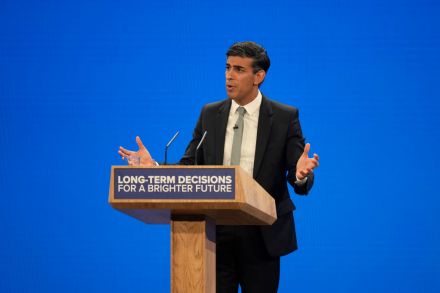
Rishi Sunak’s conference speech gamble

17 min listen

After spending most of his conference refusing to say much at all, Rishi Sunak used his speech to make three big policy announcements on HS2, smoking and A-levels. Will these gambles pay off?  Fraser Nelson speaks to Katy Balls, Isabel Hardman, Kate Andrews and John Connolly.

Is Mitt Romney behind Akshata Murthy’s appearance?

Is Akshata Murthy using the Ann Romney playbook? Rishi Sunak’s wife made an unexpected appearance on the main stage at Conservative party conference, delivering a speech that she insisted was even a surprise for the Prime Minister. This wasn’t just an introduction to her husband’s speech. It was ten minutes of glowing remarks about Sunak, dating back to when they met as students in California, noting the ‘aspiration’ he had ‘to build for a better country’ at the age of 24. Murthy’s remarks were the kind that are usually given by a presidential candidate’s partner at the Republican or Democratic Convention, where it is the job of the spouse to highlight the personal, more relatable side of the candidate. It’s a staple in US politics, but almost non-existent in the UK.

Jeremy Hunt: we underestimated the impact of money-printing

Speaking at the Centre for Policy Studies fringe event at Conservative party conference this afternoon, Jeremy Hunt reiterated once again that there would be no big tax cuts this year. ‘Debt interest payments have gone up so much in the past six months’, he told CPS director Robert Colvile, taking estimates for debt servicing payments over the £100 billion mark this fiscal year. The Autumn Statement, the Chancellor said, will lay bare just how dire the situation is: ‘It’s likely that our debt interest payments… are going to go up by more than £20bn pounds a year in the Autumn Budget compared to what was predicted in the spring.’ In other words: no tax cuts until inflation stops wreaking havoc on borrowing costs.

Coffee House Shots Live: Who would vote Tory?

47 min listen

The Spectator’s Fraser Nelson, Katy Balls and Kate Andrews are joined by special guest Frank Luntz for a live recording of Coffee House Shots from Tory party conference. It was at this event two years ago that Frank first declared Liz Truss to be the next Tory leader. Who might succeed Rishi Sunak? And is a Labour 2024 victory certain?

Can the Tory party afford to keep delaying tax cuts?

The whispers going around last year’s party conference largely centred on the state of government – how it was deteriorating so quickly. This year’s whispers are about something that is by no means as dramatic, but possibly as existential to the future of the party: the prospect of tax cuts. The official line is simple: no tax cuts this year. Chancellor Jeremy Hunt has spent his summer trying to quell expectations that his Autumn Statement next month will include any major changes to the tax burden, which is set to reach a post-war high by the time of the next election. This morning he said now is ‘not the right time’ for tax cuts, though he did say an inheritance tax reduction is in the ‘basket of all tax cuts’ under consideration.

Freddy Gray, Kate Andrews & Lloyd Evans

20 min listen

This week Freddy Gray takes a trip to Planet Biden and imagines what would happen if little green men invaded earth and found a big orange one back in the White House (01:15), Kate Andrews finds herself appalled by the so-called ‘advice’ routinely handed out to women that can be at best, judgemental, and at its worst, slightly bullying (12:51), and Lloyd Evans spills the beans on searching for love on his recent blind date, courtesy of the Guardian (07:13).

Slow economic growth won’t help the Tories reduce the tax burden

The Office for National Statistics has released the UK's quarterly national accounts this morning, which show growth in the second quarter of the year remains unrevised at 0.2 per cent. Meanwhile growth in the first quarter has been revised slightly upwards, from 0.1 per cent to 0.3 per cent. This means the economy is now 1.8 per cent larger than it was before the pandemic hit. This is another upward revision of growth figures, though much smaller compared to the update at the start of the month, which revealed the economy was not in fact still below its pre-pandemic levels, but had actually recovered by the time the Omicron variant hit in 2021.

How do I know I’m an adult? I’m given unsolicited feedback

Adulthood was once determined by age, but now we’ve extended childhood far beyond the teenage years. If the government gets its way, the next generation will never grow up: there are reportedly plans to ban cigarette sales to anyone born after 2009. This would mean that, come 2060, 50-year-olds could be begging their elders to pop into the local corner shop to buy them a pack of 20. We need a new metric of adulthood, and I have a proposal. The real mark is not an age or any particular milestone, it’s really when you receive your first piece of unsolicited feedback. It’s a grim but unavoidable rite of passage: having personal and outlandish comments directed your way, often in such a breezy or casual manner you’d think they were talking about the weather.

Welcome to ‘sick note Britain’

Is the country morphing into ‘sick note Britain’? According to the Chartered Institute of Personnel and Development (CIPD), the average worker took 7.8 sick days in the past year: that’s up from 5.8 days from 2019 and the highest level reached since 2010. The number of days taken off is up in all sectors, but while the reasons for absences vary across professions, common themes are emerging. According to CIPD, this includes people testing for Covid-19, stress and the cost-of-living crisis. While the data is new, this trend of increased absences has been growing for some time. The number of people on long-term sick leave skyrocketed around the pandemic, increasing by more than half a million, to now more than 2.6 million out of the workforce.

Why can’t Hunt cut taxes?

11 min listen

Jeremy Hunt said yesterday that it would be ‘virtually impossible’ to cut taxes in 2023. James Heale speaks to Katy Balls and Kate Andrews about why the government has decided to spent more, rather than cut levies, and about whether Hunt and Sunak’s economic plan will come under criticism from Tory MPs at the Conservative party conference in a few weeks.

Is Jeremy Hunt right that tax cuts are ‘virtually impossible’?

No one was expecting a big tax cut this year. Rishi Sunak’s government has been clear that 2023 is for the ‘difficult decisions’. If the Tories are to offer up a tax cut, it is much more likely to be announced in the Budget next March. Still, that didn’t make Jeremy Hunt’s comments on LBC last night any cheerier. Speaking to Andrew Marr, the Chancellor said that tax cuts were ‘virtually impossible’ due to soaring interest payable on government debt.  Hunt has a point: one of the many painful consequences of soaring inflation and higher interest rates has been the impact on public finances. In July, interest payments reached their highest level for that month on record, totalling £7.7 billion, up £1.5 billion from July last year.

Have interest rates finally peaked?

The Bank of England has voted to maintain interest rates at 5.25 per cent, rather than opt for a 15th consecutive hike. Reports that the Bank's Monetary Policy Committee decision was on a knife edge this week were bang on: the MPC voted 5 – 4 to hold the rate, with four members voting to increase it by 0.25 percentage points. The decision was down to a battle between data sets released this week; wage growth and the latest inflation figures. The Bank places a lot of weight on both sets when making its base rate decisions – but for this month’s meeting, they yielded conflicting results. Wages, for the second month, marginally outpaced inflation (by 1 percentage point). This troubles the Bank, as it fears a secondary round of inflation driven by a ‘wage-price spiral’.