Kate Andrews

Kate Andrews

Kate Andrews is deputy editor of The Spectator’s World edition.

Trussonomics is featuring heavily in the election

Is Trussonomics making a comeback? That’s the suggestion today, as Jeremy Hunt was recorded on the campaign trail telling students that Liz Truss’s goals for the economy were a ‘good thing to aim for’. As Chancellor, he said, he was ‘trying to basically achieve some of the same things’ as Truss, but ‘more gradually’ compared to the former prime minister’s timeline. Is this a gotcha moment? Labour think so, insisting that Hunt’s comments show an ongoing ‘addiction to dangerous Trussonomics’. It’s a stretch, not least because Hunt is credited with undoing almost every part of Truss’s so-called mini-Budget, when he replaced Kwasi Kwarteng as Chancellor just weeks into her premiership.

What wasn’t included in Labour’s manifesto

13 min listen

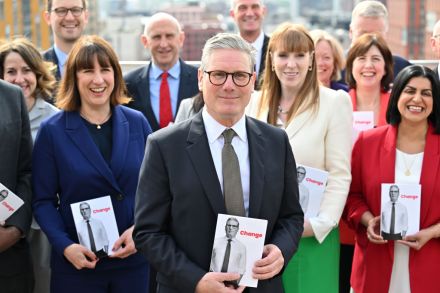
Keir Starmer launched Labour's manifesto today, but how much did we actually learn about their plans for government? And with no rabbits pulled out of the proverbial hat, how do they plan to achieve growth? Kate Andrews and Starmer's biographer Tom Baldwin joined Katy Balls to discuss. Tom also provided some insight into Angela Rayner's election bus, including a surprising admission about a lettuce...  Produced by Patrick Gibbons.

What wasn’t included in Labour’s manifesto

Keir Starmer has been promising ‘no surprises’ on tax in the Labour manifesto. At first glance, he has – technically – delivered on that. There is nothing new on tax in today’s manifesto: the hikes already announced were included, and the pledge not to raise income tax, National Insurance, VAT or corporation tax were there too. The surprise, then, is what isn’t included. There is lots of commentary on tax (attacks on Tory ‘unfunded tax cuts’, getting better ‘return for taxpayers’). But there is no comment on any other specific tax. In other words: a few tax hikes have been ruled out, and all the others are being left on the table for Labour to consider, when the party wins the election next month.

Keir Starmer needs a better answer to the Jeremy Corbyn question

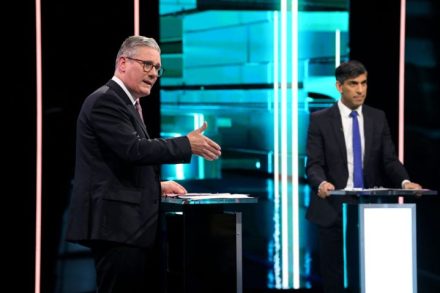
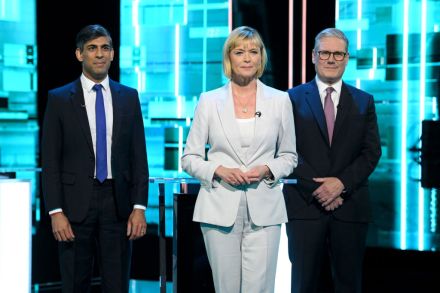
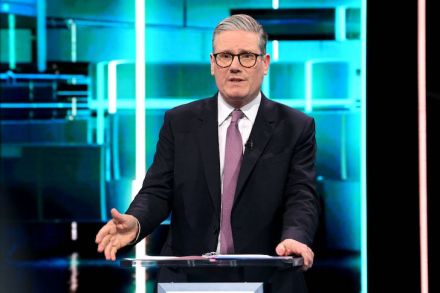
Keir Starmer looked baffled by tonight’s questions. Rishi Sunak looked resigned. Separating the two candidates – having them face Beth Rigby and the audience, rather than each other – led to far more defensive performances: Starmer on tax, and Sunak on the Tory record. Both spent the majority of the time looking deeply uncomfortable.  Sunak did not have an easy ride. The audience, all warmed up by the Labour leader’s interview, was more likely to jump in and heckle. Asked questions about his ‘five promises’ made in January 2023 – only one of which he has made good on – Sunak tried to move the goalposts, insisting that those promises could not be solved ‘overnight’.

The Tories and Labour are both relying on a magic money tree

Ask any main political party how they plan to sustain public services in the medium-term, and their answer will be to grow the economy. Ask the Tories or Labour how they might be more generous in the future – able to offer up more tax cuts, or higher public sector pay settlements – their answer will be to grow the economy. Those parties got a rude awakening this morning, when the Office for National Statistics revealed that there was no economic growth in April. After better-than-expected growth in the first quarter of the year, which lifted the UK out of recession, the economy flatlined at the start of the second quarter, setting the country up for a more sluggish spring. Services output grew by 0.

Is Sunak’s cautious manifesto a mistake?

13 min listen

Conservatives hoping to turn their fortunes around with the publication of the party's manifesto have been disappointed. The document contained little by way of surprises or rabbits, and despite Sunak's pledge that the Conservatives are the party of tax cutting, the new costings show that the tax burden will continue to rise. Katy Balls talks to James Heale and Kate Andrews. Join the Coffee House Shots team for a live recording on Thursday 11 July. Get tickets at spectator.co.uk/live. Produced by Cindy Yu.

The Tories are addressing welfare reform too late

The launch of the Conservative manifesto later this morning will dominate today's headlines. But it’s worth reflecting, before the full details are released, on how we ended up with an earlier-than-expected election. In addition to ministers’ fear that the small boats figures would rise this summer – and flights to Rwanda would be grounded – there was also growing concern that the economic data wouldn’t tell the good news story they wanted to take into an autumn election. Today’s labour market update complicates that theory.  The Labour market is still cooling, but slowly. Unemployment rose again, to 4.4 per cent between February and April this year: this takes the rate to its highest point since autumn 2021, but it still sits at a historically low rate.

Nigel Farage’s biggest gift to the Labour party

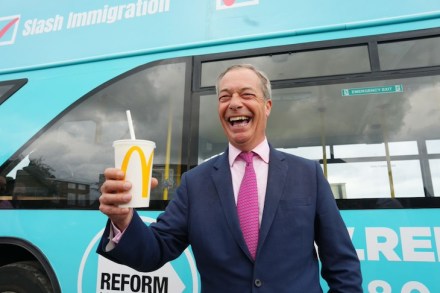
Labour has a lot of reasons to be thankful for Nigel Farage. Reform was already creeping up on the Tories in the polls, even before the party’s honorary president announced this week that he would take up the role of leader and stand in Clacton. Now the polls are nearly neck-and-neck. The most recent YouGov survey – published on Wednesday, accounting for Farage’s announcement but not Tuesday night’s debate – showed Reform on 17 per cent, a mere two points behind the Conservatives. As Katy Balls notes in this week’s magazine, Farage likes to insist that Reform tends to take more votes from Labour than the Tories, but the main bloc up for grabs seems to be 2019 Tory voters.

Who won the first leaders’ debate?

17 min listen

Last night, Rishi Sunak and Keir Starmer went head-to-head in the first TV debate of the campaign. They clashed on a variety of topics, including housing, the NHS, and immigration. But who came out on top? Katy Balls speaks to Kate Andrews and Isabel Hardman. Produced by Megan McElroy.

Is Labour really plotting a £2,000 tax grab?

Is the Labour party planning a £2,000 tax grab on households? That was Rishi Sunak’s main message last night during the first election debate on ITV – one which he was found by YouGov’s snap poll to have won (just). The Tories will ‘keep cutting taxes’, he said, while Labour will raise them. It took some time for Keir Starmer to hit back at the accusation, and the specific number, which he eventually called ‘absolute garbage’. Starmer said the £2,000 figure was based on ‘dodgy assumptions’ and had ‘glaring mistakes’ Where did the figure come from? And how accurate is it? The document, titled ‘Labour’s tax rises’ was put together by Tory aides, using costings produced by the Treasury.

Can Keir handle Trump?

12 min listen

The news that Donald Trump has been convicted of 34 felonies meant that the Labour leader faced questions about the former president on Friday morning, rather than the Diane Abbott selection storm. On his visit to Scotland, Starmer told the BBC that a Labour government would be willing to work with ‘whoever’ was elected in November’s presidential contest. But how would Starmer deal with Trump?  James Heale speaks to Kate Andrews and Freddy Gray.

Can Sunak really take credit for future interest rate cuts?

When the Bank of England finally delivers an interest rate cut, can the Tory party take credit for it? Rishi Sunak thinks so. ‘We are the party who has committed to bringing down inflation, which is a necessary condition for bringing down interest rates,’ he told the Times in an interview published today. ‘And I think people can see we have delivered that.’ Of course no politician is in a position to promise or deliver a rate cut. That decision sits firmly with the BoE’s Monetary Policy Committee, who this month voted to hold the base rate 5.25 per cent for the six time in a row. But to be fair to Sunak, he has not suggested he controls interest rates or that his party can offer up lower rates as a policy.

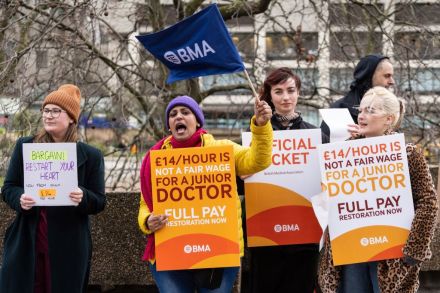
A stand-off between Labour and the BMA is coming

Junior doctors will be staging yet another walkout in the week running up to the election: five days in total, from 27 June to 1 July. It is the 11th walkout since March last year, as the union insists they will not settle for less than a 35 per cent pay raise. The dates are no coincidence: there is no moment more politically fueled than the run-up to polling day. This gives more weight to the government’s argument that these strikes have always been political in nature, and certainly resulting in political consequence: the NHS waiting list rose by roughly 500,000 after Rishi Sunak pledged to get the waitlist falling, due in part to hundreds of thousands of delayed appointments and operations thanks to the strikes.

Did Rachel Reeves just rule out more tax hikes?

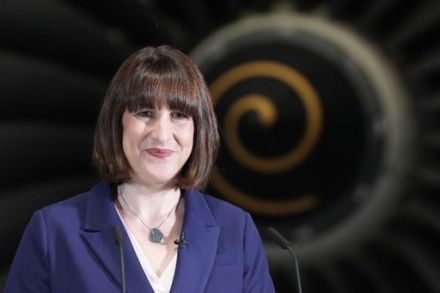
Speaking to business leaders in the East Midlands this morning, Rachel Reeves delivered a fairly uncontroversial speech. In her first major address since the election was called last week, the shadow chancellor insisted that Labour is the ‘natural party of British business’ (a point bolstered by today’s letter signed by over 100 business chiefs endorsing Labour). She said she wanted ‘to lead the most pro-growth, pro-business Treasury our country has ever seen’ – who could argue with that? She then went on to restate her commitment to fiscal discipline and a promise to make the numbers add up.

The Tory ‘tax-cutting’ agenda is fooling no one

Something has to go badly wrong for anyone to become nostalgic for 2020. But the Tory’s latest election announcement – to create the ‘Triple Lock Plus’ – is just the thing to do it. The first autumn after the pandemic hit, then-chancellor Rishi Sunak was looking at the public finances in dismay, wondering how he might even try to account for the heavy spending that he, his party and Labour had rushed through parliament earlier in the year. But the strange circumstances of the pandemic – including the mandate for young and low-risk people to ‘stay home’ – also created an opportunity to address some outstanding and unfair public policy: the triple lock on the state pension.

Does Keir Starmer have enough to say?

16 min listen

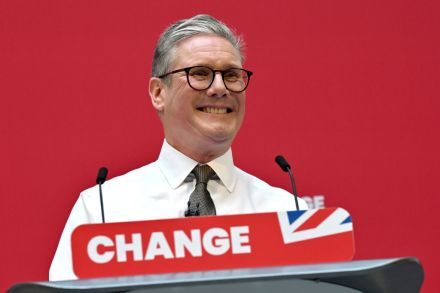
Keir Starmer set out his first major speech to kick of Labour's general election campaign. The Labour leader prioritised national security, a strong economy and the borders. But with a 'policy light' campaign – has he done enough? Kate Andrews speaks to Katy Balls and Fraser Nelson.

Will Labour raise taxes?

What is Labour’s tax-and-spend agenda? This is an outstanding question the party needs to answer before polling day – and Labour seems to know it. That is presumably why shadow chancellor Rachel Reeves sat in the BBC One hot seat on the first Sunday of the election campaign. ‘I totally agree I have to show the sums add up’ Reeves told Laura Kuenssberg this morning.  But what will be done to make that possible: higher taxes, more borrowing, or a reduction in spending? Unsurprisingly, Reeves did not want to make firm commitments in most of these areas. The shadow chancellor did commit though once again to not raising certain taxes. ‘We certainly won’t be increasing income tax or National Insurance,’ Reeves told Kuenssberg.