Karl Williams

Karl Williams is research director at the Centre for Policy Studies

Farage finally unveils his deportation plan

13 min listen

Today James Heale has been on quite the magical mystery tour. Bundled into a bus at 7.45 a.m. along with a group of other hacks, he was sent off to an aircraft hangar in Oxfordshire where Nigel Farage finally unveiled his party’s long-awaited deportations strategy. The unveiling of ‘Operation Restoring Justice’ was accompanied by some impressive production value, including a Heathrow-style departure board and an enormous union flag.

Britain really is becoming an island of strangers

New migration data released today by the Office for National Statistics (ONS) suggests Britain really is becoming an ‘island of strangers’. Around one in 25 people living in Britain today arrived in just the last four years. Nevertheless, there were probably sighs of relief in Downing Street this morning when the ONS data showed net migration last year had fallen by almost 50 per cent to 431,000. Keir Starmer and Yvette Cooper could hardly have dared hope for better numbers.

Have Labour out-Reformed Reform on immigration?

14 min listen

Keir Starmer has kicked off what may be one of his most significant weeks in the job with a white paper on immigration. In it, the government details its plan to ‘take back control’ of migration, promising that numbers will fall ‘significantly’ – although no target number has been given. The plan includes the following: English tests for all visa applicants (and their adult dependants); an increase in the residency requirement for settled status from five to ten years; and new measures making it harder for firms to hire workers from overseas, including abolishing the social care visa and raising the threshold for a skilled worker visa. Many have interpreted the move as an attempt to stem the rise of Reform by beating them at their own game.

How to fix Britain’s migrant crisis – quickly

Conventional wisdom has it that Britain faces an awkward dilemma on legal immigration: either we cut migrant numbers to keep faith with voters (more than 60 per cent of whom say immigration has been too high over the last decade), or we keep the economy growing by allowing net migration to continue at levels well beyond anything the country has ever seen. But this is a false dichotomy. The government is not facing a choice of either/or.  If we are more selective in our migration policy, we can cut overall numbers Let’s start with a bit of historical perspective. For centuries, Britain was a country of net emigration, not immigration. Annual net migration only exceeded 100,000 for the first time in 1998.

Mass migration will make the housing crisis so much worse

We can have mass migration or we can have affordable housing. But it’s hard to see how we can possibly have both. That’s the obvious implication of the revised long-term population projections released this week by the Office for National Statistics (ONS). According to the ONS's projections, in the 15 years from 2021 to 2036, the population of the UK will increase by 6.6 million. Net migration accounts for a staggering 92 per cent of this – 6.1 million people, with emigration of 7.6 million more than offset by immigration of 13.7 million. This averages out to net migration of 405,000 per annum. Which is remarkable in itself, given that the ONS’s most recent set of projections predicted that the total would be below 250,000.

Why we should all welcome Hunt’s tax break for businesses

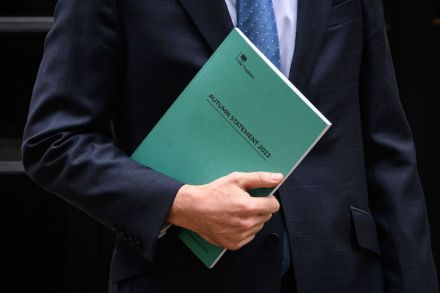
Rishi Sunak has made ‘long-term decisions’ the leitmotif of his government. Today’s Autumn Statement announcement on permanent full expensing – which will allow businesses to write off capital investment costs against corporation tax immediately and in full – shows his Chancellor is singing from the same hymn sheet. While it might sound dry, this tax reform is a vital step towards fixing one of the key structural weaknesses in the British economy: lacklustre business investment. Hunt's announcement today will help boost productivity, economic growth and wages. In due course, full expensing should make us all – businesses, workers and consumers – better off.

Roger Scruton’s treatment shows the moral cowardice of the Tories 

In his vindication of Sir Roger Scruton, Douglas Murray quite rightly refers to the affair as ‘a biopsy of a society’. It was also a biopsy of the Conservative party in particular, and a dispiriting one at that. It is notable that while a good slice of the conservative commentariat came to Scruton’s defence, Conservative MPs were conspicuously silent, except for those who rushed to excoriate Scruton. This response was indicative of the gap between the party in the country and the Parliamentary Conservative Party, which has seen an attenuation of the conservative instinct and — as has been argued in these pages — seems bereft of ideas or vision. It was also the last straw for me personally. I have cut up my party membership card and cancelled my direct debit.