Jonathan Spyer

Jonathan Spyer is a journalist and Middle East analyst. He is director of research at the Middle East Forum and the author of The Transforming Fire: The Rise of the Israel-Islamist Conflict.

A ceasefire deal won’t finish off Hezbollah

From our UK edition

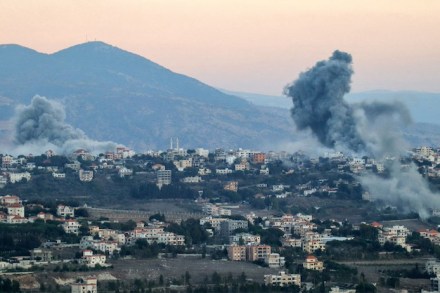
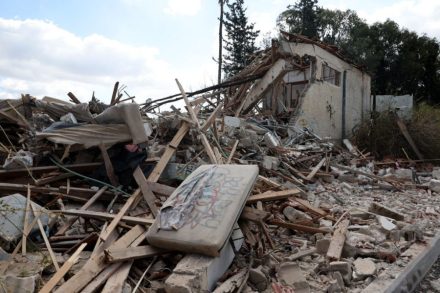
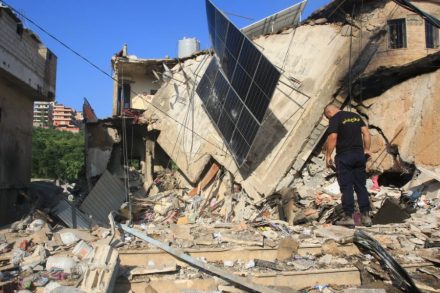
Nothing is yet confirmed, but it appears that a ceasefire between Israel and Lebanese Hezbollah is imminent. The fighting, which began on 8 October last year, has claimed thousands of lives and left the Israel-Lebanon border area decimated on both sides. But there is anger that Israel is rushing into an agreement that will not keep those who live near to the Lebanese border safe. Community leaders in Israel’s north have reacted with anger to the announcement of the proposed cessation in hostilities. They noted that while Hezbollah’s infrastructure along the border has been extensively damaged, the movement itself has not been destroyed. The proposed agreement also does not include a buffer zone.

The long roots of Iran’s hatred for the Jewish state

From our UK edition

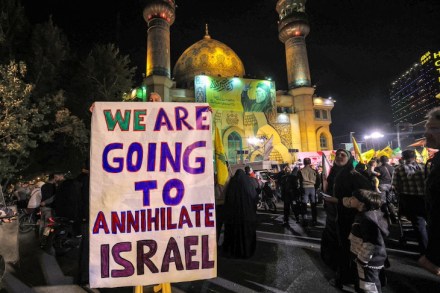
As the dust settles on the latest confrontation between Israel and Iran in the Middle East, the nature of the Israeli strikes against Tehran this weekend is becoming clear. It is a mark of the extent to which clashes between these two regional powers have become normalised over the last six months that the details, rather than the fact of the attack itself, are the main subject of focus and discussion. It should first be noted that what has just taken place is the largest operation against the Islamic Republic of Iran on its own soil in 40 years.   Hatred of Jews has been there from the start in the Teheran regime What is taking place now in the Middle East is historic.

Israel won’t be distracted by ceasefire talks

From our UK edition

Two senior US officials are in the Middle East this week, with the joint mission of negotiating an end to the current war between Israel and a number of Iran-backed Islamist militias. Secretary of State Anthony Blinken arrived in Israel on Tuesday. US Special Envoy on Lebanon Amos Hochstein was in Beirut on Monday. Are the two faced with a mission impossible, or is there a chance that their efforts may forge a pathway to bring the year-long conflict to an end? At the start of this week, Israeli aircraft carried out a series of attacks on Hezbollah targets deep inside Lebanon. These included the headquarters of the organisation’s aerial division. Hezbollah responded with rocket fire on central and northern Tel Aviv.

How Yahya Sinwar rose and fell

From our UK edition

The killing of Hamas leader Yahya Sinwar is a key milestone for Israel in its ongoing, grinding effort to destroy the Palestinian Islamist movement in Gaza. The details of the killing show the extent to which Hamas no longer has any depth of control over any part of Gaza. Earlier in the war, Sinwar would have been located deep within several circles of protection. The approach of danger would have been identified by the outer circle, and the leader moved to a new place of hiding. This is evidently no longer possible for Hamas. When troops of the IDF’s 450th Brigade were on a routine sweep in Rafat, they identified suspicious figures entering a building and opened fire on it. The Hamas leader had nowhere to run.

Where does Lebanon go from here?

From our UK edition

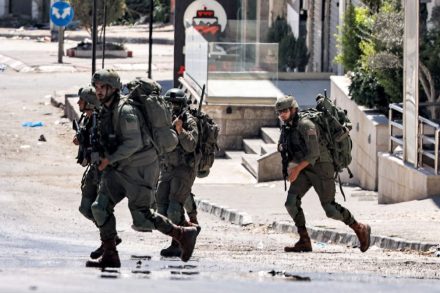
Israel’s overt ground intervention into Lebanon is now entering its third week.  So far, the Israel Defence Forces (IDF) have advanced just a few kilometers in and established control in a number of locations across the border.  The IDF itself has described its ground action on the border as consisting of ‘limited, localised and targeted raids.’  Standing at a border observation post a few days ago, my impression was that this description appears accurate, at least for now.  Looking across to the towns of Bint Jbeil, Maroun a Ras, Ain Ebel and Ait a Shaab, we heard the occasional sound of artillery cannons.  Twice, we saw interceptions of ordnance fired from the Lebanese side.

Was Hamas’s massacre the Middle East’s Franz Ferdinand moment?

From our UK edition

Travelling through the Gaza border area on the morning of October 8, 2023, I was struck by a sense of familiarity. The scenes of destruction, the burnt buildings, and the smashed-up cars by the side of the road were, of course, profoundly shocking. But they were not, at least to me, unfathomable. Unlike most of my fellow Israeli citizens, I had spent a good part of the preceding decade in close proximity to the wars in Syria and Iraq. I knew then, immediately, what had just happened in the kibbutz of Israel's southern region was what happens when a Sunni jihadi organisation finds a way through to the helpless civilian population of one of its enemies. The day after the massacre, the border area, where so many Israelis had lost their lives, was a place of ruin and destruction.

Israel is likely to hit back hard against Iran

From our UK edition

Iran's decision to launch 181 ballistic missiles at Israel on Tuesday night followed a similar pattern to the attacks of 14 April. Israeli and allied air defences appear to have performed extremely effectively. The damage to the military and civilian sites targeted is minor to non-existent. One Palestinian Arab man was killed in a village near Jericho, not from the Iranian missiles, it appears, but from interceptor debris.   I live in a Jerusalem neighbourhood on what’s called the ‘Seam Line’ between the Jewish and Arab populations.

Why Hezbollah miscalculated – and Israel attacked

From our UK edition

In the early hours of Tuesday morning, the IDF spokesman’s office issued a laconic statement, according to which Israeli forces have commenced ‘raids… based on precise intelligence against Hezbollah terrorist targets and infrastructure in southern Lebanon. These targets are located in villages close to the border and pose an immediate threat to Israeli communities in northern Israel.’ With this terse announcement, Israel signalled that its 18-year policy of restraint and reaction on its northern border was definitively over, and that the door has been opened to something new.  Hezbollah takes a particular pride in its claimed deep knowledge of and understanding of Israeli society How did we reach this point?

How will Iran respond to Nasrallah’s assassination?

From our UK edition

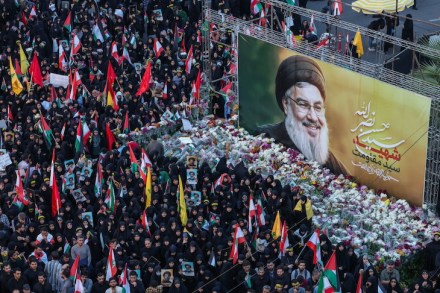
The assassination of Hezbollah leader Hassan Nasrallah transcends the immediate confrontation between Israel and its Islamist enemies. Nasrallah was both a leader and a symbol of Iran’s bid for hegemony in the Arab world. His fighters advanced Iran’s cause in Syria, Iraq, Yemen, and beyond the region – into Europe, Africa, and Latin America. Israeli pundits discussed last night the possibility of deterioration into all-out war As is known but rarely stated by western diplomats and officials, Nasrallah was the most powerful man in Lebanon and its de facto ruler. He led a military force and a political structure that dwarfed the ailing official state and managed a successful insurgency against Israel from 1992 to 2000 and an inconclusive war in 2006.

Can Israel avoid provoking all-out war with Hezbollah?

From our UK edition

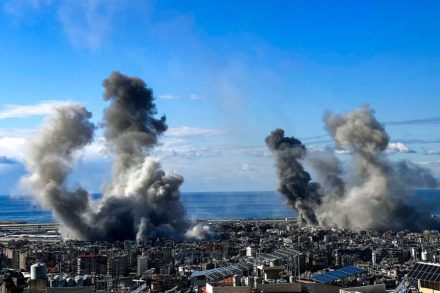
Israel has carried out its largest-scale operation against Hezbollah targets in Lebanon since the summer war of 2006. Wave after wave of Israeli aircraft struck at 1,600 targets across Lebanon yesterday with the aim of targeting Hezbollah weapons stores. Nearly 500 people were killed, according to figures issued by the Lebanese authorities. After nearly twelve months of controlled escalation on Israel’s northern border, we are now potentially on the cusp of all-out war.   Israel’s purpose in increasing the pressure on Hezbollah and Lebanon is to drive a wedge between the various components of the Iran-led regional alliance currently engaged against it.

Pager bombs won’t stop Hezbollah

From our UK edition

The killing of 12 people, including several Hezbollah members, and the wounding of thousands more when 5,000 pagers simultaneously exploded in Lebanon yesterday represents an obvious tactical triumph for Israel (or whoever carried it out). The sight of members of the Iran-supported Shia Islamist group suddenly collapsing in agony while performing mundane daily tasks was met with great amusement by the movement’s many enemies across the region. Displaying the somewhat gleeful and malicious humour which characterises all sides in the Levant, a variety of memes mocking the hapless victims of the grim beeper soon proliferated.   Hilarity aside, the operation displays the extent to which Hezbollah has been thoroughly penetrated by its opposite number.

Israel is turning its sights on Hezbollah

From our UK edition

As its Gaza campaign cools, Israel’s attention is returning northwards. Approximately 60,000 Israelis from northern communities are still refugees. A reckoning between Israel and the Lebanese terror group Hezbollah appears to be only a matter of time. Two significant strikes this week suggest that Israel is preparing for a potentially imminent major confrontation, and broadening the scope of its operations on the northern front. In the first attack, according to reports in Syrian state media, Israeli aircraft hit targets in the Hama area in western Syria on the night of 7-8 September. 18 people were reported killed, and over 43 wounded.

Netanyahu faces an unenviable dilemma on Gaza

From our UK edition

The murder of six Israeli hostages by Hamas in Gaza earlier this week led to an outpouring of grief and fury in Israel. For a considerable and vocal section of the public, the anger was directed – in a way perhaps surprising to outsiders – not against the Islamist group responsible for the murders, but against the Israeli government. Large and stormy demonstrations took place in Tel Aviv and Jerusalem. The Histadrut, Israel’s trade union federation, organised a (partially observed) one-day general strike. The demonstrators’ demand was a simple one: a deal to release the 97 remaining hostages now. At least 33, by the way, and possibly more of the Israelis remaining in Gaza, are believed by the authorities to now be dead.

Iran and Hezbollah don’t want a war with Israel

From our UK edition

Hezbollah’s response to the killing of senior official Fuad Shukr, when it finally came, was a more minor event than anticipated. For weeks, both the Lebanese Shia Islamist group and its Iranian patron have been threatening a terrible revenge for the recent assassinations in Beirut and Tehran. It is now clear, however, that neither Hezbollah or Iran wishes to risk a descent to all put war at the present time. Iran appears to have relegated its response to the killing of Hamas leader Ismail Haniyeh in Tehran to some point in the future. Hezbollah, meanwhile, sought to target two sites of high significance – the Mossad headquarters, and the HQ of the IDF’s signals intelligence unit, 8200. Both are located close to Herzliya, north of Tel Aviv, in central Israel.

Netanyahu won’t hand Hamas an easy victory

From our UK edition

The latest information seeping out from the negotiations for an end to the war in Gaza suggest that agreement between the sides remains out of reach. According to a report by Axios today, Hamas yesterday rejected an updated US proposal, claiming that the new formula aligned with attempts by Israeli prime minister Benjamin Netanyahu to raise 'new conditions and demands with the aim of undermining the mediators' efforts and prolonging the war'. While one should not rule out the possibility that we are the recipients of a messaging strategy designed to secure further concessions in the negotiations, it does appear that the talks are floundering on substantive gaps between the two sides.

What will Iran do next?

From our UK edition

Following the killings of Hezbollah’s Fuad Shukr and Hamas’s Ismail Haniyeh, Israel and the Middle East are poised and waiting for the next move. The two killings represent a significant humiliation for the Iran-led regional axis, which until this point had been projecting a sense of achievement and satisfaction.  Is Israel prepared to up the ante to the point of regional war? The October 7 massacres and the subsequent war may not have come at the express order or at the precise time wanted by the regime in Tehran. But events have proceeded largely in a way satisfactory to it.

Can Israel hold back from all-out war with Hezbollah?

From our UK edition

On 27 July, 12 children from the Druze community of the Golan Heights were slaughtered when an Iranian Falaq 1 missile hit a soccer field in the town of Majdal Shams. The office of Israel’s Prime Minister, Benjamin Netanyahu, issued a terse statement on the same day vowing that the country would ‘not allow the murderous attack to simply pass on by, and that Hezbollah will pay a heavy price for this that it has not paid until this point'. This incident was the single bloodiest attack on an Israeli target since the massacres of 7 October. It represented a severe escalation in the conflict which has been under way in the Israel-Lebanon border area and its environs since Hezbollah opened its campaign of support for Hamas in Gaza.

Here’s how Israel can win

From our UK edition

Israeli Prime Minister Benjamin Netanyahu was photographed on his flight to the US earlier this week next to a hat bearing the slogan ‘total victory.’ Those two words somewhat obscure reality: Israel is yet to fully outline what would constitute victory in the currently three-front war (against Hamas in Gaza, Hezbollah in Lebanon, and the Ansar Allah (Houthis) in Yemen).  Netanyahu is hardly alone among politicians and statesmen in his preferring vagueness over specificity. Vagueness provides flexibility, and enables a variety of possible end states to be presented as an achievement.

Will Hezbollah declare war on Israel?

From our UK edition

In Israel currently, people are waiting for a possible escalation in the north. The United States, Canada, Germany, Ireland, Russia and the Netherlands have called on their citizens in Lebanon to leave the country. Western embassies in Lebanon are exploring the coastal area to locate possible points from where an evacuation by sea could be carried out. The German foreign ministry, in a message on its website, drily notes: ‘A further escalation could also lead to a complete suspension of air traffic from Rafiq Hariri Airport. Leaving Lebanon by air would then no longer be possible.’   The USS Wasp amphibious assault ship has arrived via the Strait of Gibraltar to the eastern Mediterranean. It has the capacity to carry out civilian evacuations.

Benjamin Netanyahu must decide what to do about Hezbollah

From our UK edition

Tensions on Israel’s northern border are currently at their highest point since the outbreak of hostilities in October last year. On Friday, United Nations Secretary-General Antonio Guterres said: ‘One rash move – one miscalculation – could trigger a catastrophe that goes far beyond the border, and frankly, beyond imagination.’ The latest reports indicate that the US has declared it will give Israel its ‘full support’ in the event of war with Hezbollah. This appears to go hand in hand, however, with an American determination to prevent any Israeli action which might precipitate such a war. So what is the current situation? And where are things heading?