Johnny Patterson

Johnny Patterson is the Director of Hong Kong Watch

Carrie Lam’s disastrous legacy in Hong Kong

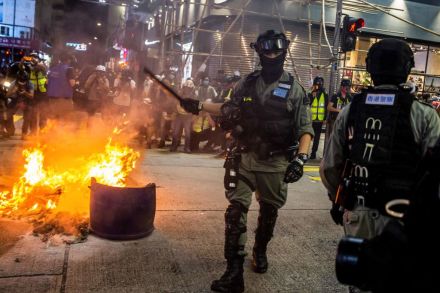
When Carrie Lam became Hong Kong's chief executive in 2017, she positioned herself as a candidate for unity. Five years on, having announced this morning her decision to step down, she will be remembered as Hong Kong’s most divisive leader.  There is a grim irony that Lam – who was Beijing's favoured choice for the top job – used 'WeConnect' as a campaign slogan. If that was her hope, it is hard to think of a politician who has failed in their ambitions more profoundly. Lam’s stubborn insistence in pushing through a wildly unpopular extradition bill in 2019, which would have allowed Hong Kongers to be extradited to the mainland, did overwhelmingly unify Hong Kongers, if only against her.


The Pillar of Shame and the erasure of Hong Kong

In the dead of night one of the most prominent memorials to the Tiananmen Square massacre, the Pillar of Shame, was removed from Hong Kong University this week. The eight-metre high statue – commemorating the thousands killed in Beijing’s brutal crackdown on peaceful demonstrators in June 1989 – was filmed being loaded into a container late on Wednesday night. It is not the only piece of public art to have been targeted. At dawn on Christmas Eve a bronze ‘Goddess of Democracy’ – a replica of a statue built by students on Tiananmen square – was dismantled by the Chinese University of Hong Kong. And at Lingnan University a wall relief featuring the ‘Tank man’ was removed during the night.

The Supreme Court’s shameful statement on Hong Kong

In a statement which will doubtless surprise the scores of lawyers, democratic politicians and human rights activists who are currently in jail awaiting show trials under Hong Kong’s National Security Law, the UK Supreme Court today made an announcement which is the best piece of free PR that Hong Kong’s Chief Executive Carrie Lam has had in years. The President of the Supreme Court, Lord Reed, has issued a statement saying that UK judges will be staying on Hong Kong’s Court of Final Appeal and that ‘the judiciary in Hong Kong continues to act largely independently of government and their decisions continue to be consistent with the rule of law.

Why Hong Kong’s Tiananmen Square vigil will be different this year

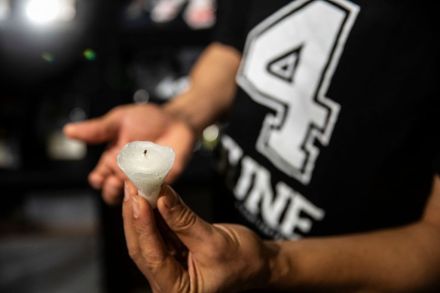
Every year since the tanks rolled into Tiananmen Square on 4 June 1989, Hong Kongers have gathered in their thousands to remember the fallen. The annual Tiananmen Vigil, where candles light up Victoria Park, was an event laden with significance. It was a statement that Hong Kongers would not forget those who had died under the heavy boot of the totalitarian state. It was a symbol of the city’s distinctive history and its autonomy from Beijing. Even last year, despite the authorities banning the protest under the pretext of Covid-19 restrictions, thousands gathered peacefully. It's unlikely the same will happen tomorrow. The organisers of last year’s vigil are in jail. This year’s vigil has been banned.

Boris’s China plan is a missed opportunity

From Brexit to China, ‘cakeism’ – the idea that it is possible to govern without making hard choices – appears to be the defining philosophy of Boris Johnson's government. A hawk to the hawks and a dove to the doves; the Prime Minister wants to be all things to all men. The result is that the government have so far failed to make the hard decisions needed when it comes to China. But as with lockdown in March 2020, dither and delay is only going to increase the difficulty and trouble ahead down the road. The publication of the integrated review today makes this painfully clear.

The EU must ditch its deal with China after the arrests in Hong Kong

Earlier this morning, 53 democrats from Hong Kong were arrested. Their crime? Trying to win last September’s elections. As absurd as it sounds, the new reality in Hong Kong is that it is now effectively a criminal offence, under the National Security Law, for the opposition to have the audacity to try and boost its representation in parliament. 'The operation today targets the active elements who are suspected to be involved in the crime of overthrowing, or interfering (with)...the Hong Kong government’s legal execution of duties,' said John Lee, Hong Kong’s security minister. But, as he later suggested, in reality this meant that those who were arrested were simply trying to win a majority of seats in Hong Kong's legislature.

Disney’s Mulan is everything Xi Jinping could wish for

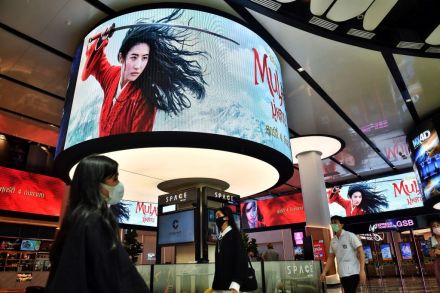
The last year has seen a litany of corporates bend the knee to the mighty Chinese Communist party. From HSBC's ringing endorsement of China's controversial national security law, to the NBA choosing to denounce a pro-Hong Kong coach, big business has decided that, when it comes to China, profit trumps principle. But Disney's latest film release, Mulan, is the worst example to date. Activists have been coordinating a #boycottMulan campaign ever since the lead actress in the film backed the Hong Kong police force. At the height of protests in 2019, Chinese-born American actress Crystal Liu Yifei wrote on Weibo: 'I support the Hong Kong police. You can all attack me now. What a shame for Hong Kong'.

Welcome to authoritarian Hong Kong

The national security law in Hong Kong has been passed for just over a month, but the scope of Beijing's plans are now clear. This is a constitutional coup. The safeguards which have historically defended human rights in Hong Kong have been shattered. Rule of law has been replaced with rule by law – and the Communist Party's word is law. Thursday 30 July brought home the reality of the new status quo. Hong Kongers woke up to the news that four young people aged between 16 and 21 years old – representing a small group of students who campaigned for Hong Kong independence last year – heard a midnight knock on the door and were arrested. Their crime? Posting on social media, or ‘organising and inciting secession’ in the new dystopian Hong Kong.

Will Boris Johnson stand with Hong Kong?

Hong Kong, ‘Asia’s World City’, is becoming a place where legislators fear that they could face years in prison for talking to politicians from other countries, including British MPs. So many of us have fond memories of Hong Kong. Dynamic and vibrant, the city is a melting pot of different cultures, which represents the meeting point of East and West. Yet in recent days, the mood in Hong Kong has soured. Moral, courageous people now face the choice of standing up and risking arrest; or staying quiet and giving up on their way of life as they know it.

Washington is furious at Boris’s Huawei bid

Boris Johnson faced his first major rebellion of the new parliament on Tuesday. Parliamentarians are waking up to the fact that this decision has far greater diplomatic ramifications than was originally appreciated. Despite their sizeable majority, the government narrowly avoided defeat and will be vulnerable when future bills relating to Huawei are tabled. The reaction in Washington DC to Boris Johnson’s decision to allow Huawei to tender for the 5G contract validates the concerns of the new 'awkward squad' of former cabinet ministers and Tory select committee chairs. Rarely have Democrats and Republicans been so united.

How coronavirus can save Hong Kong

The coronavirus has enforced a hiatus in Hong Kong’s widespread political unrest with worries about transmission stalling protests. Dissatisfaction with the government still festers, fuelled by the mishandling of the health crisis - all the ingredients are there for protests to reignite. But the lull in the unrest gives the Hong Kong government and their counterparts in Beijing a window of opportunity. It is imperative that the British government encourages all sides to grasp the next few months as a moment for reconciliation. President Xi Jinping has been busy using this space to reshuffle the officials overseeing Hong Kong from Beijing’s side by appointing loyalists Xia Baolong and Luo Huining.