John Sturgis

John Sturgis is a freelance journalist who has worked across Fleet Street for almost 30 years as both reporter and news editor

The Disneyfication of Prince Harry

From our UK edition

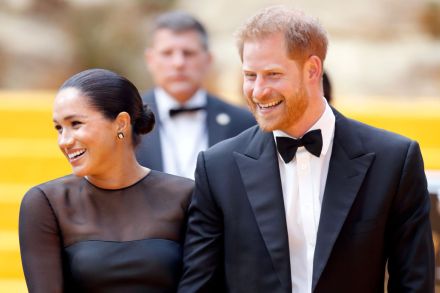
After Prince Harry’s first date with the future Duchess of Sussex, he repaired to a friend’s house off the King’s Road. ‘Out came the tequila,’ he recalls in his much-discussed autobiography, Spare. ‘Out came the weed. We drank and smoked and watched… Inside Out.’ Meghan, however, interrupted his stoned reverie by Facetiming him, and immediately asked: ‘Are you watching cartoons?’ Harry replied: ‘No. I mean, yeah. It’s… Inside Out.’ It was, he recalls, ‘good weed, dude’. The quality of the Disney film, he doesn’t mention – though his pointed double use of ellipses around its title suggests it perhaps has some significance in relation to this new girlfriend.

Legend of the Fall: Mark E. Smith and me

From our UK edition

He was one of the most unlikely pop stars this country has ever produced: extraordinarily badly dressed and famously contrarian, with a voice that sounded more like an angry man shouting than anything recognisable as singing. But Mark E. Smith, front man of the Fall, became one of the most recognisable and eventually revered figures on the music scene. And five years on from his death at 60, his stock is higher than ever – his influence heard in the sound of newer bands such as Sleaford Mods and Idles, his name regularly evoked on the likes of BBC Radio 6 Music, and a giant tribute mural an unlikely tourist attraction in his hometown of Prestwich.

There’s nothing new about ‘nepo babies’

From our UK edition

One of the neologisms of 2022 was the phrase ‘nepo baby’. Short for ‘nepotism baby’, it was coined by younger people, the so-called Gen Z, to describe the syndrome of the increased attention and opportunity afforded to the children of celebrities – in practice giving them a leg-up into a career in modelling, acting or singing.  A curious aspect of the trend is that these newly cynical youths are only belatedly realising that many of the young stars in their firmament have famous parents: Lily Collins of Emily in Paris, for example, is the daughter of the rather-better-known-to-their-parents Phil.   But it’s only the term itself that is new.

Forget Love Actually: the best alternative Christmas films

From our UK edition

It's become one of the traditions of the modern festive period: arguing about whether Die Hard is a Christmas movie. The explosive 1988 film features, you may recall, a vest-clad Bruce Willis confounding Alan Rickman and his terrorist cohorts’ evil plans in a Los Angeles skyscraper on Christmas Eve – and it’s peppered throughout with fir trees and tinsel.   Some claim this means it should take its place as a festive staple alongside more conventional classics of the season, It’s a Wonderful Life et al. Opponents furiously insist that a proper Christmas film shouldn’t feature machine guns and explosions, but instead depict rather more heartwarming scenes.

Beyond Dickens: the best Christmas short fiction

From our UK edition

Claire Keegan’s Booker-shortlisted Small Things Like These this year revived the tradition of Christmas short fiction. It’s a deftly done parable about cruelty and kindness in the run-up to Christmas, with actual snow – and tears.   Although Keegan’s novella eventually lost out to Shehan Karunatilaka for the Booker, it perhaps served a greater purpose than prizes: it was a reminder of the value of stories that connect us with our humanity, particularly around this time of year.  It was also a reminder that cultural consumption at Christmas needn’t merely be about overloading on films.

In defence of supporting both England and Wales

From our UK edition

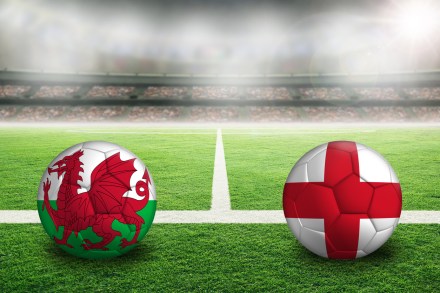
Michael Sheen has had a problem with the royal family for some time – and it’s only got worse since William was appointed Prince of Wales. The actor, best known for playing Tony Blair but somewhat to the left of him politically, has criticised the notion of an Englishman being nominal head of the principality. Sheen has lately carved out a niche as a pound-shop Richard Burton addressing motivational monologues to the Welsh football team, to little effect thus far. And he predictably stepped up his campaign ahead of the World Cup: how could William, he asked, reconcile his role as President of the English Football Association with his position as Prince of Wales – particularly when the two nations have been drawn to play each other tonight?

The curse of Belo Horizonte

From our UK edition

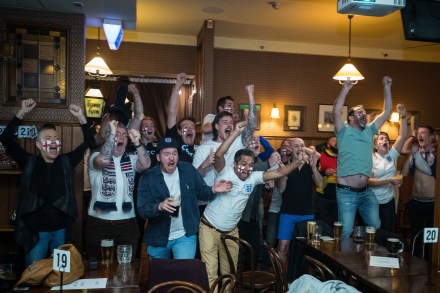
When England play the USA this evening in Al Khor, Qatar, it will be the twelfth time the two sides have met. England have had the upper hand in most of the previous 11, winning eight and recording scores as comfortable as 10-0, 8-1, 6-3 and 5-0. We easily beat them 3-0 at Wembley just three years ago.  And after their respective opening games in this tournament – England thumping Iran 6-2 in their best-ever start to a World Cup, the USA nervy and stuttering by the end of a 1-1 draw with Wales – most neutrals would expect nothing other than a routine win for England. The bookies make England comfortably odds-on too. But all of this is overlooking one factor: the Americans are English football’s bogey team.

The curious case of the Asian Maradona

From our UK edition

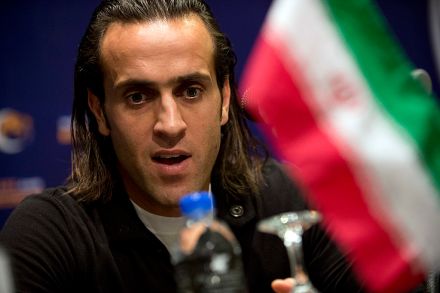
When England line up against Iran in Doha today, the VIP seats should be studded with former players from both sides. But one who almost certainly won’t be present is a player with a solid claim to having been the greatest Iranian footballer in history. Because Ali Karimi is a wanted man. The 44-year-old is hugely influential in Iran – he has 13 million social media followers there. But he has positioned himself as such an overt critic of the country’s regime that he’s now living in exile, threatened with arrest – and worse – should he return to or be forcibly taken back to Iran.

How to spend a long weekend on Cyprus

From our UK edition

At breakfast time we were contemplating the catering options at Gatwick. The 1,406 calorie fry-up at Wetherspoonswas £12.99, pint of lager optional – with only a half-hour wait for a table.  By lunch we were looking down at the birthplace of Aphrodite, eating grilled sea bream and sipping a chilled Xynisteri white. Petra tou Romiou is located both in myth, as the birthplace of the Greek goddess of love, and also in reality, just off the dual carriageway that links Paphos and Limassol in the southwestern corner of Cyprus. Her birthplace isn’t quite the dainty scallop shell depicted by Botticelli, though – it looks more like Durdle Door might if it were located in the azure waters of the eastern Mediterranean rather than the grey English Channel.

What happened to my secret snap of David Beckham?

From our UK edition

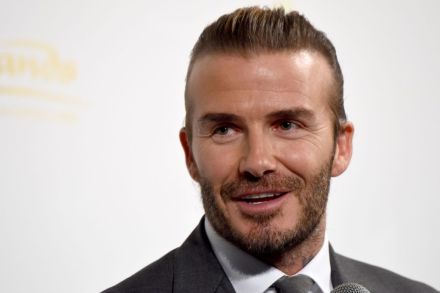
There is one footballer who will be under particular scrutiny at the Qatar World Cup – but not because he’s playing in it. David Beckham retired as a player, aged 38 in 2013, but nine years on his stature has continued to grow. The former England captain's profile is so high that those tasked with the tricky job of getting positive publicity for Qatar agreed to pay him a reported £10 million to plug the tournament.  This is the story of my role as a cog in the wheels of the media machine that helped propel Beckham to this position – and of one particular incident, involving surreptitious snaps of him sitting on a sun lounger. But first some context.

The truth about the curse of the pharaohs

From our UK edition

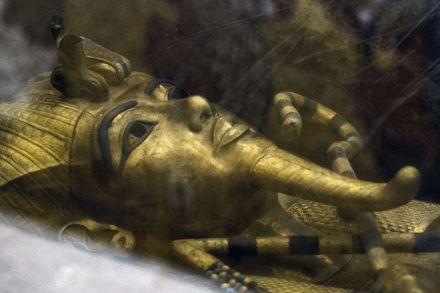
George Edward Stanhope Molyneux Herbert, 5th Earl of Carnarvon, was bitten on the cheek by a mosquito some time in early March 1923. The bite became infected. By April he was running a high fever, had pneumonia in both lungs and his heart and respiratory systems were failing. He died in a Cairo hospital on 5 April. His death came less than six months after Howard Carter, the Egyptologist whose excavations Carnarvon was funding, first discovered evidence that there was an undisturbed tomb in the Valley of the Kings in Thebes. That was on 4 November 1922 – 100 years ago this month. A few days later, Carter, Carnarvon and his daughter, Lady Evelyn Herbert, had squeezed through a roughly-hewn hole in the wall of the burial chamber of Tutankhamun, uncovering its glittering treasures.

Why the best horror films are silent

From our UK edition

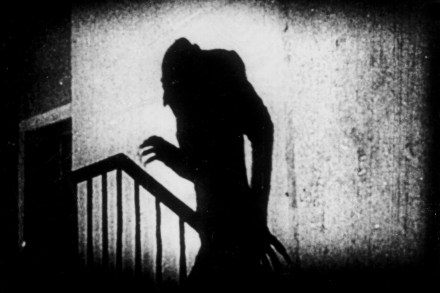
He is completely bald but his eyebrows are grotesquely hirsute; his ears and chin are both weirdly elongated, as are his bony fingers; and as he creeps up the stairs towards the bedroom of a young woman in white, his hunched frame casts a sinister shadow. Count Orlok in Nosferatu is as instantly recognisable a cinematic figure as Charlie Chaplin, Mickey Mouse or Superman. The F.W. Murnau silent film that created this image (and found itself at the centre of a copyright battle with the estate of Dracula author Bram Stoker) is celebrating its 100th anniversary this year. It continues to be regularly screened, showing at two different cinemas in London alone in the run-up to Halloween.

Good riddance to long books

From our UK edition

As soon as I picked up the parcel, my heart sank. The sheer weight of it gave the game away. Already I could unhappily picture myself struggling to hold it in one hand without straining a wrist while standing on the Piccadilly Line. I’d ordered it after coming across a couple of positive references to it in quick succession: Lonesome Dove by Larry McMurtry. Written in the 1980s, set in the 1870s, it’s a cowboy story that won a Pulitzer in its day and still has its enthusiasts. I just hadn’t thought to check its length. In fact the paperback isn’t much smaller than a box of Kleenex and runs to 839 pages. That’s scarcely less than my paperback of Ulysses and more than other whoppers I’ve read lately, The Magic Mountain and Our Mutual Friend.

The enduring appeal of Arnos Grove station

From our UK edition

It's not in Whitehall nor Westminster; not on the central London tourist trail. Instead it’s ten miles away, on the wrong side of the North Circular, an obscurity in the suburbs, rarely visited for its own sake. But Arnos Grove Tube station is one of the masterpieces of 20th century British architecture – and this week it celebrates its 90th anniversary. Until September 1932, the northern branch of the Piccadilly line ended at Finsbury Park. Then five new stations were built: Manor House, Turnpike Lane, Wood Green, Bounds Green and, finally, Arnos Grove, all commissioned by Frank Pick and designed by Charles Holden. Suddenly it was only 20 minutes to Leicester Square.

Primary dread: the horror of school plays, fêtes and trips

From our UK edition

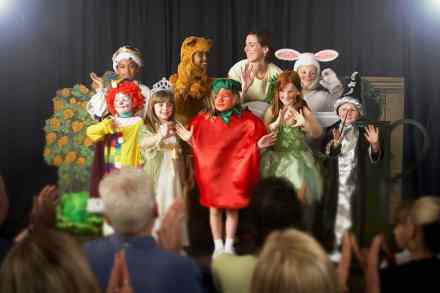
Primary school drama has a rule which is a variation on Chekhov’s gun principle: if your child has a part in the school play they won’t get to speak until the end of the final act. And you’ll have to sit through the part of every other child before their moment finally comes. You will have to go. You will have to go and sit on a very small chair for a very long time, watching other people’s children perform ineptly before you get your ten seconds of joy at your own darling’s turn (which you won’t get to see properly anyway as you’re tasked with filming it).

The sweet and sour sides of growing up in a Chinese takeaway

From our UK edition

Angela Hui was born into a life of service: Chinese takeaway service. Her parents had fled mainland China, where they experienced borderline starvation under the communist regime before arriving as exotic newcomers to provincial South Wales in 1985. There they become part of a Chinese diaspora, financially sustained by dozens of family-run takeaways dotted across the Valleys. The Huis set up in Beddau, a former pit town of 4,000 people that was still struggling socially and economically after the then recent closure of the mines. They call their restaurant Lucky Star.

Where’s our world cup?

From our UK edition

There was that frenetic drama of the last day of the Premier League just a fortnight ago - City down, Liverpool in, City up, Liverpool out! Then we had Real Madrid further chipping away at Liverpool’s quadruple ambitions, leaving them with a mere double, closely followed by Nottingham Forest clinging on against Huddersfield to finally get back into the Premier League. Then on Wednesday night Ukraine caused delight everywhere in the world except Scotland and Moscow to set up a play off this Sunday against Wales for the last available World Cup slot. But after that…nothing. Some people, to misquote Kenneth Wolstenholme, aren’t on the pitch - it’s all over.

The tiny Greek island beloved by Athenians

From our UK edition

Hydra is where well-heeled Athenians go for weekend breaks. It’s what Long Island is to New Yorkers, or Île de Ré to Parisians. For, while Corfu is a 12-hour ferry ride away and Santorini six, Hydra can be reached in as little as 1hr20 on the regular scheduled boats out of Athens. And – unless you own your own yacht – there’s no other way to get there: there’s no air or heliport, there aren’t even any cars. We tacked a day trip to Hydra onto a weekend city break that was otherwise full of the classical antiquity you'd associate with Athens.

How a royal disagreement over a penny revealed Edward VIII’s vanity

From our UK edition

A rare penny piece goes on sale this month for 20 million times its face value – quite the mark up. But it’s the backstory to the coin’s creation that is arguably the most interesting aspect of the sale – because of the insight it gives into the frosty relationship between George VI and Edward, whose sudden abdication put his brother on the throne. The story begins in 1936 with a dispute over the small matter of a hairstyle. While plunging the government towards a constitutional crisis through his relationship with the American divorcee Wallis Simpson, the notoriously vain Edward was also concerned about how he might look as loose change.

The lost art of browsing

From our UK edition

The paperback’s cover showed a woman and man walking down Ludgate Hill towards Fleet Street with St Paul’s behind them and a red double decker passing to their right, dressed in the office fashions of the post war years. It looked like a still from an Ealing Comedy. A friend posted the image on his social media because he liked the look of the Fontana edition which he had found on his father’s shelves. It was a copy of London Belongs to Me by Norman Collins. Most people seeing this would immediately start thinking of the fifties but for me it had rather different associations, triggering intense memories of the 1990s. This was because I had spent many hours over several years of that decade trying to find a copy of this very book.