John Sturgis

John Sturgis is a freelance journalist who has worked across Fleet Street for almost 30 years as both reporter and news editor

In praise of peculiar names

From our UK edition

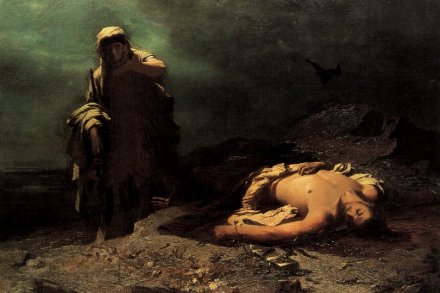
It began, as these things often do, in the Births, Deaths and Marriages column of the Times. ‘On 29th February, to Olivia von Wulffen and Rupert Oldham-Reid,’ the announcement read. ‘A daughter, Antigone Elizabeth Anna, sister to Peregrine Yorck von Wulffen and Otto the dog.’ The ad was spotted by journalist Harry Wallop who posted it on social media last week without comment – but plenty of comment would follow, much of it negative. I think that shows a sad lack of imagination.  My rule is that any choice should be recognised as a name: so no Zowie, Moon Unit or Blanket, say The Oldham-Reid von Wulffen family is configured like Enid Blyton’s Famous Five: two girls, two boys and a dog.

Love Desert Island Discs? Try this

From our UK edition

In its primary Sunday morning slot, Desert Island Discs on BBC Radio 4 finishes at noon. This is the cue for radio cognoscenti to turn the digital dial a single notch – to BBC Radio 3. Because as Desert Island Discs ends, Private Passions, its lesser known twin, is about to begin. I wrote here recently about the celebrations around DID’s 80th anniversary. And many of the comments from Spectator readers were along the lines of ‘yes, but it’s no Private Passions’. And that sentiment, which I partly share, comes, I think, from the fact that PP feels the more serious, the more grown-up of two otherwise very similarly formatted shows.  ‘The big difference is that on Desert Island Discs people do not necessarily have to be passionate about music.

Could the BBC sink Desert Island Discs?

From our UK edition

Desert Island Discs is 80 years old and to celebrate this milestone the BBC has planned an event unprecedented in the show’s long history. It is also one that will surely have its creator and original presenter, Roy Plomley, spinning in his grave. Desert Island Discs Live will take place at London’s Palladium over three nights later this month with host Lauren Lavern in conversation with celebrity guests Russell T. Davies, Katherine Ryan, Lemn Sissay, Ellie Simmonds, Dara Ó Briain, Sue Perkins ‘and more to be announced’. The whole charm of the show, and the reason for its longevity, is its intimacy If this sounds like your sort of thing then it’s not too late to book – there is, at the time of writing, a whole raft of tickets still available from between £44 and £92.

The tyranny of the 20mph limit

From our UK edition

I was still thinking about the film when I came out of the cinema and got into my car. I can’t have exceeded 28mph. On this wide, well-lit, almost empty London road at midnight, it was hardly reckless. Nevertheless, this stretch of road is one of hundreds to have had their speed limits reduced from 30mph to 20mph. Had I driven past a camera while reflecting on the ambiguous ending of All Of Us Strangers? I now face an anxious few weeks waiting to find out. When I mentioned this to friends I discovered this anxiety is now a common experience. The last time I got the dreaded speed camera letter in the post was for going at a breakneck 22mph Take my friend David. Last year he moved to east Sussex.

Have I been cursed by a white deer?

From our UK edition

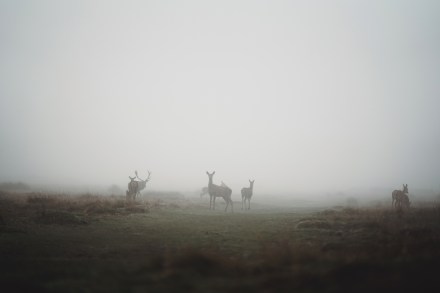
It was standing completely still, about 40 yards away, partially obscured by a clump of hazel: a pure white deer. It looked almost iridescent in the gloom of an overcast winter day. My dogs were straining at the lead but otherwise all sense of movement ceased for half a minute, maybe longer. I managed to decapitate it with a twist and fastened the head and horns to my car roof with bungee cords Then something broke. The white deer twitched. It was only when it began to run that we realised it had been accompanied by half a dozen other, darker-skinned herdmates. In just a few seconds we were alone again. The straining dogs were the only sign that anything had happened at all.

Glenn Hoddle and the birth of cancel culture

From our UK edition

Most England managers lose their jobs over bad results: Roy Hodgson was sacked after being humiliated by Iceland, Graham Taylor for losing a must-win qualifier against Holland, Kevin Keegan quit after a bitter home defeat to Germany. There have been exceptions, though: Sam Allardyce went for bragging to an undercover reporter how he could do certain favours for a hefty fee, Fabio Capello after a row with the FA over John Terry’s captaincy when accused of racism, Don Revie defected to take UAE oil money.  The episode seems to have foretold an imminent shift in our culture But Glenn Hoddle remains unique among England managers – possibly among any football manager anywhere ever  – for having been sacked over a theological issue. This strange episode unfolded 25 years ago.

Sven-Goran Eriksson made English football

From our UK edition

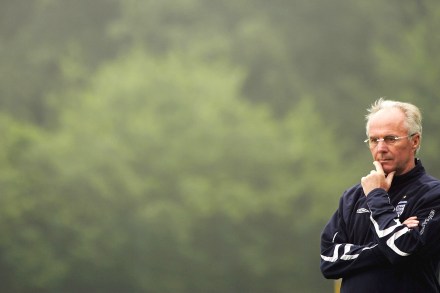
The former England football manager Sven-Goran Eriksson has terminal cancer, he says he expects to be dead before the year is out. In an age when such grim diagnoses are usually kept private until their morbid predictions have come to pass, it was characteristically candid of the 75-year-old Swede to go public like this, even though doing so inevitably invited a fresh round of media scrutiny of a life that has already been scrutinised intensively over many years.  He treated players as grown-ups, even though they often weren’t Any England football manager gets attention – it comes with the territory.

Why are writers obsessed with Tunbridge Wells?

From our UK edition

It’s just a moderately sized town in Kent, but Tunbridge Wells seems to have a literary status disproportionate to its size. And, perhaps as a corollary, it seems to occur in fiction much more frequently than considerably bigger towns of otherwise greater significance. Or certainly this has been my impression over a lifetime’s reading.  I recall, for example, almost falling out of my chair when it suddenly featured in Thomas Pynchon’s Gravity’s Rainbow The town has numerous literary connections. Thackeray lived there and set part of his The Virginians in the town. Dickens visited, as did Jane Austen – her brother is buried there. And it’s surrounded by smaller towns and villages with extraordinarily rich literary connections.

Ten novels about flooding

From our UK edition

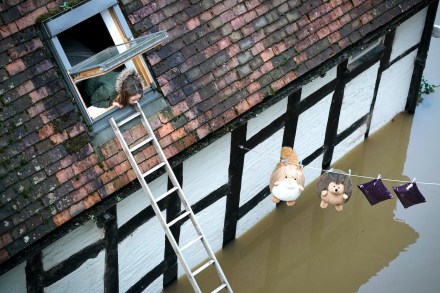
Shropshire was named this week as an unlikely entrant in the top ten global dream travel destinations for 2024 – alongside more predictable contenders like Mauritius. This news received extensive media coverage, most of which featured serene, summery images of Ironbridge, the Georgian engineering marvel that is the county’s most recognisable attraction. There was something wonderfully British about the fact that, at the very moment this story appeared, Ironbridge itself was at the centre of flood defence efforts to stop the swollen River Severn bursting its banks.

The strange return of Cilla Black

From our UK edition

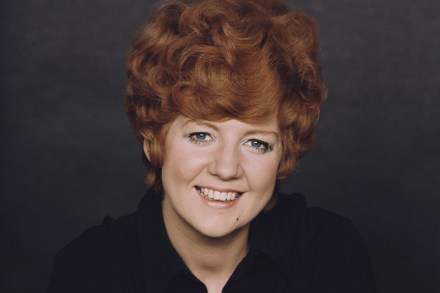
She was an unlikely contender for fame from the outset, with a pub singer voice and a nose so  prominent she would later have it surgically reduced. But, with her Scouser-next-door persona and trademark cropped hair, Cilla Black was in the right place at the right time: she rode the popular wave created by Beatlemania and its attendant appetite for all things Liverpudlian. This led to national stardom as a singer. Then, when her pop career waned, instead of disappearing into obscurity, Cilla managed to relaunch herself into a spectacular second career as one of the biggest names at the lighter end of TV light entertainment. Now, some nine years after her death, Cilla has achieved her most unlikely success yet – by becoming a household name among gen Z.

How to survive the post-Christmas slump

From our UK edition

Elizabeth David was a cookery writer who led the British palate away from the grim days of stodgy, post-war rationing towards the adoption of a fresher, more Mediterranean diet. But she saved the most resonant advice of her six decade writing career for an observation on how to survive a typical British Christmas. Describing the festive period here as The Great Too Much that has also become The Great Too Long, David wrote: A ten-day shut-down, no less, is now normal at Christmas. On at least one day during The Great Too Long stretch, I stay in bed, making myself lunch on a tray. Smoked salmon, home-made bread, butter, lovely cold white Alsace Wine. A glorious way to celebrate Christmas.

Fairytale of the Duke of York: Shane MacGowan’s life in pubs

From our UK edition

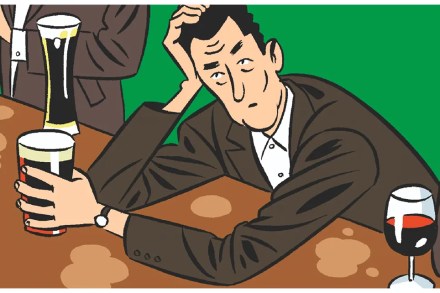
Shane MacGowan spent much of his life in pubs, working in them, drinking in them, performing in them – even living in a couple. He would have turned 66 on Christmas Day, state retirement age, so he was only three and a half weeks short of reaching a finishing line of sorts when he died at the end of November.  Perhaps if he’d just stuck to pints, he might have made it. Guinness is, after all, good for you. But there were also spirits. I can’t imagine quite how many shots he drank over seven decades. And it was seven: MacGowan claimed to have had his first Guinness aged four, his first whisky at eight. Drugs soon followed. And then, later, everyone wanted to buy him a drink.

The strange life of Alvin Stardust

From our UK edition

He had mutton chop sideburns, a vast quiff and was dressed in black leather, even down to murderers’ gloves, over which he wore enormous silver rings, which he then wiggled in a beckoning fashion while staring suggestively into the camera. Nevermind hiding behind the sofa during Dr Who – for me, in December 1973, as a six-year-old nurtured on bubblegum pop, the debut appearance on Top of the Pops of Alvin Stardust, with his rock’n’roll Child Catcher look, was the most menacing thing I had ever seen. In the 1990s he found God – at Waterloo Station apparently, a place where one might be more likely to experience a loss of faith Frightening in a dark panto way it may have been – but its performer was a concoction.

Britain’s curious pub naming conventions

From our UK edition

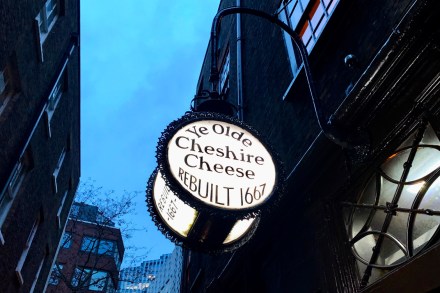
The big London restaurant opening of the autumn has been The Devonshire in Denman Street, Soho, close to Piccadilly Circus. There was a run on bookings as soon as the reviews appeared. Giles Coren in the Times wrote: ‘What a place. What. A. Place.’ Jimi Famurewa's review in the Evening Standard appeared under the headline: ‘Nothing beats a good pub – and this is as good as it gets’. Because – as well as being an exciting new restaurant – The Devonshire is also very much a pub. What must foreign visitors make of all this confusing disconnection between pub name and location? There’s been a pub on the site since 1793.

The importance of London’s lost cinema

From our UK edition

King’s Cross in the eighties was the scabbiest, dodgiest, scariest and most alternative place in central London – and the crumbling Scala cinema was its beating heart. Memories of this long-shut venue are being revived by the imminent release of a feature-length documentary tracing its brief, colourful history. The film is named after the cinema but its lengthy subtitle signals the kind of material it depicts: Scala!!! Or, the incredibly strange rise and fall of the world’s wildest cinema and how it influenced a mixed-up generation of weirdos and misfits. I’ve been back to The Scala to see bands there since. But it’s a different beast now This sounds an extravagant claim but it clearly was influential in the film world.

Against all odds, I’ve started to like Phil Collins

From our UK edition

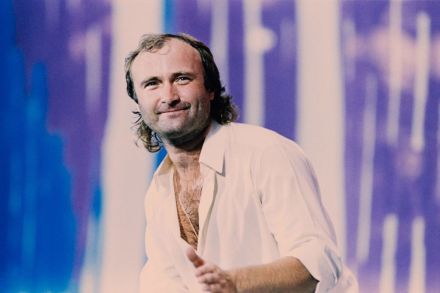
This isn’t easy for me. In fact, it is perhaps the most difficult public admission I’ve ever made. I’m worried about how people will react, how friends and colleagues might reconsider their opinion of me after reading this. But I can’t keep it locked up secretly inside me any longer. I have to admit it. I’m starting to quite like Phil Collins. This isn’t a fully fledged commitment – it’s not something I’d die on a hill for. But I’m unmistakably starting to warm to the chirpy, balding balladeer. This is particularly shocking because for at least a decade, from the early eighties to early nineties, he was, for me, the personification of everything that was wrong with the world.

Save our unmessed-with pubs!

From our UK edition

From the outside, it appeared derelict – not an uncommon thing to find when visiting an unknown establishment based solely on a listing in an old copy of ‘The Good Pub Guide’. But a chap walking past with his labrador reassured us: ‘She usually opens at noon.’ When we returned an hour later it was immediately plain that the pub was still in use – you could hear music coming from inside. This turned out to be from a five-piece acoustic string band who were seated by the fire, playing ‘I’ve Just Seen a Face’.

My quest for a legendary punk mix tape

From our UK edition

In the early 1980s, I was a young teenager being drawn into the small music scene of a provincial town. The moment was post-punk – bands like Joy Division, The Cure and Echo and the Bunnymen were driving my interest – but I was also fascinated by the punk movement that had immediately preceded it. One of the enduring origin-story legends of punk, frequently mentioned in the music press articles I was then devouring, was that it had been kickstarted when Lenny Kaye, later the guitarist in the Patti Smith Group, curated (as we’d say now) a compilation album of lo-fi 1960s American garage bands called Nuggets.

There’s nothing as sad as a bad pub revamp

From our UK edition

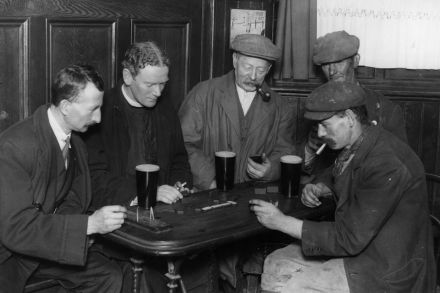
The Flower Pot in Aston, near Henley, was one of my favourite pubs in the country, a charming, eccentric time capsule cluttered with esoteric decoration: dozens of cases of stuffed fish and animals, angling paraphernalia and Edwardian art; there was even a resident parrot.  It was always rammed, with everyone from vicars to Hell’s Angels The pub opened in 1890, at almost exactly the same time as the publication of Three Men in a Boat, and in a certain light, after a few drinks, it could feel as though one was actually inhabiting the quirky, late-Victorian England described by Jerome K. Jerome.

Did my wife, 56, really need an emergency pregnancy test?

From our UK edition

A team of nurses was trying to ascertain whether my wife was pregnant. It didn’t seem very likely. She’ll be 57 in a couple of months, went through the menopause over a decade ago and has been on HRT for several years. And she hasn’t had IVF. Insofar as one can be certain about such matters, I believe I have been her only sexual partner for two decades – and I’ve had a vasectomy. Furthermore, were she to be pregnant and go on to give birth she would leap straight into the global top 100 oldest mothers of all time list. So, no, it didn’t seem likely.   A team of three assembled to put screens around her so that she could urinate on her trolley.