John Sturgis

John Sturgis is a freelance journalist who has worked across Fleet Street for almost 30 years as both reporter and news editor

Did my wife, 56, really need an emergency pregnancy test?

A team of nurses was trying to ascertain whether my wife was pregnant. It didn’t seem very likely. She’ll be 57 in a couple of months, went through the menopause over a decade ago and has been on HRT for several years. And she hasn’t had IVF. Insofar as one can be certain about such matters, I believe I have been her only sexual partner for two decades – and I’ve had a vasectomy. Furthermore, were she to be pregnant and go on to give birth she would leap straight into the global top 100 oldest mothers of all time list. So, no, it didn’t seem likely.   A team of three assembled to put screens around her so that she could urinate on her trolley.

Arsene Wenger is no philosopher

It’s now five years since he finally stepped down as the manager of Arsenal FC after two decades at the helm – an occasion marked by the recent unveiling of a statue outside the Emirates Stadium of a triumphant Arsene Wenger holding aloft the Premier League trophy. The occasion made me reflect on his tenure at the club and return to one particular aspect of the Frenchman who became such a high-profile character in England: was Wenger really an intellectual? There is scant evidence of great intellect in any of his post-match utterances He was certainly popularly portrayed as one. The sports writing fraternity was so invested in the idea that Wenger was a man of considerable depth that they nicknamed him ‘Le Professeur’.

Stop paving over front gardens

It’s a pretty typical 1930s-built semi in the outer London suburbs: four bedrooms, living room, dining room, kitchen, average back garden and unusually large front garden with a lawn and mixed shrub borders. Or rather that’s what it was until it changed hands earlier this summer and the new owners had different ideas. Now that that front lawn and its surrounding borders are gone. In their place is an extended paved area that has enough space to park at least six cars, maybe eight. Not a blade of grass has survived. The bulldozing of this domestic garden in north London coincided with the Ulez expansion, joining other recent anti-car measures like 20mph speed limits and LTN-closed streets, in an effort to reduce air pollution.

Alone in Dartmoor’s haunted woods

Wistman’s Wood is one of the UK’s last remaining temperate rainforests. It came within Prince William’s purview after he inherited the Duchy of Cornwall, the largest privately owned portion of Dartmoor National Park. He has since visited the site, a seven-acre strip of oak woodland on the eastern slopes of the West Dart Valley, posing for photos in a waxed jacket and tweed cap. Wistman’s is a unique habitat. It has a number of rare mosses and lichens which attach themselves to and around its stunted, gnarly oaks and the large boulders dotted among them. But it is as much its place in folklore as natural history that makes Wistman’s so important.

Admit it, the French are better than us

The French, according to the enshrined belief system that I grew up with, are work-shy layabouts. They never turn up for a job on time as they’re too busy drinking wine for breakfast. And once they do finally start, they break off almost immediately for a two-hour lunch with more wine before dithering about a bit and then finishing early. If anyone threatens these unproductive practices, they blockade ports or set fire to lorries full of lambs.  We British, by contrast, have work ethic running through our veins. We fill every unforgiving minute with sixty seconds’ worth of distance run, as Kipling put it. They ridicule us as a nation of shopkeepers, but this is mere jealousy – we are strivers while they are hopelessly lazy shirkers.

Save our takeaways!

Rishi Sunak’s strategy for solving Britain’s crippling housing shortage has been revealed: converting redundant takeaway restaurants into homes. It was a strange role reversal for Sunak, so recently cast as the potential saviour of many of these outlets during his Rishi’s dishes period. Yet fast forward three years and here he is as Prime Minister announcing – not just the demise of many of these places – but their apparent imminent demolition in favour of a million new homes. Mains were made fresh to order, the fiddly sides like spring rolls and prawn toast all assembled painstakingly by hand The conversation of old takeaways was, significantly, the headline detail that was singled out in pre-announcement media briefings.

My Sinéad O’Connor story

It must have been late 1993. She was at the height of her fame and I was in the earliest days of my journalism career. I was working for a small press agency in Clerkenwell whose stock in trade was day work for newspapers: court cases, press conferences and particularly door knocks and door steps. As a rookie, I did an awful lot of these. With my cover story now established, I went back to bed on that sofa Away from work I was in my twenties in London and had quite the party lifestyle – clubbing every weekend. The club of choice was Subterranea in Ladbroke Grove and I’d go most Saturday nights. But on this occasion, I was the rota reporter on the following Sunday, due in at 9 a.m., so when midnight came around I made moves to go home to bed.

The insidious creep of plastic glasses

It was the afternoon of the first day of the second Ashes test at Lord’s. In the brief lull between overs, the camera panned, as it often does, to a recognisable face in the crowd: Jacob Rees-Mogg. The traditionalist Tory presented exactly as you’d expect: Savile Row suit, tie and cufflinks. But there was one wrong note: he was drinking from a plastic glass.  Say what you like about Mr Rees-Mogg – and people do – but one attribute that I think we can all agree he possesses in abundance is that he’s in touch, almost viscerally, with his own sense of how things should be done. And this sense, as I perceive it, would very much preclude drinking from a plastic cup.

How to avoid paying parking tickets

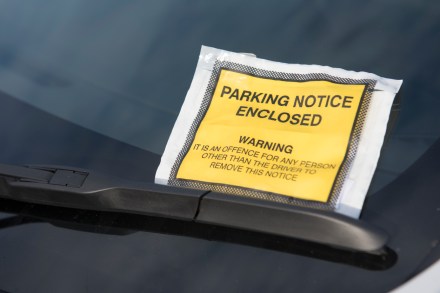
My year of motoring tourism didn’t begin auspiciously. Early on the morning of New Year’s Eve, in downtown Dieppe, I looked out of the window of our rented apartment with its magnificent view of the Église Saint-Jacques, painted by the likes of Pissarro and Sickert, and noticed that our car had disappeared.  What followed over the next three hours was a journey of discovery – of the government offices and gendarmeries of the historic maritime town (on foot, in the rain), by which process I was eventually informed that my car was now residing in a secure pound on an industrial estate some five kilometres out of town.  I tried to get a taxi there. Eventually I found a rank by the harbour with three cabs, but they were driverless. I rang the number on one of them.

In praise of Delia Smith

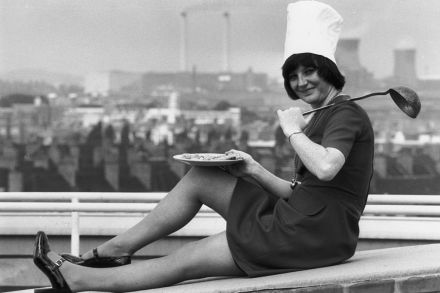
They’re now such common ingredients that you can buy them in all but the smallest shops: halloumi, pesto, couscous, salsa, roasted peppers. But their origins as culinary staples can be traced back to the publication 30 years ago of Delia Smith’s Summer Collection. This book and the accompanying TV series changed British cooking forever. Delia didn’t invent much but she brought things to the mainstream. The unprecedented success of Summer Collection – both the book and the show – also made Smith into the biggest figure in British cooking for a decade or more. The follow-up, entitled, rather obviously, Winter Collection, built on Summer’s success to become one of the best-selling books of the decade in any field.

Damn you Bella Freud

I was just arriving at El Vino on Fleet Street for a leaving do when my phone rang. It was my wife, sounding frantic. ‘Where’s that box?’  ‘What box?’  ‘The box that was outside our bedroom door.’ I didn’t just do the bins effectively, I did them with grace. I did the bins, I thought, in the manner of Roger Federer My mind started working quickly. It was a Thursday evening. The box in question, small and nondescript, had indeed been by our bedroom door. It had been there since Saturday evening or Sunday morning and I had passed it any number of times until earlier that day, shortly before 6 a.m.

Can you tell if he’s dead yet? The secret life and death of Rolf Harris

Rolf Harris, the disgraced entertainer and sex offender, is dead. Harris's death was confirmed yesterday – but his death certificate showed that he passed away at his home in Bray, Berkshire, on 10 May. This confirmed what many journalists already knew: a fortnight ago, a private ambulance was photographed backing into the doorway of his riverside home. News organisations were ramped up to full alert. Old obituaries were dusted down, pages drawn up, commentators considered for comment. And then…nothing. Two weeks elapsed, almost to the minute, from the moment the rumours began to swirl to the official confirmation yesterday of his death at the age of 93.

Where to go to hear a nightingale sing

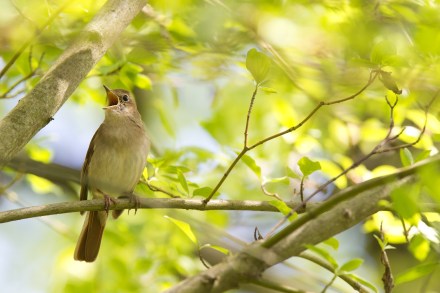
The first cuckoos are audible, skylarks are singing their hearts out, the dawn chorus is in full, joyous effect and more bitterns are booming than in decades. But the real highlight of the birdsong calendar is only now beginning in earnest: nightingale season. Nightingales have been winging their way from sub-Saharan Africa across Spain and France and into the wilder fringes of the southern part of England, where they are beginning their attempts to seduce each other by means of song. And it’s this seductive sound that has given this tiny bird such a huge place in our culture.  There are two guaranteed reference points for any discussion about nightingales. So I may as well get Keats and Berkeley Square out of the way immediately.

Why I’ll never be a disappointed West Ham fan

It was one of the most visually striking events of the interwar years and one of the first times that moving footage captured a major news event clearly. A vast crowd poured onto a football pitch, only restrained from covering it completely by a single mounted policeman and his white horse holding them at bay. In fact, the horse, Billie, wasn’t white, he was grey, it just looked that way in the newsreel. And he wasn’t alone – he just stood out more than the other horses, bays and chestnuts. But a myth was born. The ‘White Horse Cup Final’ was the inaugural match at the newly-built Wembley Stadium. While it was in construction, finals had been held at – and failed to fill – the much smaller Stamford Bridge.

In praise of Prunella Scales

As I’ve got on in years I’ve been fairly successful in eliminating vices – most of the debauchery of my teens and twenties is a distant, hazy memory. But as I reached my fifties I found I had fallen into the grip of a compulsion that was as powerful and unshakeable as any drug. My name is John and I am addicted to Great Canal Journeys with Prunella Scales and Timothy West.  During my condition’s worst ravages I found myself staying up half the night binge-watching this endearing elderly couple navigating their way around the historic waterways of Britain at 2mph. The pottering about, the occasional prang while entering and exiting locks, the odd glass of wine in the afternoon ­­– it was the most addictive TV I’d seen since The Wire.

Read all about it: 12 of the best novels about journalism

A recently published novel, Becky by Sarah May, is the latest in a long tradition of fiction based on journalism – and a good excuse to think again about the great books from that sub-genre. May’s is a curious hybrid of the life story of News UK CEO Rebekah Brooks and a repurposing of Vanity Fair. George Cochrane, reviewing it for The Spectator, called Becky ‘a good novel dwarfed by a great one’.  He was referring to the Thackeray, but he might just as easily have been talking about another classic English novel: Evelyn Waugh’s Scoop. That comic masterpiece from 1938 is the book against which all other fictional evocations of journalists and journalism are judged – and is almost invariably the first on any list of the best of such books.

The unmaking of Russell Brand

Russell Brand’s hero status among a prominent section of the British left began on Friday 13 September 2013 and officially came to an end one week ago. On both occasions the medium was the Guardian. The 2013 moment came when he wrote for the paper giving ‘his side of the story’ after being kicked out of a GQ awards event for making a joke about the Hugo Boss fashion label and its historic links with the Nazis. Just shy of ten years later, the paper’s columnist George Monbiot last week published a mea culpa for having once been an advocate for Brand. He had nominated the comedian as his ‘hero’ of 2014, saying he was ‘the best thing that has happened to the left in years’.

The real reason cyclists go on the pavement

It’s a statement that’s guaranteed to raise hackles, but I admit: I cycle on pavements. This has become a controversial thing to say after the recent manslaughter conviction of Auriol Grey, who waved and shouted as Celia Ward cycled towards her in Huntingdon, Cambridgeshire – resulting in the retired midwife falling into the road to her death. Many have responded to the case by saying no cyclist should be let on the pavement ever again. But I think this misses something important.

In defence of having a flutter

It was the end of May 1983, half term week. I was meant to be revising for my O-levels, which were to begin the following Monday, but instead was mooching around town, a teenager ready to be led astray. And when I bumped into a couple of similarly unfocused classmates, that’s exactly what happened.  Instead of studying, they’d been seduced by gambling – specifically, betting on the horses. And now they were trying to seduce me. ‘You’ll love it,’ I was promised as they led me into a Ladbrokes, where the air was thick with fag smoke and booming with racetrack commentary.  They explained the procedure to me – the races were displayed by their start time, this was the list of runners on the board and those sets of two numbers were their odds.

Stop misgendering my dog

It happens a couple of times a week: in parks, usually; sometimes outside shops, on Tube trains or in pubs. ‘What kind of dog is he?’ they’ll ask. I answer: ‘Bearded collie crossed with a greyhound which comes out looking like a deerhound but is actually a lurcher.’ But this is pointedly preceded by: ‘She’s a…’ I don’t like to be rude when strangers are being interested and congenial, but I feel compelled to quietly make the point that the dog they’re expressing interest in is not a he but a she.  News emerged this month that God might be becoming gender neutral.