John Sturgis

John Sturgis is a freelance journalist who has worked across Fleet Street for almost 30 years as both reporter and news editor

Were Boney M the weirdest pop act of all time?

From our UK edition

For a spell in the late 1970s there were two pop groups which dominated the UK singles charts – both, coincidentally, vocal quartets from continental northern Europe. But while one, Abba, have since become a billion-pound industry with an apparently permanent hologram-shaped presence on the London concert scene, their then rivals for pop supremacy, Boney M, have almost completely disappeared from public consciousness. And this is a shame because Boney M remain uniquely noteworthy in one field in particular: weirdness.  There are other contenders: Little Richard, the Sweet, Village People, the KLF.

The tragedy of Anne Boleyn’s childhood home

From our UK edition

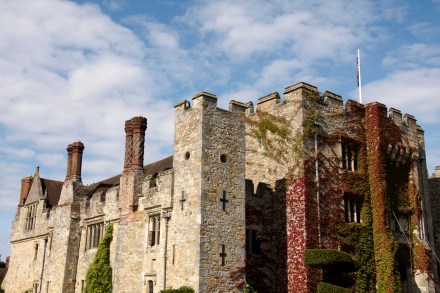
Hever Castle was the childhood home of Anne Boleyn and played a not insignificant part in the Henry VIII story. The smitten despot, already planning his divorce from sonless Catherine of Aragon, would ride over from his hunting lodge at nearby Penshurst Place to woo Anne there. Then, when things didn’t work out as he’d hoped, Henry seized Hever from her family and gave it to wife number four, Anne of Cleves, as part of the settlement when he was divorcing rather than beheading her, as he had poor Anne Boleyn. The first thing that I heard when I arrived in a teeming car park was the voice of Mariah Carey singing: ‘All I Want for Christmas Is You’ It remains one of Britain’s best-preserved Tudor houses.

Glastonbury and the problems of youth

From our UK edition

On Sunday, I was in deepest Wales, listening to birdsong, braying donkeys and a demented cockerel, but instead of getting away from it all I was staring at three different laptops all clicked to the same link: the Glastonbury ticket sale countdown clock. This was the fifth year in which my daughter has sought tickets and, determined not to fail once again, she had arranged a military-style operation, recruiting a small army of volunteers, including me, to be online on the stroke of 9 a.m. in the hope that one of us would get lucky. The other five people she was planning to go with had all done the same. There must have been 50 people trying for the the tickets. My daughter had arranged a military-style operation, recruiting a small army of volunteers At first it was fun.

The royal love triangle that led to Montecito

From our UK edition

Were The Duke and Duchess of Sussex to leave their mansion in Montecito, California, and head a couple of miles across town, to Toro Canyon, they would soon find themselves at the one-time home of a woman whose story they would find rather relatable. Because the former occupant once drove a wedge between the Prince of Wales and his younger brother, Prince Harry. Sound familiar? That former Montecito resident was Beryl Markham, a woman whose destructive involvement with the two English princes decades before Meghan was born bears one or two rather strange similarities with the Sussexes’s own story. The fact that Harry and Meghan chose to make their new home just around the corner from where Markham established herself after her own flight to America really is an extraordinary coincidence.

Disney’s betrayal of The Jungle Book

From our UK edition

When Sven-Göran Eriksson’s coffin was being paraded through the streets of his home town, ahead of his funeral, it was followed by a marching jazz band playing ‘The Bare Necessities’. The song, from Disney’s The Jungle Book, was intended to honour the former England manager’s request that his send-off should be celebratory rather than mournful. But, despite a personal fondness for Sven – which I wrote about here in The Spectator – this choice left a sour note for me. This was because of a perhaps obscure but nevertheless deeply held dislike which I have developed for the fictional character associated with the song: Baloo, the bear. I cannot stand him. He is a classic feckless father figure who, for me, has been wrongly revered by film audiences for decades.

I’m glad my wife had a medical emergency at sea

From our UK edition

My wife had already been given morphine and they had just topped her up with ketamine. She was now so high she didn’t seem even to know where she was. And this was probably a good thing, given she was strapped to a stretcher on the rear deck of a ferry in the Bay of Biscay, 100 miles off the French coast, and about to be hoisted some 75 feet into the night sky to a helicopter that was struggling in an increasingly stiff wind. I asked her what the flight had been like. She said she had been so out of it she thought she was appearing in a remake of Apocalypse Now The reason for all this drama was that she had abruptly dislocated her hip as we sailed from Portsmouth to Santander. Before I relate what happened next, though, some background.

In defence of airport pints

From our UK edition

It is hard to think of anyone in aviation history who has done more to degrade the passenger experience of air travel than the man who has run Ryanair for the last 30 years. So forgive me if I’m not rushing to listen to Michael O’Leary’s thoughts on how to improve it.  Being allowed a drink before and during a Ryanair flight is about the only thing that makes the experience bearable in the first place But his claim yesterday that we should significantly restrict passenger alcohol consumption has sparked apparently serious consideration. Suggesting that the remedy to the supposed problem may lie in a two-drink-per-passenger limit, O'Leary told the Daily Telegraph: ‘We don't allow people to drink-drive, yet we keep putting them up in aircraft at 33,000 feet.

I was an Oasis fan. Then I grew up

From our UK edition

On the evening of 10 August 1996, I found myself lost in the grounds of a stately home in Hertfordshire, and very, very drunk. Everywhere I turned, there were men, mostly young men in bucket hats. They were all raucously singing, and they too were very drunk. Everyone was drunk. It always felt like the Gallagher brothers were performatively baiting each other for show, like two camp old wrestlers trying to hype a crowd Almost 30 years on, the Oasis concert at Knebworth is, what those working in marketing like to call, legendary. There has already been a commemorative album and documentary film – and now an Oasis reunion will see millions of people attempt to spend tens of millions of pounds to be able to attend re-creations of Knebworth next summer.

Sven-Goran Eriksson: 1948-2024

From our UK edition

The former England football manager Sven-Goran Eriksson died today. He had terminal cancer and said he expected to be dead before the year was out. In an age when such grim diagnoses are usually kept private until their morbid predictions have come to pass, it was characteristically candid of the 76-year-old Swede, even though doing so invited a fresh round of media scrutiny of a life that has already been scrutinised intensively over many years. He treated players as grown-ups, even though they often weren’t. Any England football manager gets attention – it comes with the territory.

How the Premier League abandoned its fans

From our UK edition

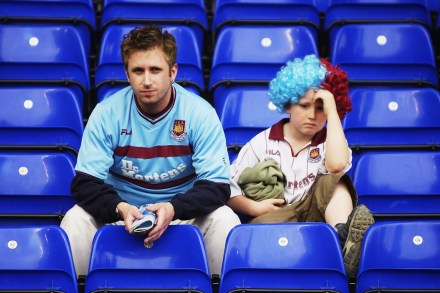
It’s become a regular occurrence: a friend or a friend-of-a-friend is visiting London, wants to go to a football game and messages asking for help getting tickets. My standard response is: no chance. The most recent of these was from New Zealand-based Spectator contributor David Cohen, whose son will be in London in the autumn. I’d love to be able to help him but know I almost certainly can’t. The sad reality is that I’m struggling to get tickets myself these days, let alone able to assist others. The clubs themselves are too greedy to do anything other than continue to wring as much out of the fans as they can When I first started going to football, to West Ham games in the late eighties, it used to be easy getting in. You just turned up.

My canal boat obsession is causing me trouble

From our UK edition

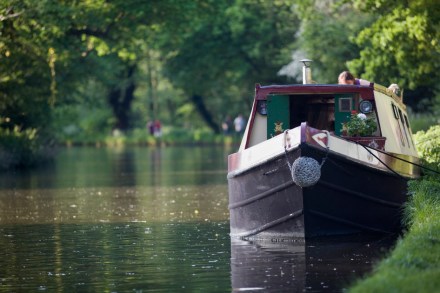
We had steered our narrowboat into the lock at Swineford on the navigable section of the Bristol Avon before 8 a.m., heading upstream, back towards Bath. Two and a half hours later, we were still there. We were stuck. Having worked the lock’s paddles, our boat had climbed the requisite 10 feet to be level with the stretch of river ahead. We were poised to open the lock gate and press on towards the Kennet and Avon canal. This, however, meant having to push against the swirling waters of a tidal river. There were only two of us, one still recovering from hip surgery, and pushing the gates of this particular lock open was a job that would need a strong team of helpers. A pack of rugby forwards would be ideal, a recently hospitalised wife less so.

In defence of the vest

From our UK edition

I have been fond of vests ever since those plain white cotton ones we wore for primary school athletics in the long ago and mythically hot summers of the mid-1970s. No other garment in the male warm weather wardrobe is quite the same. A T-shirt isn’t as breathable, while a loose linen shirt even half unbuttoned doesn’t allow the cooling air to play around the shoulders in the same way. And neither allow you to catch the sun on your skin so pleasingly. They only really come into play in high summer: you wouldn’t attempt one in May or September. But for July and August, when, in a good year, the temperature consistently gets into the thirties, if paired with cotton shorts and flip flops or sliders, they are about as stripped back as the male wardrobe gets away from a beach.

Proper football fans don’t chuck pints

From our UK edition

Many previous football tournaments have had a signature motif: the Mexican wave in 1986, the irritating vuvuzelas in South Africa 2010, the firework up the backside in London in 2021. At Euro 2024, that motif has been the hurling of plastic beer glasses. They have been thrown, in celebration or anger, by the Croatians, the Serbs, the Albanians, the Dutch, the Spanish, by our German hosts and by the excitable Scots. The latter would doubtless have thrown more had they had cause, or stuck around longer. But it was their use as projectiles by England fans which attracted most media attention – and which is likely to result in a fine from Uefa’s Control, Ethics and Disciplinary Body.

My match clash tactics

From our UK edition

Stuttering England aside, it’s been a great Euros so far: the comedy of Scotland, the tragedy of Croatia, the miracle of Georgia. Now that the knockout rounds are upon us, I intend to see every remaining game live in full. This is when the memorable moments will begin in earnest, in these win-or-go-home games: last minute twists, astonishing upsets, penalty shoot-outs. I can’t wait. There’s just one little problem with this plan to saturate myself in football for the next fortnight: Steve and Katrina’s wedding today (Saturday). They are former colleagues of my wife who went on to become good friends and we’ve had the invite stuck by magnet to our fridge door since last summer – since before the Euros qualifying stages had even been completed.

I am the victim of a bureaucratic injustice

From our UK edition

I live north of the river in London and my parents live south of it, in the Tunbridge Wells. I have long been a registered user of the Dartford Crossing for fear of forgetting to pay to cross – and thus incurring an automatic fine. This means that the cameras at the bridge and tunnel recognise my car number plate and immediately deduct £2.50 from my bank account when they see it going over or under the Thames. I found myself in an automated telephone queuing system. I was caller number 73 Or it did mean this until something went wrong. After my usual crossing in April, I started to get text messages from ‘Dart Charge’ to say my account was ‘dormant’ and I needed to ‘re–register my card details’.

The England squad is too sensitive

From our UK edition

Perhaps Gareth Southgate’s greatest achievement at the England helm has been to inculcate a sense of togetherness in his squads. This had been noticeably absent in teams under those who preceded him: at one point, for example, the first-choice central defence partnership, Rio Ferdinand and John Terry, refused to even talk to each other, while the two best midfielders, Frank Lampard and Steven Gerrard, seemed unable to play together.  Strangely, this change was symbolised by some inflatable unicorns. The players were photographed laughing and messing about in a swimming pool during Southgate’s first tournament, the 2018 World Cup, at which he took his team further than any England outfit had in decades.

The Beckham rumour that refuses to die

From our UK edition

I first heard it in the spring of 1999 from a bloke who was sitting behind me at a West Ham game. It concerned David Beckham and Victoria Adams of the Spice Girls, who were then on their way to becoming the UK’s most prominent celebrity couple. They were set to marry that summer – and they particularly wanted to book an Essex country hotel for the event, he told me. But his friend of a friend had long since secured the booking on the day in question for his own wedding. On learning this, Beckham had been so keen on getting the coveted slot himself that he had offered to pay for the friend of a friend’s entire wedding if he moved it to a later date – and, as an extra sweetener, he would pay off his mortgage too.

Our strange relationship with columnists

From our UK edition

I’ve been reading newspapers since I was a teenager and have become strangely familiar with those who write about their lives, even though I’ve met very few of them. Recently, this has gone from being a moderately amusing side interest to an increasingly sad one.  In the late 1990s we lived a few doors down from Times columnist Robert Crampton, in Hackney. We had dinner with the Cramptons a couple of times and found them perfectly affable. And then we moved. So I haven’t seen him in years. But were I to bump into him now, I’m pretty certain he’d be struggling to remember who I was, whereas I’d be more: ‘How are Nicola and the kids? Do you still get to that beach hotel in Pembrokeshire?

There is nothing common about the northern lights

From our UK edition

It was 10.45pm and our film had just finished. I checked my phone and saw a friend claiming he had just seen the northern lights — in Wembley. It had been trailed as a possibility, but I hadn't given it much credence. Not with the light pollution inside the M25, surely. You’d need to head up to the Chilterns at least, and even then be incredibly lucky.   But I dashed to the back garden anyway. The night sky certainly had an unusual clarity, almost shimmering, and you could clearly make out the whole of the moon behind the shining crescent. But no colours. My Wembley pal must have mistaken the glow of an all-night garage for the celestial cosmos.  I went back inside and poured another glass of wine.

The stupidity of the former footballer pundits

From our UK edition

It was the most dramatic moment of the whole football season. Having trailed 3-0 to the millionaires of Manchester United in their FA Cup semi-final, lowly Coventry had bravely fought their way back to 3-3 and extra time. And now, in the last minute of that extra time, they had broken away to score an incredible winner. Or had they? Immediately after Victor Torp’s shot beat Onana, and the sky blue end of Wembley erupted into pandemonium, the ITV broadcast footage rewound to the critical moment – when the defence-splitting pass was made that led to the goal. So what did the designated expert think at this critical moment? ‘He’s onside,’ said Lee Dixon, assertively.