John R. Bradley

The Islamic State says France is atop its target list – and declares a new war

From our UK edition

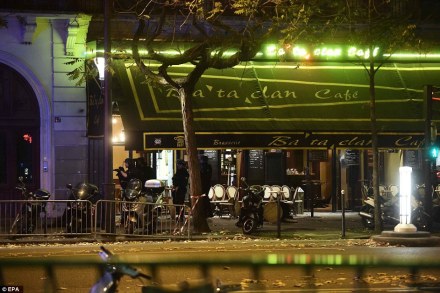
Speaking from the Élysée Palace, Francois Hollande has said that the terror attacks which killed 127 in Paris last night were the work of the Islamic State. What happened yesterday in Paris and in Saint Denis is an act of war and this country needs to make the right decisions to fight this war. This act committed by the terrorist army, Islamic State, is against who we are, against a free country that speaks to the whole world. It is an act of war prepared and planned outside, with outside involvement which this investigation will seek to establish. It is an act of absolute barbarism. France will be ruthless in its response to Islamic State.
The caliphate strikes back

From our UK edition

[audioplayer src="http://rss.acast.com/viewfrom22/jeremyhunt-scatastrophicmistake/media.mp3" title="Douglas Murray discusses what Isis might do next" startat=1814] Listen [/audioplayer]When the creation of a new caliphate was announced last year, who but the small band of his followers took seriously its leader’s prediction of imminent regional and eventual global dominance? It straddled the northern parts of Syria and Iraq, two countries already torn apart by civil war and sectarian hatreds. So the self-declared caliph, Abu Bakr al-Baghdadi, appeared to be just another thug and opportunist ruling over a blighted no-man’s land, little known and still less revered in the wider Islamic world.

Russia’s dramatic new policy towards Assad is very revealing

From our UK edition

Yesterday I argued that if it became clear that the Russian plane was brought down over Egypt by a bomb, Vladamir Putin may be forced to reassess his Syrian campaign – especially in light of a strong counterattack by Islamic State on the ground in Syria. Today, as the bomb theory became the only plausible explanation for the catastrophe, the Kremlin is strongly hinting that such a radical reassessment is already underway. Maria Zakharova, a Russian foreign ministry spokeswoman, has today said on a Russian radio station it is no longer 'crucial' that Syrian President Bashar al-Assad stay in power. 'Absolutely not, we've never said that,' she insisted when pressed, adding that Moscow only opposed 'regime change'.

The Russian plane crash could undermine Putin’s Syria strategy

From our UK edition

It now seems fairly likely that an explosion brought down the Russian passenger airline over Egypt's Sinai Peninsula over the weekend. One Metrojet official has already suggested that the 'only explainable cause is physical impact on the aircraft' and they have ruled out technical failure or human error. If the ongoing investigation proves that to be the case, it will obviously have an immediate and catastrophic impact on Egypt's already decimated tourism industry. A jihadist would have been able to infiltrate one of the country's supposedly most secure airports to plant a sizeable explosive device on a specific airline.

Will Jeremy Corbyn condemn Gerald Kaufman’s comments about ‘Jewish money’ influencing the Tories?

From our UK edition

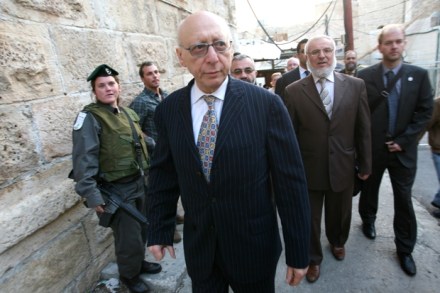
Sir Gerald Kaufman is Jewish, which he seems to use as an excuse to make claims that would, ordinarily, be denounced as anti-Semitic. He has made this a trademark of his career but on Tuesday night, Sir Gerald - now Father of the House of Commons - outdid himself. In an extraordinary speech he allegedly discussed the influence of 'Jewish money' over the Conservative party. He also claimed that, according to an email he had received, 'half' of the Palestinian knife attacks in Israel over recent weeks have been 'fabricated' as an excuse to execute Palestinians, and that the small-circulation weekly newspaper The Jewish Chronicle has biased the Conservatives.

Don’t believe rumours of an ‘imminent’ Saudi coup

From our UK edition

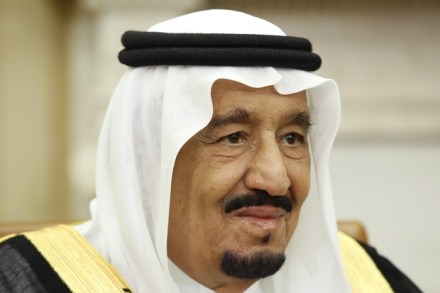
During the past month, news about domestic Saudi Arabian politics has been dominated by frenzied speculation over an imminent coup within the world's most opaque and important ruling family: the House of Saud. This rumour was started by a little-known website dedicated to Middle Eastern affairs. It was then quickly picked up by the Guardian and numerous other British newspapers, and a few days ago was given new impetus when splashed by the Independent. Remarkably, there is only a single source for all of these stories of senior, disgruntled, dagger-wielding royals lurking in the vast palaces of Riyadh and Jeddah: a Saudi prince who is one of the 12 surviving sons of the kingdom's founder, King Abdulaziz, and who has requested anonymity 'for security reasons'.

Israel’s ‘neutral’ position towards Syria has created some strange bedfellows

From our UK edition

Over the weekend an Israeli-Arab flew from his home in the Jewish state on a paraglider, evading Israel's formidable air defences to land smack bang in the middle of the Golan Heights. Despite a search by the IDF so intense it provoked a flurry of tweets stating that an Israeli invasion of Syria was underway, he disappeared. No doubt he was hidden by one or other of the assorted jihadist groups based there, predominant among whom is the Al-Qaeda offshoot Al-Nusra Front. They long since booted out the UN peace-keeping mission in the No-Man's Land part of the territory and, to the delight of binocular-wielding day-trippers, have for the past two years been battling Syrian regime forces within a few miles of Israeli border.

Leaked extracts of Nicola Sturgeon’s speech suggests she doesn’t care much about Syria

From our UK edition

Nicola Sturgeon is to close the SNP annual conference today, and her aides have leaked what she proposes to say about UK military intervention in Syria. I hope there's time for her to change the text because, as it stands, it's muddled and rather embarrassing - it suggests that she does not understand the situation at all. Unilateral air strikes, she is due to say, will merely add to the “already unimaginable human suffering” in the region. She will vaguely urge a diplomatic push at the UN to help bring the four-year civil war to an end (Isis, meet Mr Assad. Now, please shake hands).

Is the West arming the Syrian People’s Front or the People’s Front of Syria?

From our UK edition

The United States has abandoned training rebel forces on the ground in Syria but not equipping them, or at least some of them, and over the weekend its military cargo planes dropped 50 tons of ammunition to rebel groups in the north of the country. All apparently reached their intended target: yet another hastily formed alliance intent on fighting both the Islamic State and the Assad regime. Alas, despite being created just days ago, in keeping with Syrian rebels' almost constantly shifting alliances, it confusingly already has two names: the Democratic Forces of Syria and the Syrian Arab Coalition. The former includes both Arab groups and the Kurdish YPG militia.

Giving the Nobel peace prize to Tunisia’s ‘quartet’ perpetuates a dangerous lie

From our UK edition

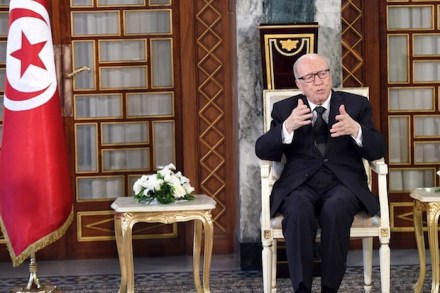
Tunisia is preposterously touted as the one success story of the nightmarish revolutions, counter-revolutions, civil wars, jihadist invasions and Islamist terrorist atrocities in the name of an Arab Spring we are still told represents a thirst for Western-style freedom and plurality. The decision to award this year's Nobel Peace Prize to the country’s National Dialogue Quartet, for apparently helping the country's transition to democracy, dangerously perpetuates this myth. The Nobel Committee says that the National Dialogue Quartet was... ...

WATCH: Russians release video of their Cruise missiles hitting Syria

From our UK edition

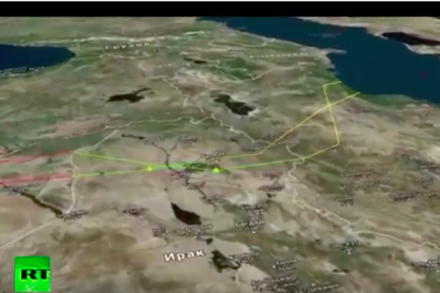
It is too early, as the Kremlin admits, to assess how effective Russia's week-long military assault on the Islamic State in Syria has been. However, one thing is already crystal clear: Moscow is winning the propaganda war. While Barack Obama was apologising today for the disgraceful bombing of a hospital in Afghanistan, changing Washington's official version of events for the fourth time in as many days, the Russian Defence Ministry provided an extraordinary sleek video of its cruise missile barrage of Isis targets. The accompanying press release explained how the 26 missiles not only avoided civilians when they hit their targets, but even flew over non-residential terrain for almost the entire 900 miles after they were launched from the Caspian Sea.

Sex and the Saudis

From our UK edition

A young Saudi prince, Majed Abdulaziz Al-Saud, has apparently fled to the Wahhabi kingdom on his private jet after a bleeding woman was found trying to escape from his Los Angeles mansion. She filed sexual assault charges against him, claiming her injuries were sustained when he tried to force her to give him a blow job. Other alleged female victims have since detailed a three-day orgy of violence. But what are the chances they will have their day in court? The prince will certainly not be compelled by the Saudi royal family to return; and we can be equally sure that Washington will not hold its Saudi masters to account for facilitating his escape. Two Nepalese women imprisoned as sex slaves by a sadistic Saudi diplomat in New Delhi are unlikely to see justice either.

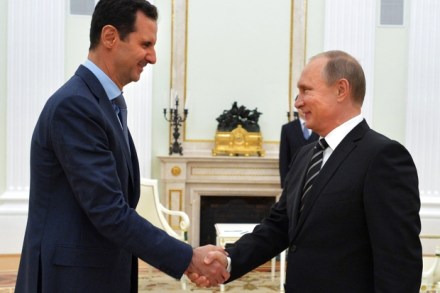
Why Putin backs Assad

From our UK edition

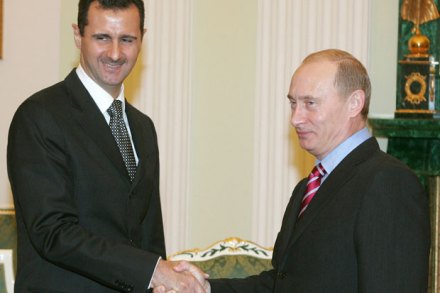
At the outset of Syria’s brutal four-year civil war, I was an almost unique voice in the British media deploring the push to depose the secular dictator President Bashar al-Assad, especially in the absence of a genuinely popular uprising against him. Here in The Spectator I tried to point out that such a short-term strategy would have devastating long-term consequences. Assad, I argued, would not fall, because the people of Damascus would not rise up against him. The so-called secular rebels were in fact vicious Islamists in disguise. Western interests in the region would be dramatically undermined by Saudi and Iranian militias, who would fight a devastating proxy war. Syria’s extraordinarily diverse population risked annihilation as a result.

Recipe for revolution

From our UK edition

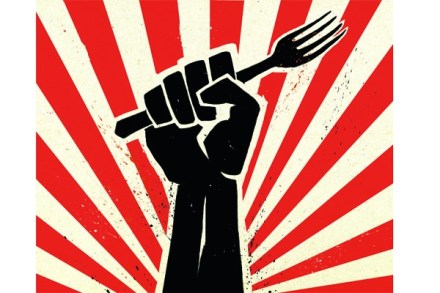
It started in America. The Midwest has for weeks been suffering what is now the worst drought in living memory. Prices for maize and wheat have soared by 50 per cent and the G20 will next week decide whether to call an emergency meeting to discuss what the United Nations believes could be a repeat of the 2008 food price crisis. It is being spoken of as a humanitarian disaster, and rightly. But the last few years have taught us that, when hunger strikes, political upheaval will not be far behind. Even now, the Arab Spring is seen as a popular outcry for political freedom, but those of us who lived in the Arab world in the years leading up to it know better. The first signs of popular agitation begin at the grocery stall, not at a public debate.

Be careful who you depose

From our UK edition

Is the Syrian regime hellbent on political suicide? There can be no doubt that he is determined to crush any resistance, but if President Bashar al-Assad had really started a massacre in the city of Homs (as was reported by most of the western media) it would have been an act of complete madness. And though he may be ruthless, Assad is no madman. So what’s really going on? Well, the truth about the situation in Syria is that, as in Libya, there is much more to it than the simple narrative we’re all fed: pro-democracy activists fighting a hated tyrant. The Russians, at least, understand that much.

The hypocrisy of Cameron’s Saudi trip

From our UK edition

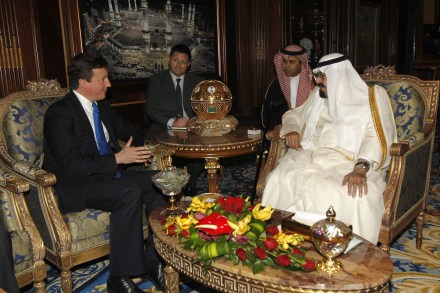
A year ago, Tunisian strongman Zine El Abidine Ben Ali fled Tunisia for Saudi Arabia, thus ushering in the Salafi Spring. No doubt now bored out of his mind, this once stubbornly secular leader is said to have caught religion of the deranged Wahhabi variety propagated by his oil-rich hosts.   In turn, the Saudis are preparing to welcome Rachid Ghannouchi – the notoriously humble leader of the even more notoriously moderate Ennahda that now controls Tunisia’s parliament – on a state visit. This week Ghannouchi has been heaping praise on the Persian Gulf monarchies, doing us all the favour of revealing where his true sympathies lie when it comes to issues like religious moderation and its love affair with democracy.

Summer of hate

From our UK edition

For the past half a century, the Tunisian film director Nadia El Fani would have had no problem showing her new documentary, Neither God Nor Master, which explores her atheism and disdain for radical Islam. But before the Jasmine Revolution, Tunisia was the most socially liberal country in the Muslim world. Its Islamist extremists were where they belonged: in prison. A few weeks ago, however, during the film’s premiere, hundreds of bearded zealots smashed through the glass doors of the capital’s CinemAfricArt cinema, attacked the audience, and threatened ‘a massacre’ if the screening continued.

Gay Damascus

From our UK edition

A few years ago, I spent a month in Damascus. I arrived late in the evening but was so eager to see a city I’d long wished to visit — getting a visa had proved nightmarish — that I soon found myself in a little coffee shop round the corner from my budget hotel. I was well aware of Syrians’ reputation for being extraordinarily welcoming and friendly, even by Arab standards; but even I wasn’t quite prepared for the frank opening salvo from the handsome young guy sitting next to me. ‘Are you active or passive?’ he asked me. It turned out that the coffee shop — packed with men of all ages and types, from English-speaking teenagers to elderly Bedouins — was a pick-up joint.

Battle lines | 19 March 2011

From our UK edition

It’s tribal and religious divisions that really shape the Middle East – and that account for the Saudi intervention in Bahrain I once got lost in Asir, the mountainous region on Saudi Arabia’s southwestern border with Yemen. This was the home of many of the terrorists on September 11, from the million-strong al-Ghamdi tribe. But the strangest thing, to me as a westerner, was that I seemed to be the only person who cared which country I was in. I met an elderly man with a garland of flowers in his hair, and asked if I was in Yemen. ‘It’s all the same to us down here,’ he mumbled. The idea of border police — or, indeed, central government — becomes more blurry the further away from the region’s capitals you head.

Arabian nightmare

From our UK edition

In Abdallah Guech Street, a few hundred metres from the main mosque in the heart of Tunis’s old quarter, lies a red-light district which has thrived since the 19th century. Here the Ottomans legalised (and regulated) prostitution as they had in much of the rest of the Muslim world. Uniquely, though, in the Arab world, the tradition in Tunisia endured: every one of the country’s historic quarters boasts bordellos — even, most remarkably, Kairouan, Islam’s fourth holiest city after Mecca, Medina and Jerusalem.