John Pietro

John Pietro is an editorial assistant at The Spectator World

In defense of America the arms dealer

From our US edition

As the world enters a new era of great power competition, countries are arming themselves at a rate unseen since the end of the Cold War. The war in Ukraine, China’s increasing belligerence and angst over rogue states like Iran and North Korea are driving defense spending and weapons purchases the world over. Amid all this, the United States does not have the luxury of being too picky as to who among its friends gets the weapons they need to defend themselves. Nor can Washington continue to avoid drastic reforms to its arms export controls to face the challenges of the twenty-first century. Standards are necessary — they are what should set America apart — but they must not become so onerous that the security of the US and its partners suffer.

Macron is wrong: Europe needs the United States

From our US edition

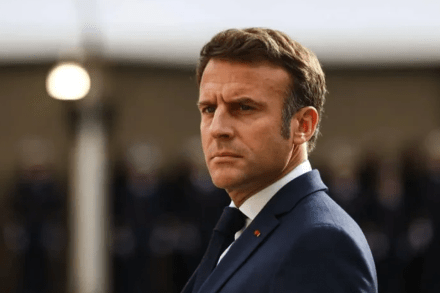
There is an irony in Emmanuel Macron’s vision of a sovereign, independent Europe. His latest comments following his trip to China, far from sparking a seismic shift in European strategic thinking, have illustrated just how foolish the French president’s fantasy is. That fantasy would require a unity that the Continent has never seen before — and won’t see anytime soon if the avalanche of criticism over Macron’s comments is any indication.    Macron’s European counterparts were swift to condemn his remarks made in the context of his trip to China.

france war

Why the US shouldn’t underestimate Poland as an ally

From our US edition

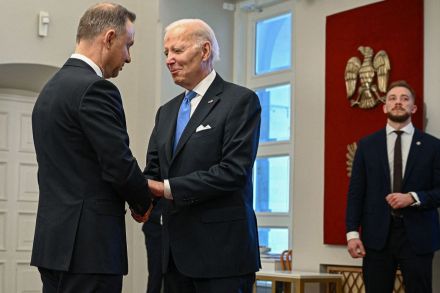
Polish Prime Minister Mateusz Morawiecki is finishing up his three-day trip to the United States on Thursday, almost two months after President Biden’s trip to Poland. The visit is a good opportunity to showcase the solidity of the US-Poland alliance, which, as Morawiecki said, is “an absolute foundation of our [Poland’s] security.” The Poles are truly enamored with the United States, with 91 percent of the populace viewing the US positively. Contrast that with the United Kingdom at 64 percent, and the scale of Poland’s affinity for America becomes clear. Warsaw also has one of the highest levels of confidence in American reliability as a partner at 86 percent, more than any other European country except for the Netherlands.

Use Russia’s money to destroy Russia’s military

From our US edition

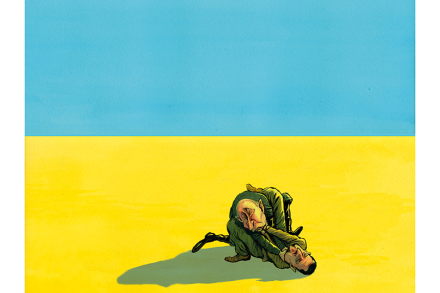
After thirteen months of war, Ukraine’s infrastructure is in a dire state. Its armies are preparing for a counteroffensive, and its economy is not likely to fare any better this year than it did in the last. Kyiv will need more money from the West — and the West will have to provide. The need is clear, but the will, in the United States and Europe, less so. Thankfully there is a way around this looming problem, courtesy of the Central Bank of the Russian Federation.  Representative Stephanie Bice of Oklahoma has submitted the Make Russia Pay Act, which authorizes the federal government to seize, deem as forfeited, and liquidate Russian assets that are currently frozen in the US.

vladimir putin hawks

Biden should butt out of Israeli politics

From our US edition

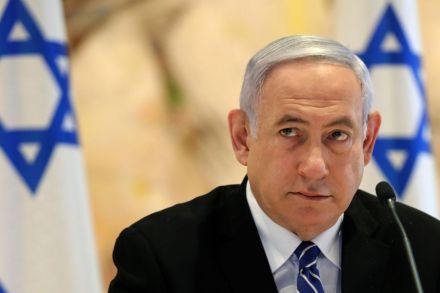
Two days after Israeli prime minister Benjamin Netanyahu postponed his government’s planned judicial reforms, President Joe Biden felt it necessary to go after his own country's ally. In an off-the-cuff comment, he said, “Like many strong supporters of Israel, I'm very concerned. And I'm concerned that they get this straight. They cannot continue down this road. And I've sort of made that clear.” “Hopefully the prime minister will act in a way that he can try to work out some genuine compromise,” he continued, “but that remains to be seen.” Later on Tuesday, the president added that he hopes Netanyahu “walks away from it [the reform].” There are plenty of reasons to be concerned about Israel’s judicial reforms.

joe biden women’s rights

Why Haiti’s problems are America’s problems

From our US edition

Haiti tends to not get much attention in the American press, but it should. The country has descended into a state of near-anarchy, with gangs ruling the streets and the government more or less nonfunctional. There has not been an election since 2016, and both the legislative and executive branches of government have no elected officials in office. The country has been ruled by an unelected prime minister, Ariel Henry, since the July 2021 assassination of President Jovenel Moïse. Elections are tentatively planned for this year, but the timeline is not yet set. The crisis in Haiti is a problem for the whole region, including the United States.

The Paraguay predicament over Taiwan

From our US edition

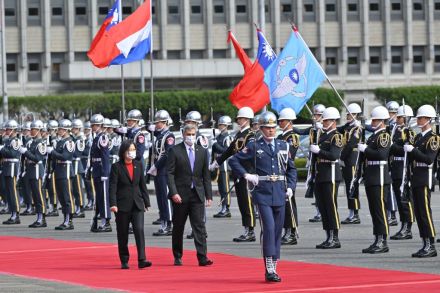
On April 30, Paraguayans will go to the polls to select a new president. Though elections in the landlocked South American nation do not typically make headlines around the world, this vote carries outsized geopolitical importance: it could mean Taiwan loses yet another country to China. Opposition candidate Efraín Alegre of the Authentic Radical Liberal Party, or PLRA, has said that, should he win, he will retract Paraguay’s recognition of Taiwan as a country. At present, Paraguay is the largest of just fourteen countries to have formal diplomatic relations with Taiwan and the only one in South America. Paraguay first recognized Taipei in 1957 while under the dictatorship of Alfredo Stroessner.

paraguay

Putin and Xi: authoritarian bros

From our US edition

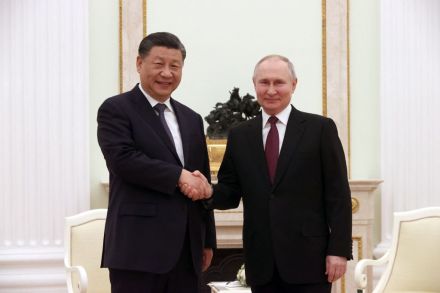
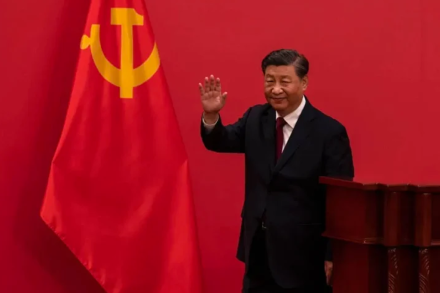
Relationships between dictators are bound to be a bit strange, but Xi Jinping and Vladimir Putin’s stands out for its theatrical quality. Meetings are carefully choreographed for maximum propaganda effect. Lavish gifts and gilded state rooms are the norm. Fluent in the language of autocratic flattery, the two always have gushing praise for each other. In 2019, before traveling to Russia, Xi said that Putin was his “best and bosom friend,” while just a year earlier Putin praised Xi as being a “remarkable thinker” and “a good friend I can count on.” Leading up to this week’s visit, Putin referred to Xi as his “good old friend,” and recalling Confucius, wrote, “Isn’t it a joy when a friend comes from afar!

putin xi authoritarian bros

Xi Jinping heads to Moscow

From our US edition

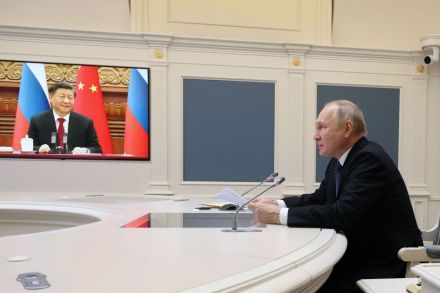
Chinese president Xi Jinping is headed to Moscow next week to meet with Russia’s Vladimir Putin. Xi last visited Russia in 2019, though the two leaders have met in person multiple times since then, including in Beijing just weeks before the invasion and in Samarkand, Uzbekistan, last September. Virtual meetings are a fairly regular affair for the two. This summit, however, is qualitatively different from the rest: it will take place in the heart of Russia while Moscow is waging war on Ukraine. To give Putin such a significant endorsement on the world stage underscores just how close the two powers are, even if Russia is, by almost any metric, the underdog in the partnership.

China’s big win in the Middle East

From our US edition

China had a diplomatic triumph last week that was a disaster for the US. In a vacuum, Saudi Arabia and Iran re-establishing relations would be a good thing, reducing the risk of conflict between two Middle East powers that have been engaged in proxy wars for years. But nothing happens in a vacuum, and this deal was brokered by China. Before Friday, Iran was in an accelerating downward economic spiral, with its currency at a record low. The country was increasingly viewed as the pariah that it is, alienated from much of the world as it pushed ahead with its nuclear program, supplied Russia with arms, and brutally suppressed its own citizens. Normalization does not fundamentally change that, but it does give Tehran breathing room at a time when the pressure should be increasing.

There’s no excuse for Russia’s downing of a US drone

From our US edition

A US MQ-9 Reaper drone’s propeller was hit by a Russian Su-27 fighter jet over the Black Sea on Tuesday, causing the drone to lose control and crash. Before the fighter made contact with the drone, it and its wingman released fuel in what was likely an attempt to impair the American aircraft. The drone was in international airspace — which Russia seems to acknowledge — leaving no justification under international law for Moscow’s aggressive actions. Whether or not the physical contact was premeditated remains unknown. The Kremlin claims the drone’s “sharp maneuvers” caused it to crash and that its jet did not hit it.

vladimir putin army

Why South Africa is cozying up to Russia and China

From our US edition

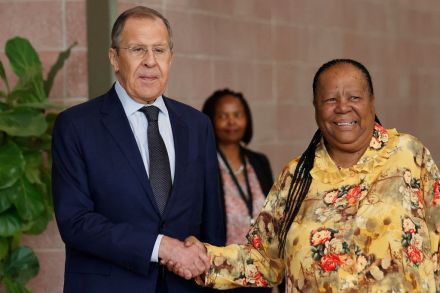
Vladimir Putin’s invasion of Ukraine opened the most dramatic divide between East and West since the Cold War. Most of these divisions were clear beforehand — Hungary and Turkey were longtime thorns in the side of NATO, for example. Yet South Africa’s warming ties with Russia and China seemed to come out of nowhere. South Africa's initial reaction to the invasion was the same as much of the Western world, demanding that Russia leave Ukraine. That did not last, however. South African President Cyril Ramaphosa said on March 17 that “The war could have been avoided if NATO had heeded the warnings from amongst its own leaders and officials over the years that its eastward expansion would lead to greater, not less, instability in the region.

One year of war in Ukraine: six experts predict what will happen next

From our US edition

As the war in Ukraine enters its second year, today seems as a good time as any to reflect on its first, and see what the future might hold. Six foreign policy experts from across the spectrum of opinion offered their thoughts to The Spectator. As the war in Ukraine enters its second year, how do you foresee the conflict ending? Ted Carpenter: There are several possible outcomes, but the most likely is a ceasefire without a formal peace accord. That move would end the bloodshed, but it would leave the underlying disputes unresolved. Such an outcome would be similar to the armistice that ended the Korean War. It also would create the world’s largest and most dangerous “frozen conflict.

ukraine war nato

Why Netanyahu is right about Israel’s rogue supreme court

From our US edition

Despite recent hyperbole, Israel is not on the verge of authoritarianism. The proposed reforms to the country's judicial system, which have attracted so much controversy — usually under the assumption that they will turn Benjamin Netanyahu into an Israeli Viktor Orbán — are lacking in historical context. The Israeli Supreme Court is one of the most activist courts in the world. It has assigned itself more authority and subverted the balance of power between Israel's different branches of government. It has done all this while at the same time lacking any kind of serious accountability to the electorate.

bibi

The virtues of American ‘nation-building’

From our US edition

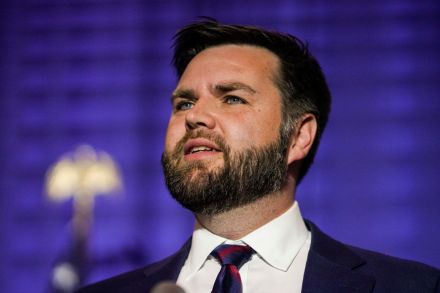
Newly minted senator JD Vance of Ohio has wasted no time in extolling the virtues of a soft isolationist foreign policy. In a January 31 op-ed for the Wall Street Journal, Vance endorsed Donald Trump for president largely because Trump isn't a hawk. A prominent member of the GOP's national conservative wing, Vance has made skepticism of American leadership abroad a centerpiece of his political identity. The senator attacks the “bipartisan foreign policy consensus that has led the country astray many times.” Never mind that the so-called "consensus" only really exists under extreme circumstances, such as after the 9/11 terror attacks. Think of the deep divide between right and left over how to deal with Cuba and Saudi Arabia, for example.

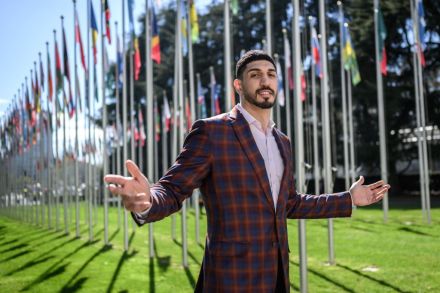
Enes Kanter Freedom on LeBron, Erdoğan and the earthquake

From our US edition

Basketball player and human rights activist Enes Kanter Freedom was invited as Leader Kevin McCarthy's guest of honor to the State of the Union last week, an address in which President Biden barely touched on foreign policy. The former Boston Celtics and Oklahoma City Thunder center spoke with The Spectator about democracy, autocracies and hypocrisy. John Pietro: How far does China’s influence reach into the NBA, in your estimation? Could you see the NBA ever standing up to China in the way the Women’s Tennis Association did in defense of Peng Shuai? Enes Kanter Freedom: I didn’t know how deep the relationship between the NBA and China was until Daryl Morey tweeted and said "stand with Hong Kong" and after that obviously the NBA lost millions and millions of dollars.

enes kanter freedom

China is playing the US for fools over the spy balloon

From our US edition

The Chinese balloon debacle has shone a light on America's security vulnerabilities, but it has also revealed just how audacious and deceptive the Chinese Communist Party is. As with their reaction to Covid-19's origins, they have brazenly lied from the day that the balloon’s presence was made public. It is abundantly clear that the craft was not a weather balloon, not least because of its uncharacteristically massive size. Yet China opted to construct a tall tale about a wandering weather balloon that somehow ended up over America. Oh, and the balloon over Latin America? That was just another errant storm tracker. Sure, China regrets the mishap, but there is no need to overreact. What makes the lie so extraordinary is that it is so easily debunked.

xi

A closer look at Biden’s State of the Union proposals

From our US edition

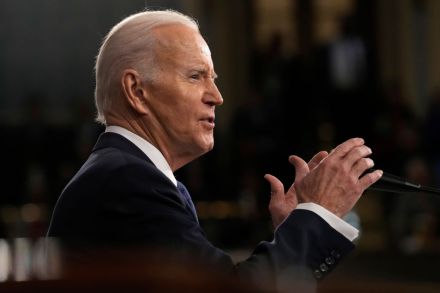
Joe Biden’s lengthy State of the Union address on Tuesday saw him call on Congress to pass a bevy of policies, most of which were regurgitations of his previous proposals. Here's a look at some of the policies that were mentioned by the president. Capping insulin prices at $35 Everyone knew this would be on the agenda after the Inflation Reduction Act passed Congress last August. The IRA's Medicare copay cap was just a foot in the door, with a push for further drug price controls an inevitability. The problem is that price controls do not work. Ed Haislmaier of the Heritage Foundation succinctly outlines how the problem can be mitigated responsibly. The most obvious option is to eliminate the prescription requirement for insulin.

Trump is wrong that the US should negotiate peace in Ukraine

From our US edition

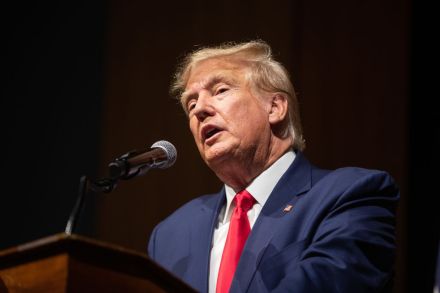
The GOP’s foreign policy doves and soft isolationists have grown stronger, with 40 percent of “Republican and Republican-leaning independents” saying the US is giving too much aid to Ukraine. Former president Donald Trump has now taken up the mantle of this movement, firmly anchoring himself to the anti-Ukraine aid faction of the party. Trump recently gave an interview to radio host Hugh Hewitt in which he made one thing clear: he’s no fan of aiding Ukraine. Asked about sending F-16s, Trump said, “I think the United States should negotiate peace between these two countries, and I don’t think they should be sending very much.” When Hewitt asked if the former president would cut aid to Kyiv, Trump responded, “we’ve got to make peace.

Democracy in Peru is under attack

From our US edition

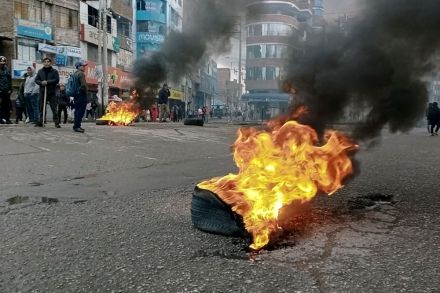
For over a month, Peru has been in a state of near-constant unrest. In December, as the legislature threatened to impeach President Pedro Castillo for, among other things, allegations of corruption, Castillo tried to dissolve the legislature and “govern through decrees.” By all measures, this was an attempted coup, and it resulted in his impeachment (by a vote of 101-6), arrest, and condemnation from left and right. In his place, Vice President Dina Boluarte was sworn in as president, having denounced her former boss’s attack on the country’s democracy. This was a success in a country that has seen six new presidents in the past seven calendar years. The Congress has repeatedly been at odds with the president, and scandals have rocked administration after administration.