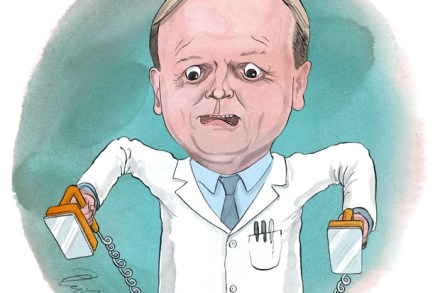
John McTernan

John McTernan

John McTernan was political secretary to Tony Blair

Why did Labour U-turn on its green investment pledge?

14 min listen

Natasha Feroze speaks to Katy Balls and former Labour advisor John McTernan about Labour's announcement that they are watering down their green investment pledge. Is Labour in trouble over this U-turn? And could this be seen as a change in strategy for the party? Produced by Natasha Feroze.

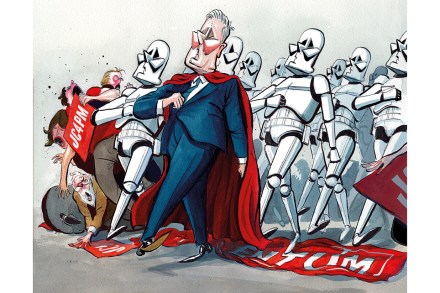
The Starmtroopers: Labour’s new recruits

43 min listen

This week: In her cover piece for the magazine, The Spectator’s political editor Katy Balls writes that as Labour prepares for government, Keir Starmer is rooting out the far left sections of his party and replacing them with moderates. She is joined by John McTernan, former political secretary to Tony Blair, to discuss the return of the Blairites (01:06). Also this week: The Spectator’s Russia correspondent Owen Matthews writes about Putin's three most prominent political prisoners. He joins the podcast alongside The Spectator’s assistant online editor Lisa Haseldine to consider the cost of speaking up against the regime (17:50).

It’s time to forgive Diane Abbott

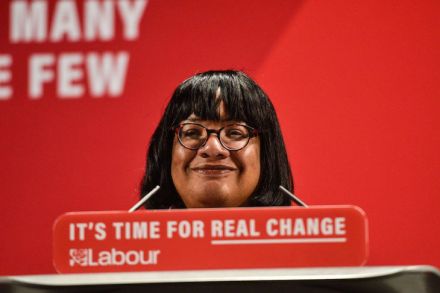
Diane Abbott is a giant figure in the modern Labour party. As the first black woman ever to be elected to the House of Commons, and the longest serving black MP, she is an inspiration to black and brown communities – especially women – across the country. Abbott also wrote a crass and offensive letter to the Observer, in which she unfortunately, and utterly unsuccessfully, sought to distinguish racism from prejudice – in the process deeply offending the Jewish, Irish, and Gypsy, Roma, and Traveller (GRT) communities. For a life-long campaigner against racism, this was an especially egregious error. It appears it is now impossible to accept a sincere apology It was not only the reactions on social media that were swift.

Hiring Sue Gray is a shrewd move by Keir Starmer

Offering Sue Gray a job as his chief of staff is one of the most consequential decisions Keir Starmer is ever going to make in his political career. For a senior politician, your chief, together with your communications director, and your campaign director, are force multipliers. They represent you in meetings and briefings you can’t attend, know your mind, report your views and relay – and enforce – your decisions. Importantly, they can tell others what you think and want – thus releasing valuable time. It is an intense relationship, but one that can last for an entire administration: consider that the two senior figures who were with Tony Blair as Labour leader and prime minister from beginning to end were Gordon Brown as chancellor, and Jonathan Powell as chief of staff.

What it’s really like facing a Downing Street police probe

Boris Johnson and No. 10 staff could soon face being interviewed under caution over partygate. While this is remarkable, it is not unprecedented: Downing Street has been the focus of a police investigation before, when Tony Blair, my boss, was prime minister. Fifteen years ago, the 'cash for peerages' affair led to me and my colleagues being interviewed by police. So what advice would I give to Downing Street staffers fearing a call from plod? Those working behind the door of No. 10 should firstly remember that, while they are part of a team, when they speak to police in an interview, they will be alone. It's an unsettling experience. Police officers are professionals, and have been doing this for their whole career.

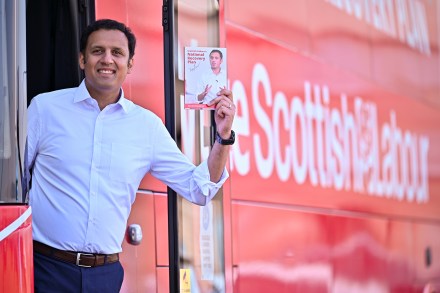
Anas Sarwar shows how to unite Scotland

Tony Blair had a breakthrough moment in the mid-1980s. As an opposition frontbencher, he observed that UK politics was paralysed by Margaret Thatcher. The Conservative party were in awe of her and Labour were mesmerised like a snake in front of a mongoose. Politics was binary: are you for or against Thatcherism? Tony realised that the open ground in UK politics was what happened after Mrs Thatcher. Thus was born the ‘third way’, which smashed right through the sterile binary debate. Scottish politics today is similarly gripped by a barren and futile dichotomy: are you for or against a second independence referendum? The question is, on the face of it, irrelevant to elections for a devolved institution, since the constitution of the UK is reserved to Westminster.

The fatal flaw in Labour’s politics

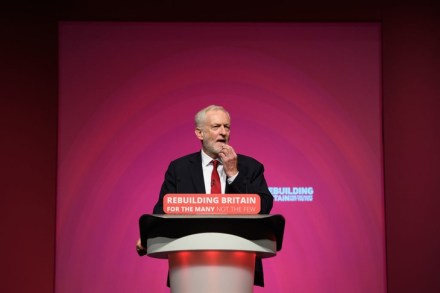
If we learned one thing from Labour Party Conference it's that capitalism is bad. The union leaders said so, the delegates said so, Jeremy Corbyn, the Leader of the Labour Party, said so – at length. And do you know what? They’re right. Capitalism is bad, very, very bad – at defending itself. As anti-business policy after anti-business policy was announced, despair at the poverty of the response of the business lobby was matched only by grudging admiration for the message discipline of Corbyn and his supporters.

Is George Osborne destined to be a lame tribute act for proper Labour politicians?

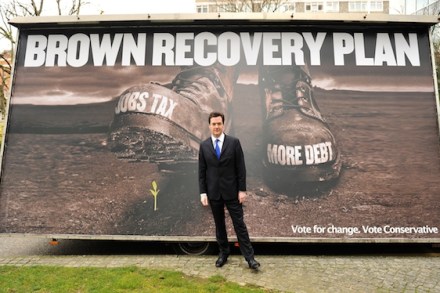
Claiming credit for things that are nothing to do with you is where trouble starts in politics. You can claim that you have abolished ‘boom and bust’, even when occasionally qualified as ‘Tory boom and bust’, but the economy will disprove you – as Gordon Brown spectacularly found out during the Global Financial Crisis. George Osborne has, of course, mimicked Brown from the outset. He has promised deficit reduction he has never yet delivered, and a rebalancing of the economy that has proved to be just so much hot air. Both of these are unnecessary, self-inflicted injuries reminiscent of Brown. On Monday, Osborne and Bill Gates announced a fund of billions to eradicate malaria.

The Tories messed up with junior doctors. Here’s what they should have done

It takes some skill to turn the BMA into the NUM – but Jeremy Hunt has done just that. It takes nearly as much skill to persuade the public that people on £53,000 a year are scions of the oppressed working classes – but the BMA, aided by Hunt, have done that too. How did we get to the point where there is any sympathy about pay levels of anyone who is in the top quintile of earnings? Obviously the strange quasi-religious role that the NHS plays in British life is partly to blame, but the government have played a strong hand appallingly badly. First, they have told the wrong story. The government are making this about patient safety – they say that a move to a seven-day NHS is needed because too many people die at the weekends when they shouldn't.

The Calais crisis needs a better response than fences and dogs, Prime Minister

David Cameron should be in real trouble over Calais. It goes to the heart of two of the central issues by which British voters judge governments: are you competent and can you control immigration. Judging by the unstoppable growth of the chaotic 'Jungle', the increasing number of assaults on Eurotunnel staff and the rising number of tragic and needless deaths, we know the answer to the competence question. To paraphrase Sam Goldwyn, there are two words for the government: incompetent. Every time a minister comes on the radio or TV to explain what the government is doing, I immediately think 'who is that useless Lib Dem junior minister? No 10 must hate having to compromise on immigration policy.' Then I remember.

Labour has lost its senses if it thinks Liz Kendall is a Tory

Here are four things that Liz Kendall has said during the Labour leadership campaign. First, that she would never close a successful school. Second, that the country should always come first, not the party. Third, that the UK should spend at last 2 per cent of GDP in defence. And finally, that Harriet Harman is right — Labour need to understand that the voters did not trust them on welfare, and that regaining that trust is as important as gaining a reputation for economic competence. To a voter, none of this is particularly controversial. Good schools, patriotism, strong defence and fair welfare — that's what they want, that's what government should deliver. None of it is vote winning - but then why should it be?

Why Simon Stevens – more radical than most Tories – may save the NHS

In a valedictory interview, Sir David Nicholson was quite frank about the state of the health service that he has run for the last eight years. ‘In its current form,’ he declared, ‘the NHS is unsustainable.’ It is hard to imagine Simon Stevens, who takes over as NHS England chief executive this week, having to say that when he leaves. His friends know him as an experienced reformer, a policy expert and a radical. His CV causes some suspicion in Tory circles — he is a former adviser to Tony Blair (I’m also guilty in that respect) and was a co-author of the last Labour government’s health reforms — but that is precisely why he will be so valuable to David Cameron now.