John Keiger

John Keiger

John Keiger is a former Research Director at the University of Cambridge and author of the biography of French president Raymond Poincaré

Theresa May must stand up to Emmanuel Macron’s Brexit posturing

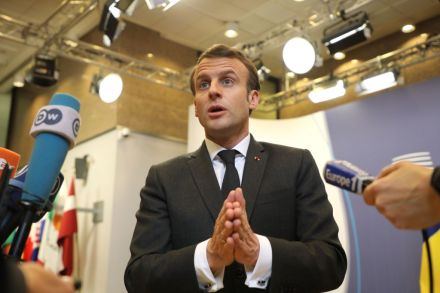
In this the 115th anniversary week of the Entente Cordiale, the French president and the British Prime Minister will meet twice, today at the Elysee Palace and tomorrow at the European Council in Brussels. But neither of those meetings will be to celebrate their countries friendship. When May goes to Paris and then to Brussels, she will instead be a woeful supplicant in the Brexit feuilleton. And the one thing the vicar’s daughter can count on is that she will be subjected to a severe bout of Macron lesson-giving and severe sermonising, as is his wont. And yet Macron is hardly in a position of strength. Both leaders are battling domestic crises that come to a head this week. The British PM’s Brexit woes are only too well known.

How Brexit could lead to Frexit

Struggling to understand the ways of the French, the francophile Winston Churchill reflected whimsically in 1942: ‘The Almighty in His infinite wisdom did not see fit to create Frenchmen in the image of Englishmen.’ And yet today, the Almighty would struggle to create two more similar states in international terms than Britain and France. Similar geographies on the northwest European continent, similar populations (66 and 67 million), economies (5th and 6th by GDP), colonial histories, 3rd and 4th nuclear powers, two of the five permanent members of the UN Security Council, leading members of Nato and, until 2019 (probably), equally prominent members of the European Union.

A no-deal Brexit spells trouble for Emmanuel Macron

In 1919, a 31-year-old Tommy from Bristol, named George Robertson – fresh from fighting alongside French troops on the Somme – married Suzanne Leblond in Abbeville, northern France. In 2017, George Robertson’s great grandson, Emmanuel Macron, became French president. Macron embarked on a policy that, while acknowledging Franco-British friendship, sought to ensure that Britain did not prosper from Brexit. Yet Macron’s stance appears increasingly counter-intuitive. Of all the European leaders, Macron is noted for being the most intransigent in his public utterances on Britain’s Brexit negotiations.

A no-deal Brexit spells trouble for Emmanuel Macron | 12 February 2019

In 1919, a 31-year-old Tommy from Bristol, named George Robertson – fresh from fighting alongside French troops on the Somme – married Suzanne Leblond in Abbeville, northern France. In 2017, George Robertson’s great grandson, Emmanuel Macron, became French president. Macron embarked on a policy that, while acknowledging Franco-British friendship, sought to ensure that Britain did not prosper from Brexit. Yet Macron’s stance appears increasingly counter-intuitive. Of all the European leaders, Macron is noted for being the most intransigent in his public utterances on Britain’s Brexit negotiations.

Macron’s fight with Europe’s populists is backfiring

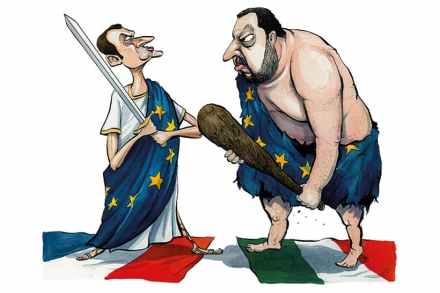
In France, discontent has been brewing for years. Emmanuel Macron managed to set it alight by embarking on a series of reforms that sparked the gilet jaunes movement. In Europe it has been brewing too, and now Macron seems to be repeating the trick. Here the antipathy is from populist governments opposed to his ideas, not only on a future Europe but also his lesson-giving in how those countries should govern themselves. International politics are following a similar pattern to national politics. Macron sweeps onto the international stage with new ideas for reforming Europe, he accompanies that with acerbic throw-away quips on the competence and morality of particular leaders, they riposte and, gradually, individual protests coalesce into an axis of angry opposition to the French president.

France and Brexit: lessons from history

Almost 50 years before Brexit, there was a ‘Frexit’: France shocked her allies in March 1966 by giving notice of her withdrawal from an international community of largely European states (plus the USA and Canada), of which she had been a member for 17 years, on the grounds that she wished to regain her national sovereignty. French withdrawal from the integrated military command of NATO was complete within two years. Though France remained a member of the Atlantic Council and subsequently negotiated a continued role in certain NATO institutions, she left the all important collective military command which France’s president General de Gaulle claimed bridled her independence and her ability to play a world role.