John Kampfner

John Kampfner is a former editor of the New Statesman and author of Braver New World.

Has multiculturalism really failed?

Fifteen years ago this week, I spent the day with the late Queen. She had come to Turner Contemporary, the gallery in Margate I helped set up and chaired for the best part of a decade. It was Remembrance Day. We had it all decked out, including a rest area containing a new sofa and drinks table. The protocol folk from the Palace didn’t seem to mind that it was the disabled loo. They did ask us discreetly to place a burly member of staff in front of an anti-monarchist punk sketch, as she walked past. Then it was on to lunch and three hours of chat. We breezed through my list of prepared conversation topics – from Downton Abbey (fan) to Boris Yeltsin (not a fan) to the forthcoming London Olympics (judgment reserved). When it came to my speech, I had my flash cards numbered and stacked.
A day for celebration, but more must be done to protect free speech

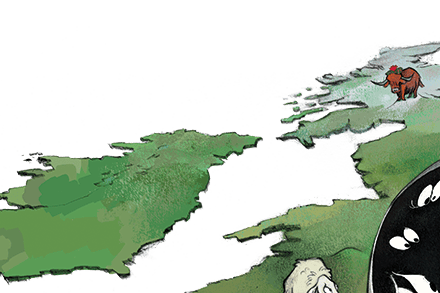
It’s not often that three relatively small NGOs can change politics. So today’s parliamentary debate on the Defamation Bill is cause for considerable pride, among my former colleagues at Index on Censorship and their partners at English PEN and Sense about Science. In November 2009, we began a campaign to reform England’s unfair libel laws. The claimant cabal, those law firms who encourage the rich and famous, particularly those from abroad, to use London’s indulgent courts, assumed that the campaign would fizzle out. It didn’t, picking up steam as it went along. So today’s events should be a cause for celebration. They are, but only in part. The legislative process has been a long and tortuous one.

A crucial week for the cause of free expression

For those who care about free expression in the UK, and particularly the reform of our invidious libel laws, this is a crucial week. Today and tomorrow, the UK Supreme Court hears the Times’s attempt to overturn an appeal court ruling in a libel case brought against it by Metropolitan Police officer Gary Flood.   On Wednesday the Joint Committee on the Draft Defamation Bill produce its first report. There are grounds for hope that it will suggest strengthening some key areas, paving the way for full legislation early in 2012 — if the government can be persuaded to find parliamentary time.

The secret Iraq deal that bought Mandelson’s loyalty to Brown

John Kampfner unveils the ignominious truth about Sir John Chilcot’s Iraq inquiry and reveals Peter Mandelson’s demand, when Brown’s future hung in the balance in early June, that the hearings be held in private. Even now Mandelson’s priority is to protect Brand Blair The charge sheet is long and yet the dock is empty. One of the most extraordinary aspects of Britain’s involvement in the Iraq war has been the ability of those responsible to evade any form of reckoning. For that they have many people to thank, including incurious journalists and pliant judges. But most of all, Tony Blair is in debt to his New Labour friends for their efforts to get him off the hook — in recent days, Peter Mandelson and Gordon Brown.

Diary – 20 September 2008

One of the joys of writing a book about authoritarian capitalism is that I am spoilt for choice. My travels have taken me from Singapore to Luanda to Moscow to Rome and in the next few days I am off to the Gulf. Later in the year comes China. Last week I was back in Russia, for the annual Valdai conference, where experts from around the world are given red-carpet treatment. This time we were offered two for the price of one. Vladimir Putin indulged us with a three-hour lunch in Sochi. Not to be outdone, we were given similar treatment by Dmitry Medvedev in the bizarre setting of a banqueting hall on the top floor of Gum, the department store that overlooks Red Square.