Joanna Williams

Joanna Williams

Joanna Williams is an academic and author. Follow her on Substack here

Playgrounds are no place for Pride parades

Parents standing at the school gate have all kinds of hopes and expectations. They want their children to be happy, well looked-after and to learn something. Thankfully, most teachers agree. But for some classroom activists, education is less about the three Rs and more about LGBTQ+. Rather than geography and history, they teach gender identity and sexuality. Instead of team sports, they might encourage ten-year-old girls who bind their chest to do something less energetic. And rather than Easter bonnet parades there are Pride marches. That’s right. Playground Pride Parades. For four year-olds. Back in 2018, the head teacher of Heavers Farm Primary School in south east London decided to line her tiny charges up for an LGBT pride march.

Matt Hancock has united Britain

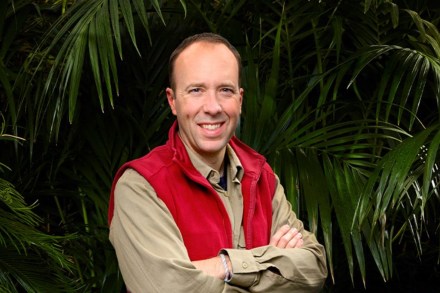
Some people deal with failure better than others. Matt Hancock, it seems, has spent the past three years trying to get over losing his bid to be leader of the Conservative party. But good news! Finally, Hancock has found solace. Upon being declared leader of the I’m A Celebrity Get Me Out Of Here jungle, he told his campmates his new position 'more than makes up for' his previous loss. Hancock has, yet again, attempted to explain why he is in the game show jungle. 'What I’m really looking for is a bit of forgiveness,' he declared.

Liz Truss was a conviction politician

As an erstwhile Brexit-voting academic, I’m used to being at odds with those around me. But in feeling troubled at the news of Liz Truss’s resignation yesterday, it seems I’m now in a minority of one. Truss had to go, of course. Her failings have been so well documented they hardly need repeating. Her lack of political acumen was perhaps most shocking: Truss utterly failed to read the mood of the Conservative party, the nation and the financial markets on every single one of her 44 days in office. But still, I have a pang of regret that she is on her way out. Truss’s stilted performances failed to inspire confidence. So frequently did the word ‘wooden’ prefix Liz, it became difficult to distinguish political commentary from the Ikea catalogue.

Do Oxford students really need trigger warnings?

It is freshers’ week on campus. Brand new students get to make friends, get drunk and find their way around university. The excitement culminates with freshers' fair, a once-in-a-lifetime opportunity to find your tribe by joining everything from the paragliding club to the Mao appreciation society. Who cares if you never attend a single meeting? For one brief moment, you can flirt with the person you might become. Freshers’ fairs offer new students a glimpse of the intellectual and political possibilities on offer at university. But sadly not at Oxford. This year, Oxford University’s freshers’ fair comes with a big fat trigger warning. Apologies. I should of course have prefaced that sizeist statement with ‘Trigger Warning: body shaming.

Can Cambridge decolonise?

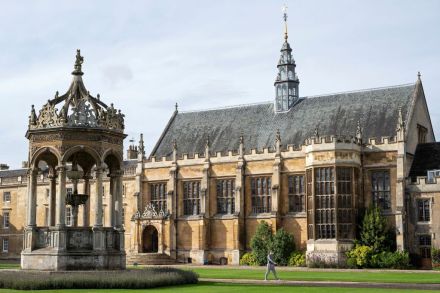
News that Cambridge University is to commission an art installation to adorn one of its ancient buildings rarely warrants holding the front page. But when higher education is in sway to the cult of decolonisation, we know this will be no ordinary sculpture. Forget beauty, skill or originality. This new installation is not a celebration of artistic excellence but a monument to identity politics. The artist will be black and the art must memorialise black Cambridge scholars or graduates. The new work is one of a series of commitments announced by Cambridge University in response to the findings of its three year-long inquiry into how the institution benefited from slavery.

Meghan’s youth speech was all about her

The Duchess of Sussex has been busy. In the past fortnight Meghan has treated us to two new episodes of her podcast as well as a lengthy spill-all interview in the Cut magazine. And now here she is in Britain, making her first speech since leaving the Royal Family. Battles over security apparently resolved, Meghan addressed the One Young World Summit in Manchester. As far as public appearances go, they do not come much easier than this. One Young World combines the slickness of lavishly funded corporate events with feel good vibes about making the world a better place. Meghan’s association with the NGO stretches back almost a decade. Last night, she was clearly among friends or, perhaps more precisely, fans.

Suella Braverman is right to take on trans teaching in schools

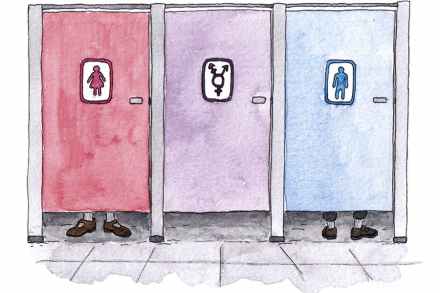
Three cheers for Suella Braverman. The Attorney General has made clear that it is not appropriate for schools to teach young children that gender is a choice. Speaking at the think tank Policy Exchange on Wednesday, Braverman stated that teachers should not be in the business of indoctrinating children with ‘one sided and controversial views on gender’. To do so, she warned, may leave them in breach of government guidance. What’s more, Braverman indicated, schools should not allow children to change gender – whether by using a different name or pronouns, wearing a different uniform, or using the toilets meant for the opposite sex – without their parents’ consent. Thank goodness this has finally been said.

The truth about trans teaching in schools

The LGBT advocacy group Stonewall has come in for criticism over recent months with many big name organisations – including the BBC and the cabinet office – withdrawing from its diversity champions programme. Yet rather than toning down its controversial claims and divisive rhetoric, the charity insists on doubling down. It now seems to have children firmly in its sights. ‘Research suggests that children as young as 2 recognise their trans identity,’ Stonewall recently declared. ‘Yet, many nurseries and schools teach a binary understanding of pre-assigned gender. LGBTQ-inclusive and affirming education is crucial for the wellbeing of all young people!’.

Is ‘woke’ real?

Woke is a strange phenomena, but what does it actually mean? Activists and columnists alike declare that being woke is simply being aware of social injustices and challenging racism and sexism. But if that is the case, where are the out and proud woke warriors? Where are the ‘I’m woke’ pin badges and the ‘Being Woke’ clubs for people to join? The more we are told woke is cool, the harder it gets to find someone who self-identifies as woke. So is woke real? The Centre for Labour and Social Studies (CLASS) casts doubt on whether it is. The think tank has published new research suggesting that ‘woke’ is essentially the creation of a handful of elite right wingers.

Carry on Carrie: why I’ve changed my mind about our ‘first lady’

Who exactly is the Prime Minister’s wife? To some, she’s Carrie Antoinette, the extravagant demander of gold wallpaper who spent lockdown ambushing her unsuspecting husband with parties and cake. To others, she’s a young wife and new mum under attack by sexist patriarchs intent on ousting Boris from No. 10. Our national obsession with Carrie Johnson knows no bounds. The latest round of intrigue comes courtesy of Lord Ashcroft and his new book, First Lady. The title alone wryly signals Carrie has overstepped the mark into a starring role that is fundamentally un-British. Its shocking contents detail alleged incidents of behind-the-scenes interference, from ‘impersonating’ Boris in text messages to whispered briefings during phone calls.

Leave Enid Blyton alone

Once again, people are getting their knickers in a twist over Enid Blyton. Such is the capacity for outrage these days, the same accusations are recycled on a biannual basis. This time around it’s The Magic Faraway Tree that’s in the spotlight. For those unfamiliar, this 1943 tale features a fantastical array of plots and characters aimed at delighting young children. Three siblings stumble upon an enchanted wood where they befriend Moon-Face, Silky the fairy, the Saucepan Man, Dame Slap, Mr Watzisname and the Angry Pixie. At the top of a magical tree they find a ladder which takes them to a different land each time they visit. It really is that surreal. Enid Blyton is one of the most popular children’s authors of all time.

When did traditional masculinity become toxic?

It’s hard for privileged white men to stay relevant in this age of identity politics but a number of fail-safe strategies have begun to emerge. Prince Harry and, to a lesser extent his older brother, have captured the mental health market by publicly discussing their issues. William’s school pal Eddie Redmayne, and pretty much the entire cast of the Harry Potter films, have spoken out in defence of the transgender community. Benedict Cumberbatch is going down the feminist route. Cumberbatch is calling time on ‘toxic masculinity’. Interviewed by Sky News ahead of the release of his latest film, a Netflix Western in which he plays the part of a rancher, Cumberbatch took the opportunity to chastise men.

EastEnders isn’t the place for a lecture on climate change

Soap operas are cultural punctuation points. Big plot lines unite colleagues, neighbours and distant family members in shared conversation starters. Den and Angie’s Christmas divorce? Brookside’s before-the-watershed lesbian kiss? Tony Blair’s support for the wrongly-imprisoned Deirdre Barlow? I was there for it, along with millions of others. I even got caught up in Rob’s coercive control of Helen over in Ambridge. But not any more. When drama gave way to a continual stream of awareness-raising, I got bored. And if ratings are to be believed, I’m not alone. Now soap’s directors and script editors are fighting back: unfortunately with a plan to ratchet up the political messaging still further.

Is Harry and Meghan’s Time profile a parody?

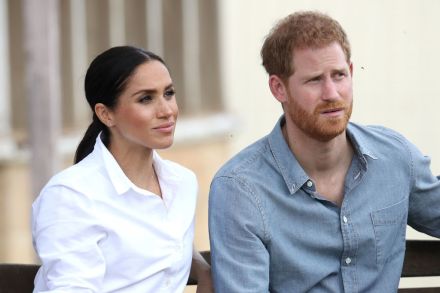
Of course the Duke and Duchess of Sussex are named in Time magazine’s 100 most influential people of 2021. And of course their listing, which makes the publication’s front cover, is accompanied by a lavish citation and photos of the pair put together by Hollywood A-list stylists. Did we really expect anything less? Time truly has it all. First there are the photos. The couple are groomed beyond the imagining of mere mortals, their clothes carefully co-ordinated. They are artistically positioned in order to comprise both a beautiful image and a political statement. Yes, indeed! These are no ordinary celebrity snaps. They are Harry and Meghan’s meaningful portraits. The cover shot symbolises equality.

Lindsay Hoyle is right to give scruffy MPs a dressing down

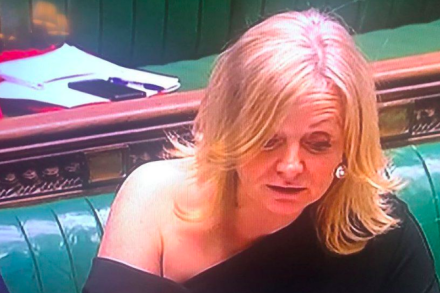
MPs are making their way back to Parliament with an order from Speaker Sir Lindsay Hoyle ringing in their ears. In the post-Zoom world, they must smarten up their appearance. ‘Members are expected to wear business attire in and around the Chamber,’ Hoyle reminded them.  ‘Jeans, chinos, sportswear or any other casual trousers are not appropriate. T-shirts and sleeveless tops are not business attire,’ continued his memo. ‘Men are encouraged to wear a tie, and jackets must be worn.’ Good for you, Mr Speaker! Perhaps you could send a similar directive to the rest of the country too. After 18 months of working from home, it’s not just MPs who have forgotten how to dress.

Harry and Meghan’s glib Afghan statement

Finally, some news to cheer us all up on this grim, relentless August. The Duke and Duchess of Sussex have been rendered ‘speechless’ by the news from Afghanistan and Haiti. No doubt, there’ll be no more Oprah interviews or birthday messages. And there’ll be no more lectures from Harry on the importance of imagining how it feels to be a raindrop or from Meghan on the importance of people asking her if she is okay. At least, that’s what we should assume, right? Surely being left ‘speechless’ is a sign that you are about to shut up? Unless, of course, you are Harry and Meghan. In their world, being ‘speechless’ requires the release of a 200-word public statement.

Spare us Prince Harry’s ‘literary memoir’

However you look at it, ‘freedom day’ turned out to be a bit of a damp squib. So thank goodness for Prince Harry who managed to squeeze in some good news to cheer us all up. His formerly-royal highness is to publish his memoirs. It’ll be an ‘intimate and heartfelt’ account no less, written, he tells us, ‘not as the prince I was born but as the man I have become.’ I can’t be the only one barely able to contain my excitement. One tantalising question is what more Harry still has to reveal. Having spent a tempestuous couple of years desperately seeking privacy in between pouring his heart out in a series of podcasts and high profile interviews, is there really anything about Harry we do not already know?

What Meghan Markle can learn from Enid Blyton

The year is 2070 and English Heritage are unveiling their latest Blue Plaque: 'The Duchess of Sussex, children’s author, lived here 2017 – 2018'. The accompanying online guide praises Meghan for her work promoting inclusion and diversity. I have no idea whether Meghan will one day be rewarded with an iconic plaque for her services to literature. But she’s certainly heading in the right direction.

The problem with Prince Harry’s mental health drive

Has Prince Harry ever had a thought and not made it public? Are there feelings or emotions he has experienced but kept to himself? The latest episode of The Me You Can’t See, the Duke’s documentary series exploring mental health and emotional well-being, aired this week. Loyal viewers were rewarded with a bonus ‘town hall conversation’ show in which Harry and his co-host and producer, Oprah Winfrey, were reunited with advisors and participants from the series.  The premise of the programmes, drummed home once again in the town hall special, is that having ‘a me we can’t see’ is bad for our mental health. Full emotional disclosure is open, honest, liberating, brave and true.

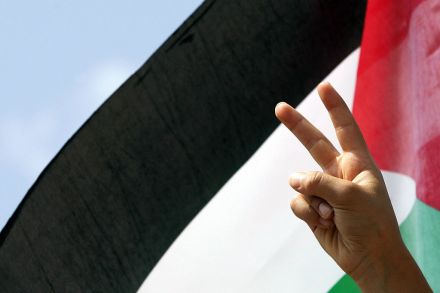
School playgrounds are no place for ‘free Palestine’ protests

GCSE and A level assessments. Enforcing social distancing. Catch-up provision for pupils who fell behind during lockdown. Mental health support. Behavioural issues. Headteachers have more than enough to worry about right now. The conflict between Israel and Palestine? This one, at least, can be filed under ‘beyond my pay grade’. Or perhaps not. Should pupils be able to wear lanyards that show the Palestinian flag? Or display pro-Palestinian posters? Some see engaged teenagers exercising their right to free expression; others a stoking of racial tensions. Getting the balance right, particularly in a large, ethnically diverse school, is not straightforward. Mike Roper, headteacher at Allerton Grange school in Leeds, faced this problem head on.