Joanna Williams

Joanna Williams

Joanna Williams is an academic and author. Follow her on Substack here

Khamenei’s death has exposed the ugly side of British campuses

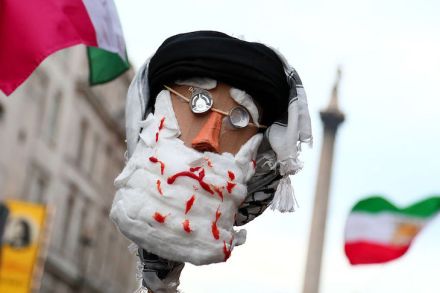
Why are students in British universities mourning Ayatollah Khamenei? The Iranian dictator's death brought jubilant crowds of Jews and Persians out onto the streets of London. Yet, on campus, there’s a more sombre mood. Islamist extremists at British universities are working to continue the Ayatollah’s legacy Members of University College London’s Ahlul Bayt Islamic Society are grieving the ‘martyrdom’ of the Ayatollah. Khamenei’s death is described as ‘an unimaginable loss for the entire Ummah’, or global Islamic community. Students in mourning are asked to recite Surah al Fatiha, the first chapter of the Quran, ‘for our beloved Sayed’.
Labour’s special educational needs reforms don’t add up

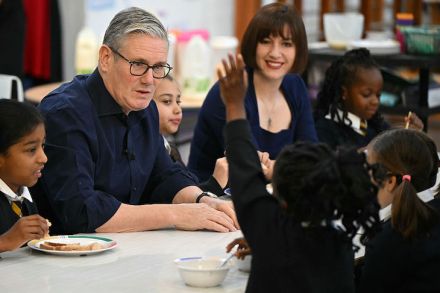
Does Bridget Phillipson think that every child has learning difficulties? The government’s long-overdue overhaul of provision for children with special educational needs and disabilities (SEND) has now been unveiled, revealing a deeply troubling vision of schools. Today’s big announcement about SEND reform reveals Labour’s impoverished vision for schools Announced this morning is an additional £4 billion of funding, spread over three years, to support SEND pupils in mainstream schools. Matt Wrack, general secretary of the NASUWT teaching union, was quick off the blocks in condemning this amount as ‘barely a drop in the bucket of the investment necessary to drive real improvement in schools.

Why isn’t Reform welcome on university campuses?

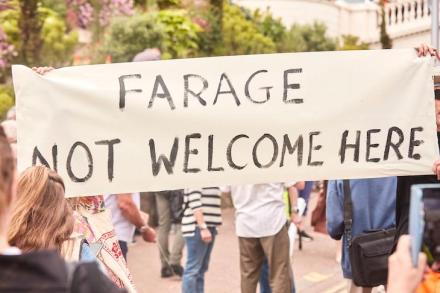
It’s been a while, but student censors are on the march once more. This time, they have Reform UK firmly in their sights. With eight MPs in Parliament and a huge lead in opinion polls, Reform has rapidly become a key part of Britain’s political landscape. But denial is the current vibe on campus, and students seem determined to make universities Reform-free zones. Students need to get with the times. This anti-free speech on campus stuff is all so 2022 Bangor University is the latest to hit the headlines after a Reform MP was banned from addressing students. Sarah Pochin, MP for Runcorn and Helsby, offered to conduct a question-and-answer session, but her request was dismissed.

David Cameron is right: spiteful Labour is wrecking our schools

Agreeing with David Cameron was not on my bingo card, but politics in 2026 is a funny old game, and so here we are. The former prime minister has blasted the Labour government for taking ‘a spite-laden wrecking ball’ to school reforms that raised standards, improved education, and benefited children from the least well-off backgrounds. And he is right. Labour’s infantile crusade against elitism extended to cutting the state-school Latin Excellence Programme Since their very first days in office, Keir Starmer and his Education Secretary Bridget Phillipson have seemed intent on destroying Britain’s finest schools.

Of course babies aren’t born with a ‘gender identity’

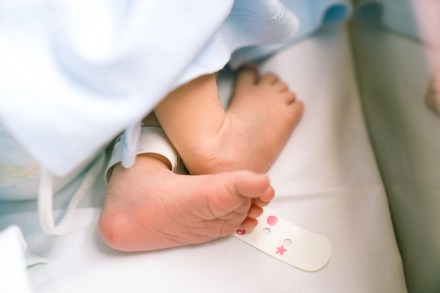
‘It’s a girl!’ New parents, after a long labour or at a mid-pregnancy scan, take huge joy from discovering the sex of their baby. Imagined futures fall into place as the newborn becomes a son or daughter. Relatives are told whether they have a niece or nephew, a grandson or granddaughter. These things matter. Not, for the most part, because parents have a preference, but because with the sex announced, a mystery is revealed and a new person takes his or her place in the world. Shockingly, it seems that the NHS is intent on denying mothers and fathers this pleasure. A new patient record system, produced by a giant American IT company, Epic Systems, gives midwives the option of recording a baby’s gender identity.

The civil service cares more about ‘trans equality’ than women

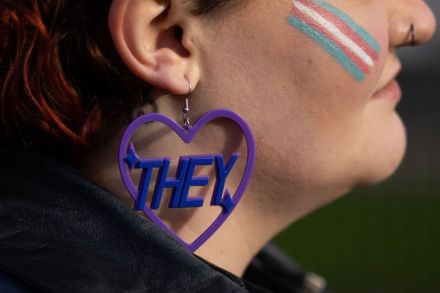
The Supreme Court's ruling that the legal definition of ‘woman’ is ‘biological female’ should have meant game over for trans rights activists. One would have thought that following last summer's judgement, there would be no more men in women’s toilets or changing rooms. But in the clearest sign yet that women cannot give up the fight, there comes news that the government is advertising for a senior civil servant to ‘lead on trans equality’. This is not a minor role. The recruit will be a policy manager at the Cabinet Office, heading up some of the government’s ‘top priorities’.

Samuel Pepys’s school should be proud, not ashamed, of its ex-pupil

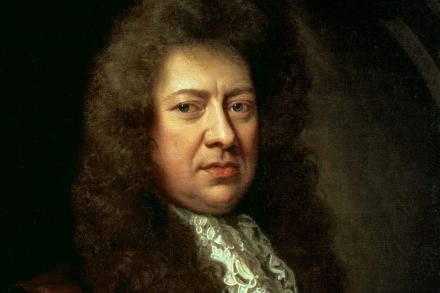
‘I know not how to abstain from reading,’ wrote Samuel Pepys back in the seventeenth century. Were he by some miracle still alive, Pepys would discover that this is a problem entirely alien to most people today. Indeed, his own diaries, avidly pored over by generations gone by, have now been condemned by today’s moralists and seem destined to be ignored. This ‘new evidence’ seems to have prompted Hinchingbrooke School to review its association with Pepys. But why? Almost four hundred years after he was a pupil, Pepys is in trouble at his old school. Following a ‘comprehensive consultation’, students at what is now Hinchingbrooke School, but was then known as Huntingdon Grammar, have voted to remove the name of this famous old boy from one of their houses.

Stonewall’s collapse can’t come soon enough

At last, some good news: Stonewall, the charity behind so much of the gender insanity that has gripped Britain in recent years, is going broke. Accounts seen by the Daily Telegraph suggest the organisation reported a net deficit of more than £906,000 at the end of the last financial year. A fall of over £2 million in income on the previous year, alongside spending of £5.6 million, means Stonewall now has a meagre £92,000 left in reserve. Unless there’s a dramatic change of fortune, it seems the charity really could be one legal case or redundancy payout away from bankruptcy. 2026 is beginning to look up! The financial problems Stonewall now faces inadvertently reveal exactly how influential the charity was until just a very few years ago.

Harry Potter doesn’t need a trigger warning

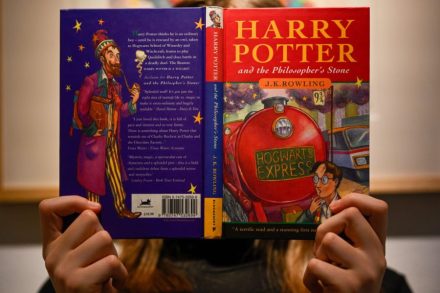
Take my advice and steer clear of your local university. It is not just the flu that’s spreading on campus. Last month, an outbreak of trigger warnings occurred at the University of Essex. Up they popped, warning literature students about ‘violence, slavery, racism, and suicide’ in Hamlet, A Clockwork Orange and Nineteen Eighty-Four. Those infected showed signs of ignorance and hysteria. Now the plague has spread to Glasgow. Students at this ancient university are being warned that Harry Potter and the Philosopher’s Stone, the first in J. K. Rowling’s series about the boy wizard, contains ‘outdated attitudes, abuse and language’.

Are the Girl Guides ashamed of their trans ban?

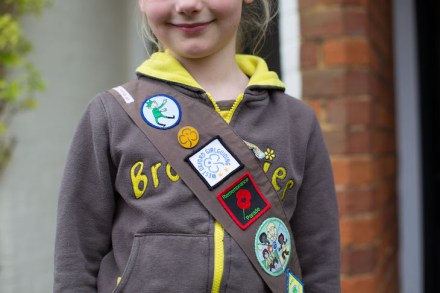
In 1984, I was Middlesbrough’s most eager Brownie. Such was my enthusiasm, I happily chomped my way through raw potatoes after an older girl, having failed to light the campfire, ordered us to tell Brown Owl: ‘This is how we like them!’ That was sisterhood, and I was deeply committed. So imagine my horror upon discovering, a few years ago, that Brownies and Guides were now admitting boys. Not the rough and tough fun kind who probably could have got a fire started, no problem at all. But the drippy ones who like to wear dresses and call themselves girls. I was horrified, but not surprised. The organisation’s woke capture became clear when the promise I made, ‘to do my duty to God’, was replaced by the insipid pledge ‘to be true to myself and develop my beliefs’.

Trigger warnings are out of control at the University of Essex

You don’t need a PhD to see that censorship thrives in universities. In the past few weeks alone, a professor has been banned from the University of Manchester and described as a ‘potential risk to colleagues’ for having allegedly used ‘the n-word’ in a disciplinary meeting; a sociology lecturer at Abertay University has been subjected to a smear campaign for inviting a speaker critical of Scotland’s rape laws; and pro-Palestinian student activists at City, University of London have called for the dismissal of a Jewish professor because he completed compulsory military service in Israel during the 1980s.

Why so many young people don’t have a job

Why are so many young adults not in education, employment or training? The latest statistics show that almost one million 16 to 24-year-olds are unemployed, or ‘Neet’, to use the inappropriately cheery-sounding acronym. Fractionally down on the previous quarter, this is still close to a ten-year high. The number of Neets has been consistently above 900,000 since early 2024, peaking at 987,000 – around one-in-eight young people – earlier this year. Falling out of education and employment in your early twenties can have a devastating impact. More than half a million of those who are not currently working or studying have never had a job. Neets face not just financial hardship but loneliness, boredom and ill health. And yet this is not a new problem.

There has been no ‘coup’ at the BBC

Readers who woke to Radio 4’s Today programme at around 6:30 a.m. can be forgiven for leaping out of bed in alarm. ‘There has been a coup at the BBC!’ cried presenter Nick Robinson, or words to that effect. Clearly, as we lay snoozing, a hostile takeover of our state broadcaster was underway. ‘These are not,’ Robinson informed us, ‘normal times’. Indeed, they are not.  His monologue began: The boss of the organisation which remains, despite all the rows about bias, the most trusted news organisation in the country – perhaps also across the globe – has quit, along with the head of news, after a row in which the President of the United States denounced what he called ‘doctoring’ of what he had said in a speech featured on a BBC Panorama programme.

Grade inflation is harming a generation of school children

The national Covid-19 inquiry rumbles slowly onwards. Module 8, examining the impact of the pandemic on children and young people, drew to a close last month. Blast-from-the-past appearances from Matt Hancock and Boris Johnson meant the decision to shut schools and stop exams from going ahead for the best part of two years was subjected to scrutiny and buck-passing in equal measure. Since lockdown ended, concern has, rightly, been raised about so-called ‘ghost children’, who continue to be persistently absent from school rolls. Far less attention has been paid to the gaps in the education of those pupils who did turn up when schools reopened. Perhaps understandably, no one wants to be seen to undermine the efforts of hard-working children and teachers.

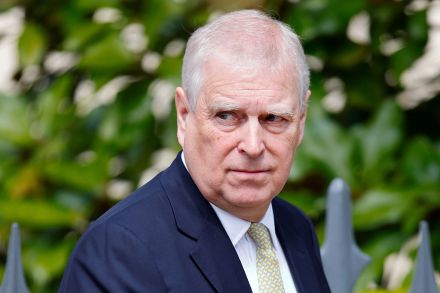
Why Prince Andrew gets more attention than grooming gangs

This week, a group of Pakistani-heritage men appeared in court. The 54-year-old alleged ringleader stands accused of preying on two vulnerable school girls, and abusing them ‘in the most humiliating and degrading way imaginable’. The girls were alleged to have been passed between six men in total, with prosecutor Rossano Scamardella KC telling jurors, ‘Unprotected sex was routine. The girls were lied to about it being forbidden for Muslim men to use protection. These men cared not a bit about sexually transmitted diseases or unwanted pregnancies.

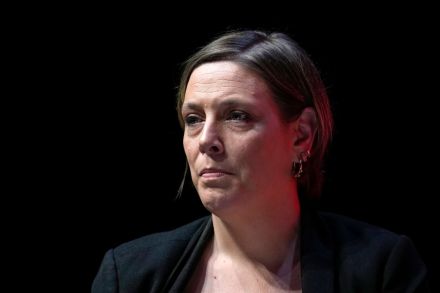
Jess Phillips is letting down grooming gang victims again

Remember when feminists rallied behind the mantra ‘Believe All Women’? It was back in 2017, at the peak of the #MeToo movement that rightly brought down serial sex offenders such as film producer Harvey Weinstein. But then the net was cast more widely, tripping up men like comedian Aziz Ansari for boorish behaviour on a date and allowing women who had been touched on the leg to label themselves victims. Critics, like me, who urged against such blurred lines, were told that women do not lie about being victims of sexual assault. I had to shut up and believe. But the years since have shown that feminists themselves have double standards when it comes to believing victims. Some women are to be taken at their word, while others are to be forever doubted.

Why do students think a bake sale is the way to mark October 7?

How best to commemorate the horrors of October 7th, 2023? How to mark the day on which hundreds of Hamas terrorists invaded Israel, slaughtering almost 1,200 people, injuring thousands more, and taking 251 hostages? For students at the University of Liverpool, the answer seems to be a ‘bake sale’. That’s right. In remembrance of the worst massacre of Jews since the Holocaust, students will eat cake and raise money for Palestine. ‘Time for Dessert’ is the event’s sickening slogan. Protests are expected to take place today at universities throughout the UK Sadly, Liverpool is far from unique. Protests are expected to take place today at universities throughout the UK. Not demonstrations against Hamas, or the states that harboured and funded the October 7th militia.

Who will take responsibility for closing schools during Covid?

‘I have never hated someone so much.’ ‘I hope you commit suicide.’ These are just two of the messages I received back in 2020, when I argued that schools should remain open despite the pandemic. Now that the interminable national Covid-19 inquiry is finally getting round to considering the experiences of children, school closures are in the spotlight. Education was massively disrupted as schools shut their doors to all but the children of key workers and those considered most vulnerable. Between January 2020 and July 2021, children were kept out of the classroom for extended periods, missing almost half of the time they should have been in school.

Labour women must stop crying sexism

Does the Labour party have a problem with women? It’s not just Conservatives – who enjoy comparing their own three female prime ministers with Labour’s failure to get any woman into the top job – who seem to think so. It turns out many on the left think their side of the aisle is riddled with sexism. Women on the left need to wake up to the fact that not all criticism directed their way is ‘sexism’ As Labour members head to Liverpool for this weekend’s party conference, all eyes are on the battle between Education Secretary Bridget Phillipson and former Leader of the Commons, Lucy Powell, for the position of Deputy Leader. Phillipson, initially seen as the frontrunner and assumed to be the Prime Minister’s choice, has been losing support.

Will we face the truth about Britain’s bogus mental health crisis?

Is it really the case that a majority of Gen Z have experienced mental health problems? Researchers from University College London certainly seem to think so. A YouGov survey they commissioned finds that almost two-thirds (64 per cent) of people aged 16 to 25 have either experienced or are currently experiencing mental health difficulties. Women seem to suffer most: 72 per cent said they had mental health difficulties compared to 56 per cent of young men. Rates are highest among 20 to 21-year-olds: 40 per cent of this age group are currently experiencing difficulties, while 31 per cent have had problems in the past. Women seem to suffer most: 72 per cent said they had mental health difficulties Certainly, this aligns with other research.