Jeremy Clarke

Jeremy Clarke

The healing power of medieval austerity

Eighty yards west of the high terrace where I’ve sat for three weeks recuperating is a hospice built for Napoleon’s veterans. Solidly constructed high up in the south-facing cliff-face, it comprises a complex of walkways and balconies interconnected by precipitous staircases. It is easy to imagine the battered survivors of Leipzig and Borodino perched up there on those ledges exposing their sabre cuts and bullet wounds to Dr Sun. Which we’ve had plenty of lately. Sun-worshippers of an envious disposition look away now: the year so far has been almost cloudless. Every day the same pale blue horizon. Freezing nights, though. At sundown I ferry my collection of pot-grown cacti into the house and return them after breakfast.
The joy of the Great War memoir

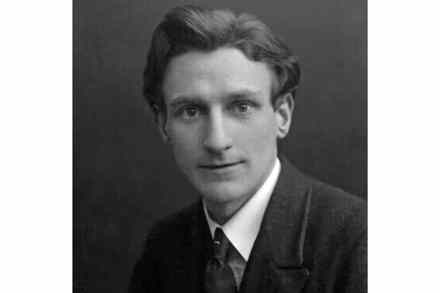
Harley Granville-Barker, actor, director, playwright, manager and critic, was a pasha of the Edwardian London stage. As a director, his Midsummer Night’s Dream of 1914 was a theatrical landmark. His own plays were provocative and controversial. The Secret Life, for example, was an analysis of the torpor of the British ruling classes. Waste, involving a married woman’s lethal abortion, was suppressed by the Lord Chamberlain. In 1916, aged 38, at the peak of his celebrity, the great Harley Granville-Barker volunteered for a walk-on part on the Western Front as a Red Cross auxiliary.

It’s my ninth – and final – chemotherapy session

‘Sorry I’m late,’ I said to the big unit stationed behind her computer. She’s the chief, this one. She shows no fear or favour. ‘It’s not grave. Room two,’ she said without looking up. ‘Today’s my last one,’ I said. ‘I know,’ she said. Room two comprises three cubicles. Two were already occupied. I was piggy in the middle. I took off my shoes and coat, hung the coat over the back of the chair and climbed up on to the padded recliner. Then the raven-haired black-eyed nurse, who invariably looks searchingly into the depths of my soul before asking whether I would like apple or orange to drink, came in. ‘My last one,’ I said. I thought that she at least would smile or offer congratulations.

The farcical world of the Sharon’s Ex-Boyfriends Club

Sharon told me once that the best sex she’d ever had was with Tom in the town public conveniences, bathed in that mauve light some town councils install to inconvenience junkies. Which was typical of Sharon’s unsnobbishness and of Tom’s work ethic. I’d met Tom through Sharon. In a list of boyfriends that year that would have taken as long to read aloud as the football results, Tom came after me and I came after Trevor. After Trevor had beaten Tom up a couple of times — my brief contribution to his estrangement from his former long-term girlfriend hadn’t counted for some reason — the three of us formed a sort of Sharon’s Ex-Servicemen’s Association, which met occasionally around a pub table.

The magic of champagne

The four portraits of four siblings that Catriona had painted from their photographs over four months were framed, hung and lit and ready for a viewing by the loving parents. That so much creative endeavour should succeed or fail at a glance made me terribly glad I wasn’t a painter. At the appointed hour of six o’clock, I was still in bed upstairs, but listening out, as anxious as she was. Then I heard the parents’ optimistic tattoo on the front door. We needn’t have worried. I heard them spot their children hanging on the rock face, then their overjoyed exclamations at the interpretations and likenesses. She’d captured their two sons and two mile-and-a-quarters’ various characters brilliantly, they said.

My wig faux pas

I listed for Catriona the reasons why I did not want to go out to dinner that evening at the posh new restaurant in the village. The Hammers were on telly that evening and we had a fire lit. Plus, I was only just back from the hospital at Marseille where another half pint of turps was tipped into the tube in my neck, which would easily do for my supper. Also I wanted to lie down. Also that day the Omicron variant, in its speed and spread across France, was doing a fair impression of Rommel. Why should I with my double-asterisked low white blood cell count take an unnecessary risk of catching the highly infectious version of Covid by eating poncy food in a small dining room with a lot of strangers?

Most-read 2021: The joy of my new British passport

We’re ending the year by republishing our most popular articles from 2021. Number six is from Jeremy Clarke’s Low Life column in January. He writes about the joy of receiving his new black British passport. ‘Anything you want?’ says Catriona on her way out of the house to go to the shop. I’m standing at the hob stirring a first batch of Low Life’s 2021 Pandemic Second Wave green tomato chutney. (My outdoor homegrown tomatoes stopped turning red just before Christmas.) The wooden spoon stops revolving while I google my brain for things I want. No results. Materially, I have everything I need. Too much of everything. What I once looked on as too few clothes now strikes me as insane excess.

Would my scan results be a death sentence?

At the desk I gave my name and showed my Covid vaccination pass and the woman told me to take a seat with the others. I greeted the two elderly couples and the healthy-looking man wearing a three-piece suit and tie and plonked myself down on one of the orange sofas. The tatty oncology department at Marseille now feels like home. The hard-as-nails but sympathetic receptionists. The seatless lavatory bowl. The notice on the wall listing the recognised mainstream religions, designating them with equal disdain as ‘cultes’. Which is a far cry from Torbay hospital, where I was treated for cancer before this. At Torbay hospital the oncology department has a solid Anglican chapel right next door and back then I would pop in before appointments and get on my knees and pray.

A hidden side of the Somme

Noticing via this Low Life column that I had trench fever, the Western Front Association treated me to a year’s membership and subscription to their excellent quarterly magazine Stand To!. And if that wasn’t enough, they also offered me a place in their contingent at this year’s Service of Remembrance at the Cenotaph — a dream come true. ‘It’ll make the hairs stand up on the back of your neck,’ promised WFA legal trustee Richard Hughes in an email. My torch might be sputtering but my trench fever burns still brightly. ‘Not another book about the first world war!’ says Catriona as she hobbles up the path with yet another package posted from the UK.

French kissing with the French

Every year Vernon celebrates the gathering in and pressing of his olive harvest by inviting friends to a ceremony at his house. This year there were seven of us. He poured about a third of a pint of the freshly pressed, very green oil on to a central white china plate. We each took a small piece of toast, rubbed it with a garlic clove and soaked it in the oil. Then we removed it from the oil and rubbed it against the pulp of a quartered tomato. Apparently it’s a Provençal peasant tradition. The new green oil catches the back of the throat and isn’t everybody’s cup of tea. But it’s a vivid taste of nature.

The joy of French hospital food

After checking me in, the receptionist, who was wearing an overcoat, said: ‘There is no heating in the hotel. The unit is broken. But it is not cold today so you should be fine.’ Room 357 was cold. Hoping to raise the temperature by a degree, I filled the sink with hot water, turned on all the lights, and switched on the massive telly. It showed drug squad officers busting dealers in a poor northern French town. After combing through a suspect’s text messages, they bashed down his or her front door and arrested everybody and seized their drugs and cash. Most often it was hashish in small amounts and the drug dealers were in bed. It was poor whites busting other poor whites. The programme was three hours long. One bust after another.

My moment of madness in the opticians

Foolishly I chose new specs in the village optician’s after a long lunch: a rather outré design that I might not have chosen had I been completely sober. For the past decade I’ve worn a retro design I’d first admired in David Bailey’s striking black and white photographs of Ron Kray. Thinking it might be time for a change of style to reflect my invalid passivity, and the hairless dome of my surprisingly small skull, I’d gone in a moment of madness for a pair of John Lennon’s hippie silver circles. Three weeks later, I returned to the shop to try them on with the new prescription lenses fitted. It was only then, studying my face and new glasses in the mirror, that I realised that my eyebrows and eyelashes had also gone.

A tale of bitter brotherly rivalry

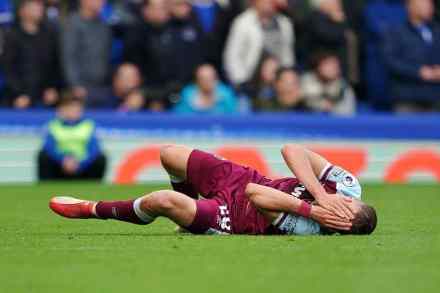
For early humans there was no distinction between spirit and matter. There was no idea of self; no barrier between consciousness and the world. Eventually, evolving self-consciousness and thought put a barrier between the two. Object was irrecoverably divorced from subject. Or so I’ve read somewhere. Something like that anyway. Very recently yet another barrier has been erected between human consciousness and the world in the form of the smart phone touch screen, putting us at not one but two removes from reality. No wonder everyone’s lost the plot. On Sunday, at the very forefront of the evolution of human consciousness, I took human evolution a step further by watching West Ham play Liverpool on my phone screen while sitting in a room in Provence.

The healing power of champagne

The day after Catriona was fitted with a plaster cast and crutches, her elder sister arrived from the UK for a rare visit. Marigold is also on crutches. Diabetes. Which left me as the only able-bodied member of the household, though an ethereal one. I try daily ‘to run with determination the race that is set before me’ (Hebrews 12:1). Champagne helps. Our seasonal neighbour Professor Brian Cox has pointed me to a website specialising in getting the produce of small family-run champagne houses to your doorstep within 48 hours at a considerably cheaper price than the local supermarket and very decent it is too. I have a half-bottle at breakfast. ‘Glass of champagne, Marigold?’ I asked her at a quarter to nine on the first morning of her visit. ‘Why not?

Life amid Catriona’s cleaning regime

Earlier in this run of glorious October sunshine I was languishing on the bed in the middle of the afternoon not feeling up to much. The phone rang. Catriona. Could I manage to get down the path to help carry two heavy shopping bags back up to the house? ‘I’m on my way, mon chou’, I said, maintaining my customary ‘willing helper’ tone of voice. I went down the path in my pants, which could pass for thin shorts in the event of an encounter at the bottom with one of the neighbours. From here it’s a short climb to a dusty plateau were we park the cars. I gallantly refused Catriona’s offer that we carried a bag each, saying that I’d be better balanced with both. As we set off, Catriona slid on some loose stones and lost her footing.

My happiness has given way to a paralysing melancholy

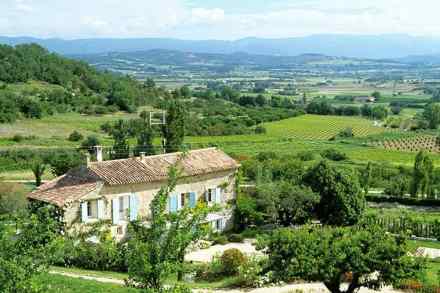
From our hypothetical drone-mounted camera let us look down into a secluded valley in the same series of valleys as Brad and Angelina’s celebrated Provençal vineyard. Cultivated olives and vines on ancient terraces descend to an English lawn encompassing a pretty stone cottage, formerly a beekeeper’s. The lawn is wide and green and must take an enormous and perhaps illegal amount of water to keep it alive through the scorching summer. Moreover, the smallish blades of grass and the mosses suggest an English species of lawn. There has been no compromising here with a broader-leafed, hardier, uglier, tropical variety. To see an English lawn here, in this harsh climate, coterminous with bushy vines and silver-grey olive trees, is an extraordinary sight.

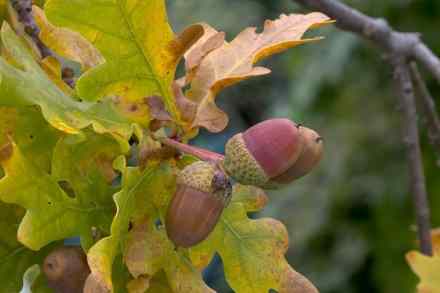
Acorns and aliens: lunch with Vernon and the Ukrainians

Catriona and I were late for lunch at Vernon’s because I couldn’t get out of bed. The four of them — Vernon and the three Ukrainians — were sitting outside drinking in the sun when we walked up the path. The Ukrainians are renting Vernon’s other house. Nina is married to Andrij. Valentyna is Nina’s friend from their college days. They had been talking about me. ‘Talk of the wolf,’ said Valentyna. ‘That is what we say in Ukraine when we talk about someone and they come,’ she explained. ‘Quand on parle du loup,’ said Vernon, who is French-American, ‘on en voit la queue. That’s what we French say. When you speak of the wolf, you see its tail.

The downfall of the French middle class

The chesty Corsican taxi driver was giving me his earnest appraisal of the way things were headed in France politically. On the right we were passing the battlefield of Aquae Sextiae where the Roman general Gaius Marius, commanding 37,000 legionaries, massacred a 100,000-strong Teutonic horde thought to be headed for Italy after laying waste to northern Spain. Then, on the left, the church of Saint-Maximin-la-Sainte-Baume with its fragment of Mary Magdalene’s cranium displayed in a spookily lit showcase. Later, turning south, we would pass through the countryside of Pagnol’s childhood, now split by the motorway. And a bit further on — glimpsed through roadside trees at Aubagne — the Foreign Legion barracks and parade ground.

Sally Rooney on steroids

To lessen the side effects of chemotherapy I am prescribed a corticosteroid. I take a whopping dose around the treatment dates and a maintenance dose the rest of the time. The physical side effects of prednisolone are sweating, insomnia, a gargantuan appetite and a moon face. The mental effects are similar to those of decent coke: an afflatus of delightedness and collected wits spoiled by an indiscriminating faith in the truth of my own thoughts, and an overwhelming and grandiose desire to express these marvellous thoughts verbally to other people. Grandiosity in an invalid is not a good look. But people excuse it.

Why I’m touchy about being asked what I do for a living

In former times I had acquaintances of long standing, or even friends, who never once asked what I did for a job and neither did I ask them. In the new equitable era I seem to be always introduced to people who badly want to know before proceeding. Here’s how it goes. We are introduced. We exchange platitudes. I am difficult to place on the social scale, it’s true. The accent, for one thing. The question is shamelessly put just after the off: ‘So what do you do?’ (I complained about it to my American friend Vernon. That’s nothing, he said. In the United States they ask you how much money you make before they let go of your hand.) I used to tell these social scientists who asked straight away: ‘Fudge packer. And you?