Jeremy Clarke

Jeremy Clarke

The risks of being an Englishman on Burns Night

I’m rubbish at public speaking and detest it. Even the thought of reciting an English poem of my choice at a Burns Night Supper cast a long shadow beforehand, in spite of the strong probability that everyone at the table would be blootered when the time came for me to get to my feet. A further problem was: which poem should an Englishman choose to read at a celebration of Scottishness, if not of Scottish nationalism? Should it perhaps be an English riposte? Or would something amiable and irrelevant be more politic? A comic poem maybe? A comic poem in a comic dialect? Lewis Carroll? ‘’Twas brillig’, and so on?


Twelve miles of indefatigable misery

The taxi-driver wound his window one third of the way down and put a priestlike, confessional ear to the freezing night air. I spoke the name of my village. Twelve miles. Twenty minutes. Forty quid normally, including tip. A decent fare, considering that the vast majority waiting at this railway-station cab rank require only the short ride into town. And yet an agonised grimace contorted his miserable, flabby, unshaved face. After an omnipotent pause, however, it nodded gloomy assent and I walked around the bonnet of the 12-year-old Mondeo and climbed into the passenger seat. ‘Busy?’ I said when we were in motion, to start the conversational ball rolling.

My addiction to literary pilgrimage is akin to masturbation

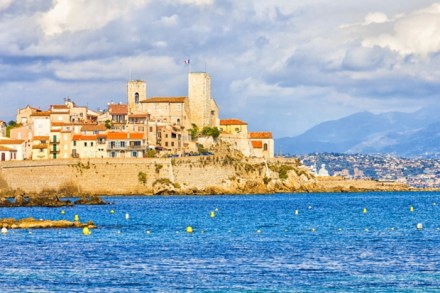
The hotel and its bright tan prayer rug of a beach were one. In the early morning the distant image of Cannes, the pink and cream of old fortifications, the purple Alp that bounded Italy, were cast across the water and lay quivering in the ripples and rings sent up by sea-plants through the clear shallows. Recognise it? F. Scott Fitzgerald’s Tender is the Night. First page. Hollywood starlet Rosemary Hoyt and her mentoring mother take ground-floor rooms at a quiet beachside Antibes hotel. Rosemary wanders out and on to the aforementioned beach, takes off her bathing robe, wades into a ‘blue as laundry water’ sea, then ‘laid her face on the water and swam a choppy four-beat crawl out to the raft’.

The joys of home and hearth and hot lemon

Over Christmas and New Year I was rotten with flu and didn’t go out once. I stayed soberly at home beside the fire with the family and enjoyed every minute. The first time I ventured out, still feeling ropy, was on Saturday morning for a look around the shops. As I came out of Superdrug, I met Sasha. She was wrapped up warmly against the cold, except for her bosoms, which were recklessly exposed and showcased by a black, lacy push ’em up and point ’em out bra. We hadn’t seen each other for months and we warmly embraced. ‘Drink?’ I said. ‘Ship?’ Sasha had lost her purse again, she said, and was retracing her steps in the high street; but yes, marvellous, sauvignon blanc, dry, large one.

That’s another year gone and, against the odds, I’m still here

A fruity voice on the train’s announcement system said, ‘Ladies and gentlemen, make sure you have all your belongings, family members and what have you with you when alighting from the train. We are now arriving in the naughty little station of Newton Abbot.’ This carriage was empty. The Teign estuary sparkled in the Sunday morning sunshine. The line from Totnes in Devon to Paddington is a lovely journey at any time of the year across the farms and pastures green of Devon, Somerset, Wiltshire and Berkshire.

My perfect island – and the posher one next door

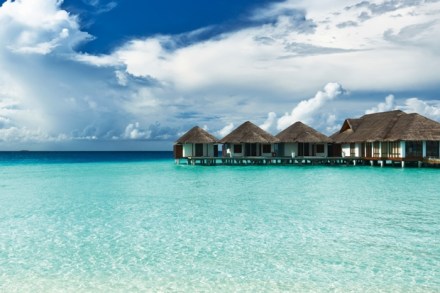
The Republic of Maldives is the lowest country in the world and has the highest divorce rate. Is there correlation between altitude and fidelity, I wonder? Male, the capital, is 370 miles south-west of the southern tip of India. From the air it looks like Tower Hamlets. From Male we flew first by DHC-6 Twin Otter seaplane to the tiny coral island of Moofushi — about 20 thrilling minutes — and checked in at the Constance Moofushi island resort. I was allocated a thatched wooden bungalow (number 35) with sundeck, loungers, and wooden steps leading down directly into the warm, shallow sea. I could look down from the balcony rail of number 35 and see baby sharks and fishes up to two feet long cruising around at the foot of my stairs.

Forgive us our Christmases as we forgive those who Christmas against us

After lunch on Christmas Day my father always stood at the sink in his apron and yellow Marigolds and did the washing-up. Rolling up his shirtsleeves the gentleman’s way, as he claimed it was, with two turns maximum to just below the elbow, he couldn’t wait to get started. I can see him now, paper hat, suds up his arms. However, the underlying and perhaps most pressing reason for his doing the washing-up all afternoon was that he was a furtive drinker. When my father courted my mother, he led her to believe that he was a non-smoking, teetotalling Christian believer, when in truth he was the exact opposite of those three ideals; and though a long one, their marriage essentially foundered on the rocks of those discrepancies.

The best thing about travel-writing gigs is meeting other hacks

The thing I enjoy most about travel-writing gigs is meeting other hacks. Hacks are almost invariably fun, funny, gossipy, irreverent, and they like a drink. They are well read and intelligent, but like to conceal it. They know and understand the lineaments of power as well as politicians, only they think it’s funny. On multi-hack travel gigs you can tell whether there is a drain or a nutcase in the squad during the introductions in the Heathrow departures lounge. In this case we could safely sound the ‘all-clear’. The line-up consisted of a man from the Daily Mail, a woman from the Daily Telegraph, a woman from the Sunday Times and myself. In his 50 years, the Mail man has so far visited 134 countries, mostly as an independent traveller.

The criteria for admittance to a Maldivian cemetery

Moofushi, Maldives   We clambered aboard a dhoni, the sturdy wooden boat that the Maldivians use for getting about the islands, and motored across from our high-end ‘all-inclusive’ resort to a ‘traditional’ island village for a guided tour. Maldivians are devout Muslims and it was suggested to us that we dress modestly and behave respectfully when there. Our guide was Mohamed, a self-confident 22-year-old fisherman. ‘Ask me anything. I know everything,’ he said. His village was called Himandhoo. According to Mohamed, it means ‘fishing village’. He led us first to the village school. The writing on the classroom walls was Thaana, a peculiar script resembling a cross between shorthand and Arabic.

‘Are you going out tonight, Frasier? If you are, don’t leave without me’

An hour earlier I had stepped off a plane from Dublin and I was three-quarters deaf in one ear. I had a drink in the bar at Boisdales Canary Wharf and a gander at the seating plan. Fourteen to a table. I was on table 18. I went up the stairs. Only one person was already in place: a poised woman wearing a three-string pearl necklace. Everyone else must have been finishing their cigars on the terrace. My name card placed me beside her. I put my complimentary five-pack of hand-rolled cigars on the table, plonked myself down, and said, ‘Hallo, I’m Jeremy.’ ‘Jean. Jean Trumpington,’ she said. ‘Do you smoke cigars, Jean?’ I said. ‘The last time I smoked a cigar was behind a cowshed in East Kent,’ she said.

I nearly went lost my mind in southern Spain on the trail of Gerald Brenan

Another writer I once liked very much is Gerald Brenan. Brenan served with distinction in the first world war and afterwards carted 2,000 books to Yegen, a remote village in the Sierra Nevada, to eke out his family allowance and educate himself. He was a great walker. From his house in Yegen he walked 57 miles in two days to Almeria to buy second-hand furniture, and once he walked the 71 miles to Malaga in 28 hours to meet friends. A lifelong friendship with Ralph Partridge drew him into the Bloomsbury group of writers and artists, and he spent years trying to get his well-developed leg over Dora Carrington, Partridge’s wife. Lytton Strachey visited him at Yegen, suffering agonies from his haemorrhoids on the mule trek from the coast.

Bidding a fond, and drunken, farewell to the awe-inspiring Mark Amory

Rubbing shoulders with political suits on the pavement outside the Westminster Arms, I drank two pints of Spitfire. Pump primed, I strolled the 50 quaint yards along Old Queen Street and entered the Spectator offices through the open door of number 22.  An elderly chap on his way out said, ‘You’ve missed the speeches.’ I said, ‘Is all of literary London in there?’ ‘I wouldn’t know about that,’ he said huffily. I went downstairs to the party and grabbed a ready-poured gin and tonic from the drinks table of one’s dreams.

‘My boy was my all’: letters from a bereaved mother to a Somme widow

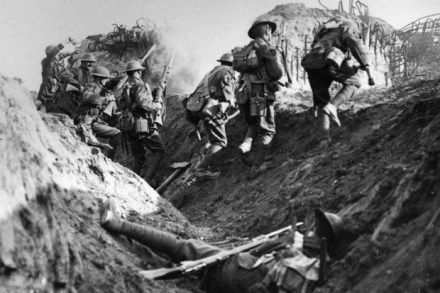
My maternal grandmother (née Clarke) had six brothers, all keen poker players. All six volunteered to fight in the Great War, and only one, Sergeant Herbert Clarke, of B Company, 10th Battalion, Royal Fusiliers, failed to return to civilian life afterwards. He was blown up by a shell during the second week of the Battle of the Somme. Shortly before the shell got him, Herbert had taken some leave and married his sweetheart, Dolly. Dolly never got over him. Just before she died, she passed on Herbert’s army papers and tiny, secretly kept diary to my aunt.

Hello trees, hello sky, hello armoured riot police

What a beautiful day, I thought, as I nodded to the porter in the bowler hat and stepped out of the Westminster hotel into October sun and wind, with a dramatic, fast-forwarding sky overhead, and the dry crackle of leaves underfoot. Lovely London. Solid, masculine, powerful, exciting London. Beautiful London. Outside Westminster Abbey the pavements were thronged with tourists pointing their cameras and smartphones at anything and everything, from the traffic cops to the decorative spikes on the railings. Pret à Manger was packed with riot police in full battledress queueing nicely for their mid-morning caffeine fix. I crossed over the road into Parliament Square and passed a statue of what looked like a black troll.

The karmic rewards of becoming a vegetarian

 ‘Is that you, Sister?’ It was Tom misdialling again with those thick, stubby fingers of his. ‘No, it’s me: Jerry,’ I said. I held the phone away from my ear as he whooped and yelled his love and overjoyed greetings. Tom, unfortunately, is going to hell on a poker. No one has seen him sober or straight for months. Mention his name to any local personality who is proud of being a reprobate and they go all prissy on you. ‘He’ll be dead in a year the way he’s going,’ they’ll say, shaking their heads. Or it’s, ‘Someone needs to have a serious word with that guy.’ Tom is another of Sharon’s exes. He was the one after me.

Karl Miller called me his ‘great white hope’. I failed him, of course

As I think I said in this column the other week, I used to sneak into English lectures at University College London, while officially studying at the School of Oriental and African Studies round the corner. I attended these lectures with such keenness and regularity that an English student called John Bradley, who now writes sometimes on Middle Eastern politics for this paper, one day asked me to contribute to the London Review — a UCL student literary magazine. I chose to review a handbook of ferret husbandry by the artisan hunter D. Brian Plummer, who was my favourite writer at the time. I’d never written anything other than school or college essays before, let alone had anything printed.

Chatting up Katherine Mansfield

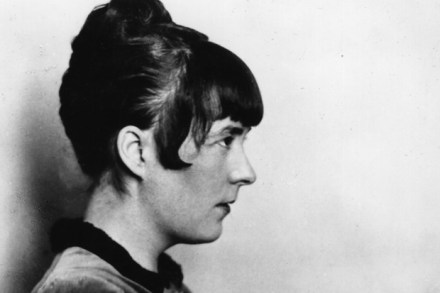
I like the New Zealand writer Katherine Mansfield, who according to Virginia Woolf smelt like a civet cat and had a hard, cheap face, and who was the only contemporary writer of whom she was remotely jealous. I like her writing and I like what I read about her short life. I’m not saying she was a great writer. I’m only saying that my imagination finds her writing voice oddly congenial. It strikes it as supremely impersonal, poker-faced and tart, with a quietly powerful undertow of sexual recklessness. But that might be just me. Funny things, writers’ voices. I suppose we meet them halfway and we either embrace them or we don’t. Kathleen Mansfield Beauchamp and I embraced.

A visit to a drugs den above a fishmongers with Miss South America

‘Stand outside the fishmongers in 20 minutes and call this number,’ she said, ‘and I can arrange it.’ On Saturday evening I was scrubbed up for a big night out. I was wearing a black jacket and black jeans, which is overdressed for a night out in this seaside town. But Jupiter, said Shelley von Strunckel, was making a spectacular conjunction with Uranus, my ruler, lending me enormous powers of attraction. So I thought I might as well dress up for the occasion. After 20 minutes, I stood outside the fishmongers and called the number.

A game of dominoes turns ugly

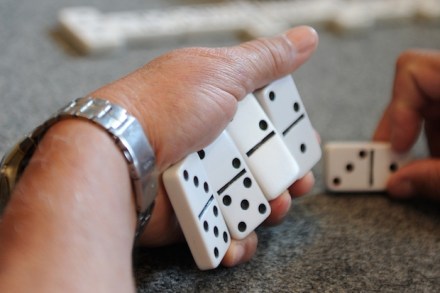
I’m round at Amy and Bill’s for Sunday afternoon tea. Amy and Bill are my in-laws, kind of. When I was courting their daughter, I used to spend most of my spare time sitting around Amy and Bill’s kitchen table. She was 15 when I started going round there, I was 26, and I suppose if I were an old TV entertainer or disc jockey, I should be tidying up my affairs before officers from Operation Yewtree beat a lively tattoo on my front door. But Amy and Bill welcomed me in to their family from the start. If they had an objection to my courting their daughter, it was to my social class rather than her age. I can remember Bill grumbling that he would have preferred that his daughter went out with someone of her own class, which I suppose is rural working class.