Jay Mens

Jay Mens is a Senior Fellow at Policy Exchange and Ernest May Fellow for History and Policy at Harvard Kennedy School. He tweets at @_JMens.

Trump’s presidency could spell the end of Iran’s regime

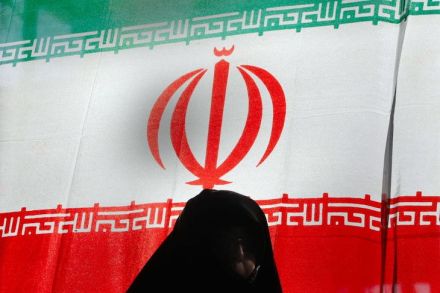
Donald J. Trump returns to the Oval Office for the second time as the least interventionist American president since 1941. As the Islamic Republic of Iran – which recently tried to kill him – is at its lowest point in forty years, could the end be near? And what does that all mean for the UK? The death of the Islamic Republic has been predicted many times before, always prematurely. But today, with the fall of Syria's Bashar al-Assad, economic collapse at home, and an incoming Trump administration, the moment feels different. The Iranian rial is trading at 820,000 to the dollar; it was 59,000 back in 2017. It has lost more than $30 billion (£25 billion) in contracts due to the collapse of the Assad regime.

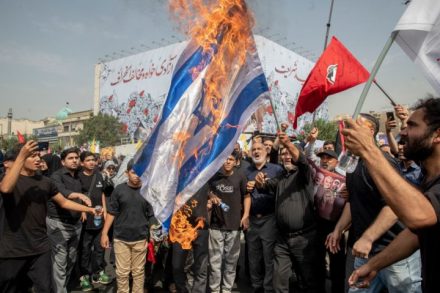
How will Iran seek to ‘punish’ Israel?

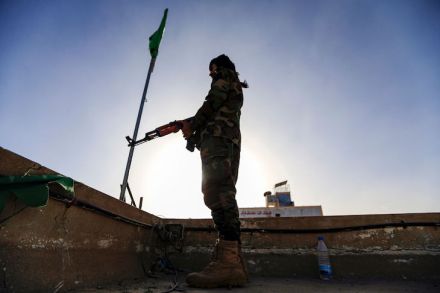
It was never just about Gaza. Since October, the Middle East has been in a regional war that, over the next few weeks, is likely to break into the open. After Israel’s airstrike on Beirut and assassination of Hamas chief Ismail Haniyeh in Tehran last week, Iran is promising a different approach. Following the killing of Qassem Soleimani in 2020, and the Israeli attack on Iran’s consulate in Damascus, they promised enteqam: revenge. Today, they say mojazat – punishment, or khun-khahi: literally 'a desire for blood'. Israel has three outstanding blood debts accumulated over the past few weeks from across the self-styled 'Axis of Resistance'. It bombed Hodeidah, the Houthi-controlled port in Yemen, in broad daylight.

How Trump and Starmer could form an unlikely alliance against Iran

The incoming Labour government has pledged a more robust Iran policy than the Conservative party has had over the last decade. The bar is low. Somehow, nothing new came of Iran’s women’s movement, support for Russia, assassination attempts on British soil, and attacks on all our regional partners – or the unprecedented cross-party consensus this all generated. Tehran may never have a better window for building a bomb Labour is apparently planning a pivot that includes proscribing the Islamic Revolutionary Guard Corps (IRGC), cracking down on Iran’s domestic networks, and more robust deployments to the Middle East and Mediterranean. Whether Keir Starmer's party will implement these plans is another question. The key difference is that U.S.

Ebrahim Raisi’s death won’t change the course of history

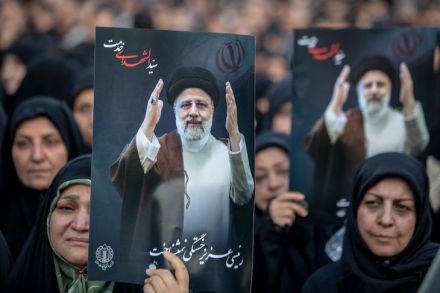
The Middle East never fails to surprise. Sunday was no exception. Iranian president Ebrahim Raisi, foreign minister Hossein Amir-Abdollahian, and several other senior Iranian politicians were killed in a helicopter crash in East Azerbaijan. One cannot help but wonder at the extraordinary misfortune not only of crashing, but of doing so in a foggy, rainy, muddy area that took rescue workers 15 hours to reach. Despite the profile of the accident’s victims, however, this is probably not an accident that changes the course of history. The Iranian presidency has become increasingly irrelevant in an increasingly-Soviet system. That trend is set to continue.

Don’t be scared of Iran

Why are people so scared of ‘escalation’? The escalation paradigm is the outstanding relic of the Cold War. There is no situation where it cannot be applied. No foreign policy cause – from arming Ukraine, to antagonising Iran, to engaging diplomatically with Taiwan – can be discussed without fearing ‘escalation’. It sits among the other dud words beloved by foreign policy wonks: deterrence, compellence, persuasion, dissuasion. It is lazy, and leads to unthinking punditry. Worse still, our enemies use the escalation word-trap against us. On 1 April, an Israeli airstrike on the Iranian consulate in Damascus killed seven Iranian officers. Everyone is on the edge of their seats. Will Iran escalate? Will Hezbollah?

Performative airstrikes against the Houthis will achieve nothing

Performative sanctions have long been the last refuge of the lazy policymaker looking to 'do something'. Take, for instance, the sanctions that are slapped on unsavoury individuals from around the world on an almost-weekly basis: Turkish assassins, Iranian guerrilla commanders, Somali pirates, and Yemeni rebels are among those who have been whacked with the sanctions stick. Unsurprisingly, nobody has repented as a result of being listed, meaning that the sanctions roster is a government naughty list and little more. After more than a decade of performative sanctions, the public is slowly cottoning onto the fact that they don’t seem to offer much. Amidst this scrutiny, policymakers are increasingly drawn to what might be called the performative airstrike. On Friday night, the U.S.

Time is running out to crack down on Iran

Three American soldiers on the Syria-Jordan border were killed by Iranian drones on Sunday. Since October, Iranian drones and missiles have injured nearly two hundred American troops. The pipe dream that was the Joint Comprehensive Plan of Action – the Iran deal – could not seem more distant. The equation at the heart of the deal, more money for more Iranian concessions, vanished shortly after an agreement was concluded in 2015. In the years since, Iran’s funding to its regional proxies exploded, and its proxies’ attacks on Israel and the Gulf states continued unabated. The Houthis in Yemen, who emerged in earnest after the deal was struck, are now a global pest. Iran’s reformist movement, which the carrot of doux commerce was meant to empower, has been all but decimated.

Israel is facing an existential battle

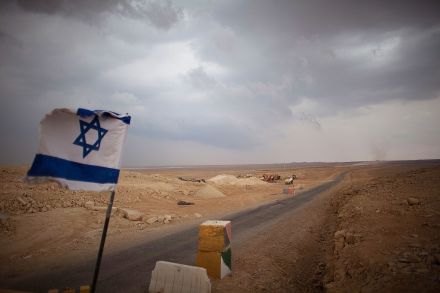
Israel is fighting for its life. While the White House remains convinced that it is possible to somehow contain the conflict to Gaza, Israel’s security establishment is nervously looking north to Lebanon, where a second front in the war has already started to open. The 7 October massacre was the first act in a decade-old plan for the Iran-backed ‘Axis of Resistance’ – Hamas, Hezbollah, and Palestinian Islamic Jihad. The end goal is not, as it was for Egypt in 1973, to recover lost territory. The goal is no less than the destruction of Israel, either by political or military means.  For months, something has been afoot. On 9 April, the leaders of the Axis met in a Beirut bunker.