Jawad Iqbal

Jawad Iqbal

Jawad Iqbal is a broadcaster and ex-television news executive. Jawad is a former Visiting Senior Fellow in the Institute of Global Affairs at the LSE

Will the mystery of MH370 ever be solved?

Ten years ago today, on 8 March 2014, Malaysian Airlines flight MH370 took off from Kuala Lumpur, en-route to Beijing – only to veer wildly off course and vanish, never to be seen or heard from again. There were 239 people on board. How can an aircraft simply disappear without a trace? Even now, no one has any real clue what happened. It is a mystery like no other. The only indisputable facts are those that have existed from the very beginning. The flight left Kuala Lumpur, travelled north-east and out over the South China Sea, heading for Beijing. The crew last communicated with air traffic control 38 minutes into the flight. Everything seemed normal enough. Minutes later, the aircraft veered dramatically off its planned flight path to head over the southern Indian Ocean.

Who cares that Rishi Sunak makes his own bed?

Mr and Mrs Sunak of Downing Street have given a joint interview to Grazia magazine in which they give answers to the most pressing questions facing the country. They don’t bother sweating the small stuff like the state of the economy, the upcoming Budget, or the election prospects of the beleaguered Tories, but instead share their carefully considered thoughts on dividing up the household chores. Akshata Murty gushes that Rishi’s ‘special skill’ is tidying the bedroom. Rishi is not to be outdone when it comes to spilling the secrets of their home life. He confesses to breaking away from his day job (just the small matter of running the country, lest we forget) to go upstairs to the Downing Street flat and make the bed because of his wife’s habit of leaving it in a mess.

The Iranian people have had enough

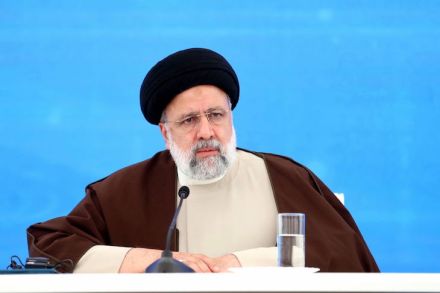
The record low turnout for parliamentary elections in Iran, which took place on Friday, is another blow to the regime’s attempts to pretend that all is well in the country. Early reports suggest a turnout of just under 41 per cent nationwide. Iranians in their millions have rejected the regime by choosing to stay at home rather than vote. The elections were never really about the final results (victory is pretty much guaranteed for the motley crew of religious hardliners and social conservatives endorsed by the ruling clerics), but about how many people would actually bother to vote. Turnout matters to the mullahs because the election process exists to give the regime the veneer of democratic legitimacy.

Why is a West End theatre putting on ‘black only’ performances?

Why would the producers of a new West End play think it a good idea to put on select performances for all-black audiences, effectively telling white theatregoers they’re not welcome on those nights? The idea of Black Out nights (as they have become known) amounts to segregation by race and skin colour. Yet this is exactly what will take place when Slave Play, written by American playwright Jeremy O Harris, starts its run at the Noël Coward Theatre this summer. Is he suggesting black people can only feel safe with other black people? Two nights – 17 July and 17 September – have been allocated to all-black audiences to watch the play 'free from the white gaze'. What does this phrase even mean?

Why do football managers like Thomas Tuchel always get the blame?

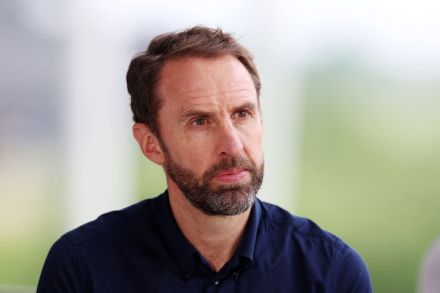
Bayern Munich’s decision to part ways with their coach Thomas Tuchel is a rather bizarre form of managerial sacking. Tuchel is leaving the job but will be allowed to stay in charge until the end of the season. This can only make a team that is in free fall more unstable. In a statement on the club’s website, Jan-Christian Dreesen, the Bayern chief executive, said: ‘In an open, good conversation we came to the decision to mutually end our collaboration in the summer.’ This is the same Dreesen who told reporters hours earlier that Tuchel would not be dismissed anytime soon. Tuchel was singing the same tune about an end to collaboration, but promising to do everything he can ‘to ensure maximum success’. It’s difficult to see how this can work.

Pakistani democracy is on the brink

A senior official in Pakistan has publicly confessed to vote-rigging in the country’s general election earlier this month. It is an unprecedented admission of malpractice that raises fresh questions about the legitimacy of the electoral process and whether the final results were manipulated by the country’s all-powerful military. Commissioner Liaqat Ali Chattha claimed that authorities in Rawalpindi, Punjab province, changed the final voting numbers so that the candidates who were ‘losing’ the elections ‘were made to win’. Chattha says there was so much ‘pressure’ on him to manipulate the results that he contemplated suicide, before opting to make a public confession: ‘I take responsibility for the wrong in Rawalpindi.

America might regret its Baghdad drone strike

The latest American drone strike in Iraq, which killed the commander of a powerful Iranian-backed militia group, is one more dangerous escalation in the increasingly unpredictable Middle East conflict. The US strike in the Iraqi capital Baghdad targeted Wisam 'Abu Baqer' al-Saadi – a senior leader of Kataib Hezbollah, which the Pentagon blames for the attack that led to the deaths of three American soldiers in Jordan last month. The rationale for the American retaliation is clear enough. It sends a powerful message that Washington will punish attacks on US forces in the region, using every means to hunt down those responsible. Everyone and everything – from military leaders to infrastructure – will feel the full force of American military might.

Pakistani politics is like a Monopoly game

The levels of cynicism and disillusionment surrounding the upcoming parliamentary elections in Pakistan – due to take place tomorrow – are remarkable, even for a country with a chequered democratic tradition. Few people believe the vote will be free or fair, with widespread speculation that the country’s all-powerful military has already decided the result and will stop at nothing to get its way. Put simply, the election is a charade.  This is how things stand. The country’s former prime minister, Imran Khan, is in jail. More on him later. Another former leader, Nawaz Sharif, who was in exile after his own spell in jail, has returned home, and all outstanding cases against him have been dropped. How so?

Muslim voters are falling out of love with Keir Starmer

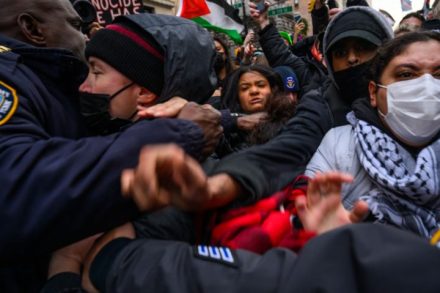
The Labour party has a problem with Muslims. A new poll suggests that British Muslim voters, who have traditionally supported Labour in huge numbers, are deserting the party over its handling of the Israel-Gaza war. Backing for Labour from the Muslim community has fallen massively since the 2019 general election from 86 per cent to 60 per cent, according to a poll conducted by Survation. It was commissioned by the Labour Muslim Network (LMN), which promotes British Muslim engagement with the party.

The trouble with Marcus Rashford

What a week it’s been for Marcus Rashford, who divides opinion like almost no one else in football. The Manchester United striker has been making headlines of the non-footballing kind after pictures emerged of him in a Belfast nightclub last week, a night out that apparently consisted of drinking tequila non-stop. When he returned home to Manchester, he called in sick, meaning he was unable to play in last Sunday’s FA Cup tie between Manchester United and Newport. After Rashford finally returned to first team action on Thursday evening, in Manchester United’s away game against Wolverhampton Wanderers, he was first on the scoresheet, a cooly taken goal in the opening minutes of the match. Crisis, what crisis? The questions keep on coming.

America is being sucked back into the Middle East

It didn't take long for the US military to retaliate to the drone strike in Jordan that killed three American soldiers. It was always a question of how hard and when, not if, America would strike back. 'Our response began today. It will continue at times and places of our choosing,' President Joe Biden said in a statement. Be in no doubt though: the US air strikes, using long-range bombers to hit 85 targets in Iraq and Syria, mark a dangerous and unpredictable new phase in the spiralling Middle East conflict, with potentially far-reaching consequences. The Americans chose their targets carefully enough. They hit four locations in Syria and three in Iraq linked to the Tehran-sponsored militias.

Why Jordan is in Iran’s sights

The drone attack on a US base in Jordan that killed three American troops and injured dozens risks bringing one more country into the orbit of the war between Israel and Hamas. US president Joe Biden has blamed 'Tehran-backed militants' operating in Syria and Iraq for the strike on Tower 22, a US base on Jordan’s border with Syria, and has promised reprisals. Iran has denied any involvement: Tehran prefers to let its proxies do its dirty work. Watching on nervously is Jordan. Iran, whatever its denials, has much to gain by sowing instability in Jordan Iranian-backed militias in Syria, Iraq and Yemen have now launched more than 150 attacks on US positions in the region since the Gaza conflict began in October.

The ludicrous saga of India’s butter chicken war

Butter chicken, one of India’s best-known dishes and a favourite all over the world, is at the centre of an extraordinary curry war in India. Two rival restaurant chains have asked the courts to rule over who invented the recipe for  the signature dish, made with tender pieces of chicken in a tandoor oven, mixed in a rich tomato, cream and butter sauce. It’s a dispute that has captured the attention of the nation, with television stations covering the story and widespread debate across social media.

Jurgen Klopp’s departure is a disaster for Liverpool

The news that the Liverpool manager Jurgen Klopp is to quit his job at the end of the season is a bombshell. No one expected it, not right now, nor anytime soon. The questions will come thick and fast, with all kinds of daft conspiracy theories about what is really behind his departure not too far behind. Football is like that.  Klopp’s decision to go comes shortly after Liverpool qualified for the final of the Carabao Cup. It is all the more unexpected because he completed a major rebuild of the playing squad last summer (usually something that suggests the coach has the long-term in mind), and Liverpool are currently sitting top of the Premier League, and still in the FA Cup as well as the Europa League. That’s a potential quadruple right there. So, why go now?

Is Saudi Arabia softening its booze ban?

Saudi Arabia, an Islamic nation where drinking alcohol is strictly forbidden, is to get its first official liquor store. There’s just one catch: only foreign diplomats will be able to buy booze there. The store in the capital Riyadh’s Diplomatic Quarter will remain off-limits to Muslims and, needless to say, ordinary Saudis. For a handful of lucky diplomats, the shop's opening will spell an end to having to import alcohol via a diplomatic pouch or sealed official package. Yet the purchase of their favourite tipple won't be straightforward. They will need to apply for clearance through a mobile app administered by Saudi officials. There will also be strict limits on how much they can buy at any one time, and customers will not be allowed to take pictures inside the store.

How Modi is tearing up India’s secular state

The religious and political symbolism was unmistakable, as the Indian prime minister Narendra Modi led the consecration of a controversial new Hindu temple in Ayodhya, in Uttar Pradesh state, built on the ruins of a 16th century mosque. The Babri Masjid was torn down by Hindu nationalist mobs in 1992, sparking riots across the country that killed about 2,000 people, most of them Muslim. In 2019, India’s Supreme Court ruled that a temple could be built on the site, a decision that was roundly criticised by India’s Muslim minority. Modi spoke of India being at 'the beginning of a new era' The festering wounds from this long-running dispute reverberate to this day.

The clash between Iran and Pakistan is spiralling out of control

Pakistan’s retaliatory military strike on suspected militant bases in Iran – in response to Iranian attacks in Pakistani territory – can only escalate tensions between the two countries. It will also ring alarm bells elsewhere across an increasingly jittery Middle East but also further afield in India and China. The Chinese have friendly relations with both Pakistan and Iran. India, meanwhile, is always on high alert whenever Pakistan’s military forces flex their muscles. All in all, there is a real danger that more and more countries will be sucked into the volatile and unpredictable vortex of the Middle East conflict. The Pakistani military action follows Iran’s attacks on the Jaish ul-Adl, a jihadi militant group, in the Balochistan province border area.

Iran’s attack on Pakistan shows how close the Middle East is to war

Iranian airstrikes on 'militant bases' in neighbouring Pakistan signal a dangerous and worrying escalation of the conflict in the Middle East. Details of what unfolded remain sketchy, but Iranian media reported that the strikes were aimed at the bases of a Sunni militant group, Jaish al-Adl. The missiles and drones landed in the Balochistan province, which lies along the 600-mile border between the two countries. Both countries have long bickered over the activities of Baloch separatists and other militant groups in the border region. All it would take is one misunderstanding or false move to spark all-out war Pakistan’s foreign ministry said two children were killed and three others were injured.

Are Indian agents targeting British Sikhs?

How worried should British Sikhs be about the threat to their lives from forces acting on behalf of the Indian government? The question has arisen after it was revealed that some Sikhs have been issued with 'threat to life' warnings by West Midlands police. Such warnings – called 'Osman warnings' – mean there is credible intelligence of a death threat or risk of murder but not sufficient to justify an arrest. The warnings by British police follow claims of murder and an assassination attempt on activists in Canada and the United States last year. This has fuelled speculation that Sikhs are being targeted by India because of their support for the formation of an independent state of 'Khalistan' in the Punjab. India has always denied the claims.

Jose Mourinho is no longer the ‘Special One’

Jose Mourinho, who has just been sacked by the Italian club AS Roma, is a once great manager on his last legs. The football his teams play is terrible, the results so-so, and his increasingly erratic behaviour on the touchline altogether disgraceful.  Mourinho has gone from fighting for league titles and Champions Leagues to waging war on officials and opposing teams. His sacking had an air of inevitability. Roma’s American owners, the Friedkin Group, thanked Mourinho 'for his passion and efforts'. Tellingly though, the owners stated that they felt 'an immediate change' was 'in the best interests of the club'. Good riddance, in other words.