Jane Coombs

Why is the Met making medieval art perverse?

From our US edition

Unwitting historians often reveal just as much – if not more – about their own time and place than the time and place they claim to describe. The curators of Spectrum of Desire: Love, Sex, and Gender in the Middle Ages, a new exhibition at the Met Cloisters, are prime examples. Gathering manuscript illustrations, paintings, sculptures, jewelry and more from the 13th to 16th centuries, the exhibition promises to uncover “the hidden sexuality and sensuality of medieval art.” The intent is “queering the past,” and the objects were chosen to show expressions of “desire” in as many forms as possible – a saucy premise that appeals to contemporary trends. But many of the new interpretations range from the woolly to the laughable.

met kinky

An American in Paris

From our US edition

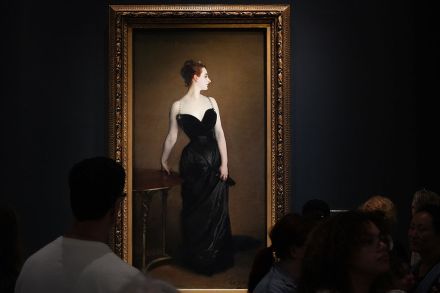
Oh, to be a 19th-century Parisienne! A creature like no other, she arose “like Venus from the waters of the Seine,” as one fanciful journalist put it, “the supreme fruit of civilization.” An elegant arbiter of taste, she could be seen attending plays, concerts and exhibitions, or walking along Haussmann’s airy boulevards. By the time of the Third Republic, she did not need blue blood, so long as she had thoughts on paintings, poetry and music. To a city recovering from the horrors of the Franco-Prussian War and the Paris Commune, which left thousands dead and monuments ravaged, she was a symbol of a brighter future. Artists flocked to paint the Parisienne (and expat wannabes), who in turn welcomed the opportunity to commission status-boosting likenesses.

Madame X

Kimono Style is more than just East-meets-West fashion

From our US edition

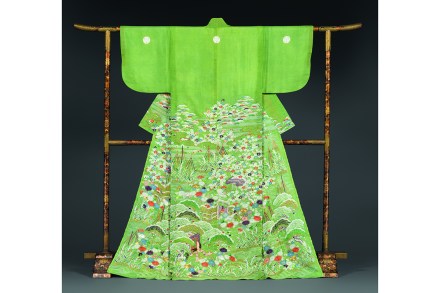
It is not easy to achieve serenity in Manhattan, but after living in a hectic part of Midtown, I have managed to find a few peaceful places dotted around the island. Central Park’s well-groomed Conservatory Garden makes the cut, as does Gramercy Park (if you can find a key), but perhaps the most tranquil destination of all is the Asian Wing at the otherwise bustling Metropolitan Museum.

kimono

Not your average Jo

From our US edition

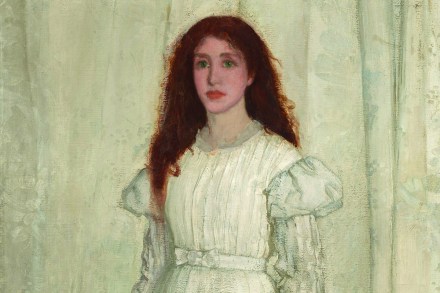
She appears in one of the most beloved paintings in Washington’s National Gallery of Art — “Symphony in White, No. 1: The White Girl” (1862) — but few people know her name. No longer. Joanna Hiffernan is now at the center of The Woman in White, an exhibition at the NGA that explores the close working relationship between James McNeill Whistler and his Irish model and mistress that produced some of the most beautiful and enigmatic paintings of the 1860s. “The White Girl” is a haunting full-length portrait of a young woman, with large blue eyes and Titian-red hair, in a white linen dress. She stands on a rug made from the pelt of a wolf (or is it a bear?

white

Jewel aid

From our US edition

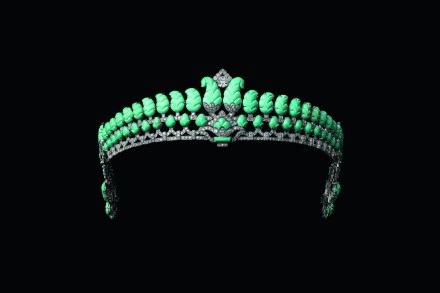
In the late 1890s, the workshop of Maison Cartier adorned its Belle Époque clients in “garland-style” jewelry fashioned from white diamonds in platinum settings shaped like curled ribbons and bows. Soon, however, a more streamlined style began to emerge. In 1904, the workshop produced a small, rhomb-shaped brooch, decorated with smaller rhombs in diamonds and rubies. By the 1920s, Cartier was regularly producing polychromatic jewelry in a linear, abstract style made up of interlocking or tessellated triangles, squares, lozenges and other geometric shapes that had rarely been seen in Western jewelry. The craftsmen also combined brightly colored stones such as turquoise, coral and jade, and they experimented with enamel. What prompted this dramatic change?

cartier

How did Walt Disney learn from Ancien Régime decoration?

From our US edition

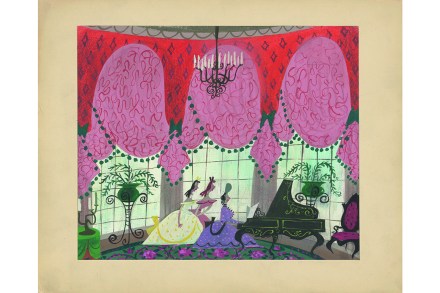
"Make it pink! Make it pink!” says the chubby fairy Flora, aiming her wand at Princess Aurora’s new ball gown in Walt Disney’s Sleeping Beauty (1959). A few magic sparks must have fallen on the walls of Disneyland’s Sleeping Beauty Castle in Anaheim, California, which have been painted (and repainted) in several shades of cotton-candy pink since the faux fortress opened in the summer of 1955, well before the film itself was completed. Two centuries earlier, in 1757, Jean Hellot, the general inspector of the porcelain factory at Sèvres, invented the slightly deeper “rose Pompadour,” a ground color named in honor of Louis XV’s chief mistress and the factory’s most important patron. This pink appears on the scallop-patterned lids of two large Sèvres vases (c.

disney

A dream of a dress

From our US edition

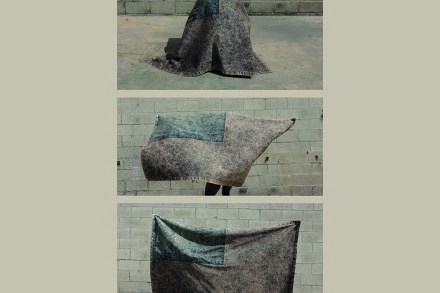
In America: A Lexicon of Fashion, now at the Metropolitan Museum’s Costume Institute, leads with a quote from Jesse Jackson: “America is... like a quilt — many patches, many pieces, many colors, many sizes, all woven and held together by a common thread.” Odd, then, that framed above the first wall panel is a drab, blank-faced suggestion of an American flag constructed from just two rectangular pieces of faded denim. Created by Sterling Ruby as a mourning garment — a model huddles under a wearable version in the exhibition poster — “Veil Flag” (2020) sits awkwardly next to the bright patchwork skirts, dresses, trousers and jackets also on display in the first room. Yet it’s the right way to open a fashion exhibition that makes you think, not swoon.

dress