Jamie Bartlett

Italy’s Five Star Movement and the triumph of digital populism

From our UK edition

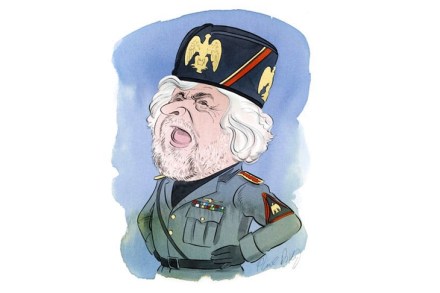
A couple of years back, while writing my book Radicals, I secured an interview with Beppe Grillo, leader of the Italian Five Star Movement. M5S (its Italian abbreviation) is the radical anti-establishment party that’s on track to top next week’s general election. We met in the restaurant of the hotel he always stays when in Rome. There was a small crowd outside as I walked in, hoping to get a glimpse of the man. Beppe wandered in late – he enjoys daily siestas – waving his smartphone. ‘This,’ he said, as he sat down, ‘this is what changes everything!’ Then something weird happened.

Should we believe the hype about blockchains?

From our UK edition

Blockchain is an idea whose time has come. By which I mean it’s still mostly an idea, and is currently the only thing tech people want to talk about. But it’s in danger of getting hyped out of control, which in the end will damage it. So what actually is a blockchain? Very broadly speaking, a blockchain is a way to store information. Boring, yet possibly revolutionary. A copy of every transaction between people is stored on a chronologically ordered, secure database, and identical copies of that database are hosted on multiple computers. New transactions can only be added once they have been verified by other computers, and it’s not possible to edit, change or delete old entries.

The trouble with ‘activists’

From our UK edition

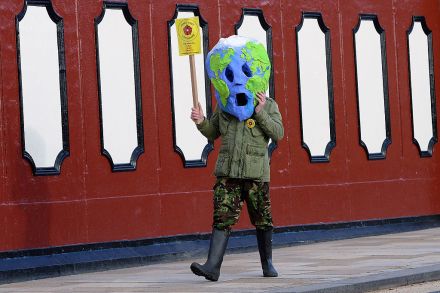
I often ask myself why there aren’t more people on the streets over climate change. After all, there is a near scientific consensus that we’re on the path to destroying every single living thing on the planet, including ourselves. Seems a pretty worthwhile cause. Yet you’ll typically find more people attending an English Defence League demo or a bitcoin conference than trying to close a coal mine. I’d like to propose an answer: ‘the activist’. I don’t mean the gran who donates each month to Greenpeace, or even Caroline Lucas. I mean the pros who roam the country, joining causes and taking risks. The people for whom being a climate activist is part of their identity and social circle.

The great online advertising swindle

From our UK edition

Conmen and fraudsters thrive in confusion. And few places are more confusing and opaque than the jargon-ridden world of online advertising. Which is odd really, since the entire social media edifice – Google, Facebook, Twitter, Snapchat – depends on it. 2017 was the year of the tech-lash, when people and politicians started to push back against tech-led disruption. But there’s potentially a far more significant threat looming for the tech giants: ad fraud. On one level, online advertising is very simple: you get shown endless adverts as you bounce your way around the net, and an advertiser pays whenever someone either looks at, or – the holy grail! – clicks on one of the damn things.

Bitcoin’s rocketing value is undermining its original purpose

From our UK edition

Everyone interested in technology has their own bitcoin story. As is the way with these things, the earlier you were on the scene the better. I cashed out back in 2012 when a bitcoin was worth just £7, says one. Well, I bought a pizza in 2014 with bitcoin which, at today’s rate, cost me almost ten grand, replies another. And so on. These stories are usually told with a hint of pride. The more you lost the better in fact, since it signifies that you were in the know before everyone else, long before it was cool. I have my own story too of course, involving dark net drugs markets back in 2013, when drug pushing was the main use of bitcoin. I will tell it to anyone who listens, especially if they are Johnny-come-latelies.

The driverless car revolution will open up all sorts of dilemmas

From our UK edition

Philip Hammond wants fully autonomous driverless cars on our roads by 2021. That’s not too far away, is it? I know it sounds like a science fiction year, but it’s only about fifty months off. Technologically, it’s plausible. Earlier this year I travelled over 100 miles in a driverless truck across Florida with the BBC. True, it was on long straight highways and not through Slough town centre in the rain, but still. Millions are being spent on this technology, and in the race between Google, Uber, Tesla and the rest, there will be rapid progress. And there is no doubt that driverless cars will be safer than these killing machines being operated by texting, confused and tired humans. Thousands are killed every year by human drivers.

Can you distinguish between a bot and a human?

From our UK edition

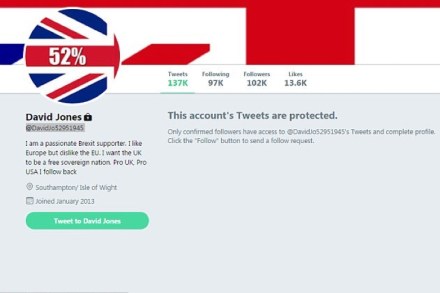
We’ve all gone a bit bot-mad in the past few weeks. Automated accounts have invaded our civic life – especially pesky Russian ones – and politicians on both sides of the Atlantic have woken up to the fact that a new propaganda war is taking place online. Bots – which is of course short for robot – are essentially accounts which can be programmed to automatically post, share, re-tweet, or do whatever the programmer chooses. Creating a bot is extremely easy, and huge amounts of cheap bots are available on dark net markets for next to nothing. There are millions of harmless bots out there doing all sorts of helpful and funny things, including breaking news stories. But Russia twigged early that bots can also be usefully deployed to influence public opinion.

The Russia US election probe is lose-lose for Facebook

From our UK edition

The ongoing investigation into Russian influence in the US election is looking more and more like an existential threat to big tech. A couple of weeks back, Facebook, hauled up in front of the Senate Judiciary Committee, revealed that up to 126 million people saw political adverts that had been purchased by the Kremlin backed ‘Internet Research Agency’, between 2015-2017. It turned over 3,000 ads to investigators, which had been placed through almost 500 accounts and 120 pages. It's not just Facebook, of course. Twitter also provided Congress with the handles of around 36,000 Russian linked bots who tweeted a total of 1.4 million times in the two months before the election. The company estimates that their tweets were viewed nearly 300 million times.

The backlash against big tech is in danger of going too far

From our UK edition

I’ve long believed the public has a good bullshit meter. It’s imprecise and sometimes temporarily misdirected, but people usually sense when something’s up. And they smell a problem with big tech. Think back a few years. Remember how optimistic you were about the digital revolution and how total connectivity and limitless information would make us all wiser, freer, kinder and happier? Lots of extremely intelligent people swallowed this guff. Sure, there were sceptics who warned that the coming digital utopia wasn’t nailed on. But these miserable old farts were easy to ignore because they didn’t ‘get it’. So we galloped ahead, embracing every new gadget, phone, platform, website and app.

How tech lobbyists harness the power of grassroots activism

From our UK edition

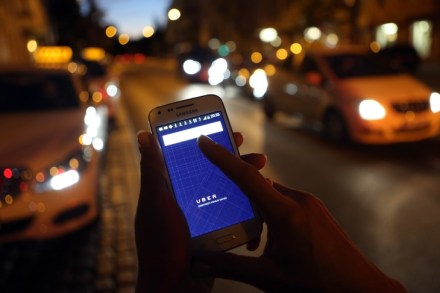
A strange thing happened after TFL’s decision last month not to renew Uber’s license to operate in London. The ride sharing app started a petition on the website change.org. To defend the livelihoods of 40,000 drivers - and the consumer choice of millions of Londoners - sign this petition asking to reverse the decision to ban Uber in London. Thousands of stranded bus-shy Londoners rushed to sign, making it the fastest growing petition in the UK this year. (At the time of writing it’s reached 855 thousand signatures). And of course it was accompanied by the mandatory hashtag #saveyouruber, which was shared by the official Uber UK Twitter account. Big business has always used its clout and money to lobby.

A tale of two Valleys

From our UK edition

Silicon Valley looks like a cross between Milton Keynes and the set of the Stepford Wives. Row after row of ordinary houses and picket fences, clustered in villages notable only for the mega-companies they serve: Menlo Park (Facebook), Cupertino (Apple) or Mountain View (Google). There’s the odd charm, but it’s generally clean, sterile, young, overpriced. Life here, they say, is five years ahead of everywhere else. Well, if that’s the case, I’ve seen the future and it is a bit disturbing. The surface ordinariness of the Valley hides a deep utopianism. In the late 1960s San Francisco was the home of both hippie counterculture and the early computer communities. Both groups shared an aversion to the existing order.

The real radicals are now on the right – and the left can’t stand it

From our UK edition

The apparent success of the ‘alt-right’ and ‘populist right’ movements in Europe and the US has analysts scratching around for explanations. It’s economics at heart, say the serious academics. The annoyed liberals counter that it’s really hidden xenophobia unleashed. The sensible centrists, Economist-reading types, agree a little with both and sagely add cultural nervousness: a symptom of too much change, too quickly. There’s some truth in each, but there’s one ingredient missing. For many people this newish radical right (by which I mean the very loose coalition of anti-globalisation, anti-left wing, populist right-wing groups) has become a rebellious counter-culture. Deny it if you want!

Will Artificial Intelligence put my job at risk? | 6 June 2014

From our UK edition

Ever since the onset of artificial intelligence – simulating human reasoning, problem solving – there has been worry about the machines taking over. Taking our jobs, rendering us unnecessary, perhaps even developing sentience and turning on us, like Skynet in Terminator 2. Some of those fears have been wildly exaggerated, partly based on a misconception of what artificial intelligence actually is (which, on the whole, still remains using examples to train computer programmes to mimic human behaviour under certain quite limited conditions). But they aren't completely foolish worries. The speed of improvement in artificial intelligence, as in much modern technology, is dazzling and quickening.

Will 2014 be the year of the populist party?

From our UK edition

With Ukip widely expected to win big in May’s elections, 2014 may well be the year of the populist party. Not easily categorised as left or right wing, populist parties across Europe pit the good, honest, ordinary voter against the out of touch, liberal, mainstream political elite. The populists claim to represent the former against the latter, an authentic and honest voice in a world of spin and self-interest. Nigel Farage is not the only one to be surfing the wave of widespread disillusionment, with politics in general and politicians in particular. In Italy, Beppe Grillo straddles both left and right.

iSPY: How the internet buys and sells your secrets

From our UK edition

You probably have no idea how much of yourself you have given away on the internet, or how much it’s worth. Never mind Big Brother, the all-seeing state; the real menace online is the Little Brothers — the companies who suck up your personal data, repackage it, then sell it to the highest bidder. The Little Brothers are answerable to no one, and they are every-where. What may seem innocuous, even worthless information — shopping, musical preferences, holiday destinations — is seized on by the digital scavengers who sift through cyberspace looking for information they can sell: a mobile phone number, a private email address. The more respectable data-accumulating companies — Facebook, Google, Amazon — already have all that.