James Snell

James Snell is a senior advisor for special initiatives at the New Lines Institute for Strategy and Policy. His upcoming book, Defeat, about the failure of the war in Afghanistan and the future of terrorism, will be published by Gibson Square next year.

The troubling truth about ‘witchcraft’ in modern Britain

From our UK edition

Witchcraft, and accusations of witchcraft, are returning to Britain. We might think of witchcraft as a thing of the past; sadly, this isn't the case. In multicultural Britain, folk practices like witchcraft and sorcery are more common than you might expect. Alongside the practice of witchcraft, there is also its opposite: accusations that others, particularly children, are witches, or demons, or possessed by spirits. In the last decade in Britain, 14,000 social work assessments flagged possible abuse linked to faith or belief, which includes witchcraft, and also things like spirit possession, and claims about the presence of demons or the devil. Between March 2023 and 2024 alone, there were 2,180 such assessments, according to official statistics.

Why the Foreign Office shouldn’t save Brits abroad

From our UK edition

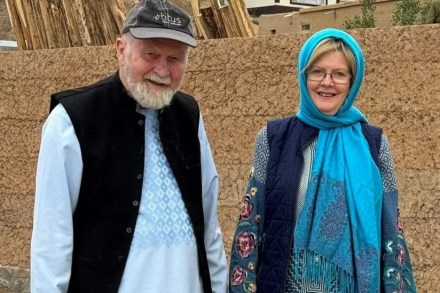
One of the perils of working in or even travelling to the Middle East and Central Asia is that there is a high risk of being taken hostage by autocratic states or terrorist groups. Peter Reynolds, 79, and Barbie, his 75-year-old wife, are the latest Brits to find this out the hard way. The couple, who have been running projects in Afghanistan for 18 years, were detained by the Taliban in Afghanistan on 1 February. Their children have heard nothing from them for a fortnight. The grim reality is that they might be left languishing as hostages for some time. A former colleague of mine at the New Lines Institute, Elizabeth Tsurkov, has been a hostage of either the Iranian regime or a proxy force of that regime for over 700 days.

Don’t judge Syria’s new rulers yet

From our UK edition

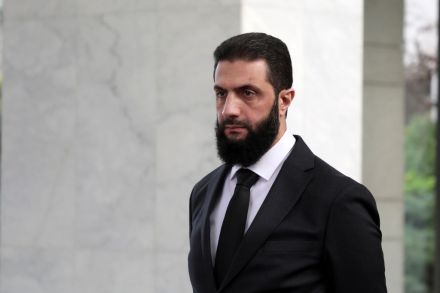
Some people went mad when Ahmed al-Sharaa (you might know him as Abu Mohammad al-Jolani, the commander of Hayat Tahrir al-Sham and the now de facto leader of Syria) refrained from shaking the hand of Annalena Baerbock, the foreign minister of Germany, when she visited Damascus this week. Not shaking hands with a woman! Al-Sharaa is the same jihadist he always was! Another story which fixates westerners: the bars in Damascus – the centrepieces of the Assad regime’s propaganda tours, where journalists and vloggers were made pleasantly drunk within earshot of concentration camps – do they still serve their favourite poison?

Syria is emerging from a nightmare

From our UK edition

Gradually, and then suddenly, the regime of Bashar al-Assad has collapsed. This century’s most evil tyrant has fled Syria, and Damascus has fallen to the opponents of the regime. Across the country, a new political reality reigns. In towns and cities across Syria, the regime’s torture chambers are being opened, and the prisons liberated. Men whose adulthoods have been stolen from them by the tyrant are emerging into the fires of day. Brothers are being united after being separated for 40 years. They were separated when one was 18 and the other younger, because the elder of them fell foul of a regime patrol and was taken away for torture for the remainder of his natural life.

What the ‘experts’ got wrong about Syria

From our UK edition

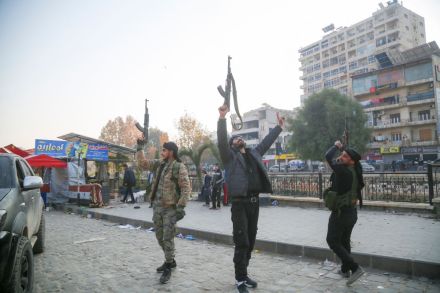
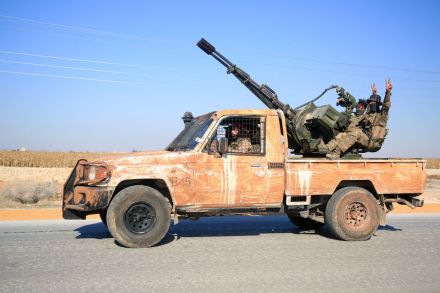
Provincial capitals falling before an unexpected advance. Military units allegedly defecting, deserting or switching sides. Talk of a coup in Damascus. The Syria of 2012 is the Syria of 2024. For years this was a so-called ‘frozen conflict’. The front lines did not move, no matter how many artillery and aerial attacks there were on civilians in the country’s north. The maps did not change, though dozens of people at a minimum were killed in fighting every week. But now Syria’s civil conflict has reignited. From their portion of Idlib province, a broad coalition of armed groups led by the Islamists Hayat Tahrir al-Sham (HTS) have taken over a significant swathe of territory.

Could Ukraine go nuclear?

From our UK edition

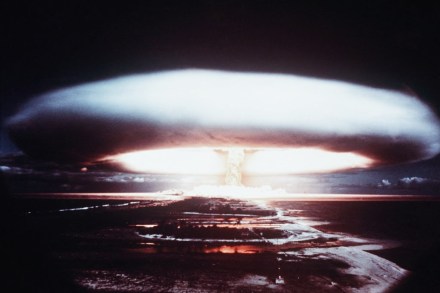
Should Ukraine have nuclear weapons? This is a question that was raised, a little insincerely, by President Zelensky recently as he discussed Nato membership and its alternatives. If Ukraine was not in Nato, Zelensky mused, the only alternative would be to look for protection of another kind: nuclear arms. A recent story in the Times said that Ukraine could make a ‘rudimentary’ nuclear bomb ‘within months’ if Donald Trump withdrew Ukraine’s military assistance. Russia has not used its nuclear weapons, but they have been the major reason no western power has directly intervened on Ukraine’s side. Ukraine had its own nuclear arsenal after the fall of the Soviet Union left it with a significant stockpile.

Why was Europe not ready for Trump?

From our UK edition

Donald Trump has won his third presidential election and across Europe heads are exploding. This should not be the case. Many European leaders were briefed earlier this year that a Trump victory was more likely than not. But wishful thinking appears to have defeated grim experience in many minds and many civil service buildings. To hear the Europeans tell it, they are now confronted with a unique threat. The last time Trump was in office, Ukraine had been fighting Russia since 2014, but its survival was not hanging by a thread. It was not seriously likely that Russia would invade Moldova, Estonia, Latvia or Lithuania, as now seems possible.

MI5 must stop Russia

From our UK edition

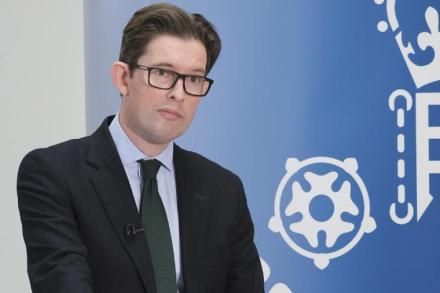
The semi-regular speeches given by the heads of Britain’s intelligence services are always described as a ‘rare intervention’, and yesterday it was the turn of Ken McCallum, the head of MI5, to issue one of these periodic warnings about the safety of the nation. McCallum noted that although his favourite subjects (terrorism, Russia, Iran and China) have featured in prior ‘rare interventions’, some things have changed. The ‘shifts underneath present the most complex and interconnected threat environment we’ve ever seen’, he said. We are living in a more dangerous world and our enemies are working together. They share the same goal: bringing more murder and mayhem to Britain.

Madness and cannibalism with David Grann

David Grann is one of a very select club of writers: those whose books of history are so diverting that they almost seem implausible. Their narrative constructions are so effective, the dialogue so apposite, that jaded readers might think everything has been made up or twisted to give the books life, in novelistic fashion. And yet — as with the books of Erik Larson — that’s not true at all. It’s all there in the notes: everything between quotation marks was actually said or written. It’s a remarkable skill. This is a hell of a story, and I use that word appropriately. Those who shipped out from Portsmouth on HMS Wager in 1740 — part of George Anson’s circumnavigation of the globe — struggled through hell.

grann

Sudan’s dreams of democracy appear to be over

From our UK edition

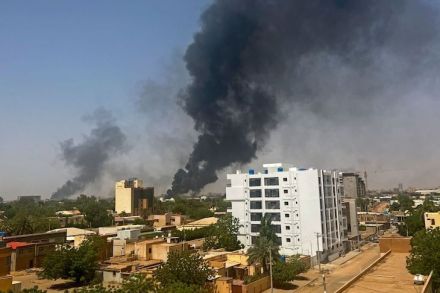
Fighting is raging once again in Khartoum, the capital of Sudan, where a power struggle between rival factions has claimed the lives of hundreds of people. Around 185 people have been killed and more than 1,800 injured in the wake of an attempted coup. A US diplomatic convoy came under fire yesterday and the EU's ambassador in Sudan, Aidan O'Hara, was reportedly assaulted at his home. Journalists have been detained and beaten up by soldiers for breaking newly-imposed curfews. Across Sudan, international agencies, non-governmental organisations and charities are scrambling for a solution to prevent further bloodshed. Military aircraft have flown low over urban centres and engaged targets on the ground.

Why the world shouldn’t ignore the brutal war in Burma

From our UK edition

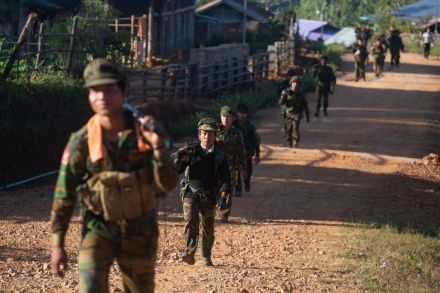
It is a bad cliché, of several decades’ vintage, to say that a given civil war is ‘complex’. Normally, this is a dodge on the foreign correspondent’s part. He either wishes to hide his lack of knowledge from you, or to pretend that without him holding the reader’s hand, they could never hope to understand the story.   Tutting over ‘complexity’ benefits the army most of all I ask you to forgive me for making use of it. The civil conflict in Burma (Myanmar, according to the regime) really is complex.   Last week, the Burmese military, also called the Tatmadaw, excelled itself in savagery. It launched a very nasty attack at a place called Pa Zi Gyi.

Netanyahu’s war on lawyers has thrown Israel into turmoil

From our UK edition

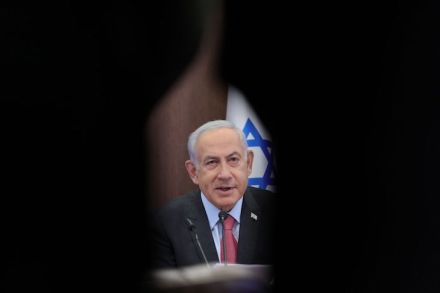
Chaos reigns in Israel, a country in the throes of an ad hoc general strike called by trade unions, university students, numerous industries across the country, and many military and civil defence reservists. Demonstrators are storming buildings and fighting the police. Some council leaders say they are beginning a hunger strike. If you wanted to fly into Ben Gurion airport today, as tens of thousands of people usually do of a weekday, I’m afraid you’re out of luck. It’s closed.  Why is all of this happening? In the immediate term, because Prime Minister Benjamin Netanyahu sacked his defence minister, Yoav Gallant. Gallant is a member of Netanyahu’s Likud party and is a loyalist.

Benjamin Netanyahu has made his troubles even worse

From our UK edition

Israeli politics is rarely quiet, but recent events have taken the drama and volubility to another level. The country has faced 11 weeks of protests against the make-up of Israel’s governing coalition and reforms to the country’s judicial system. Hundreds of thousands of people have taken to the streets. Roads have been blocked. The Knesset and politicians’ homes in Jerusalem have been targeted. Israeli police have used mounted officers, stun grenades and water cannon to disperse demonstrators. With the protests showing no signs of abating, last night – ahead of his visit to London – the country's prime minister Benjamin Netanyahu made a tone deaf television address.

Is Taiwan’s support really ebbing away?

From our UK edition

Taiwan has lost another friend. Or at least it soon will, according to the president of Honduras, Xiomara Castro. She says her country will formally withdraw its diplomatic recognition of Taiwan, in favour of recognising China. If this happens, it will leave only 13 countries (and the Holy See) who recognise Taiwan as independent and sovereign.  Support for Taiwan appears to be dwindling – just as the Chinese Communist Party would wish. But there is a slight wrinkle here. This toing and froing about diplomatic recognition emerges not from ordinary diplomacy, but instead one of the absurder aspects of international politics. Recognising either China or Taiwan is an old problem, one springing from the ‘one China policy’ of the last Cold War.

Why has the West allowed Tunisia to slip into dictatorship?

From our UK edition

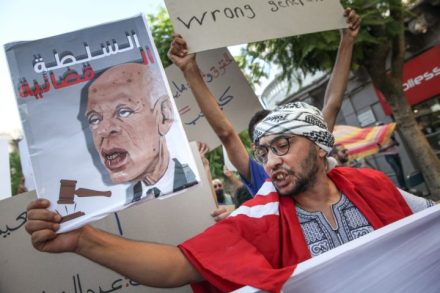
Tunisia has become a police state. This has not happened overnight. But it is still a shocking reversal in democratic development.  This is the country whose former dictator was overthrown in a few days in 2011. His was the first scalp claimed by the Arab revolutions of that year. But where the tyrant Zine El Abidine Ben Ali once went (apart from running away in disgrace), his latest successor, Kais Saied, longs to follow.  A few stories converged over the past week in Tunisia, resulting in major protests over the weekend. Protesting without presidential approval is formally banned in the country, and most of the country’s opposition leaders are now in jail. So to protest for their release takes twofold courage.

Saudi Arabia must not bring Syria’s Assad in from the cold

From our UK edition

Saudi Arabia’s foreign minister has said the quiet part out loud when it comes to his country’s attitude towards Syria. Faisal bin Farhan Al-Saud told the Munich Security Conference that the ‘maximalist goals’ of the past in confronting Assad’s regime were no longer tenable: [We are] going to have to go through a dialogue with the government in Damascus at some point, in a way that achieves at least the most important of the objectives especially as regards the humanitarian angle, the return of refugees, etc.

The charm of Volodymyr Zelensky

From our UK edition

Ukraine’s president, Volodymyr Zelensky, is in Britain for a surprise visit. ‘Freedom will win – we know Russia will lose,’ he told a joint session of Parliament in Westminster Hall this afternoon.  This address is the first he has given in Westminster since a video message in March 2022, when the situation for his country was vastly grimmer than it is now. Last year, when he addressed MPs, Zelensky had just rejected a British attempt to evacuate him and his family from Ukraine. He was under threat of assassination; and his country’s capital faced siege and – as Foreign Office officials still insisted – the brand of Russian destruction like that suffered by the Chechnyan capital Grozny and the cradle of Syrian civilisation, Aleppo.

Syria might never recover from the devastation of this earthquake

From our UK edition

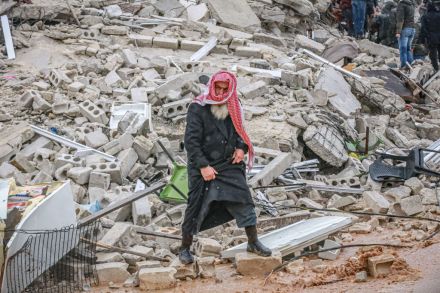
Natural disaster always worst affects those who have already lost so much. And so it is in Turkey and Syria, where a double earthquake has killed more than 1,900 people. Across both countries, there are widespread scenes of destruction: apartment blocks reduced to rubble; gas supplies cut off in the middle of a freezing winter; survivors left to try and pluck their relatives from the rubble. Much of Syria’s population is displaced and living in refugee camps whose temporary buildings are hardly structurally sound. A million Syrians, forced to flee their homes, are living in poor accommodation across Turkey. In Syria itself, the country is still in ruins after a decade of civil war.

Is Isis to blame for the Pakistan mosque bombing?

From our UK edition

The Islamic State may have been driven out of its capitals in Iraq’s Mosul and Syria’s Raqqa but that doesn't mean it has disappeared. In the Philippines, West Africa, and most obviously in Afghanistan, the terror group is thriving. Isis's tentacles have also spread to Pakistan. Over the weekend, in Peshawar, a terrible bombing took place in a mosque. At least 95 are dead, and hundreds have been injured. It remains unclear who is to blame for this atrocity, but, tragically, it is not the first time a place of worship has been targeted. In March 2022, the Afghan detachment of Isis bombed a Shia Mosque in Peshawar. More than 60 people were killed in that attack and nearly 200 injured.

A Third Intifada looms in Israel

From our UK edition

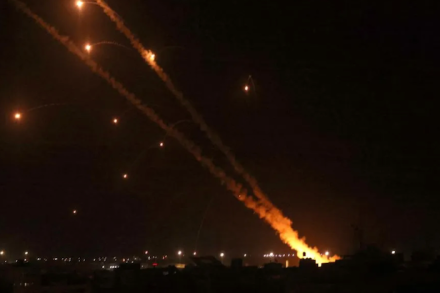
Peace has never seemed further away for Israel, the West Bank and Gaza. Several dreadful incidents recently have made that point sadly obvious. The most vicious was a terrorist attack: a horrific shooting in which seven people were killed and many injured outside a Jerusalem synagogue on Friday. We don’t know the organisational affiliation of the attacker, Khairi Alqam. He could have been Hamas. He could have been Islamic Jihad. None of those organisations claimed this attack. Some observers – on the basis of speculation, or possibly evidence not in the public domain at the moment – believe that he was a member of the Islamic State. What we know for sure is that this was a dreadful crime – one which shocked the world.