James Mcnamara

Manhunt in the taiga

The Siberian-born novelist Andreï Makine has, as we say in the book world, a shedload of French literary bling. He’s the only writer to win the Prix Goncourt and the Prix Médicis for a single novel (Le Testament Français) which is, in pop cultural terms, like winning The Great British Bake Off and Strictly on the same day. So one imagines that when old Andreï sat down to write this one, he enjoined himself not to cock it up. Reader, he hasn’t. One hesitates to use the word ‘masterful’, but for The Archipelago of Another Life it feels warranted. Set largely in 1950s USSR, Makine’s novel tells the story of Pavel Gartsev, a reluctant Red Army reservist tasked with hunting down an escaped convict in the Siberian forests.

‘She’s got major ovaries’ – why people like Kamala Harris

From our US edition

Block after block, thousands queued to enter Oakland’s Frank H. Ogawa Plaza to hear Sen. Kamala Harris announce her campaign for president. As police and security fielded anxious questions – ‘Will we get in? Will we see her?’ – the guard by me repeated: ‘I’m not sure, but don’t lose hope’. Hope was in the air. It was an atmosphere of a home crowd waiting to see a hometown team: here, the junior senator from California, a ‘daughter of Oakland,’ raised by immigrants in the East Bay, who served as District Attorney and California’s Attorney-General before becoming the second black female senator and first Indian American senator. As I spoke to people on the rope line, they told me why they came.

kamala harris

Endless petty squabbles

I wrote foul-mouthed marginalia throughout Benjamin Markovits’s A Weekend in New York. Not because Markovits is a bad writer — he has a deserved reputation for excellence. But because this study of a privileged American family reaches for a significance it doesn’t achieve, and leaves a self-consciously literary novel with a surfeit of detail. There are admirable qualities. Markovits’s prose is elegant; his portrait of New York is vivid; his characters feel authentic. Paul Essinger is a mid-ranked tennis player facing retirement. Over a long weekend, his donnish siblings reunite in New York for his final match.

Hopes and dreams

Twenty-odd pages into Michelle de Kretser’s The Life to Come, I pounded the table and bellowed an Australian-accented ‘fuck yeah!’ This startled my wife, who startled the cat, which startled my gin and tonic into my lap. But it was worth it, and remains my unvarnished critical opinion. To varnish it a bit: The Life to Come is de Kretser’s sixth book, her first full-length novel since her 2013 Miles Franklin Award, and for my money one of the best to have been published in Australia in the past decade.

A clash of loyalties

If someone was to lob the name Antigone about, many of us would smile and nod while trying to remember if this is the one about the guy who shagged his mum or the parent who offed their kids. (Bit of both.) For those whose Sophocles is hazy, let me summarise. After a civil war in Thebes that sees two brothers, Eteocles and Polyneices, dead, the new king Creon rules that Eteocles is to be buried with honour, while Polyneices will be left outside the city gates to rot. Their sisters, Ismene and Antigone, have different views. Ismene — concerned that their social position is a bit shaky, given a family history of incest and rebellion — obeys Creon.

Flee or die

Every nation has the right to control its borders, but we in the West are getting a bit too comfortable dehumanising other humans for failing to fill out forms in triplicate before fleeing the carpet-bombing of their cities. In recent months, Theresa May has rejected Calais’s child refugees; Donald Trump has seemingly tried (unsuccessfully, twice) to ban Muslims; and Australia has gone full ‘Dickensian judge’ and chucked its refugees on a prison island.

The legacy of Vietnam

At first glance, Robert Olen Butler’s Perfume River seems like an application for a National Book Award. Its protagonist, Robert, a 70-year-old history professor, lives in comfortable ennui with his semiotician wife, Darla: tenure, sabbaticals, staring through separate study windows in their sprawling Florida home. It’s a life of carefully brewed coffee and uninterrupted research. All is well, save for the growing distance in the marriage, man and wife siloed into their respective Kindle-glows at night. But a chance meeting with Bob — a homeless man Robert assumes to be a veteran — reveals the reason for the disconnect: Robert’s unacknowledged guilt about his war in Vietnam.

A terrible beauty | 9 June 2016

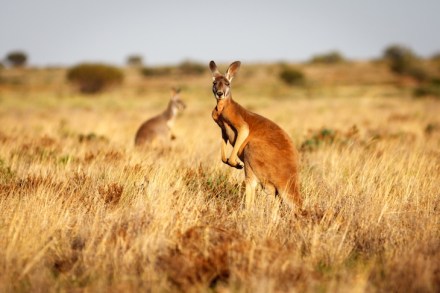
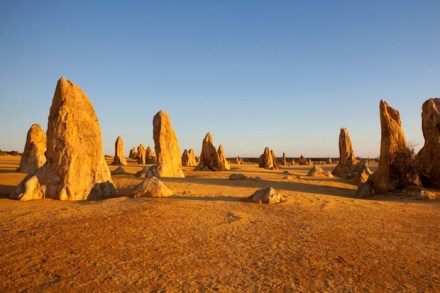
It was only when I left Western Australia for university in England that I understood how vast and dangerous my homeland is. In freshers’ week, a group of us had spent a happy afternoon at a waterside pub. As we traced the pollen-dusty river back to Oxford, my friend Anish was overcome with joy (some might say cider) and capered into a field of long dry grass. Summer left me. I yelled for him to stop — stand still now, or he would die. When my friends stopped laughing, they assured me that the only way to be harmed by English nature is if you put your face up to a consumptive badger and it sneezed. That this field, all fields, weren’t full of tiger snakes was a novel relief. And so I joined Anish, whooping in the grass. Western Australia is one of the last frontiers.

The big steal

In recent weeks, North Korea allegedly developed a hydrogen bomb and hangover-free booze. This would be a worrying combination in any government not widely thought to have the force projection of an aggressively drunk toddler with a bag on its head. North Korea is often portrayed as a cartoon state — something sustained by Kim Jong-un’s propensity to execute rivals using anti-aircraft guns. Announcing the discovery of unicorns in 2012 didn’t help, though it was comparatively mild for a state media agency partial to statements like: ‘South Korean President Lee Myung-bak is a rat who should be struck with a retaliatory bolt of lightning.

The Australian literary icon who fooled her family

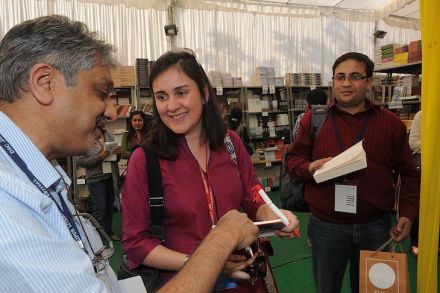
There aren’t many places you can get shouty about Proust without losing your job. The Lane Bookshop in Perth, Western Australia, is one of them. As an undergraduate, I’d pitch up there for work on Saturday mornings with as much song in the heart as a hangover allowed. Because for me the Lane wasn’t just a shop, it was a salon. The young staff, all writers, were encouraged (and fed, when cash was scarce) by the kind owners. Debates sparked between the shelves. And great Australian novelists came in to buy the books. The late Elizabeth Jolley was one of these. She must have been 80 when I last saw her, bird-thin with fiery eyes. Whenever she walked down the stairs, an awed hush descended.