James Innes-Smith

James Innes-Smith is the author of The Seven Ages of Man – How to Live a Meaningful Life, published by Little, Brown

Where do you fit on the whiteness graph?

From our US edition

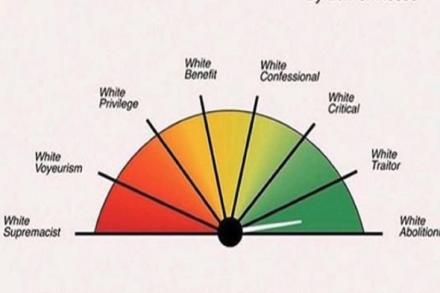
Are you white? If so, how white are you? Or to put it another way, where would you place your 'whiteness' on a scale of one to eight? This might seem like an odd question for those who still see whiteness as mere skin pigmentation. For many progressives however the term has come to mean a form of bigotry inherent in, but not exclusive to, white people. In other words, you don’t have to be white to suffer from the affliction of 'whiteness' but it certainly helps. To clear up any confusion, Mark Federman, principal at the East Side Community High School in Manhattan's Lower East Side has sent parents a handy pamphlet. It ranks, in graphic form, eight color-coded 'white identities' with 'white supremacist' at one end and 'white abolitionist' at the other.
whiteness

British comedy needs a new Brass Eye

Britain has always prided itself on the rich diversity of its comedy output, from trouser splitting farce to cerebral satire but our genius for tickling the world's funny bone has reached a crisis point - something has gone terribly awry. A new report on the BBC's TV output from regulator Ofcom has classed comedy as an 'at risk' genre.  Over the last decade, the amount of original comedy on BBC channels has dropped by more than 40 per cent. This is partly to do with the cost and risk factors involved in making such a subjective art form but the problem runs deeper than mere economics. Comedy has hit a brick wall, and I don’t mean in a comedic way.  Producers, writers and performers appear to be all out of ideas especially when it comes to creating daring satire.

The hounding of Jordan Peterson

From our US edition

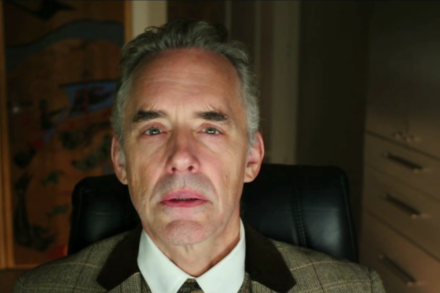
The knives are out once again for the man left-liberals love to hate. You'd have thought Jordan Peterson’s recent health scares — wrought about by drug dependency and related depression — might have given him some kind of reprieve but even a medically induced coma couldn’t keep the gloaters from punching the man when he's down. The man who espoused traditional masculine virtues such as strength and stoicism is now having to rely on his 28-year-old daughter — oh the delicious irony! Writing in the Times of London, Hugo Rifkind describes Peterson's 'apparent collapse' as 'a parable', casting doubt on the legitimacy of his illness while viewing the doctor's weakened state as a repudiation of everything he has stood for.

jordan peterson

No more echo chambers: the internet’s best left-wing thinkers

As culture and politics become ever more polarised, it's tempting to retreat into the reassuring hum of our own echo chambers and positive feedback loops. But this reluctance to engage with 'the other side' can only corrode civil discourse. As regular readers of The Spectator will know, listening to opposing views in good faith allows us to test our convictions, or as Bertrand Russell put it, 'those who feel certainty are stupid, and those with any imagination and understanding are filled with doubt and indecision.'  In these hyper-partisan times, it's not surprising perhaps that there are so few platforms where opposing intellectual heavyweights can go head to head — who wouldn’t want to see Douglas Murray and Paul Mason debate identity politics for instance?

12 thinkers to discover online this year

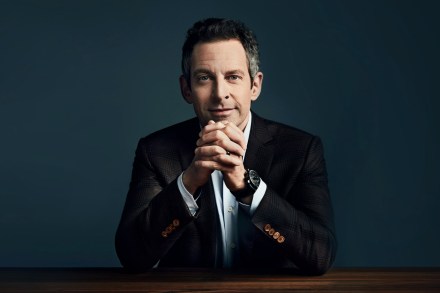
Now that we're all stuck at home with our devices the temptation is to succumb to a vortex of internet clickbait in the vain hope that it will distract us until lockdown ends. But resist the allure of that cat video if you can and instead discover the rich seam of documentaries, lectures and long-form discussions with some of the world's leading thinkers. Here's a selection of mind-expanding podcasts and YouTube channels to discover in 2021. Making Sense with Sam Harris Join renowned neuroscientist, philosopher and New York Times best selling author Sam Harris as he explores the intricacies of the human mind along with in depth discussions about society, moral philosophy, religion and current affairs.

Why I won’t mourn the death of the cinema

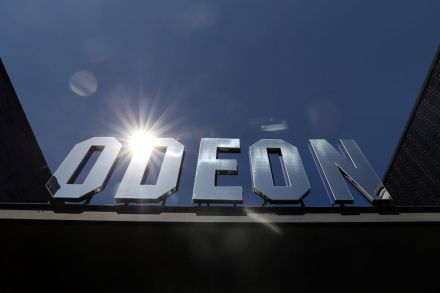
You could smell the stale popcorn and rancid carpet from the other end of the high street but that unmistakable Odeon odour always set my pulse racing. That was before we lost the vast art deco interior to corporate greed and short sightedness. The carving up of the beautifully ornate auditorium into three miniscule screens ruined the 'going to the pictures' experience. It became a sad portent of things to come.  A couple of years after the needless vandalism, not one but two hangar-sized multiplexes landed on the outskirts of town rendering the old inner-city Odeon obsolete. For several years, my beloved fleapit stood like a towering 1930s headstone to a lost era.

The death of an axe man

The death of legendary axe grinder Eddie Van Halen is a sad reminder of how far rock music has fallen since those heady, head-banging days of the 1970s and 1980s when hairy, denim-clad blokes bestrode the earth, power-chording their way into our collective consciousness. Once the foundation of any self-respecting rock anthem, the obligatory guitar solo was where musicianship took flight and Eddie was a master at his craft. From speed metal to prog, album-orientated rock to epic ballads, soloing gave rock music its backbone. Unlike boring drum solos, everyone could appreciate the excitement of a well-crafted guitar break. So what happened, why did we fall out of love with one of rock's founding principles?

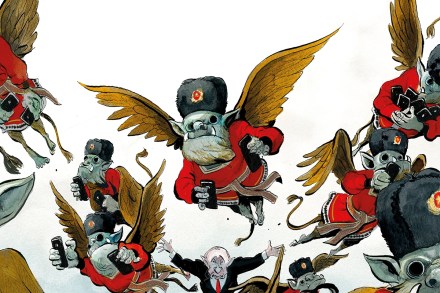
What is Russia’s plan to unleash chaos?

39 min listen

As the long-awaited Russia report is released this week, we discuss Russia's plan to unleash chaos (00:45). Plus, does Boris Johnson have a management problem with his new MPs? (14:30) And last, the pains of dating during lockdown (28:30). With Russia journalists Owen Matthews and Mary Dejevsky; the Spectator's deputy political editor Katy Balls; Conservative Home's editor Paul Goodman; Sunday Telegraph columnist Madeline Grant; and author James Innes-Smith.Presented by Cindy Yu.Produced by Cindy Yu and Pete Humphreys.

Is this the sanest debate on race yet?

From our US edition

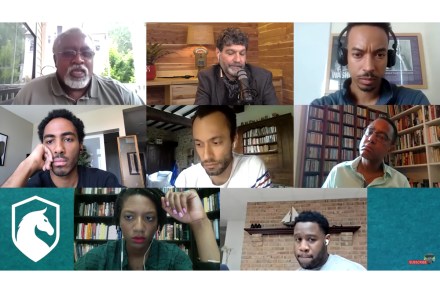
The race debate is rapidly descending into a one-note diatribe where white accountability has become the only game in town. White liberal voices now dominate an increasingly febrile narrative but alongside mainstream flagellations about systemic racism and white supremacy, a less hysterical, more nuanced discussion is taking place. Black centrist and conservative intellectuals have been quietly trying to unpick what's really been going on across western democracies. Their conclusions run counter to the mainstream story we are all being impelled to sign up to, namely that injustice runs deeper than mere skin color.

bret weinstein

The BBC’s patronising new diversity quota

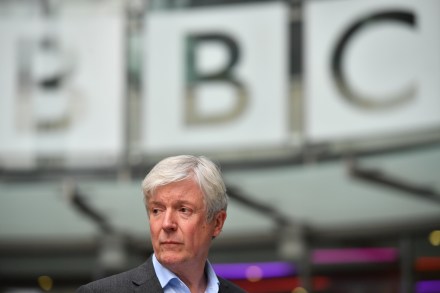
'Diversity' and 'inclusion' have become sacred doctrines within many of our major institutions, a religious fervour that has only increased since the senseless death of George Floyd. All across the globe, panicked corporations, desperate to be on the right side of history, have been rushing to meet demands for 'systemic and structural change', whatever that might mean in practice. Not surprisingly, the BBC has been busily doubling down on its efforts to change perceptions of racism from within its own ranks. This week, director-general Lord Hall announced that the BBC will invest £100 million of its TV budget over a three-year period to produce ‘diverse and inclusive content’.

What’s the truth about men’s rights activists?

This year's International Conference on Men's Issues was due to be held at St Andrew's Stadium, the home of Birmingham City Football Club. But at the eleventh hour the club pulled the plug on the event after it was decided that a conference on men's issues wasn’t something a football club should be aligning itself with. This isn’t the first time the organisers have run into trouble. Two years ago, protesters fought for the conference to be cancelled, with some even reportedly threatening to burn down the venue if demands weren’t met. No wonder the organisers of this year's event decided to keep the venue details secret until the last minute. But one thing seems surprising as I enter the conference at the ExCel centre: the number of women in attendance.

The rise of the pop-up brothel

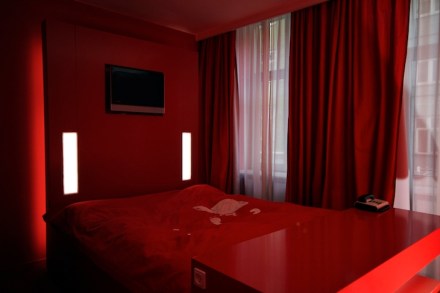
I had been in Los Angeles for less than a month when I received the call from a concerned neighbour back home in London. ‘Why are there men queuing up outside your flat at 3 a.m.?’ It was a good question. ‘And are you aware that a locksmith came over the other day to change your locks?’ I had no idea. ‘Oh and by the way, your tenant has put some kind of security camera outside your front door.’ Concern turned to panic. ‘And there’s been rather a lot of … erm, activity, you know … to-ing and fro-ing. That tenant of yours certainly has an appetite for the ladies.’ My neighbour must have been mistaken. I had rented my apartment to Alan and Ada, a respectable young Chinese couple.

Hope vs hate: is grief manipulated for political purposes?

On the anniversary of the Manchester Arena bombing all the talk has been of hugs and hearts; of healing and hope; of handholding and heroism. Newsreaders have spoken in self-consciously faltering tones about the resilience and defiance of those who have suffered so much. A choir sang Somewhere over the Rainbow. A minute's silence, followed by a mass sing-a-long. Trees were decked with messages of hope as Dr Rev David Walker, the bishop of Manchester observed, somewhat obtusely, that “Part of the horror … is that [the arena] appeared to have been deliberately chosen as a venue full of young people”. On Radio 4's Today programme, Nick Robinson sounded in almost jovial mood as he spoke to grieving victims, Mancunian roots ratcheted up for maximum empathetic effect.

Who were the real bigots at the ‘Day for Freedom’ rally?

'Na-zi scum!' Na-zi scum!' 'Na-zi scum!' Who? Me? How come? I'm on my way to a genteel picnic in St James's Park and appear to have strayed into the path of a virtue-signalling tsunami. A wall of raggedy demonstrators clutching anti-fascist banners inch their way towards me, faces contorted with self-righteous fury. 'Move to the side NOW' a truncheon-wielding cop leaps to my rescue, manhandling me to the safety of a tourist-laden Whitehall pavement. 'What's going on?' I ask, as a pot of humus spills from my Sainsbury's bag. 'Freedom of speech rally,' he replies, handing me the broken tub of dip. 'The anti-fascists aren’t happy about it.' 'Why?' I ask. 'Dunno mate, I just want to go home.

Matlock Bath

Revisiting cherished childhood memories can be dispiriting; everything appears diminished and one leaves questioning the nature of perception. Were we more open as children or less discerning? Happily, the village of Matlock Bath in Derbyshire, where I wasted so much of my youth and pocket money, is as delightfully dotty as when I last visited 30 years ago. Situated on the edge of the Peak District at the bottom of a limestone gorge, this enchanting mix of faded Victorian grandeur, tatty 1970s tourism and dreamy, Tolkien-esque landscape was once a fashionable spa resort where ladies in crinolines came to ‘take the waters’.

The doorstep

You have probably been hearing a lot about doorsteps recently. Politicians love to demonstrate how much they care about ordinary, hard-working voters by banging on about how many front doors they’ve knocked on. Standing on a doorstep, preferably in the driving rain, proves how dedicated you are to getting your message of ‘hope’ and ‘change’ across. An hour or two pounding provincial avenues, camera crew in tow, pays dividends back at the TV studio where you can then boast about how many of the electorate are on your side. Of course the reality of doorstepping is much bleaker.