James Heale

James Heale

James Heale is The Spectator’s deputy political editor.

From The Queen to Bonnie Blue: The Spectator’s Christmas Edition 2025 

From our UK edition

40 min listen

The Spectator’s bumper Christmas issue is a feast for all, with offerings from Nigel Farage, Matthew McConaughey and Andrew Strauss to Dominic Sandbrook, David Deutsch and Bonnie Blue – and even from Her Majesty The Queen. To take us through the Christmas Edition, host Lara Prendergast is joined by deputy political editor James Heale, associate editor Damian Thompson and writer of the Spectator’s new morning newsletter, Morning Press, Angus Colwell.

Does Farage really want to be Prime Minister?

From our UK edition

25 min listen

How does Reform go from political insurgents to a government in waiting? Political editor Tim Shipman gives an insight into his interview with Nigel Farage, which you can read in The Spectator’s Christmas edition. In the background at party headquarters, discussions are under way to work out how Reform would bring sweeping changes to the British state, looking at the model of the American system of executive power. But once handed the reins of power, would Farage actually enjoy the day-to-day business of being prime minister? In the meantime, how are Reform MPs finding Westminster? Tim reveals the unlikely relationship between Reform and the SNP, and how respect shown to the Lib Dems is not reciprocated. Plus, would the Conservatives ever work with Reform?

Will Keir still be Prime Minister in a year?

From our UK edition

Keir Starmer will start the new year as he means to go on: by attempting to convince his troops that he is still the best man to lead them. The Prime Minister will begin 2026 by hosting Labour MPs at Chequers. The motive behind the outreach is simple. ‘The only question that matters this year,’ says a non-invitee, ‘is whether Keir can cling on.’ It was not so long ago that a peacetime prime minister with a healthy working majority was thought to be unassailable. No longer. The defining moment in parliament these past 12 months was the summer welfare rebellion. After 120 Labour MPs threatened revolt, the £5 billion cuts were withdrawn. ‘The party took back control,’ says a minister. Some in the Whips’ Office wished to make this a vote of confidence.

Kemi wins PMQs

From our UK edition

12 min listen

Kemi Badenoch’s good form continues at Prime Minister’s Questions. The Tory leader was once more visibly enjoying herself today as she feasted on Labour misfortune, and she did a good job in covering the breadth of problems in the government. She used her six questions to ask about different departments and how they were faring: an approach that can often risk diluting the overall attack. But today, Badenoch had an overarching theme to those questions, which was that the Prime Minister and his colleagues are failing to meet their own promises.  To discuss, James Heale is joined by Tim Shipman and Michael Simmons.

Farage and Bardella’s small boats pact

From our UK edition

What will European politics look like in 2029? Nigel Farage is hoping that it resembles something like the pictures he posed for in London today, shaking hands and flashing smiles with Jordan Bardella, the president of France’s National Rally (RN). Both men are part of a pan-continental trend of radical parties challenging their established rivals to gain power in the years ahead. For Bardella, the crunch year is 2027, when President Macron's term in the Élysée is up. Polls show Bardella is the RN frontrunner, with Reform keen to learn the lessons of best practice. The two men had never met before but they shared a convivial lunch at 5 Hertford Street – with Farage's partner Laure Ferrari serving as a translator.

Is a Ukraine peace deal inching closer?

From our UK edition

13 min listen

This week Keir Starmer hosted the French President and the German Chancellor in Downing Street as the E3 moved closer to a landmark agreement: seizing around €100 billion in frozen Russian assets to fund Ukraine’s war effort. It’s a dramatic shift that has soothed some fears in Kyiv – but it has also reopened long-running arguments in Europe about property rights, sanctions and how far the West is willing to go. What does this bold move mean for the conflict, for Ukraine’s future and for Europe’s relationship with Washington? Meanwhile, as US–Russia shuttle diplomacy intensifies, Donald Trump’s oscillating positions continue to unsettle allies. Are we inching closer to a peace deal – or stuck in yet another cycle of drafts, red lines and diplomatic back-tracking?

Lammy’s jury reforms face an uphill battle

From our UK edition

If you speak to Labour MPs about looming battles in the new year, most are quick to mention the elections in May. But an almighty scrap is shaping up beforehand over David Lammy’s bid to strip back jury trials. There is deep unease about the Justice Secretary’s plan, with dozens of MPs expected to publicly criticise the proposals. Angela Rayner – regarded by some within the party as the queen over the water – is believed to share such concerns. She has reportedly told allies that there are serious unanswered questions about access to justice and whether restricting juries would really cut the court backlog of 80,000 outstanding cases. Public opinion is against Lammy’s reforms, according to Opinium polling for The Spectator.

Why Kemi is safer than Keir

From our UK edition

12 min listen

This morning Kemi Badenoch has staged a presser setting out the terms for a new (alternative) national grooming gangs inquiry – a move that has reopened wounds for many survivors and intensified criticism of Labour’s handling of the existing process. What will this mean for the government, for survivors, and for the political fight ahead? Meanwhile in Scotland, the defection of former Scotland Office minister Lord Offord to Reform UK has sent shockwaves through the Scottish Conservatives – and raised fresh questions about the balance of power ahead of the Holyrood elections. Could Reform genuinely challenge Labour for second place? And how worried should Scottish Labour be as scandals continue to mount?

The meaning of Lord Offord’s defection

From our UK edition

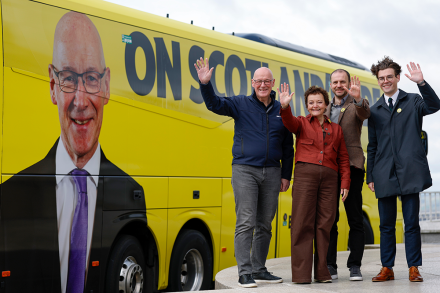
Malcolm Offord has today quit Kemi Badenoch’s Conservatives to join Reform UK. The peer was unveiled at a press conference today in Falkirk, as Nigel Farage’s party ramp up their campaigning ahead of the Holyrood elections next year. Offord, a former minister, becomes the second sitting frontbencher to quit the Conservatives in recent months, following Danny Kruger’s departure in September. It means that Reform UK now boast their first peer in the House of Lords. Offord will stand down from the Upper House if he is elected to the Scottish Parliament in May. It is worth remembering that Offord enthusiastically backed Kemi Badenoch for leader Offord cited his Unionism as the main motive for his defection.

‘Superadvisers’ and the Starmer paradox: who really runs No. 10?

From our UK edition

25 min listen

This weekend’s Coffee House Shots digs into the growing debate over whether Keir Starmer should tack left on the economy as voters peel away to the Greens and Lib Dems – and why some in Labour think its migration stance is now more popular with their own voters than ever. Are Labour tacking left? But beyond policy, a deeper question looms: is Westminster’s obsession with ‘super-advisers’ drowning out the government’s message? Tom Baldwin argues that leaks, briefing wars and the hunt for the next ‘power-behind-the-throne’ are undermining Labour’s ability to tell a coherent story, while Tim Shipman asks why Starmer still struggles to communicate the values that drive him. James Heale speaks to Tim Shipman and Tom Baldwin, Keir Starmer's biographer.

Brexit’s back – and so is Truss

From our UK edition

16 min listen

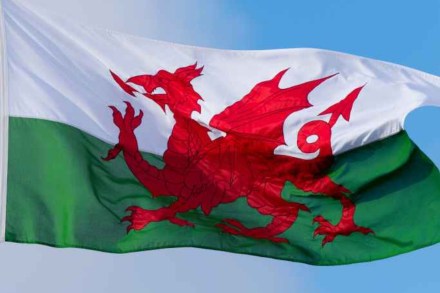
There has been a flurry of UK-European activity across Britain this week, with the German state visit in London, the Norwegian Prime Minister signing a defence agreement in Scotland and the British-Irish council meeting in Wales today. Perhaps then it's inevitable that speculation over closer ties between the UK and the EU has re-emerged. Could Labour seek to rejoin the Customs Union? Would this help or hinder Reform? And would the EU even stomach it? Plus – Liz Truss launches a new show today. Will she say anything new? James Heale and Charles Grant from the Centre for European Reform join Patrick Gibbons to discuss. Produced by Patrick Gibbons.

The murky world of political donations

From our UK edition

15 min listen

Reform are in the money. This morning the Electoral Commission has dropped the latest figures on political donations, and Reform are streets ahead. Former Tory donor Christopher Harborne has handed Nigel Farage £9 million, what we believe to be a record amount from a single donor. How much impact will this have on Reform’s chances of electoral success? How much influence do political donors have over how their money is spent? Elsewhere, Reform are conducting a press conference later this afternoon where they will be sticking it to Labour over its decision to postpone more local elections. Without new mayoral elections in four more areas, where are Reform going to spend their new cash? Oscar Edmondson speaks to Tim Shipman and James Heale. Produced by Oscar Edmondson.

Will Robert Jenrick join Reform?

From our UK edition

For more than a decade, Westminster has been obsessing about whether Nigel Farage will do a deal with the Tories. First, it was Ukip in 2015; then the Brexit party in 2019. Now, the question is whether some kind of pact should be struck by 2029. This age-old debate has been reopened today. First, the Financial Times claimed Farage has told donors that the two parties will come to an accord. Then, the Times reported that that senior figures within Reform want Robert Jenrick, the shadow justice secretary, to defect from the Tories. Farage has slapped down the first story and refused to comment on the second. But there are certainly plenty of people in British politics who are keen to talk up both stories.

Lammy on trial over plans to scrap juries

From our UK edition

12 min listen

Today we’re going to be talking about David Lammy, and his brand new plans to drastically reduce the number of jury trials in the UK in an attempt to address the backlog. With the backlog of cases due to be heard in courts already at 78,000, and heading for 100,000, the Justice Secretary believes that only radical solutions can tackle the ‘courts emergency’. But is he being too radical? This comes on the same day that Lammy announced that 12 prisoners have been accidentally released in the last three weeks. But first, the Budget fallout continues and there has been a resignation but – crucially – it’s not the Chancellor. After the OBR leaked the Budget early, its chairman Richard Hughes has taken the fall and resigned last night.

Lammy unveils plans to slash jury trials

From our UK edition

David Lammy has this afternoon set out his plans in parliament to drastically reduce the use of jury trials in England and Wales. With the backlog of cases due to be heard in courts already at 78,000, and heading for 100,000, the Justice Secretary believes that only radical solutions can tackle the ‘courts emergency’. He has announced that jury trials will be scrapped for crimes carrying a likely sentence of less than three years. However, the changes will not apply to more serious offences such as rape, murder and robbery.  Lammy believes his plans are proportionate, given the scale of the problem Lammy is depicting himself as the heroic defender of juries; saving, not scrapping, an ancient English tradition.

Starmer’s China policy seems stuck in the past

From our UK edition

Prior to entering No. 10, Keir Starmer had little experience of foreign affairs. Yet in office, the subject has consumed a disproportionate amount of time, with a sixth of his premiership being spent abroad. So last night's Lady Mayor's Banquet speech at the Guildhall offered the Prime Minister a chance to set out his thinking. A year after his previous address, many of Starmer's themes remained the same, as he summarised his own philosophy as 'internationalism is patriotism.' Yet reading Starmer's speech, it is striking how little he seems to have been influenced by the events of the past year Europe – so crucial to Starmer's worldview – naturally was a staple throughout.

Richard Hughes quits as OBR chairman

From our UK edition

They think it's all OBR – it is now. Political journalists should always be wary of that word 'inevitable'. But from the moment it was revealed on Wednesday that the Office for Budget Responsibility (OBR) had accidentally leaked details of the Budget, it always seemed likely that this story only had one ending. Richard Hughes, the watchdog's chairman, has tonight fallen on his sword and accepted responsibility for the data leak. It came two hours after a damning report was published into last week's data breach, calling the incident the 'worst failure in the 15-year history of the OBR'.

Did Rachel Reeves lie?

From our UK edition

15 min listen

Lots has happened over the weekend – Your Party (as they are now actually called) have proven to be the gift that keeps on giving, there been another defection to Reform and Rachel Reeves stands accused of lying about the extent of the fiscal blackhole in her pre-Budget briefings. Some within Labour see it as a victory of sorts for Rachel Reeves that, so far, the post-Budget debate has focused mostly on the run-up to her statement rather than the measures it contained. However Keir Starmer has been mobilised this morning to give an 'everything is fine' speech in support of the Chancellor, with whom his fate is intertwined. Could she be forced to go? How serious is this? Lucy Dunn speaks to James Heale and Tim Shipman. Produced by Oscar Edmondson.

Starmer defends Rachel Reeves over Budget ‘lies’

From our UK edition

Much of Rachel Reeves’s Budget was unprecedented: the leaking, the speculation and the OBR accidentally uploading its details an hour early. This morning, Keir Starmer added another entry on that list. The Prime Minister assembled the nation’s journalists to lecture them about the many wonderful things contained in his neighbour’s Budget – something Reeves surely ought to have done in her own speech last Wednesday. Starmer rattled off a list of policies announced last week: frozen rail fares, prescription charges and fuel duty, childcare costs slashed and £150 off energy bills. But, naturally, all the waiting hacks wanted to ask him about was the central question which dominated the weekend broadcast rounds.

Zack Polanski is the real winner of the Your Party conference

From our UK edition

After two days of discord and division, Your Party has voted and it finally has a name – Your Party. This afternoon, 37 per cent of members chose to keep the party's existing title rather than select one of the three alternatives: Popular Alliance, For The Many or Our Party. This marked one of the few highlights from the party's inaugural conference in Liverpool. It otherwise proved to be an acrimonious affair in which the tensions between Jeremy Corbyn, Zarah Sultana and their respective allies have been on display for all to see. Clearly it is the Green party leader who will dominate the British left for the near future Membership rules and the leadership question were the two issues that dominated the conference hall this weekend.