James Heale

James Heale

James Heale is The Spectator’s deputy political editor.

Wes for PM?

From our UK edition

19 min listen

Conspiracy or cock-up? Westminster is abuzz after what appears to be a plan to decapitate Wes Streeting has spectacularly backfired. A flurry of late-night briefings designed to shore up Keir Starmer’s position turned personal against the Health Secretary, suggesting he was plotting a coup in advance of the Budget and in anticipation of – what many expect will be – a poor showing at the local elections. Streeting was left to defend himself on the media round, confidently declaring he was a ‘faithful’ and he also joked that he doesn't know the whereabouts of Shergar and believes the moon landings are real. There is only one clear winner from this whole debacle: Wes Streeting. Are the knives now out for the Prime Minister? Produced by Megan McElroy and Oscar Edmondson.

Are the knives out for Keir Starmer?

From our UK edition

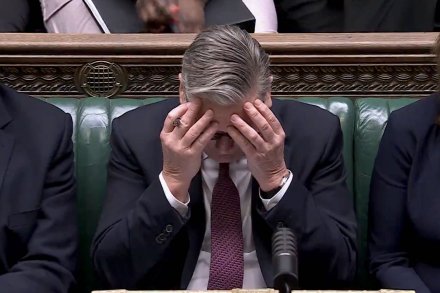
A flurry of late-night media briefings have triggered a full blown crisis for Keir Starmer. Allies of the Prime Minister sought to fire a pre-emptive strike in the Times and to the BBC, suggesting that he would fight any challenge to his leadership after the Budget. The Guardian subsequently reported that Wes Streeting, the Health Secretary, has 50 frontbenchers willing to resign if the Budget goes badly and Starmer does not go. Various ministers, officials and allies are quoted – suggesting a degree of co-ordination, rather than just one rogue operator sounding off. Streeting, who was down last night to do this morning's media round, was furious at both the substance and timing of these stories.

Lifting the two-child benefit cap won’t save Labour

From our UK edition

Rachel Reeves will not officially confirm any tax changes until 26 November, but two policy shifts in her second Budget now look inevitable. The first is that the basic rate of income tax is set to rise, breaking Labour's central manifesto pledge. The second is that the Chancellor will lift the two-child benefit cap, following intense pressure from colleagues. In her two most recent interventions, Reeves all but confirmed both changes. At last week's press conference said said that 'each of us must do our bit', heavily hinting that she will shortly hike taxes for all. Then yesterday, she told the BBC it was not right that children in bigger families were 'penalised' through 'no fault of their own'.

Labour’s vibes are all wrong

From our UK edition

14 min listen

With two weeks until her Budget, Rachel Reeves has received more bad news: unemployment is now at its highest level since the pandemic. With the Chancellor hinting at income tax rises, could this be dangerous for Labour as it increasingly becomes the party of higher earners? Polling suggests the public would lay the blame for tax hikes with Reeves, despite her speech last week. With threats from a resurgent Green party to the left and Reform to the right, is there an obvious path forward for Labour to win back voters? James Heale speaks to Michael Simmons and Scarlett Maguire. Produced by Megan McElroy and James Lewis.

What now for the BBC?

From our UK edition

12 min listen

It seems that the BBC is once again setting the news agenda – via tales of its own incompetence. The Corporation has spent days battling accusations that it aired a doctored clip of a speech by President Trump in a Panorama documentary back in January 2021. The White House Press Secretary has called the Beeb ‘100 per cent fake news’ while Kemi Badenoch has demanded that ‘heads must roll’ ... and now they have. For Tim Davie, the Director-General of the BBC, announced his resignation, alongside Deborah Turness, his senior colleague and CEO of News. But will two scalps be enough? James Heale speaks to Tim Shipman and Sonia Sodha. Produced by Oscar Edmondson.

James Heale, Margaret Mitchell, Damien Thompson, Rebecca Reid & Julie Bindel

From our UK edition

26 min listen

On this week's Spectator Out Loud: James Heale considers the climate conundrum at the heart of British politics; Rebecca Reid explains why she's given up polyamory; Damien Thompson recounts the classical music education from his school days; Margaret Mitchell asks what's happened to Britain's apples; and Julie Bindel marvels at the history of pizza.  Produced and presented by James Lewis.

Pain is inevitable for Rachel Reeves

From our UK edition

A year ago, the Chancellor called her £38 billion tax rise a ‘one-and-done’ move. Now she looks set to rinse and repeat, with reports that a 2p increase in income tax is on the table. According to The Times, she has informed the Office for Budget Responsibility that a rise in personal taxation is one of the ‘major measures’ she will announce. This is the strongest signal yet that she will break Labour's manifesto pledge not to increase income tax rates. What does this mean for the Chancellor, and taxpayers? Elsewhere, David Lammy suffered a disastrous Deputy Prime Minister's Questions after dodging questions on whether there had been another prisoner let out by mistake.

Reeves set to break manifesto pledge – and hike income tax

From our UK edition

Rachel Reeves billed her £38 billion in tax increases last year – the biggest tax-rising Budget since Black Wednesday – as a ‘one and done’ approach. As she prepares to deliver her second Budget in three weeks’ time, the Chancellor is set for a ‘rinse and repeat’ strategy, as she tries to wring similar sums from taxpayers. Reeves is increasingly expected to hike income tax by 2p next month. The Chancellor has informed the Office for Budget Responsibility (OBR) that a rise in personal taxation is one of the ‘major measures’ that she will announce later this month, according to the Times. The Budget watchdog will assess the impact of her plans before informing the Treasury of its assessment on Monday: the penultimate round of forecasts before 26 November.

Why energy is the new political battleground

From our UK edition

12 min listen

With three weeks until the Budget, the main political parties have been setting out their economic thinking. Each faces the same bind: anaemic growth, fiscal constraints and uncomfortable exposure to the bond markets. The upshot is that there is less ‘clear blue water’ on the economy between Labour, the Conservatives and Reform. This has left a space for energy to emerge as the policy area in which to differentiate the parties in this new era of five-party politics. The Westminster energy consensus is over – Net Zero is not as popular as it once was – and the parties are setting out their stalls. Could energy win the next election? Oscar Edmondson speaks to James Heale and Michael Simmons.

Energy is the new political battleground

From our UK edition

With three weeks until the Budget, the main political parties have been setting out their economic thinking. Each faces the same bind: anaemic growth, fiscal constraints and uncomfortable exposure to the bond markets. The upshot is that there is less ‘clear blue water’ on the economy between Labour, the Conservatives and Reform. Even Sir Mel Stride, the shadow chancellor, irritated some colleagues by appearing to suggest he would raise income tax if he were in Rachel Reeves’s shoes at his party’s conference. ‘It’s a good job no one is listening to us,’ jokes a fellow frontbencher. If the economy is less of a dividing line in British politics, what might take its place? Energy is one possibility.

The most bizarre PMQs ever

From our UK edition

15 min listen

In a crowded field, today’s could have been the most bizarre PMQs ever. From David Lammy pronouncing ‘I am the Justice Secretary’ as if it were an affirmation to be chanted in the bathroom mirror, to the wild hair on display on both benches, it surely takes the mantle of parliament at its most ridiculous – and that’s not to mention the story that another convict has escaped from prison. Has David Lammy got a grip on mistaken prison release? And – more importantly – does he have the support of his colleagues? James Heale speaks to Tim Shipman and Isabel Hardman. Produced by Oscar Edmondson.

Reform launches its own Research Department

From our UK edition

Since returning to politics in May 2024, Nigel Farage has had one central goal: replacing the Conservatives as one of the two great parties of British politics. Having led in the polls since April, Reform UK has focused in recent weeks on the intellectual battle, by attracting bright thinkers on the centre-right. Danny Kruger MP defected last month, followed shortly by the academic James Orr. The former now heads the party's 'Preparing for Government' unit; the latter is tasked with building the intellectual pipeline from the universities to a future Farage administration. Today, the party has sought to lay down a fresh marker. Reform is launching its own Research Department – in the style of the Tories' famed Conservative Research Department (CRD).

Reeves prepares the public for tax hikes

From our UK edition

11 min listen

It is three weeks until the Budget – and Rachel Reeves wants to get her narrative out there. The Chancellor held an early morning press conference today to, in her words, ‘set out the circumstances and the principles’ guiding her thinking on 26 November. Her speech followed a familiar pattern. First, there was the evisceration of the ‘austerity’, ‘reckless borrowing’ and ‘stop go of public investment’ which characterised the last 14 years. In her 25-minute speech in Downing Street, one line in particular stood out: ‘If we are to build the future of Britain together’, Reeves said, ‘we will all have to contribute to that effort. Each of us must do our bit.

Badenoch has a new favourite word: work

From our UK edition

After Nigel Farage’s address on Reform’s tax plans yesterday and Rachel Reeves’s effort to lay the groundwork for the Budget this morning, Kemi Badenoch completed the trifecta of economic speeches this lunchtime. Appearing at the Royal Academy of Engineering, the Conservative leader sought to wrestle back the limelight for her party, as pre-Budget speculation ramps up ahead of 26 November. In the era of multi-party politics, it is no longer good enough for Badenoch to simply bash Labour. With the Tories no longer commanding a monopoly on the right, she must focus her attacks on Reform too. Badenoch’s chosen battleground today was welfare.

What does Rachel Reeves really mean that we must all ‘do our bit’?

From our UK edition

It is three weeks until the Budget – and Rachel Reeves wants to get her narrative out there. The Chancellor held an early morning press conference today to, in her words, ‘set out the circumstances and the principles’ guiding her thinking on 26 November. One line in particular stood out: ‘If we are to build the future of Britain together’, Reeves said, ‘we will all have to contribute to that effort. Each of us must do our bit’ Her speech followed a familiar pattern. First, there was the evisceration of the ‘austerity’, ‘reckless borrowing’ and ‘stop go of public investment’ which characterised the last 14 years.

Farage: trust me with the economy

From our UK edition

15 min listen

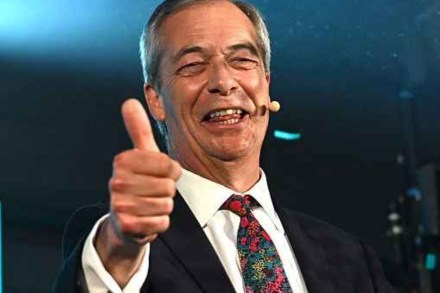
With Reform leading in the polls, Nigel Farage is determined to ensure that nothing can impede its growth. This morning he sought to bolster his credibility on an area that the Tories think could be his Achilles heel: the economy. Reform’s £90 billion programme of tax cuts promised at the last election has been constantly used as a stick with which to beat its leader. So today, Farage took to the stage in the City, to – once again – formally bury ‘Our Contract with You’ – the platform on which he was elected in July last year. This morning’s speech was all about Reform claiming the mantle of fiscal conservatism and claiming that the party can be trusted with the nation’s savings. Who will win the battle to be the party of fiscal credibility?

Farage: Trust me with the economy

From our UK edition

With Reform leading in the polls, Nigel Farage is determined to ensure that nothing can impede its growth. This morning he sought to bolster his credibility on an area that the Tories think could be his Achilles heel: the economy. Reform’s £90 billion programme of tax cuts promised at the last election has been constantly used as a stick with which to beat its leader. So today, Farage took to the stage in the City, to – once again – formally bury ‘Our Contract with You’ - the platform on which he was elected in July last year. This morning’s speech was all about Reform claiming the mantle of fiscal conservatism and claiming that the party can be trusted with the nation’s savings.

Which party has the crypto factor?

From our UK edition

He helped ‘break’ the Bank of England – but now Scott Bessent is helping to shape its future. As a young hedge-fund manager, he served in George Soros’s firm when it made $1 billion on Black Wednesday. But as Donald Trump’s Treasury Secretary, he has overseen an explosion in cryptocurrencies this year which has left many in London looking on enviously. While the use of cryptocurrencies such as bitcoin has trebled in Britain since 2021, this country’s governing framework has struggled to keep up. A shortage of political bandwidth has meant the UK lacks a national equivalent to Europe’s MiCA rules or America’s Genius Act, passed in July. Our policy is moulded by a trio of the Bank, the Treasury and the Financial Conduct Authority.

Migration, the customs union & a £40bn black hole?

From our UK edition

14 min listen

There are reports that the OBR will downgrade Britain’s productivity growth forecasts, increasing the size of the black hole facing the Chancellor at the end of the month. This continues the spate of bad news for the Chancellor on the economy – but can we trust the figures? James Heale and Michael Simmons join Patrick Gibbons to talk about what this means ahead of the budget, whether anger over the money wasted on asylum hotels can be linked to the cost-of-living crisis and what Rachel Reeves is doing in Saudi Arabia this week. Plus: is a debate over the customs union really what Britain wants right now? Produced by Patrick Gibbons.

Revealed: how PM Farage wants to govern

From our UK edition

Six weeks after his defection from the Tories, Danny Kruger will tomorrow set out his thinking on how a Reform administration would function. The East Wiltshire MP is billed as the party's 'head of government' unit and is charged with working out how to overhaul the British state. In a speech, he will set out his critique of Britain in 2025: nothing works anymore, taxes are too high, public services are crumbling and our governing class has willingly outsourced the tools to fix our ails. In a five-point plan, Kruger will explain how he wants to empower Nigel Farage as Prime Minister. His speech will stress the importance of a strong democratic mandate for radical change: hence the need to set out this plan three-and-a-half years in advance.