James Heale

James Heale

James Heale is The Spectator’s deputy political editor.

Starmer was plodding and peevish at PMQs

From our UK edition

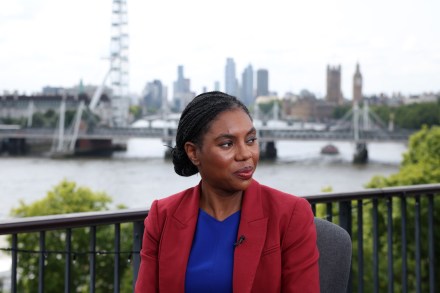
One of the great gifts in politics is the capacity to surprise. Kemi Badenoch, again, demonstrated her ability in this respect when she chose to wrong-foot Keir Starmer at the last PMQs before recess. All of Westminster is talking about Morgan McSweeney’s missing phone, which has taken on the status of Chekhov’s gun in the minds of some. But having led on Peter Mandelson at last week’s exchange, Badenoch chose to switch it up today. Energy proved to be the Tory leader’s line of questioning, hammering Starmer on the government’s refusal to grant new drilling licences for Jackdaw and Rosebank. With oil prices in the headlines and the Holyrood elections looming, it was an opportunity to put some clear blue water between the Tories and Labour on an issue affecting voters’ pockets.

Should we brace for another financial shock?

From our UK edition

Britain’s response to the conflict in Iran is dominating Westminster – but is Keir Starmer really keeping the country out of war? After a tense Liaison Committee appearance exposed divisions over defence spending, pressure is also mounting on the government’s economic strategy. With energy prices rising, mortgage products disappearing and fears of inflation returning, how prepared is Labour for the fallout? James Heale speaks to Isabel Hardman and Michael Simmons.

Should we brace for another financial shock?

It’s Ed Miliband’s world – and we’re living in it

From our UK edition

23 min listen

Three big stories are on the agenda this morning: the war in Iran has dominated over the weekend, with Trump now failing to conceal his feelings towards Keir Starmer; Ed Miliband is also rising in profile, with those close to the cabinet briefing against him and his influence; and, finally, the Liaison Committee will sit later today, giving select committee chairs the opportunity to grill the Prime Minister. Will Keir Starmer manage to escape this week into a quiet recess? Tim Shipman and James Heale discuss. Produced by Megan McElroy.

It’s Ed Miliband’s world – and we’re living in it.

On the road with Nigel Farage

From our UK edition

30 min listen

This week James Heale and Tim Shipman share a byline to tell the story of Reform since the 2024 election, and where they are going. Nigel Farage reveals he is talking to potential Blue Labour defectors, shifting his leadership style and offering a ‘less is more’ approach on policy. Essex and its resident Tory big beasts – Kemi Badenoch, James Cleverly and Priti Patel – are a major focus. Reform hopes to swallow the Tory vote come the 2029 election – ‘As long as Nigel is ahead of Badenoch,’ an adviser notes, ‘the Tory vote will disintegrate overnight.’ Also on the podcast, the Labour leadership contest (informally) started this week, with interventions from Angela Rayner and Andy Burnham. But are they right to put Labour members before the public? Tim and James discuss.

On the road with Nigel Farage

LIVE: is it time for a Tory-Reform pact?

From our UK edition

51 min listen

As Reform chips away at the Tory vote, the Conservatives face a stark choice – join forces with Nigel Farage or fight alone. James Heale, The Spectator’s deputy political editor, will be joined by Conservative peer Daniel Hannan, journalist and politician Paul Goodman, shadow cabinet member Victoria Atkins, and former Brexit secretary David Davis as they lock horns over what a Conservative–Reform pact might look like – and whether it should happen at all.

Does Nigel Farage really want to be Prime Minister?

Does Nigel Farage really want to be Prime Minister?

From our UK edition

45 min listen

Nigel Farage is a shark – hell bent on devouring Britain's political class, as illustrated with the Spectator's cover story this week, co-authored by James Heale and Tim Shipman. Yet, from rows over the pension triple lock to stagnation in the polls, it isn't clear that Farage has a strategy for power. Reform may win the battle of the Right, but does its leader really want to be Prime Minister? For this week's Edition, host Lara Prendergast is joined by the Spectator's Chairman Charles Moore, deputy political editor James Heale and Times Radio broadcaster Jo Coburn. The panel ponder the idea that Farage may crave power without responsibility. As James puts it, Farage is akin to a southern revivalist – but is momentum waning?

Badenoch goes traditional at Tory local launch

From our UK edition

The Tories launched their local election campaign this morning, with a beaming Kemi Badenoch surrounded by rows of flag-waving party members. The polls remain stubbornly low for the party, but the Conservative leader gave little sign of that getting to her. In a 20-minute speech, she gave an upbeat, on-message performance which centred on her slogan of ‘strong economy, strong country’. It mixed her favoured turf on cultural issues along with a veritable smorgasbord of ‘red meat’ on fiscal policy: a stamp duty cut, a fuel duty cut and slashing business rates too. The figures might be a little iffy – can the Tories really cut £47 billion without touching the triple lock? – but it had the party faithful cheering.

Is Angela Rayner staging a coup?

From our UK edition

11 min listen

Angela Rayner has entered the chat. Last night she gave a speech to Labour members which many are reading as the soft launch of her leadership bid. She told the room that Labour needs to be more ‘bold’ – echoing Gordon Brown as she called for a more left-wing direction. She took aim specifically at Shabana Mahmood’s immigration reforms, describing them as ‘un-British’. Is she staging a coup? And is she the viable leader that Labour can rally around? Also today, we had PMQs with lots more difficult questions on Mandelson and Iran – who came out on top? Oscar Edmondson speaks to Isabel Hardman and James Heale. Produced by Oscar Edmondson.

Is Angela Rayner staging a coup?

Angela Rayner’s warning to Shabana Mahmood over migrant crackdown

From our UK edition

Shabana Mahmood made an impressive start as Home Secretary. Within her first 100 days, she had set out a tough new plan to 'stop the boats', drawing lessons from the experience of Denmark. Yet as we now move from winter to spring, it seems that much of the Labour party is becoming increasingly squeamish about Mahmood's proposals to double the time it takes for migrants to qualify for permanent residence from five to ten years. The latest to sound the alarm is Angela Rayner, the Labour queen over the water. In a speech last night to the Mainstream group, she declared that it would be 'un-British' to change the rules for migrants already in the UK. 'Enforcing a fair deal is not the same as ripping up a deal halfway through,' Rayner said.

Is Labour sleepwalking back to the EU?

From our UK edition

Two big topics on the agenda today as Keir Starmer has his pitch – again – on the cost of living. He told us towards the start of the year that every minute not spent tackling the cost of living was a minute wasted, so what has he been doing in all that time? Also today, ahead of her Mais Lecture this week, Rachel Reeves has been laying the groundwork for closer ties with the European Union. This does seem like a change of rhetoric from the Chancellor, who is openly suggesting that Brexit was a mistake. So what would closer ties look like? And is this the only lever that remains for her to deliver growth? James Heale and Tim Shipman discuss. Produced by Megan McElroy.

Revealed: Lib Dems’ plan for ‘Operation Epsom Fury’

From our UK edition

Is any party having a 'good war' on Iran? After Donald Trump's first strikes, I suggested that the Prime Minister had few appealing options. A week on and both the Tories and Reform now appear to be rowing back on their initial statements calling for greater UK involvement. One party which feels confident that they can benefit from their rivals' missteps is the Liberal Democrats. Ahead of their Spring Conference starting tomorrow, Sir Ed Davey's forces are planning to exploit the Iran issue on the doorstep by tying it to cost-of-living pressures around rising energy bills. Drawing inspiration from Richard Curtis's Christmas blockbuster, the party is hoping for what it calls a 'Love Actually dividend' at the ballot box, by depicting Davey as standing up to a bullying US President.

Why we left the Foreign Office | Ben Judah & Ameer Kotecha

From our UK edition

35 min listen

Does Britain still have a coherent foreign policy? James Heale and Tim Shipman are joined by Ben Judah, former special adviser to David Lammy, and Ameer Kotecha, who recently resigned from the Foreign Office. Together they discuss why Britain’s diplomatic establishment is under growing criticism – from accusations that the department has become bloated and distracted by DEI, to Chagos and deeper concerns that Whitehall no longer has the expertise or strategic clarity needed in an increasingly unstable world. With wars raging from Ukraine to the Middle East and tensions rising with China, they ask whether Britain has adapted to a more chaotic global order – or whether the country is still operating with the assumptions of a different era.

Green surge: could Labour lose London?

From our UK edition

15 min listen

Deputy political editor James Heale and deputy editor of The House magazine Sienna Rodgers join Patrick Gibbons to discuss the challenge the Greens pose to Labour in London. James's political column this week explains how the shockwaves of the Gorton and Denton by-election have reached the capital. Could Labour's 'strongest heartland' fall to the Greens through their coalition of 'urban professionals, young Muslims and the economically disaffected'? Plus: as Sienna reveals Zack Polanski's podcast tastes – in an exclusive interview for The House's cover (out Monday) – we extend an interview to the Green Party leader to join us on Coffee House Shots. Produced by Patrick Gibbons.

Green surge: could Labour lose London?

Iran: has Starmer alienated Britain’s allies?

From our UK edition

21 min listen

As the conflict in the Middle East escalates, the British government continues to face questions about its response. Was the UK too slow to act, and if so – why? Tim Shipman reveals in the Spectator today that Keir Starmer was initially minded to approve American use of British bases but was persuaded not to by other figures, including Ed Miliband. How much damage has this done with the Americans and also wider European allies? Defence Secretary John Healey has landed in Cyprus today on a damage-limitation mission – or in a show of strength, depending on your viewpoint. Has Starmer been weakened by these events? Plus – Home Secretary Shabana Mahmood has revealed further asylum reforms. Will the reforms neutralise the issue of immigration for voters?

Iran: has Starmer alienated Britain's allies?

Labour humiliated by Chinese spy arrests

From our UK edition

12 min listen

It was a bad tempered PMQs today – Kemi Badenoch attacked Starmer over his involvement, or lack thereof with the Iran conflict. And Starmer hit back at Badenoch over her questions. Not the type of unity you'd want to see on the major foreign policy issue of the day. Also today, three more arrests have been made related to Chinese spy allegations. One of them is the partner of a Labour MP Joani Reid, who has said she is 'not part of' her husbands business activities. James Heale speaks to Tim Shipman and Isabel Hardman.

Labour humiliated by Chinese spy arrests

Could Labour lose London?

After Gorton and Denton, where next? The scale of the Green triumph in Manchester has sent shockwaves through Sir Keir Starmer’s party. Much has been written about looming losses in Cardiff and Edinburgh. But the Greens – with their appeal to urban professionals, young Muslims and the economically disaffected – pose a threat in the place that many took to be Labour’s strongest heartland: London. ‘We have almost as many MPs there as Scotland and Wales combined,’ notes one aide. ‘Some are getting a bit nervy.’ Jitters are understandable. For ten years, Labour has ridden a wave of post-Brexit cosmopolitan feeling to boast ever-greater gains and now has 58 MPs in Greater London. At London’s last local elections, Labour won 62 per cent of council seats.

Where was the imagination in Reeves’s Spring Statement?

From our UK edition

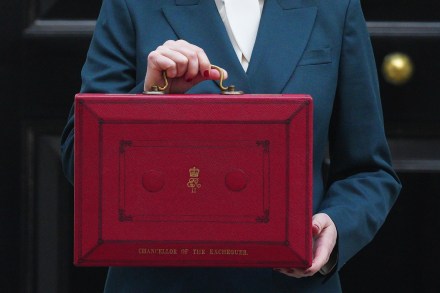
Today’s Spring Statement was intended to be the anti-Budget: no rabbits, no leaks, no lengthy speeches. After last November’s disaster, the Office for Budget Responsibility (OBR) was not entrusted to upload a copy of the Chancellor’s speech; even the name of the ‘Spring Statement’ was rebranded by Treasury spin doctors as a simple unexciting ‘forecast’. Rachel Reeves will gain some satisfaction that she achieved her primary goal: she got through her speech without committing much in the way of news. But the Chancellor’s unwillingness to create a convincing narrative simply means that it is the dry prose of the Treasury watchdog which will fill the headlines instead. The OBR’s 131-page report makes for sobering reading.

Spring statement: everything you need to know

Spring statement: everything you need to know

From our UK edition

12 min listen

Rachel Reeves has today delivered her much anticipated spring statement, her opportunity to address the looming energy crisis, the uncertainty in the Middle East and the crashing Labour market … unfortunately, she did none of the above. The Treasury promised that the spring statement was going to be boring – and at least it delivered on that pledge. For twenty painful minutes, Reeves rattled off her familiar lines about ‘stability’ and Liz Truss. Is this another wasted opportunity for Labour and the Chancellor? What will it mean for her own ‘stability’? Oscar Edmondson speaks to James Heale and Michael Simmons. Produced by Oscar Edmondson.

Iran: is Starmer doomed to repeat Blair’s mistake?

From our UK edition

20 min listen

The fallout from America's audacious attack on Iran continues, and there are a whole host of questions for Keir Starmer. The prime minister has been accused of being slow to react, having initially confirmed that ‘the United Kingdom played no role in these strikes', Labour since agreed to allow the Diego Garcia and RAF Fairford bases to be used for ‘defensive’ strikes on Iranian missiles sites. This came after Tehran began to hit back at Britain’s regional allies. Is Britain about to be sucked into another costly war in the Middle East? Should the PM stand up to Donald Trump? And will America's attack result in regime change, or are things only going to get worse? James Heale speaks to Tim Shipman and Michael Stephens, Middle East expert.

Iran: is Starmer doomed to repeat Blair's mistake

Starmer has few good options on Iran

From our UK edition

Next month marks forty years since the United States bombed Libya. Ronald Reagan requested the use of British air bases for F-111s to retaliate against Colonel Gaddafi after the West Berlin discotheque bombing. Margaret Thatcher readily agreed, despite the refusal of France and other European allies. She later reflected on the episode as cementing the 'Anglo-American alliance', arguing 'What's the good of having bases if, when you want to use them, you're not allowed to by the home country? It made America realise that Britain was her real and true friend.' Keir Starmer has taken a rather different view of the ongoing United States action against Iran. His government has previously refused to allow the Diego Garcia or RAF Fairford bases to support any potential US strikes.