James Graham

James Graham is senior researcher, financial freedoms at the Prosperity Institute.

London is becoming the home of climate litigation

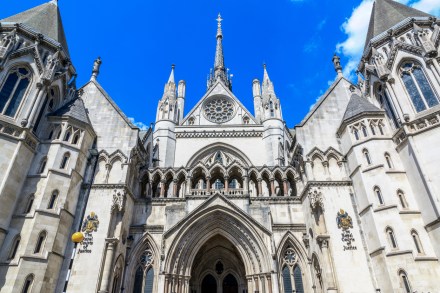
The British high court is currently preparing to hear a case that will be conducted in accordance with Filipino law. While this may seem strange, increasingly disasters in far off lands are being litigated in British courts – and because of an obscure inherited piece of EU law, Rome II, the law of the country where the damage took place applies, rather than British law. Surely, except in the most exceptional circumstances, a tragedy that occurs abroad should be litigated in the courts of that country? In the Filipino case, Shell is the defendant, a company which provides around a fifth of the fuel used in the Philippines. In 2021 there was a typhoon which killed around 400 people in the country.

How to stop the Clapham rioting

On Tuesday, I was walking from my home in Clapham towards the Common, as I do most evenings, when I encountered a large crowd of young people – nearly all wearing puffer jackets and face coverings. Their presence was menacing enough that I changed my route and hoped that they would have dispersed by the time I returned later that evening.   Unfortunately, not. By this point 300 teenagers had descended on the Common as part of an Easter holiday ‘link up’ organised online. The police later said they made several arrests after ‘anti-social behaviour and stealing from a number of businesses on Clapham High Street.’ A similar mob gathered in Birmingham on Friday.

There’s untapped gold in Northern Ireland

As anyone familiar with Irish folklore knows, it’s a fool’s errand to look for Leprechaun gold at the end of the rainbow. Luckily, in Ulster there is a pot of gold which is far more attainable. Curraghinalt, in Northern Ireland’s Sperrin mountains, is currently sitting on top of the largest gold deposit ever discovered in the United Kingdom – some 3.5 million ounces. With gold prices at an all-time high, it is worth an estimated £11.5 billion. Alongside the gold in them hills, there are 1.7 million ounces of silver and 15,000 tonnes of copper. Both metals are in huge demand because of green technologies. Silver is used in solar and high-current electronics while copper is found in every modern battery.

The secret costs of net zero

Last week, a new report by the Institute for Economic Affairs argued that the cost of transitioning to net zero could be billions – even trillions – more than some government  forecasts. That may sounds worrying, yet in many ways it still understates the problem. Net zero isn’t just hurting our energy sector, it has a complete stranglehold over the entire British economy – and it is making us all poorer. This is the ugly reality of net zero No large company in Britain can escape its grasp. Our regulators, in league with asset managers, are constantly pressuring companies into pursuing costly and fruitless green goals that make them less profitable. As a result  FTSE 100 companies now routinely have formal net zero targets.

How sustainability stole Christmas

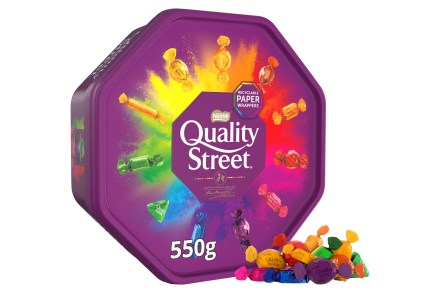
The glitz and glow of the Christmas period, from gently twinkling lights to the fireworks of New Year, is something we look forward to every year. Yet through the years, the season seems to have lost a little of its magic. Things sparkle a little less than they once did. Is it just nostalgia to think so? Everything looks more impressive as a ten-year-old, after all. That our Christmas loses a little sparkle is a small price to pay in the corporate central planners’ march towards a ‘circular economy’ But the now annual denunciations of Quality Street suggest otherwise. For those unaware, in 2022 Quality Street abandoned its shiny crinkle wrappers in favour of low-grade matt paper.

Avanti should get rid of its Pride train

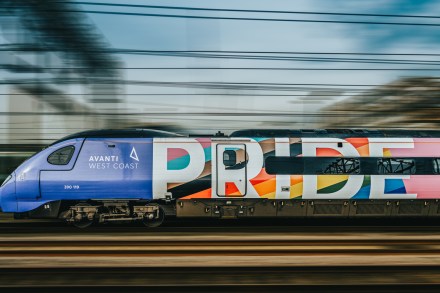
My train pulled up at the Manchester Piccadilly platform and suddenly I was staring at what is apparently the largest Pride flag in the UK. Avanti’s ‘Progress Train’ is emblazoned with the latest iteration of the ‘Progress Pride’ flag – which dutifully incorporates ethnic minorities, transgender people and STD-sufferers. The more a company chooses to focus on its social values, the more sceptical you should be of its performance As a social conservative, it is strange to have to take a journey on a train which promotes such a contested ideological outlook – especially when that outlook is being challenged by the country at large.

Who killed the London Stock Exchange?

Stock exchanges around the world compete with each other to entice the most exciting companies to sell their shares on their markets, via Initial Public Offerings (IPOs). London was once the financial capital of the world, and a leader in IPOs. Now it has fallen to number 23 in the global IPO rankings, having been surpassed by the likes of Mexico and Indonesia. In 2006, at its fundraising peak, $51 billion was raised on the London Stock Exchange, with companies such as Unilever and Vodafone making London their home. This year, London IPOs raised just $250 million. Even companies already listed on the London exchange, such as AstraZeneca, are shunning it for US markets.

How to dismantle the green industrial complex

Politicians have spent years talking about the need to create ‘green jobs’. In many ways they have succeeded: there are now nearly 700,000 people employed in green jobs in the UK.  But while the likes of Ed Miliband may think this is a victory, the reality is that many of these jobs are a product of government subsidy, paid for by the taxpayer. These subsidies distort the energy market and have resulted in a massive misallocation of human talent, not to mention money. We now have, without doubt, a green industrial complex in Britain.

Why Britain should celebrate the Battle of the Boyne

British schoolchildren spend more time learning about the American civil rights movement than the English Civil War. An entire generation has been taught, by omission as much as intent, to believe that our past and shared inheritance has little value, and that Britain has been a force for ill in the world. The Twelfth is a celebration of the freedoms secured for all British subjects This is a serious problem for the country. Only a self-confident people, unashamed of their past, can hope to build something of value today. We need a historical vision that stretches beyond the HMS Windrush’s arrival in 1948. Could the Battle of the Boyne, which celebrates its 335th anniversary today, fill that void?

Why corporations won’t let Pride die

Pride month has finally come to an end. Did you notice? There has definitely been a reduction in the number of parades, banners, and flags this year. As Gareth Roberts wrote here, Pride has been damaged by its internal contradictions and the Supreme Court’s common-sense ruling on what a woman is. Why are brands still throwing money at charities promoting an ideology that the public rejects?r Still, hopeful as all this is, it seems that for some corporations, Pride still refuses to die. Whilst shopping I recently saw a jar of Marmite. Its label urged me to ‘Stand with Pride.’ The flag accompanying the statement included the transgender stripes, naturally.

Why is your pension fund so obsessed with net zero?

Legal & General is Britain’s largest asset manager, with over £1 trillion on its books. Every pound it manages should be dedicated to achieving the highest possible returns. This matters a lot: L&G manages over five million pensions in the UK. But in recent years, the asset manager has been particularly concerned with fashionable causes, instead of being entirely focused on making sure your retirement is secure. Individuals already fund net zero schemes via their taxes. They should not be forced to pay an effective additional tax, via lower returns, to fund net zero with their retirement savings That is why I recently attended their AGM.