James Forsyth

James Forsyth

James Forsyth is former political editor of The Spectator.

Yet another no-score draw at PMQs

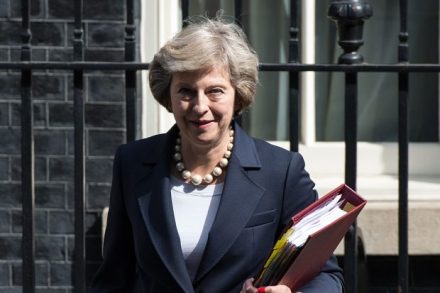
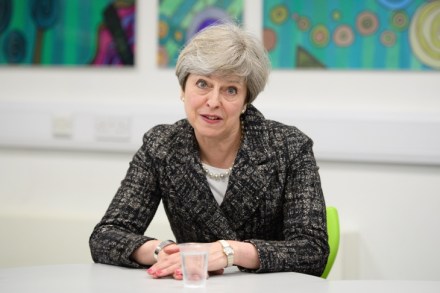
Jeremy Corbyn has improved at PMQs to the extent that he now touches on the topics that will cause the Prime Minister the most embarrassment. So, today public sector pay and tuition fees both got an outing. But Corbyn isn’t a good enough—or forensic enough—parliamentary performer to really makes these points tell. Theresa May for her part is capable of parrying, but not counter-punching. The result: PMQs is now routinely a no-score draw. Today was no different and with an unexceptional set of backbench questions, the session rather petered out. These no-score draws quite suit both May and Corbyn. As long as May gets through these sessions intact, the morale of the Tory parliamentary party isn’t adversely affected.
Theresa May must make sure that Brexit doesn’t just become a process story

The EU Withdrawal Bill is undoubtedly an important piece of legislation. But I suspect that the bickering over Henry VIII clauses and affirmative statutory instruments passes most voters by. This is why it’s imperative that Theresa May keeps reminding voters of what the point of Brexit is, of what it will enable this country to do. One of the many problems with the Tory general election campaign was that it turned Brexit into a process story. May talked endlessly about the need to strengthen her hand in the negotiations. But as Andrea Leadsom complained in the political Cabinet’s post-mortem of the election campaign, May never said what Brexit was actually for.

Another name enters the Tory leadership frame

A new name is being mentioned in the Tory leadership discussions, Mark Harper. As I say in the Sun today, the former chief whip is being touted as a possible successor to Theresa May when she stands down. One MP who is enthusiastic about the idea argues that Harper squares the circle: he’s both experienced as a former chief whip and immigration minister and a fresh face, as someone who is outside the current government. Having been chief whip, he knows the parliamentary party well. It also helps that doing that job meant he stayed neutral during the Brexit referendum. So, he isn’t loathed by either Brexiteers or Remainers. Harper has been very active in both the chamber and the media recently.

Labour is threatening its electoral coalition by voting against the EU withdrawal bill

Up to now, Labour have managed to have their cake and eat it on Brexit. At the election, Labour MPs in Brexit-backing seats could say their party didn’t oppose leaving the EU and had voted for Article 50. At the same time, Labour hoovered up votes elsewhere in the country from those angry at Brexit. Remarkably, 39 percent of Financial Times readers voted for the party despite Jeremy Corbyn’s hostility to high earners and the City. But, as I say in The Sun this morning, Labour are threatening this coalition by voting against the EU withdrawal bill. Already, Tory MPs are excited at the prospect of being able to attack Labour for trying to block Brexit. So, why are Labour taking this risk? One reason is that it is good chance to cause trouble for the government.

Theresa May’s exit strategy

Nearly all Tory MPs now agree Theresa May should stay on as Prime Minister. She must get the party through Brexit, they say. A leadership contest now would risk splitting the party over the European issue. One senior Tory who was agitating to depose May back in July has told me that he has now decided it would be best if she stays until 2019. But this desire to keep her in place for Brexit should not be confused (especially not by Mrs May) with a desire to see her fight the next election. The number of Tories prepared to even contemplate following her into another battle remains vanishingly small. Memories of her performance in the general election are far too vivid, and painful, for that. So if Brexit is her main job, how is it going?

Theresa May gets a Brexit lesson from Parliament

Today has been a reminder of just how hard getting the Brexit legislation through parliament will be for Theresa May. In the Commons today, various Tory MPs made clear their concerns about the EU withdrawal bill and the powers it gives to the executive. While the bill will pass easily at second reading, the government is almost certain to have to give some ground to get the bill through committee stage. Already there is talk about a compromise involving votes on statutory instruments on the floor of the House. At the same time, there’s been the leak of a letter that is being circulated among clean Brexit Tory MPs which sets out that not only should the UK leave the single market and the customs union but that this country should be able to do trade deals throughout the transition.

May’s exit strategy

Nearly all Tory MPs now agree Theresa May should stay on as Prime Minister. She must get the party through Brexit, they say. A leadership contest now would risk splitting the party over the European issue. One senior Tory who was agitating to depose May back in July has told me that he has now decided it would be best if she stays until 2019. But this desire to keep her in place for Brexit should not be confused (especially not by Mrs May) with a desire to see her fight the next election. The number of Tories prepared to even contemplate following her into another battle remains vanishingly small. Memories of her performance in the general election are far too vivid, and painful, for that. So if Brexit is her main job, how is it going?

Will the House of Lords rebel against the EU withdrawal bill?

Labour’s decision to whip against the EU withdrawal bill might well have more of an impact in the Lords than the Commons. In the Commons, as I wrote on Monday, the number of Tory rebels might well be offset by Labour ones—and I suspect that Labour’s decision to whip against the bill at second reading will make it easier for the Tories to peel off Labour rebels on amendments later on. But in the House of Lords, the government doesn’t have any sort of majority. If Labour whip against it there and team up with Liberal Democrat and cross-bench peers,  the bill could end up only passing with significant amendments. Now, normally the House of Lords backs down when it is in dispute with the elected House—as it did on Article 50.

Will Labour Brexiteers keep the withdrawal bill clean?

With second reading of the EU withdrawal bill coming this week, there’s a lot of speculation about Tory rebels and what amendments might be able to command a majority at committee stage. But there won’t just be rebels on the Tory side. There will be some Labour MPs who will be prepared to defy the party whip in the interests of getting the bill through without any changes. These Labour rebels could be crucial. For every Labour rebel, will cancel out a Tory one. It doesn’t matter if Anna Soubry votes against the government, if Kate Hoey votes with it. One minister closely involved with the bill told me last week that the government needs to be ‘prising out the concerned Labour Brexiteers’ over the next few weeks.

What did Theresa May mean by that?

Even some senior figures in Downing Street were unaware that Theresa May was going to say she wanted to lead the Tories into the next election, I write in the Sun this morning. The Prime Minister’s statement took Westminster by surprise. But even inside Number 10 there are doubts as to how seriously to take what she said. Indeed, I haven’t yet spoken to anyone who is genuinely convinced that she will lead the Tories into the next general election campaign. (Tory MPs were so calm about what May said precisely because they don’t think it is actually going to happen.) I think it is fair to say that May’s intervention was not perfectly calibrated.

Why Amber Rudd is the favourite to get Ruth Davidson’s endorsement in the next Tory leadership race

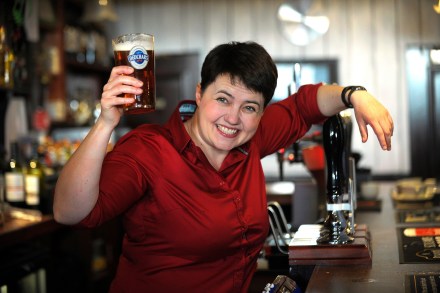
There are few people whose endorsement will be more valuable in the next Tory leadership contest than Ruth Davidson’s. She is, as I say in The Sun today, the darling of the Tory grassroots—more popular with them than the Prime Minister or any member of the Cabinet. But, unlike so many other senior Tories, she isn’t interested in running herself. Her immediate aim is to be First Minister of Scotland, not Prime Minister. All this means that Davidson will be, in the words of one of those being urged to run, ‘the king maker par excellence’. So, there is intrigue in Tory circles that Davidson and Amber Rudd had a long drink in Glasgow last week. It is another sign of the fast-developing friendship between this pair.

Ireland’s Taoiseach talks tough on Brexit

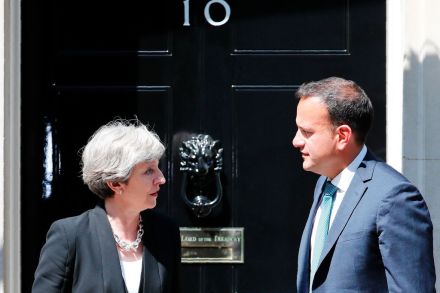
There are three areas on which the EU insists that the Brexit negotiations must make progress on, before proper trade talks can start: the so-called divorce bill, the rights of EU citizens in the UK and the Irish border. Today, the Irish PM said that no progress had been made on this issue, that the Brexiteers had had 14 months to devise a plan and hadn’t come up with anything adequate. Implicit in the Taoiseach’s speech is a threat to block the start of trade talks this autumn. If Dublin doesn’t think any progress had been made on the border question, the European Commission is highly unlikely to recommend to the Council that the EU moves on to the next stage of the negotiations.

When will Theresa May be strong enough to shuffle her ministerial pack?

Theresa May should go on holiday more often, I say in The Sun today. For her Italian break has coincided with a pause in the Tory plotting that has been rumbling on since the election. Now, this is partly logistical: it is much harder to scheme when parliament isn’t sitting. But it also reflects how Tory opinion is hardening against a leadership contest. At the same time, the government has begun to behave more like a government—setting the news agenda in the last week or so in a way it simply wasn’t straight after the election. This has been combined with a much more aggressive CCHQ-led campaign against Labour for its various spending commitments. Together, this has ended the post-election sense that Labour is the party with all the momentum.

Free traders need to get their act together

The row over chlorine-washed chicken should be a wake-up call to British free traders. It is a sign of the opposition that any new trade deals will face. The producer interests keen to oppose the extra competition that free trade brings are organised and ready to go. But the consumers who’d benefit from greater choice and lower prices have no organised, political voice at present. There is a danger that trade deal after trade deal is derailed or limited by the kind of scare tactics we have seen in recent days; having not had a trade policy for 40-odd years, there are few people in this country versed in how to make the case against protectionism. There is no group ready and waiting to speak for the shopper who might like the option of buying cheaper but less tasty chicken.

The dark clouds threatening Brexit

It’s summertime and the living is easy... unless you’re a civil servant working on Brexit. Whitehall has recognised that the UK needs to step up its preparations for leaving the EU and to offer greater certainty about the country’s immediate future. A big speech is planned for September, probably by the Prime Minister, which will set out more of the government’s thinking on the issue. One aspect of Brexit that urgently needs clarity is how Britain will leave the European Union. Theresa May has long been open to a transitional period or, as she terms it, an implementation phase. But since the election, the government’s enthusiasm for this has become far more explicit.

Will Labour split?

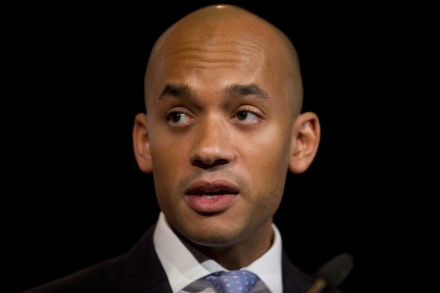
With parliament in recess and the Prime Minister on holiday, politics is calmer than it has been in some time. But Jeremy Corbyn’s comments on Marr yesterday about the EU and the single market are a reminder of Labour’s divisions over Brexit. At some point, this tension will have to be resolved. The 49 Labour MPs who voted for Chuka Umunna’s single market amendment to the Queen’s Speech will have to either back down or repeatedly defy the whip. The question is how does this division fit with the broader struggle for control of the party machinery between the Corbynites and the rest. Will those Corbynites who want mandatory re-selection regard defying Corbyn on the single market as grounds for challenging a sitting MP?

Can Theresa May make it to the end of the Brexit talks?

If the last few months should have taught us political commentators anything, it is to be wary of making predictions. So, this is more of a report on what people are thinking than a prediction. But, as I write in The Sun this morning, there is an increasing confidence among May loyalists that she can make it to the end of the Brexit talks. One of the things that gives those charged with maintaining party discipline hope that May can do this is that whenever a leadership contender is seen to be plotting, it hurts their standing with Tory MPs. The old Tory adage that he who wields the dagger, will never wear the crown is holding true—and acting as a deterrent to anyone moving against the PM. There are two other buttresses of May’s position.

Will a summer holiday solve Theresa May’s problems?

Today Downing Street achieves its immediate post-election aim: Theresa May makes it to the summer recess. As I say in the pol col this week, Number 10 have long hoped that the summer break will give the government a much-needed chance to regroup and that conditions will be easier when parliament resumes in the autumn. Is this hope realistic, though? A summer holiday can do lots of things but it can’t magic up another 20 Tory MPs or put time on the Brexit clock. Those Tories placing their faith in the atmosphere being calmer when parliament returns are forgetting how soon after that the party conference season begins—and that it will make the Westminster summer party circuit look like a mindfulness festival.

The Tories need a ‘what’ as much as a ‘who’

Theresa May has made it to the summer. In the aftermath of the election, Downing Street’s immediate aim was to get the Prime Minister to the parliamentary recess. On Thursday they succeeded. They think that the next six weeks will give the government a much-needed chance to regroup and catch its breath. Like a cricket team playing for the close, they hope conditions will be more favourable when proceedings resume. But is there any reason to think that things will be different in September? The summer break can do many things but it can’t conjure up another 20 Tory MPs or put time on the Brexit clock. Tory optimists claim things will be better once everyone has had a lie down.

Tory leadership tensions mustn’t undermine the Brexit talks

The May-Davis partnership used to be one of the strongest aspects of the government. She had brought him back from the political wilderness to be Brexit Secretary, and he was loyally working on the strategy for the negotiations. Even after the election went so wrong, Davis raced down to London to see her. But, as I say in the Sun today, Cabinet Minister reports that there are now tensions in this relationship. ‘The chemistry is not good now’, one tells me. Another says ‘that relationship has cooled’. The cause of the problem is Davis’ allies touting him for the leadership, and sooner rather than later. Those close to May don’t know if Davis is actively encouraging this.