James Forsyth

James Forsyth

James Forsyth is former political editor of The Spectator.

Penny Mordaunt’s promotion shows May’s limited room for manoeuvre

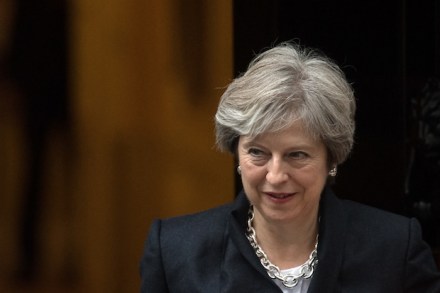
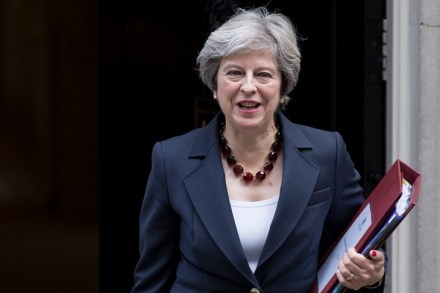
Penny Mordaunt is the new International Development Secretary. After last week’s very unexpected appointment of Gavin Williamson as Defence Secretary, Theresa May has done what many observers expected her to do in appointing Mordaunt to replace Priti Patel. The choice of a female Brexiteer maintains the gender and Brexit balance of the Cabinet. Mordaunt has done two minister of state jobs already, she was until today minister for disabilities and before that minister for the armed forces. So, she had claim to be the next cab off the rank. Though, the fact that May is going for as close to a like-for-like replacement as possible is yet another reminder that her room for manoeuvre as Prime Minister is strictly limited.

Why can’t the PM get a grip?

How much longer can things go on like this? That is the question on the lips of Tory ministers and MPs this week. A government that was already facing the monumental challenge of Brexit now finds itself dealing with a scandal that has claimed one cabinet scalp and led to another Conservative MP being referred to the police. At the same time, Priti Patel has been running her own freelance foreign policy. To make matters worse, the Prime Minister’s closest political ally is caught up in the Westminster scandal. Damian Green is under investigation by the Cabinet Office for his personal conduct. If he has to go —and several of his allies in the government are not optimistic about his prospects — it will be a devastating blow to Theresa May.

Who might replace Priti Patel in a reshuffle?

Priti Patel is currently on her way to Downing Street, where she is expected to be fired by Theresa May. The early signs are that Number 10 is looking for a Leaver to replace her as International Development Secretary, to preserve the Cabinet’s Brexit balance. But this would be the wrong way to think about the reshuffle. Trying to replace Patel with someone who matches her profile as closely as possible would just be another advertisement of how weak May’s position is. In parliamentary terms, though, May is, obviously, in a weak position, Getting a clean EU withdrawal bill will be very difficult. (Indeed, the position of the Scottish Tories means that significant changes will be required to Clause 11 of the bill.).

Why Damian Green’s position matters so much to Theresa May

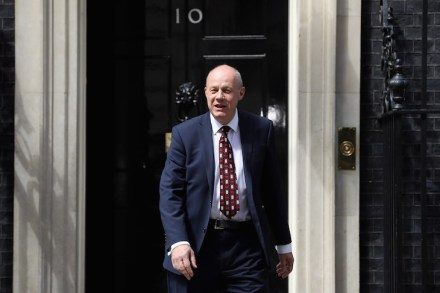
As Prime Minister, you get something of a pass on those Cabinet members that you inherit from your predecessor. So, Michael Fallon’s resignation as Defence Secretary was not a devastating blow to Theresa May. After all, it was David Cameron who had first appointed Fallon to that job. But the responsibility for Damian Green’s presence in the Cabinet is Theresa May’s alone. Green is as close a political ally of hers as it is possible to be. He was heavily involved in her leadership campaign and on becoming Prime Minister, she immediately elevated him to the Cabinet. After the election disaster, she turned to him to shore up her position.

What did Gavin Williamson mean by that?

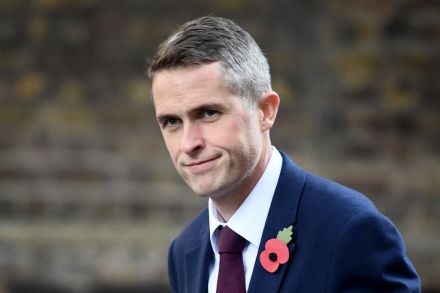
The Tory leadership stakes have been upended this week, I say in The Sun today. Gavin Williamson’s elevation to defence secretary shows that he wants to be a contender and that several of those around Theresa May think he might be their best hope. The most interesting question is why Williamson has decided to get out of Downing Street now. He has a sharp political brain and a good feel for the mood of the parliamentary party. So, he’d have known that a reshuffle where he was the only person to enter the Cabinet would put a big target on his back. There are two explanations doing the round in Tory circles for why he has chosen to leave the whips office at such a vital time. The first is that he decided that it was time to get out before things got even trickier.

Tory MP Charlie Elphicke has the whip suspended

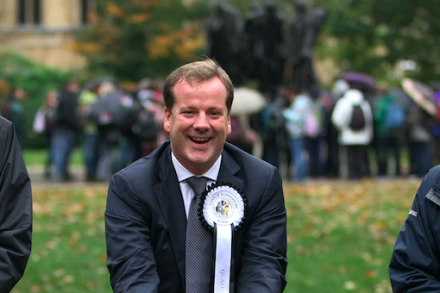
The Tory MP for Dover, Charlie Elphicke, has had the whip suspended this evening. In a statement the new chief whip Julian Smith says that this follows ‘serious allegations that have been referred to the police’. In response, Elphicke has tweeted that the party tipped off the media that he was having the whip suspended in advance of telling him. He continued, ‘I am not aware of what the allegations are and deny any wrongdoing’. There are allegations against other MPs in the papers tomorrow. Clive Lewis has been accused of groping a woman at Labour conference this year. He strenuously denies the allegation, telling ITV’s Paul Brand that his accuser is either ‘mistaken’ or ‘lying’.

Julian Smith’s promotion shows this is the Gavin Williamson reshuffle in more ways than one

This is the Gavin Williamson reshuffle in more ways than one. Not only is he the new defence secretary, but one of his closest allies is the new chief whip. Julian Smith was made deputy chief whip after the election and has worked hand in glove with Williamson in the whips' office. His appointment means that the style and tactics of the whips' office won’t change. It also means that Williamson’s power base in government has just dramatically expanded, a fact that won’t be lost on the new defence secretary’s possible leadership rivals. Smith made news earlier this year when he told a meeting of government PPSs that those planning a leadership challenge must be ‘put back in their box’.

What to do about returning jihadis

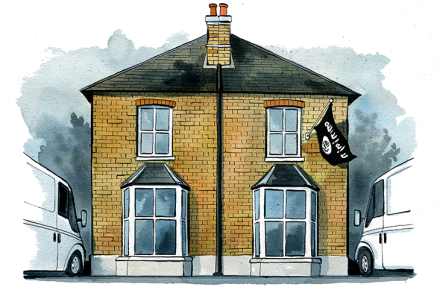
In normal times, the reported return of 400 Isis fighters to Britain would be the biggest story out there. But with policymakers preoccupied by Brexit, and the press examining the sexual culture of Westminster, this news has not received the attention it deserves. The return of these fighters has profound implications. The security services are struggling to keep up with all the possible terrorists at large. Notably, Andrew Parker, the director-general of MI5, has warned that plots are being devised at the fastest rate he can remember in his 30-year career. Though he stressed that the security services have prevented seven attacks since March, he also said they cannot foil every effort. This is simply down to capacity.

Did Theresa May really ignore Lisa Nandy’s abuse warnings?

PMQs was always going to be a more serious affair than usual this week, given the questions about how Westminster and the political parties have handled serious allegations of sexual abuse. Theresa May began the session by saying that she was inviting all party leaders to a meeting to discuss the launch of an independent, grievance procedure. Jeremy Corbyn made clear he would be happy to attend this meeting. But he then proceeded to question Theresa May about a tax loophole involving the Isle of Man. The exchanges were not particularly illuminating. But later on Lisa Nandy stood up and said she had told Theresa May three years ago that the whips were using sexual abuse allegations to impose party discipline.

The Tories need a positive vision for Britain after Brexit

Political Cabinet on Tuesday was a fascinating occasion, as I say in The Sun, and not just because Andrea Leadsom took the opportunity to tell Theresa May she had a wonderful smile.  The Cabinet were given a detailed presentation on the state of public opinion—and bits of it made for grim reading for them. David Mundell, the Scottish Secretary, summed up the mood of the meeting when he told Theresa May, to chuckles, that his first impression from all the data was that she shouldn’t call an election anytime soon. The problem for the Tories is that the voters are wary of their values and fed up with austerity.

Will Britain back Madrid for the sake of Brexit?

Theresa May’s official spokesperson has just issued a statement on Catalonia’s declaration of independence that will please Madrid. It makes clear that the ‘UK does not and will not recognise the Unilateral Declaration of Independence’. It says that the declaration is ‘based on a vote declared illegal by the Spanish courts’. It concludes by saying that ‘we want to see the rule of law upheld, the Spanish constitution respected, and Spanish unity preserved’. What is telling about this statement is that it doesn’t even included the kind of diplomatically phrased call for restraint that Donald Tusk’s tweet did.

MPs are undermining Britain’s world-class university system

The debate about universities in the last few days has been extremely frustrating. Britain has the two best universities in the world, according to The Times Higher Education rankings, and five of the top 25. This should be a cause for national celebration. Politicians should be seeking to build on this strength, not doing anything to undermine it. But instead, MPs on both the left and the right are behaving in reckless and irresponsible ways. Oxford is the best university in the world. But a former universities minister, David Lammy, the shadow Education Secretary, the Tory chair of the Education Select Committee and 100-odd other MPs want to massively interfere in how it is run. They want Oxford to move to a more centralised admissions system.

Hammond can build his way out of trouble

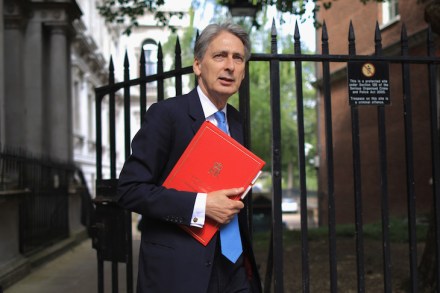
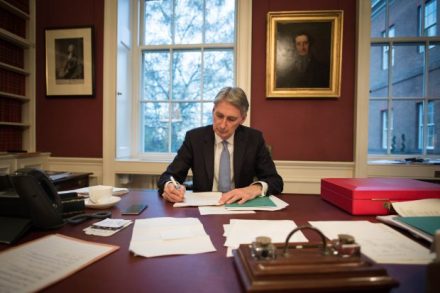
Sometimes in life the biggest risk you can take is to play it safe. This is the predicament of Philip Hammond as he approaches the Budget next month. If he adopts a safety-first approach, it will almost certainly go wrong and he’ll be forced into a credibility-draining U-turn, as he was in March. His best hope is to be bold, and to hope this generates enough momentum to carry him over any bumps in the road. The two longest-serving chancellors of recent times have relished the theatrics of Budget Day. Both Gordon Brown and George Osborne loved pulling a rabbit out of the hat at the last minute, wrongfooting the opposition and grabbing the headlines. Hammond isn’t like that.

Political meddling is putting universities’ independence at risk

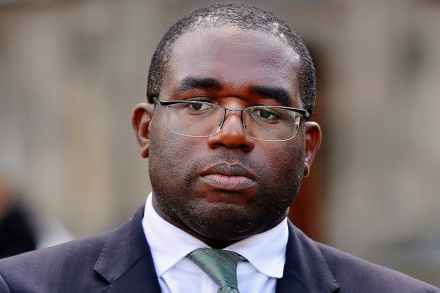
If I was the vice-chancellor of Oxford, I’d be thinking about an urgent fundraising campaign that would allow the university to go private. Chris Heaton-Harris’s letter yesterday was dumb. A request for information on who lectures about Brexit and for links to their lecture materials made on House of Commons letterhead was bound to look intimidating. But David Lammy’s letter to Oxford, co-signed by the shadow Education Secretary and the Tory chair of the Education Select Committee, is even more of an assault on university independence. Lammy not only wants Oxford to do more to fix the deficiencies of the school system but also to move to ‘centralised admissions’. Such a move would be a disaster. It would undermine the very nature of the college system.

Can the Tories defend the six-week wait for Universal Credit?

Jeremy Corbyn went on universal credit again at PMQs today. Theresa May was better than she was last week. She did muster a defence of the moral basis of the policy, but she still spent the session stuck on the back foot. It is hard to see how the Tories can continue to defend the six-week wait claimants face before they receive their payments. If I was a Number 10 political strategist, I’d also be worried about the roll out of the policy in the run up to Christmas — a time when families often feel the pinch. It was, as it nearly always is, left to backbenchers to raise Brexit.

If the Tories want to survive they must build more houses

Too many Tories have a sense of inevitable defeat at the next general election. They can see what the problems are but are fatalistic about their ability to solve them before 2022. Sajid Javid isn’t one of these Tories. He quickly grasped that the election result changed the internal Tory debate about housing policy and has been pushing for more radicalism ever since. On Sunday, he went on Andrew Marr to argue that the government should borrow to build. Javid’s argument is the same he made when he was backing Stephen Crabb for leader in 2016, interest rates are so low that it makes sense for government to borrow to invest in infrastructure. There are those who will be uncomfortable about the idea of the government borrowing even more.

Cabinet urge Hammond to be bold on housing in the Budget

With the next European Council not scheduled until December, political attention now turns to next month’s Budget. As I say in The Sun this morning, there are signs that the government is getting to the right place on housing. I understand that when Cabinet discussed the Budget this week, a frequent refrain from ministers was the need to be bold on housing. One ally of the Chancellor tells me, ‘Housing will be the big centrepiece of it’. I understand from government sources that the Budget is likely to back both land release and the government directly commissioning houses. This means the government would free up public sector land and then get housebuilders to build thousands of homes on it.

A bungled Brexit could hand the SNP a new impetus

There is one thing that would absolutely guarantee that the United Kingdom could not make success of Brexit, the break-up of the Union. The immediate danger of that happening has receded. The SNP lost ground in the general election and Nicola Sturgeon now talks about independence far less than she once did. But, as I say in the politics column in this week's magazine, if Brexit is mishandled this could change. This is why the EU withdrawal bill, which is currently paused as the whips work out how to get it through, must be changed. Clause 11 of the bill can be seen as an attempt to claim back previously devolved powers. This would allow the SNP to claim, with some justification, that Brexit looks like a London power grab.

Brexit can strengthen the Union

There will be no chance of the United Kingdom making a success of Brexit if Scotland votes to break up the kingdom. And although the immediate danger of that happening appears to have passed — the Scottish National Party lost ground in the general election and Nicola Sturgeon doesn’t speak anywhere near as much about independence nowadays — this could change if Brexit is mishandled. When Britain leaves the EU then Scotland leaves too — those are the rules, and Spain, which is not too keen on the idea of secession, will insist upon them. So Brexit in itself will make Scottish independence an even bigger risk.

May’s PMQs performance does little to cheer up the Tory benches

PMQs is mostly about parliamentary morale. The general public doesn’t watch it and while they might see or hear the odd clip, the real benefit for a leader from a good performance is keeping their own troops happy. Theresa May’s performance today will have done little to cheer up the Tory benches. Jeremy Corbyn, who while still not a forensic questioner is becoming a more confident one, got the better of the exchanges. Corbyn was clever enough to acknowledge the fall in unemployment in his first question, denying May the chance to twit him for not doing so. He thought on his feet, even making a decent joke about how Amber Rudd was being used as a buffer zone to keep Boris Johnson and Philip Hammond apart on the government front bench.