James Forsyth

James Forsyth

James Forsyth is former political editor of The Spectator.

Boris spills the beans on Tories’ big manifesto tax cut

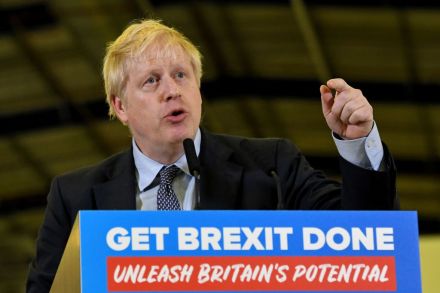
Boris Johnson has just revealed the biggest policy offer in the Tory manifesto. He told workers on Teesside today that the Tories want to raise the National Insurance threshold to £12,000. https://www.youtube.com/watch?v=BD8rF2Ds7o8 Now, I understand that this would not all be done at once. But it is telling that the Tories have chosen to prioritise this tax cut over raising the threshold for the 40p rate. But Boris Johnson’s loose lips have created a problem for the Tories. There was already concern in CCHQ that they don’t have that many new stories to come out of the manifesto. After today, they have one less. The Tories don’t want the manifesto to blow up in their faces; it is—I am told—a very cautious document.

Why the Tories will be happier than Labour with last night’s debate

Last night’s leaders debate was a scrappy affair. The format meant that neither leader was able to get going properly and that there was little back and forth between Boris Johnson and Jeremy Corbyn. It is hard to imagine that it will have changed many voters’ minds. Indeed, a snap YouGov poll suggested that it had effectively been a draw, with 51 percent saying that Johnson had performed better and 49 percent saying Corbyn had. https://audioboom.com/posts/7428847-verdict-how-did-the-first-leaders-tv-debate-go The debate made clear how the Tories intend to attack Corbyn for the rest of the campaign.

The biggest risk that Boris Johnson is taking in this election

It will be the biggest moment of the campaign so far. On Tuesday night, Boris Johnson and Jeremy Corbyn will go head to head in an ITV debate. I say in The Sun this morning that this debate is the biggest risk that Boris Johnson has taken in this election. There’s a reason why none of his predecessors as PM agreed to such an encounter. But Boris Johnson’s team calculated that this debate was worth it as it enables them to frame this election as a choice as to whether you want Boris Johnson or Jeremy Corbyn as PM. He has a 22 point lead on this question and asking it brings 2017 Tories who have gone over to both the Liberal Democrats and the Brexit Party back into the fold. Tuesday night’s format should favour Boris Johnson.

Can Nigel Farage take the Tories to victory?

Despite the consistent poll lead and projections of a majority of about 40 seats, the Tories are still nervous. They are nervous because they are uncertain, because their route to victory involves taking seats that the Tories haven’t won in living memory, so no one has a proper sense of how well (or otherwise) it’s going. The debacle of the last general election campaign has left the Tory party with a collective fear of terra incognita. At the start of that campaign, there was talk of the Conservatives sweeping through the Labour heartlands, but instead they had a lesson in how badly campaigns can go wrong. The Labour vote is resilient, and there is scepticism even among the cabinet about some of the places that the Tories are trying to take this time.

The chances of a Tory majority have increased this week

Four weeks from now, voters will be heading to their polling station, and the result of this election remains unpredictable. Today’s NHS stats and the recent flooding are reminders of the particular dangers of a winter election to the governing party. But a week into the campaign, the chances of a Tory majority have increased, I say in the magazine this week. When parliament voted for an election on 29 October, Tory strategists were still worried about how the public would react to Boris Johnson's failure to meet his ‘do or die’ deadline of 31 October for getting the UK out of the EU. Two weeks on, it’s clear there’s been no great public backlash.

Boris Johnson’s election pitch is a flashback to 2015

Boris Johnson’s speech today was an attempt to set this election up as a choice between a Tory majority government and a hung parliament. He argued that if the Tories got the nine extra seats they need from their 2017 performance, then Brexit would ‘get done’ and the country would be able to move on to other priorities. By contrast, he claimed that a hung parliament would lead to a Corbyn/ Sturgeon coalition and two referendums. (Both Labour and the SNP have ruled out a formal coalition). What was striking about today was how many of the Tories’ 2015 campaign themes, Boris Johnson was trying to revive. We had the warnings about a ‘coalition of chaos’ if you don’t vote Tories and the attacks on how the SNP would be pulling Labour’s strings.

Nigel Farage has given Tories the perfect campaign message

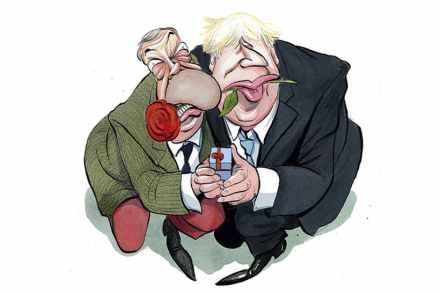
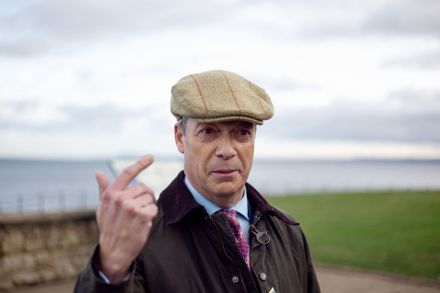
It would obviously have been better for the Tories if Nigel Farage had announced that the Brexit party was standing down everywhere. As Katy Balls says, even now, his party is standing in those very Labour held marginals that the Tories need to win a majority. But I still think today’s Brexit party announcement has increased the Tories’ chances of taking these seats. Why? Because Nigel Farage has provided the Tories with the perfect squeeze message. He has admitted that voting for the Brexit party might stop Brexit from actually happening if it denies Boris Johnson a majority; he has half conceded that the Tory line that a vote for Farage may end up being a vote for Corbyn is right.

What makes this election so unpredictable

Every election campaign has a wobble. But the Tories broke new ground in managing to wobble before they’d even launched their campaign. However, the formal start of the Tory campaign on Wednesday night does appear to have stabilised things, I say in The Sun this morning. I understand that the Tories own polling still shows them on course to win the election and return with a working majority. But, in the assessment of one of Boris Johnson’s Cabinet allies, this contest is ‘the most complicated election we have had. Two minor parties that can take from both major parties’. This dynamic means that this election will be more unpredictable than usual. There won’t be a straightforward national swing, rather a series of regional contests.

Boris’s fate will be decided by Lib Dem voters

The Tories’ great fear in this campaign is that they can get their vote out, squeeze the Brexit party right down and still lose. Why? Because their strategy relies on the Liberal Democrats taking a chunk out of Labour’s Remain vote. If Labour manages to rally the Remain vote in the way that it did in 2017, then we are heading into hung parliament territory and a situation where the Tories cannot govern because they have no potential partners. The complication for the Tories is that they also need to win back a chunk of their Remain voters who have gone over to the Liberal Democrats and hold off a challenge from Jo Swinson’s party in a host of constituencies.

Boris Johnson’s campaign launch will help calm Tory fears

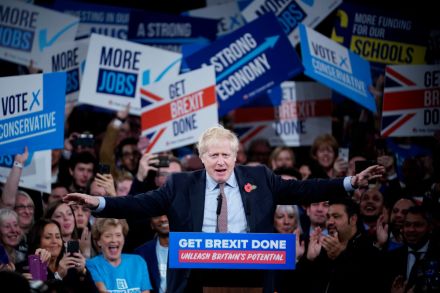
When you ask those at CCHQ why this election isn’t going to be like 2017, one of the answers they give is that Boris Johnson is a better campaigner than Theresa May. Tonight’s Tory launch was meant to show that off. The Tories held it in the evening so that they could have a crowd there—Johnson needs an audience to really get going as a speaker—and to create better pictures for tonight’s news bulletins.  Boris Johnson, unsurprisingly, hit many of the same themes in this speech that he made in Downing Street earlier.

Can Boris Johnson recover from the Tory campaign crisis?

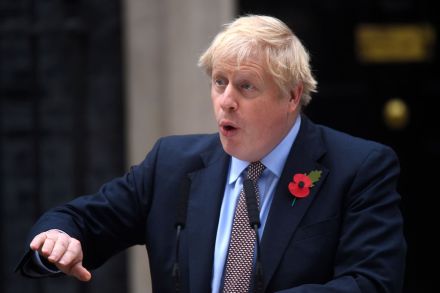
After a torrid 36 hours for the Tory party which has seen one Cabinet Minister resign and another have to apologise, Boris Johnson spoke from the steps of Downing Street before heading out on to the campaign trail. He argued that he didn’t want this election but it had to happen because Parliament was frustrating Brexit. He said that if there wasn’t an election, the UK wouldn’t even leave on the 31 January. This was designed to explain why Johnson has gone for an election, something that Theresa May never managed to adequately explain in 2017. Boris Johnson then launched into his usual stump speech. He criticised Labour for not understanding that you need a dynamic market economy to provide the revenue to fund public services.

Why both Boris Johnson and Jeremy Corbyn think they’ll benefit from this TV head to head

Normally wrangles about TV debates go on for weeks before one is agreed. Yet, before the election campaign has even formally started, ITV have announced a TV debate between Jeremy Corbyn and Boris Johnson on November 19th. This’ll be the first election head to heard this country has had. Agreement on this debate has been reached so fast, as I say in The Sun this morning, because  both Labour and the Tories think they benefit from this one on one format. On the Labour side, they hope that it helps them unite the anti-Tory vote behind Corbyn. While the Tories want a one on one debate because they think the question of who do you want to be Prime Minister—Boris Johnson or Jeremy Corbyn—favours them. During the 2017 campaign, Theresa May lost her lead on this question.

General election 2019: can Boris Johnson succeed where Theresa May failed?

This general election isn’t the most important in a generation, it is the most significant in the lifetime of anyone born since 1945. It will decide whether Brexit happens, whether Britain has the most left-wing prime minister in its history, whether the Scottish Nationalists are able to secure a second independence referendum and whether Britain’s two--party system can survive. Boris Johnson has taken a risk. A winter poll at a time of unprecedented electoral volatility is dangerous and he has no safety net. The Tories have to win outright to govern: they have no potential partners anymore. The Liberal Democrats’ position on Brexit is irreconcilable with the Tory one; the DUP won’t be doing another deal with them any time soon.

Boris Johnson rallies Tory MPs as Commons backs snap election

The House of Commons has just voted by 438 to 20 for a 12 December election. Given that amendments on extending the franchise were not selected as they were out of scope, the Commons has also backed an election with the existing general election franchise. Even in these unpredictable times, it would be jaw dropping if the House of Lords tried to amend this bill tomorrow. So, it looks pretty much nailed on that we are heading for a 12 December election. We can see in the parties who have been most enthusiastic about this poll—the Tories, the SNP and the Lib Dems—who thinks they will benefit from it. In truth, they all could unless Labour has a campaign bounce.

Why Labour are backing a Christmas election

Jeremy Corbyn has said that Labour will back a December election. This means that it is now highly likely to happen. Indeed, the only thing that could prevent it  would be if an amendment was added to the bill changing the franchise: for example, giving 16 and 17-year-olds or EU nationals the vote. In those circumstances, the government would likely not proceed with the bill. Labour’s change in stance from last night’s vote, when it whipped its MPs to abstain on the motion under the Fixed-term Parliaments Act, looks like it has been driven by the SNP’s willingness to back the government on a pre-Christmas election. If you add the SNP’s 35 MPs to the 299 votes the government got last night, you have a majority.

Will Boris Johnson get the 2019 election he craves?

By the end of the day tomorrow, we will know if Boris Johnson is going to get the 2019 election he craves. Minutes ago he responded to the government’s failure to get the two thirds vote necessary for an election under tonight’s Fixed-term Parliament Act motion by saying that the government would present a bill legislating for an election on the 12 December. Now, this is not the date that the Lib Dems and the SNP wanted – they were pushing for the 9th – but he is acceding to one of their key demands: the government won’t try and bring the Withdrawal Agreement Bill back if this legislation goes through. This meets the criterion that the SNP’s Westminster leader Ian Blackford set out in his point of order responding to Boris Johnson this evening.

What is Boris Johnson’s plan?

As Boris Johnson laid out his plan at political Cabinet on Thursday, it quickly became apparent how much of it was dependent on factors outside of his control. I write in The Sun this morning that he said that he still hoped that the EU would offer only the shortest of extensions, forcing parliament to get on with it. But he admitted that the EU was inclined to offer an extension to the end of January and that Emmanuel Macron was fighting a lonely battle against this. Earlier in the day, the Elysée had told Number 10 that the French President was too isolated on the issue in the EU to veto a longer extension. In a sign of how much he is relying on Macron, Boris Johnson then pleadingly recited the opening line of the carol ‘Oh come, oh come Emmanuel’.

Labour is set to deny Boris Johnson a December election

Word tonight is that Labour will whip its MPs to abstain on Monday's general election vote. Officially, Labour won’t formally declare its position until tomorrow. But if its MPs do abstain this means that the government won’t secure the necessary two-thirds support to dissolve parliament under the Fixed Term Parliaments Act. So no general election on 12 December. The government will respond to its failure to secure an election by doing the minimum necessary in parliament, effectively daring the opposition to bring the government down in a confidence vote. It is looking increasingly likely that the opposition will have to go down this route. If the EU grants an extension to January 31st, something will have to happen on Brexit before then.

Boris Johnson’s election threat to wavering Labour MPs

The key Brexit vote tonight is on the programme motion. The sense is that the government has the votes to carry the second reading. But that wouldn’t guarantee the UK leaving on 31 October, as the committee and report stages could take weeks and see a slew of amendment added to the bill. If Boris Johnson is to meet his 31 October deadline, he’ll need to carry the programme motion which would see all the Commons stages of the bill done in the next 60 hours or so. Right now this vote is, as us nervous journalists like to say, ‘too close to call’.

A customs union amendment is a wrecking amendment

The purpose of the Withdrawal Agreement Bill is to put the Withdrawal Agreement into UK domestic law. Nothing that MPs add to it can change the text of what the UK and the EU agreed last week. For this reason it is wrong, whatever the merits of it, to try and add a customs union to this bill. Its function is not to determine the future relationship but to put the exit deal into UK law. If MPs feel strongly that a customs union is the right choice for the UK – I don’t, but there is a significant group of parliamentarians who believe this – then they will have an opportunity to express that view very soon. Boris Johnson has accepted the so-called Nandy / Snell amendments which mean that parliament will get to vote on the negotiating mandate for the trade talks.