Is Boris Johnson a convert to the nanny state?
18 min listen

James Forsyth is former political editor of The Spectator.
18 min listen
David Frost briefed the Cabinet yesterday on the state of the Brexit negotiations and he has now issued a very downbeat statement. Boris Johnson’s chief Brexit negotiator says that the third round of negotiations ‘made very little progress’. The problem is that (as always in these talks) the UK and the EU have very different interpretations of what is reasonable. The UK thinks that because it ‘just’ wants a free trade agreement it shouldn’t be expected to follow EU rules in a host of areas and should be offered a deal similar to what Canada, South Korea or Japan have. The UK has even accepted that this deal might see some tariffs imposed.
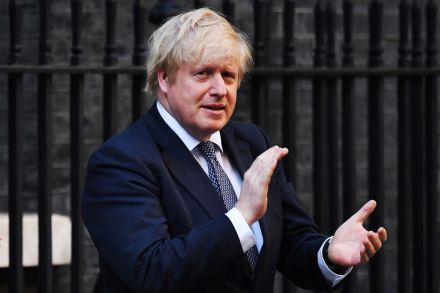
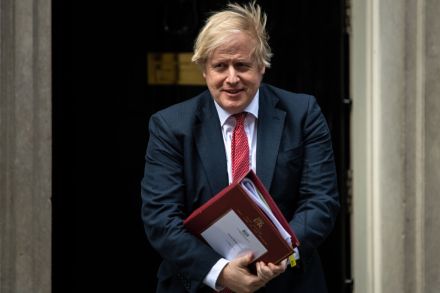
One of the constants of Boris Johnson’s political career has been his opposition to ‘nanny state’ interventions in people’s lives. In 2006, he overshadowed David Cameron’s first conference as Tory leader by supporting mothers who were pushing pies through school railings in protest at attempts to make their children eat Jamie Oliver inspired healthy school dinners. As recently as last year’s Tory leadership contest, he was attacking the so-called sugar tax for being ineffective and hitting the poor hardest. But, as I say in the Times this morning, in a discussion with some of his senior ministers and advisers last week, Boris Johnson told them, ‘I’ve changed my mind on this. We need to be much more interventionist’ on obesity.
11 min listen
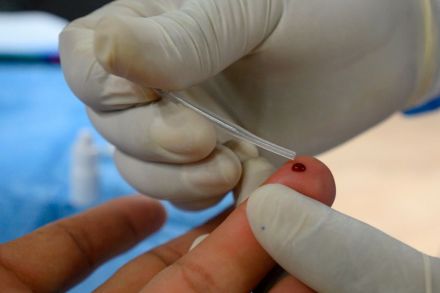
Public Health England has approved its first mass antibody test. Roche, the supplier behind it, says that the test has an 100 per cent accuracy. So how much of a game changer is this development?
Britain has long flattered itself that it leads the world in administration. But, as I write in the magazine this week, Covid-19 has highlighted just how far from being true that now is. It’s hard to argue that the UK has done much better than France, Spain and Italy, and we have clearly done worse than Germany. We are miles behind South Korea, Taiwan and Japan. This crisis has exposed the limitations of the UK’s government machine. One Whitehall veteran says that the ten days leading up to 23 March were ‘the nearest the wiring of the state has come to collapse. It wasn’t just blowing a fuse: the motherboard was beginning to melt down.’ Ministers need to be given more direct control over arms-length bodies such as Public Health England.
‘Covid-19 has been perhaps the biggest test of governments worldwide since the 1940s,’ declares the government’s command paper on the virus. The fact that the following paragraph proposes ‘a rapid re-engineering of government’s structures and institutions’ is telling. It is an implicit admission that the British government machine is, in several important areas, failing this test. The argument about whether the UK has the worst death toll in Europe risks descending into statistical absurdity. Until excess mortality figures are known, it won’t be possible to come to a verdict. But it’s hard to argue that the UK has done much better than France, Spain and Italy.
15 min listen
When this crisis is over, reform of Whitehall is going to become a major issue again – as the government’s command paper yesterday acknowledged. Any government reform is going to have to be driven by the Cabinet Office which has today announced an intriguing set of new non-executive directors. The four new appointments are Bernard Hogan-Howe, the former Metropolitan Police commissioner; Henry De Zoete, who worked with Michael Gove and Dominic Cummings at the Department for Education before winning Dragon’s Den and setting up an energy switching service; Gisela Stuart, the former Labour MP and co-chair of Vote Leave; and Simone Finn, a Tory peer who was the coalition’s adviser on trade union matters.
13 min listen
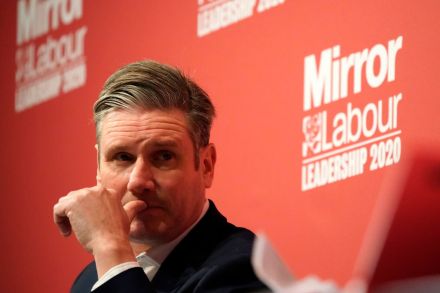
Following 24 hours of confusion over the government's advice on the next phase of lockdown, Keir Starmer is making his debut as Labour leader with a statement to be broadcast on the BBC. On the podcast, Katy Balls and James Forsyth analyse his approach of constructive criticism.
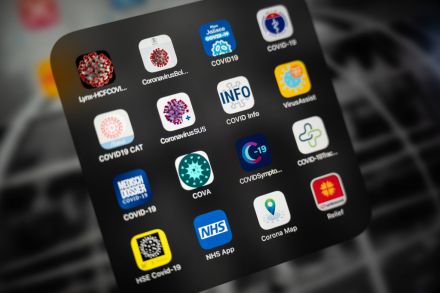
The government’s decision to try and develop its own ‘test and trace’ app seems bizarre at first glance. Who is going to be better at developing an app, the UK government or Apple and Google? Even inside government, there are those who regard the decision to try and go it alone as technological hubris. But the reason that the government is so keen to determine its own app is that the decentralised Apple and Google one doesn’t allow you to easily identify where infections are spiking. The government really wants this information as it is key to its plan for easing social distancing restrictions and keeping on top of the virus.
18 min listen
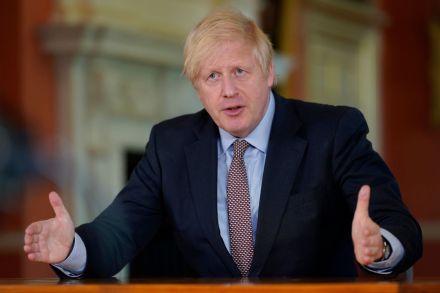
It's been six weeks since the Prime Minister first sat down to give the statement to the British public that began lockdown. Today, as James Forsyth first reported in The Spectator two weeks ago, Boris Johnson announced that the lockdown isn't over yet. From Wednesday onwards, the one form of exercise a day rule will be removed so that, social distancing provided, people will be able to spend time outside even when they are not exercising or shopping. But not much else has changed, and in his statement, Boris Johnson sets out why. The 'R' number simply isn't sufficiently low enough. A new metric for judging the risk to the population with five levels has been devised, and we are somewhere between levels 3 and 4 (with 5 being the risk at its peak).
11 min listen
In his evidence given to MPs today, Professor John Edmonds, one of the government's scientists on Sage, said he thought that the 'R' number had gone up in recent days. So why has this happened, despite the last three weeks of lockdown?
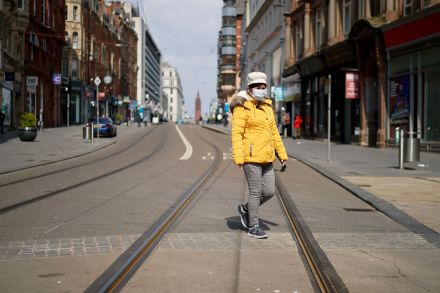

Coronavirus has accelerated the deterioration in relations between the United States and China. The US Presidential election is turning into a question of who can be tougher on China and regardless of who wins in November, US policy is going to become more hawkish. As I say in the magazine this week, this has major implications for the UK. It is going to become much harder for the government to further an economic relationship with China while maintaining Britain’s unique security partnership with the US. But just as this crisis has sped up a change in American attitudes to China, it has done the same within the Tory party. One influential Tory MP who wants to see a tougher line on Beijing says that without coronavirus, ‘it would have taken ten years to wise up to China.
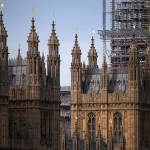
‘The normal grease of politics is not there,’ bemoans one sociable cabinet minister. Certainly, the whispered conversations in corridors that make up so much of Westminster life are in abeyance during this period of social distancing. The fact that the backbenches and the cabinet have deep reservations about the government’s approach matters far less than it would in normal times. In the Zoom parliament, there is no such thing as the mood of the House. One Tory grandee pushing for a significant easing of the lockdown complains that the current arrangements ‘make it easier for No. 10 to ignore parliament and cabinet’. But contrary to appearances, politics has actually sped up, rather than stopped, during the pandemic.
17 min listen
It's the first head to head between Boris Johnson and the new Leader of the Opposition. Unlike more normal times, Boris couldn't rely on a large parliamentary presence of Tory MPs to booster him from the green benches. Instead, as James Forsyth explains on the podcast with Katy Balls and John Connolly, Keir Starmer actually made life a little difficult for Boris Johnson.
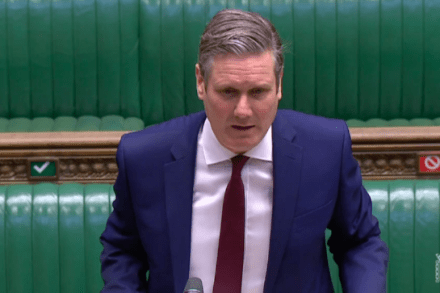
Keir Starmer got his first chance to take on Boris Johnson at PMQs today. There was no moment that will lead the evening news, but the new Labour leader did make Boris Johnson uncomfortable at times. When Starmer asked why the UK had moved away from contract tracing and testing in mid-March, Boris Johnson gave a long, rather rambling answer. But it is increasingly clear that this happened because the UK simply did not have the capacity to do this at the required level. Given that this is the case, the government would do well to be explicit about it In a further sign of how lacking the UK’s testing capacity was before this crisis hit, Boris Johnson announced a new target of 200,000 tests a day by the end of the month.

16 min listen
The leading epidemiologist from Imperial College London, who has been influential in the government's decision to impose a lockdown, has resigned. The Telegraph broke the story on Tuesday evening that Neil Ferguson had been visited at least twice by his lover. On the podcast, Cindy Yu discusses with James Forsyth and Katy Balls whether he had to go.
11 min listen
The British coronavirus death toll exceeds 30,000, which is the worst in Europe. But is it too soon to tell whether the UK has really been the worst hit on the continent?
18 min listen
The Prime Minister will say today that 'the route back to full normality requires a vaccine'. But given that most estimates put this at a year or two away (if possible at all), does that mean we will be under lockdown until then?
16 min listen